
Short Answer
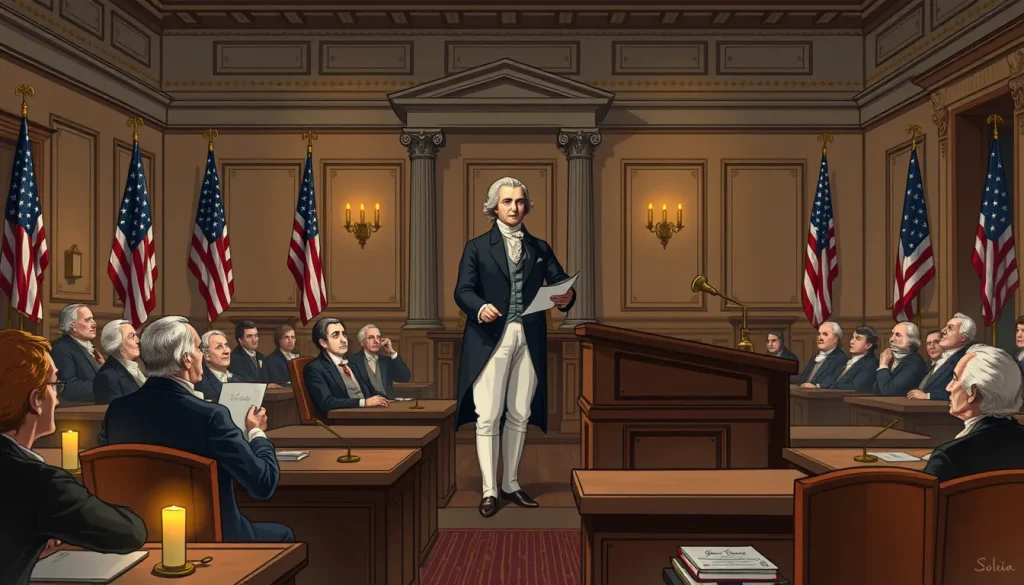
The Monroe Doctrine, articulated by President James Monroe in his seventh annual message to Congress on December 2, 1823, declared that the American continents were no longer open to future European colonization and that the United States would regard any European attempt to extend its political system to the Western Hemisphere as dangerous to American peace and safety. Although primarily a diplomatic statement, the doctrine became a cornerstone of U.S. foreign policy and a potent symbol of American nationalism, particularly in the decades following the War of 1812, which had both cemented U.S. independence and fueled a sense of national purpose.
Historical Context
After the War of 1812, the United States experienced a surge of nationalism and confidence. The war with Britain had ended with the Treaty of Ghent in 1814 and a celebrated victory at New Orleans in 1815, and the young republic increasingly asserted its independence on the global stage. The immediate context for the Monroe Doctrine was the collapse of Spanish colonial rule in Latin America. Between 1810 and 1822, fifteen Latin American colonies declared independence, and by 1823 it appeared possible that Spain, backed by the Holy Alliance (Russia, Prussia, and Austria), might attempt to reconquer them. At the same time, Russia was expanding its presence southward from Alaska along the Pacific coast, and the United States and Britain both held territorial claims in the Oregon country.
These developments threatened American commercial interests and its vision of hemispheric security. The doctrine also drew on earlier diplomatic principles, such as George Washington’s Farewell Address (1796), which warned against permanent alliances, and James Madison’s rationale for the War of 1812, which had defended neutral rights against European interference. Secretary of State John Quincy Adams, a key architect of the policy, had himself been a prominent negotiator at Ghent and had absorbed the lessons of the war about the importance of U.S. autonomy.
What Happened
In the fall of 1823, British Foreign Secretary George Canning proposed a joint Anglo-American declaration against European intervention in the Americas. Canning’s motives were commercial and strategic: Britain had a flourishing trade with Latin America and did not want Spain or France to reimpose mercantilist restrictions. President Monroe consulted his cabinet and also received advice from former presidents Thomas Jefferson and James Madison, both of whom favored accepting the British offer.
Secretary of State John Quincy Adams, however, argued forcefully for a unilateral declaration. He contended that a joint statement would limit future U.S. expansion and that Britain, acting in its own interest, would inevitably enforce the policy anyway. Monroe ultimately sided with Adams. In the annual message, delivered to Congress on December 2, 1823, Monroe laid down three core principles: (1) the American continents were henceforth not to be considered subjects for future colonization by any European power; (2) the United States would not interfere with existing European colonies; and (3) the United States would consider any attempt by European powers to extend their system to the Western Hemisphere as dangerous to its peace and safety. At the same time, Monroe pledged U.S. non-interference in the internal affairs of Europe, including the Greek struggle for independence.
Why It Matters
The immediate impact of the Monroe Doctrine was limited; European powers largely ignored it. Spain, with British naval power lurking in the background, never seriously attempted to reconquer its former colonies, and Russia eventually agreed to a treaty in 1824 limiting its claims to Alaska. In the long run, however, the doctrine became a foundational tenet of U.S. foreign policy. By the mid-19th century, it was used to justify U.S. expansion, and later, in the late 1890s and early 1900s, it was invoked to rationalize intervention in Latin America, especially under the Roosevelt Corollary of 1904. Historians view the doctrine as both a sincere statement of hemispheric policy and a reflection of American nationalism—a unilateral assertion of U.S. leadership in the Western Hemisphere.
Contemporary observers recognized the doctrine’s symbolic weight. For Americans, it demonstrated that the United States could define its own sphere of interest without deference to Europe. However, Latin American nations often viewed it with suspicion, seeing it as a cover for U.S. territorial ambitions. These differing interpretations continue to shape scholarly debate.
Definition
The Monroe Doctrine is a U.S. foreign policy principle that holds that European powers should not establish new colonies or interfere with independent nations in the Western Hemisphere, and that the United States would consider any such action a threat to its own security. It was not a law or treaty but a declaration of policy made by the president, later endorsed by Congress through practice.
Background
The doctrine emerged from the confluence of European and American post-war conditions. The War of 1812 had resolved longstanding problems with Britain, including impressment and trade restrictions, and had given the United States a renewed sense of independence. Meanwhile, the Spanish Empire’s fragmentation in the Americas raised questions about who would fill the political vacuum. The Holy Alliance’s apparent willingness to restore monarchies in Europe, combined with Russian claims on the Pacific Northwest, worried American policymakers. The British proposal for a joint declaration, which Adams rejected, was crucial because it forced the administration to decide between cooperation and unilateral action.
How It Worked
The doctrine asserted separate spheres of influence: the Americas for the United States, Europe for the old powers. It had three operational parts: non-colonization (the American continents are closed to future European colonization), non-intervention (European powers must not extend their political system to the Western Hemisphere), and U.S. non-interference in European affairs. In practice, the doctrine was initially enforced more by the British navy and by the geographic barriers of the Atlantic than by American military might. Over time, as the United States grew stronger, it enforced the doctrine through diplomatic and occasionally military action.
Competing Viewpoints
Historical interpretations of the Monroe Doctrine vary widely. Some historians see it as a defensive measure protecting newly independent Latin American states from European reconquest, while others emphasize its imperialistic overtones, arguing that it asserted U.S. hegemony. John Quincy Adams himself viewed it as a statement of republican principles, but critics then and now note that it disregarded the sovereignty of Latin American countries. The doctrine also faced contemporary critiques from European states, which dismissed it as an overreach by a young nation without the military power to back it. These differing viewpoints reflect ongoing debates about U.S. foreign policy and its motives.
Role in the War of 1812
Although the Monroe Doctrine was issued eight years after the Treaty of Ghent, it was deeply influenced by the War of 1812. The war had been fought over neutral rights, impressment, and trade restrictions—issues rooted in European conflicts. The outcome, while not a clear military victory, affirmed U.S. independence and strengthened national identity. Monroe and Adams both drew lessons from the war: Monroe had served as Secretary of State under Madison during the conflict, and Adams had been a negotiator at Ghent. Their experience convinced them that the United States must define its interests independently and avoid entangling alliances. The doctrine’s assertion of a distinct American sphere was a direct expression of this post-war nationalism.
Consequences and Historical Interpretation
The Monroe Doctrine’s consequences were profound. It became a rallying point for American expansion, particularly during the era of Manifest Destiny. In 1865, it was invoked to support the Mexican President Benito Juárez against French-installed Emperor Maximilian. In 1904, President Theodore Roosevelt extended the doctrine with his Corollary, which justified U.S. intervention in Latin American countries to prevent European involvement. Later, during the Cold War, the doctrine was cited in the Cuban Missile Crisis of 1962. Historians argue that the doctrine both reflected American nationalism and contributed to U.S. dominance in the hemisphere, often at the expense of Latin American self-determination. The Monroe Doctrine remains a symbol of U.S. foreign policy, but its legacy is contested, particularly in the context of postcolonial and anti-imperial critiques.
Primary Sources
The most important primary source is the transcript of President Monroe’s seventh annual message to Congress, delivered on December 2, 1823. It can be found in the National Archives (Record Group 46, Records of the United States Senate) and is reproduced on the National Archives website. The message outlines the principles of the doctrine. Another key source is the correspondence of John Quincy Adams, including his diary, which provides insight into the cabinet debates and his arguments against a joint declaration with Britain. Adams’ diary is published in multiple editions. The Gilder Lehrman Institute also holds a contemporary newspaper printing of the speech, which shows how the doctrine was disseminated. These sources are primary accounts, but they reflect the perspectives of U.S. leaders and should be read with attention to their political context.
Further Reading
- Dexter Perkins, The Monroe Doctrine, 1823–1826 (Harvard University Press, 1927)
- Ernest R. May, The Making of the Monroe Doctrine (Harvard University Press, 1975)
- John Quincy Adams, Memoirs of John Quincy Adams, ed. Charles Francis Adams (J. B. Lippincott, 1874–1877)
- Walter LaFeber, “The Evolution of the Monroe Doctrine,” in The American Historical Review (1963)
- National Archives, “Monroe Doctrine (1823),” at archives.gov
- Office of the Historian, “Monroe Doctrine, 1823,” at history.state.gov
References
- National Archives, “Monroe Doctrine (1823),” https://www.archives.gov/milestone-documents/monroe-doctrine
- Miller Center, University of Virginia, “December 2, 1823: Seventh Annual Message (Monroe Doctrine),” https://millercenter.org/the-presidency/presidential-speeches/december-2-1823-seventh-annual-message-monroe-doctrine
- Office of the Historian, “Monroe Doctrine, 1823,” https://history.state.gov/milestones/1801-1829/monroe
- National Museum of American Diplomacy, “The Monroe Doctrine: The United States and Latin American Independence,” https://diplomacy.state.gov/stories/the-monroe-doctrine-the-united-states-and-latin-american-independence/
- Gilder Lehrman Institute, “The Monroe Doctrine, 1823,” https://www.gilderlehrman.org/history-resources/spotlight-primary-source/monroe-doctrine-1823
FAQ
What was the Monroe Doctrine?
The Monroe Doctrine was a U.S. foreign policy statement made by President James Monroe in 1823, declaring that European powers should not colonize or intervene in the Americas and that the United States would view such actions as a threat to its security.
How did the War of 1812 influence the Monroe Doctrine?
The War of 1812 fostered American nationalism and independence, leading leaders like Monroe and John Quincy Adams to assert a distinct U.S. sphere in the Western Hemisphere. Adams' experience at the Treaty of Ghent and Monroe's wartime leadership shaped their desire for a unilateral declaration.
Did the Monroe Doctrine have immediate effect on Europe?
No, European powers largely ignored it. However, the British navy, which had its own reasons to prevent Spanish reconquest, effectively enforced the doctrine's principles, while the United States lacked military power to do so until later.



Leave a Reply