
Short Answer
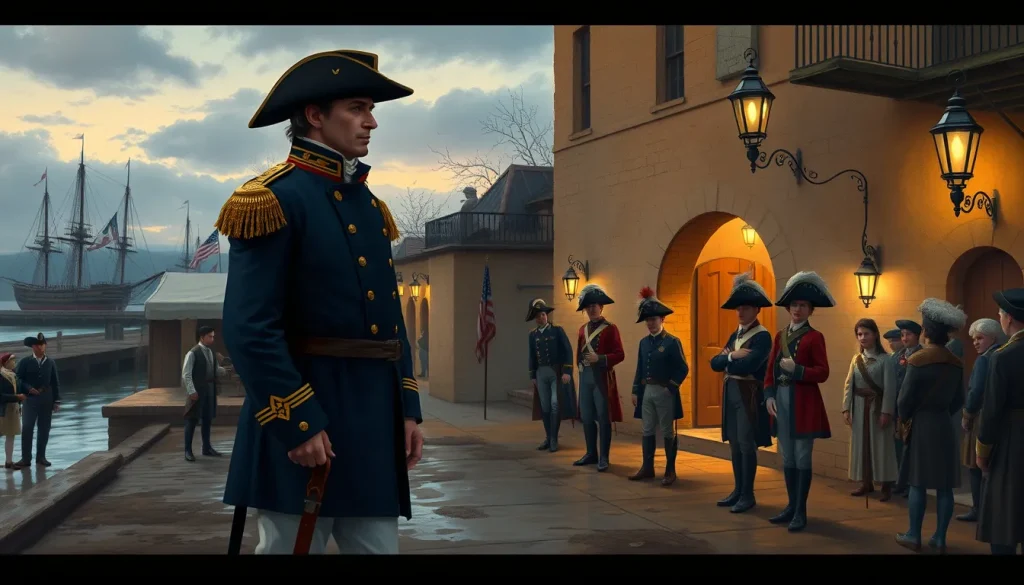
Andrew Jackson’s declaration of martial law in New Orleans on December 16, 1814, was a military general order issued during the War of 1812 as British forces threatened the Gulf Coast. Often called a proclamation, it placed the city and its environs under strict military authority, suspended normal civil processes, and restricted movement, trade, and assembly. It is historically significant because it was among the first uses of martial law in United States history and because Jackson kept it in force after the immediate British danger had passed, raising enduring questions about military necessity, civilian supremacy, and civil liberties in wartime.
Historical Context
In late 1814, the War of 1812 shifted decisively toward the Gulf Coast. British strategy aimed at seizing New Orleans, the principal port and commercial gateway of the Mississippi Valley. Control of the city would threaten American trade, separate the lower Mississippi from the United States, and possibly strengthen British leverage in peace negotiations then underway at Ghent. A British fleet under Vice Admiral Alexander Cochrane and an army under Major General Edward Pakenham approached the Louisiana coast, while American forces under Major General Andrew Jackson concentrated at New Orleans.
Jackson commanded the 7th U.S. Military District, which included Tennessee, Louisiana, and the Mississippi Territory. New Orleans was strategically vital but socially and politically complex. Its population included longtime French and Spanish residents, recently arrived Americans, free people of color, enslaved people, refugees, and merchants with international ties. Many residents were anxious, some were ambivalent about American rule, and morale was uneven. The Louisiana legislature cooperated with defense preparations but hesitated to suspend civil protections. A legislative committee headed by Louis Louaillier advised against suspending habeas corpus, recalling earlier resentment over martial law imposed in New Orleans by General James Wilkinson in 1806. Naval commander Daniel T. Patterson wanted authority to impress seamen but did not receive the legislative suspension he sought.
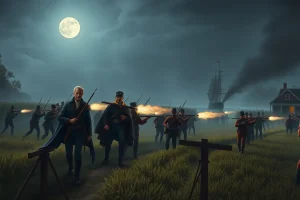
News of the British capture of American gunboats on Lake Borgne on December 14, 1814, reached New Orleans the next day. With invasion appearing imminent and with civilian confidence fragile, Jackson decided not to wait for legislative approval. On December 16 he issued general orders declaring the city and its environs under strict martial law.
What Happened
The General Orders of December 16, 1814, converted New Orleans into a district under military control. They required every person entering the city to report to the adjutant general’s office or be arrested and examined. No one could leave without written permission from Jackson or his staff. Vessels leaving New Orleans or Bayou St. John needed written passports. Street lamps were to be extinguished at nine at night, and after that hour anyone found in the streets or away from home without permission and lacking the countersign could be apprehended as a spy and held for examination. Dragoons and hussars were held ready for patrols, and the city guard was drawn from U.S. infantry and militia.
Jackson’s orders also reorganized local military authority. Brigadier General David Bannister Morgan of the Louisiana militia was ordered into federal service and given command of Louisiana militia troops. Colonel George T. Ross and Lieutenant Colonel MacRea were assigned to duty in the line despite being on recruiting service. Augustus Davezac was appointed judge advocate of the 7th Military District, replacing Thomas Gales. On January 2, 1815, after a request from the mayor’s office, Jackson rescinded the order extinguishing street lamps.
The martial law declaration preceded the main Battle of New Orleans on January 8, 1815, where Jackson’s forces defeated Pakenham’s army. The Treaty of Ghent had been signed on December 24, 1814, but news and ratification took weeks to cross the Atlantic. British forces withdrew from the Louisiana coast in January, yet Jackson did not immediately lift martial law. He maintained it into March 1815. On March 3, 1815, a newspaper article attributed to Louisiana state senator Louis Louaillier criticized the continuing military regime. Jackson had Louaillier arrested. When U.S. District Judge Dominick A. Hall ordered that Louaillier be charged or released, Jackson refused and ordered Hall arrested and removed from the city. Jackson finally lifted martial law on March 13, 1815. Hall returned and charged Jackson with contempt, imposing a one-thousand-dollar fine. Jackson paid it. In 1844 Congress remitted the fine with interest.
Why It Matters
From a military standpoint, the declaration helped Jackson control movement, suppress suspected spying, regulate supply, and maintain order in a city expecting attack. It gave him rapid authority over militia, volunteers, and civilians when legislative processes seemed too slow. Yet the order also suspended core civil protections and placed extraordinary discretion in a single military commander’s hands. The arrest of a state senator and a federal judge became a lasting political liability and a case study in the tension between military necessity and civilian supremacy.
Historians generally agree that an invasion threat existed and that New Orleans was unprepared in December 1814. They disagree about how necessary martial law was and, more sharply, about Jackson’s decision to retain it after the British threat ended. Some emphasize the emergency context and the practical benefits of unified command. Others argue that the prolongation of martial law was disproportionate, punitive, and dangerous to constitutional government. The episode contributed to Jackson’s popular reputation as the Hero of New Orleans but also fed later accusations of authoritarianism, symbolized by the 1833 caricature “King Andrew I.”
Document
The document is commonly called Andrew Jackson’s proclamation of martial law in New Orleans. Its formal form is a set of military general orders issued from Headquarters, 7th Military District, New Orleans, on December 16, 1814. The order was issued by command through Adjutant General Robert Butler.
Date
December 16, 1814. One provision, the extinguishing of street lamps, was rescinded on January 2, 1815. Martial law itself remained in force until March 13, 1815.
Author
Major General Andrew Jackson, commanding the 7th U.S. Military District. The orders were transmitted by Robert Butler, adjutant general. Jackson was the author of the policy; Butler’s office produced and circulated the order.
Historical Context
The order responded to a specific crisis: the British capture of American gunboats on Lake Borgne, the approach of a British invasion force, and the refusal or hesitation of Louisiana civil authorities to suspend habeas corpus. Jackson acted without legislative sanction. The document must be read alongside Jackson’s correspondence with Governor William C. C. Claiborne, Patterson’s requests for naval impressment authority, and the Louisiana legislature’s committee report opposing suspension. It also inherited memories of General James Wilkinson’s 1806 martial law in New Orleans, which made local officials wary of military rule.
Transcript
A verified full transcript appears in The Papers of Andrew Jackson, Main Series, Volume 3, 1814–1815. The opening and key operative language reads:
“Head Quarters 7th. M District Adjutant Generals office N. Orleans 16th. December 1814 Major General Andrew Jackson commanding the 7th. U. States Military District declares the city and environs of New Orleans under strict martial law—and orders that in future the following rules be rigidly enforced.”
The remainder of the order required persons entering the city to report to the adjutant general’s office; prohibited departure without written permission; required written passports for vessels leaving New Orleans or Bayou St. John; ordered street lamps extinguished at nine at night; and directed that after that hour persons found in the streets or away from home without permission and lacking the countersign be apprehended as spies and held for examination. It also arranged patrols, city guards, the assignment of Colonel George T. Ross and Lieutenant Colonel MacRea, the confirmation of Brigadier General David Bannister Morgan’s command, and the appointment of Augustus Davezac as judge advocate. This paragraph is a paraphrase of the order’s provisions, not a full verbatim transcript.
Modernized Transcript
Modernized rendering of the operative provisions, abridged:
- Major General Andrew Jackson declares New Orleans and its surroundings under strict martial law.
- Every person entering the city must report to the adjutant general’s office or be arrested and held for examination.
- No person may leave the city without written permission signed by Jackson or a staff officer.
- No vessel, boat, or other craft may leave New Orleans or Bayou St. John without a written passport from Jackson, his staff, or the U.S. naval commander on the station.
- Street lamps are to be extinguished at nine o’clock at night. After that hour, anyone found in the streets or away from home without written permission and without the countersign is to be apprehended as a spy and held for examination.
- Dragoons and hussars are to be held ready for patrols; the city guard is to be furnished from U.S. infantry and militia.
- Brigadier General David Bannister Morgan is ordered into service and will command Louisiana militia troops.
- Colonel George T. Ross and Lieutenant Colonel MacRea, though on recruiting service, are to consider themselves on duty in the line.
- Augustus Davezac is appointed judge advocate of the 7th Military District, succeeding Thomas Gales.
What the Document Tells Us
The order shows how broadly Jackson interpreted military necessity. It did not merely prepare defenses; it displaced ordinary civil governance in New Orleans. By controlling entry, exit, vessels, streets, and nighttime movement, Jackson sought to prevent spying, desertion, and disorder. The spy provision was especially sweeping: it allowed military authorities to detain people found without a countersign or written permission. The order also reveals Jackson’s willingness to act without legislative consent and to centralize authority in his headquarters. Its lack of a clear expiration clause made the suspension of civil authority open-ended, which became the central legal and political problem after the British threat receded.
Limitations and Bias of the Source
The General Orders express the perspective of Jackson and his military staff. They are not a neutral account of conditions in New Orleans, nor do they record the objections of civilians, the legislature, or the courts. The order’s language assumes that dissent or unexplained movement may be treated as espionage, a framing that later critics regarded as dangerously broad. Enforcement records are incomplete, and many civilian experiences survive only in letters, newspapers, and court proceedings. Modern summaries, including the National Park Service account, interpret the episode through later concerns about civil liberties and civilian control of the military; those interpretations are useful but should be distinguished from the wording of the 1814 order itself.
Citation
“General Orders, Head Quarters, 7th Military District, New Orleans, December 16, 1814,” in The Papers of Andrew Jackson Digital Edition, edited by Daniel Feller. Charlottesville: University of Virginia Press, Rotunda, 2015–. Main Series, Volume 3, 1814–1815. Original in National Archives, Record Group 98; published in Niles’ Register, 7:317. Digital edition: https://rotunda.upress.virginia.edu/founders/JKSN-01-03-02-0137.
Primary Sources
- General Orders, December 16, 1814. Jackson’s declaration of martial law, issued through Adjutant General Robert Butler. It is the central document for the topic. Its limitation is that it presents only the military command’s rationale and rules.
- Correspondence of Andrew Jackson and Governor William C. C. Claiborne, December 1814. These letters show defense preparations and the pressure for militia readiness before martial law was declared. They reflect official American concerns rather than the full range of local opinion.
- Naval correspondence of Daniel T. Patterson. Patterson’s requests for authority over seamen and his concerns about naval manpower help explain the emergency atmosphere. They are useful but narrowly naval and operational.
- Louisiana legislative committee report and Louis Louaillier’s March 3, 1815, newspaper article. These sources preserve civilian and legislative objections to suspending habeas corpus and to continuing martial law. They are partisan in the sense that they oppose Jackson’s measures.
- Niles’ Register, volume 7, page 317. A contemporary American periodical printed an extract of Jackson’s orders, showing how the declaration circulated in the broader public sphere.
Further Reading
- Matthew Warshauer, Andrew Jackson and the Politics of Martial Law: Nationalism, Civil Liberties, and Partisanship (Knoxville: University of Tennessee Press, 2006).
- Robert V. Remini, The Battle of New Orleans: Andrew Jackson and America’s First Military Victory (New York: Viking, 1999).
- Daniel Feller, ed., The Papers of Andrew Jackson Digital Edition (Charlottesville: University of Virginia Press, Rotunda, 2015–).
- National Park Service, “Winter 1814: Andrew Jackson declares martial law in New Orleans.”
- The Historic New Orleans Collection, New Orleans, Louisiana, for Battle of New Orleans manuscripts, maps, and exhibitions.
References
- “General Orders, Head Quarters, 7th Military District, New Orleans, December 16, 1814,” in The Papers of Andrew Jackson Digital Edition, edited by Daniel Feller. Charlottesville: University of Virginia Press, Rotunda, 2015–. Main Series, Volume 3, 1814–1815. https://rotunda.upress.virginia.edu/founders/JKSN-01-03-02-0137.
- National Park Service, “Winter 1814: Andrew Jackson declares martial law in New Orleans,” https://www.nps.gov/articles/andrew-jackson-and-martial-law-in-new-orleans.htm.
- Matthew Warshauer, Andrew Jackson and the Politics of Martial Law: Nationalism, Civil Liberties, and Partisanship. Knoxville: University of Tennessee Press, 2006.
- Robert V. Remini, The Battle of New Orleans: Andrew Jackson and America’s First Military Victory. New York: Viking, 1999.
FAQ
When did Andrew Jackson declare martial law in New Orleans?
Jackson issued the General Orders declaring martial law on December 16, 1814, after news reached New Orleans that British forces had captured American gunboats on Lake Borgne.
Why did Andrew Jackson declare martial law in New Orleans?
He feared an imminent British invasion, faced uneven civilian morale, and wanted rapid control over movement, supplies, militia, and suspected spying. Louisiana civil authorities had hesitated to suspend habeas corpus, so Jackson acted without legislative approval.
How long did martial law last in New Orleans in 1814–1815?
Jackson imposed martial law on December 16, 1814, and did not lift it until March 13, 1815, well after the British withdrawal from the Louisiana coast.
Leave a Reply