
Short Answer
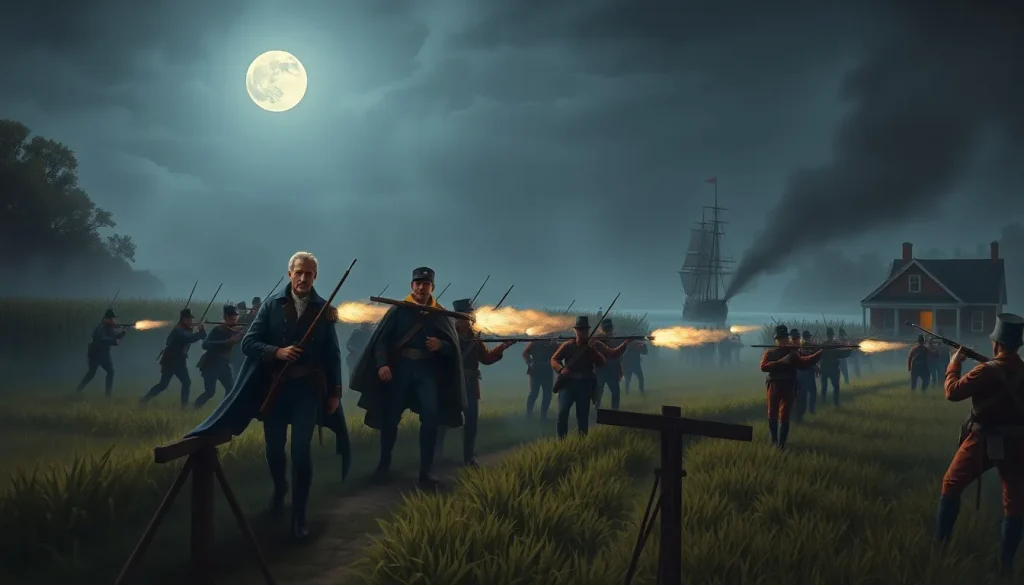
On the night of December 23, 1814, Major General Andrew Jackson launched a spoiling attack against the advanced British army near the Villeré Plantation, about nine miles below New Orleans on the east bank of the Mississippi River. The engagement, often called the Night Battle of December 23, was the first major clash in the British campaign to seize New Orleans. Jackson did not win a decisive victory that night; his forces withdrew to the Rodriguez Canal. But the attack disrupted the British advance, bought critical time to build defenses, and helped shape the more famous Battle of New Orleans on January 8, 1815. The question of why Jackson attacked is central to understanding the campaign.
Historical Context
The night attack belonged to the Gulf Coast campaign of the War of 1812. After Napoleon’s abdication in April 1814, Britain could send veteran troops and additional naval power to North America. In June 1814, Vice Admiral Alexander Cochrane proposed a campaign against New Orleans, a city whose capture would give Britain control of the lower Mississippi River, access to the interior, and a powerful bargaining position in the peace talks at Ghent. New Orleans was also an economic prize: much of the produce of the Louisiana Territory and the trans-Appalachian West passed through it, and British blockade had left valuable cotton sitting on its docks.
American defenses in the region fell largely to Major General Andrew Jackson, commander of the Seventh Military District. Jackson had campaigned against the Red Stick Creeks in 1813–1814 and had already moved to Mobile and then to New Orleans. The city was defended by a mixture of U.S. regulars, Louisiana militia, free men of color, Tennessee and Kentucky volunteers, sailors, Marines, and Baratarian privateers. On December 14, 1814, a British squadron defeated an American gunboat flotilla on Lake Borgne, opening the way for a landing. British officers then found a route through Bayou Bienvenue to the east bank of the Mississippi. By December 23, an advanced British force had reached the Villeré Plantation, within about nine miles of New Orleans and beyond the city’s prepared defenses.
What Happened
On the night of December 22–23, British troops captured a small American outpost at the mouth of Bayou Bienvenue. During the morning of December 23, the British advance under Major General John Keane occupied the Villeré Plantation. Major René Philippe Gabriel Villeré escaped and carried word to New Orleans. Jackson, then at his headquarters in the city, received the news in the early afternoon. Rather than wait for the British to consolidate or move closer, he ordered his available forces to assemble and prepare for an immediate attack.
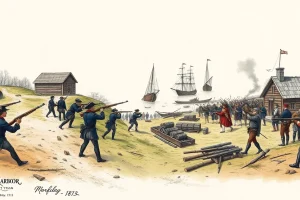
Jackson’s column moved south along the river that evening. The U.S. schooner Carolina anchored in the Mississippi and opened fire on the British camp as the signal for the advance. After about ten minutes of bombardment, American infantry attacked in the growing darkness. The fighting took place in fog, smoke, and confusion. Neither side gained a clear advantage. Jackson, unwilling to risk his force in a prolonged night action, disengaged and fell back to the Rodriguez Canal on the Chalmette Plantation. There his men began building the earthen parapet that became known as Line Jackson. The British remained near the Villeré Plantation.
Why It Matters
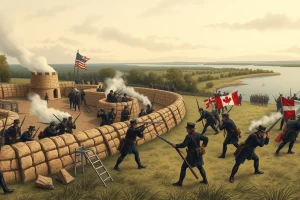
The immediate effect of the night attack was delay. The British had reached an exposed position with a small advance force, but Jackson’s assault prevented them from pushing straight into New Orleans. The British paused to bring up reinforcements, artillery, and supplies. That pause allowed Jackson to fortify the Rodriguez Canal and concentrate his diverse army. When the main British attack came on January 8, 1815, it was shattered in front of Line Jackson. The Treaty of Ghent had been signed on December 24, 1814, but news of the peace did not reach the Gulf Coast in time to affect the fighting.
The night attack also mattered for morale and memory. It gave Jackson’s raw and mixed command a sense of initiative against a veteran British army. In the longer term, the victory at New Orleans made Jackson a national hero and helped propel him to the presidency. Historians disagree about how much credit the December 23 attack deserves. Some portray it as a bold spoiling operation that saved the city from a rapid occupation. Others emphasize its risks: a night attack against disciplined British regulars could have ended in an American rout. Most agree, however, that it disrupted the British timetable and contributed to the American victory in January.
Prelude
Jackson’s decision grew from several overlapping calculations. The British advance force had endured days of exhausting work in open boats and along marshy bayous. It was tired, dispersed, and not yet entrenched. Jackson’s own troops, though still assembling, were comparatively fresh and included experienced regulars, militia, and volunteer units. A night attack offered the chance to use darkness and surprise to offset British discipline. It also promised to disrupt the British before they could bring up artillery or dig in. Finally, Jackson had to consider morale. New Orleans civilians were alarmed, and an aggressive move could reassure them that their commander intended to fight.
The operational opportunity was narrow. There were few prepared defensive works between the British camp and New Orleans. If Jackson waited, the British might enter the city or force a battle on ground of their choosing. The night attack was therefore a spoiling attack: not designed to destroy the British army, but to upset its schedule, test its strength, and buy time. Later accounts describe Jackson reacting with a dramatic exclamation that the British would not sleep on American soil. Whether or not the anecdote preserves his exact words, it reflects the urgency contemporaries attached to the moment.
Forces and Commanders
Jackson commanded the American force, which numbered roughly 2,000 men in the night action. His units included U.S. regulars, notably elements of the 7th and 44th Infantry; Tennessee volunteers under Major Generals William Carroll and John Coffee; Louisiana militia and the Orleans Battalion under Jean Baptiste Plauché; the Battalion of San Domingo Men of Color under Pierre Daquin; Baratarian volunteers associated with Jean Lafitte; and Choctaw allies. Commodore Daniel T. Patterson’s naval force provided the schooners Carolina and Louisiana and other support.
The British advance was commanded by Major General John Keane, with Vice Admiral Alexander Cochrane commanding the naval and overall expedition. Colonel William Thornton led the light brigade, which included the 85th and 95th Regiments, while Colonel Arthur Brooke commanded a second brigade with the 21st, 44th, and 93rd Regiments. The advance force in the night battle is usually estimated at roughly 1,600 to 2,000 men. Lieutenant General Sir Edward Pakenham, the overall army commander, had not yet arrived; he reached the army on Christmas Day.
Battlefield and Map Context
The action took place on the east bank of the Mississippi River, near the Villeré Plantation in what is now St. Bernard Parish, Louisiana. The British had moved through Lake Borgne and Bayou Bienvenue to reach the plantation, which lay about nine miles below New Orleans. The ground was low, marshy, and partly covered with cane and brush. Fog and smoke from black powder made visibility poor during the night fighting. After the engagement, Jackson withdrew south to the Rodriguez Canal on the Chalmette Plantation, where the main American line was later built. The modern Chalmette Battlefield preserves and interprets part of that landscape.
Battle Chronology
- December 22–23, 1814: British forces capture an American outpost at Bayou Bienvenue and advance toward the Villeré Plantation.
- Morning, December 23: British troops occupy the Villeré Plantation. Major René Villeré escapes and alerts Jackson in New Orleans.
- Afternoon, December 23: Jackson orders his available troops to assemble and prepares an immediate night attack.
- Evening, December 23: The Carolina opens fire on the British camp as the signal. American infantry advance in the darkness.
- Night, December 23: Confused fighting continues with neither side gaining a decisive advantage. Jackson disengages and withdraws to the Rodriguez Canal.
- December 24–25: Americans fortify Line Jackson. British remain near the Villeré Plantation and await reinforcements and artillery.
Casualties and Losses
Casualty figures for the night battle vary among accounts. Commonly cited estimates place American losses at about 24 killed, 115 wounded, and 74 captured. British losses are often given as about 46 killed, 167 wounded, and 64 captured. These numbers should be treated as approximate, because reports were compiled under difficult conditions and some participants were missing or unaccounted for. Both sides suffered enough losses to recognize that the engagement had been serious, but the night battle was far less costly than the January 8 assault.
Result
The December 23 night attack was tactically inconclusive. Jackson’s forces did not drive the British from the field or destroy their advance force, and the Americans ultimately withdrew. The British retained their position near the Villeré Plantation. Strategically, however, the attack was an American success. It disrupted the British advance, forced a pause, and gave Jackson time to build the defensive line that became the centerpiece of the January 8 victory. The British would not approach New Orleans again without first dealing with Line Jackson.
Strategic Consequences
The most important consequence was time. Between December 24 and January 8, Jackson’s men transformed the Rodriguez Canal into a fortified line stretching from the Mississippi River to a cypress swamp. The British, meanwhile, waited for Pakenham, artillery, and additional troops. When they finally attacked on January 8, they faced a prepared American defense. The night attack also helped establish Jackson’s reputation for aggressive action. In the broader campaign, it showed how a smaller force could use surprise and local knowledge to disrupt a larger expedition. Historians continue to debate whether Jackson’s decision was a calculated masterstroke or a gamble that could have failed disastrously.
Primary Accounts
Several contemporary accounts describe the night action. Jackson’s official correspondence in the days after the battle, now in the Andrew Jackson Papers at the Library of Congress, reports the engagement from the American command perspective. Arsène Lacarrière Latour, Jackson’s engineer and a participant, published a detailed Historical Memoir of the War in West Florida and Louisiana in 1814–15 in 1816. British reports by officers such as Keane and Cochrane provide the opposing view, though they were written to justify decisions and may minimize confusion or losses. American newspapers, including Niles’ Weekly Register, reprinted dispatches and letters, but such reports were often incomplete and shaped by patriotic expectations.
Battlefield Today
The main battlefield is preserved at Chalmette Battlefield, part of Jean Lafitte National Historical Park and Preserve in Louisiana. Visitors can see the remnant of the Rodriguez Canal, markers, monuments, and a visitor center that interprets the Battle of New Orleans and the wider campaign. The exact ground of the December 23 night attack near the Villeré Plantation is less clearly marked, and the modern landscape has changed through urban development and river management. The site remains important for understanding how the night attack set the stage for the better-known January 8 battle.
Primary Sources
Key primary sources for the night attack include Andrew Jackson’s official dispatches to the War Department, written in late December 1814 and preserved in the Andrew Jackson Papers at the Library of Congress. These letters explain Jackson’s decision to attack and his view of the results, but they are command documents intended to justify his actions. Arsène Lacarrière Latour’s Historical Memoir offers a detailed participant narrative from the American side, though Latour was loyal to Jackson and wrote partly to defend the campaign. British dispatches and letters by Vice Admiral Alexander Cochrane and Major General John Keane, along with later accounts by British officers, provide the opposing perspective but were also shaped by the need to explain a failed expedition. Newspaper reports in Niles’ Weekly Register and other papers show how the engagement was first presented to the public, but they often relied on secondhand information and were subject to exaggeration.
Further Reading
- Arsène Lacarrière Latour, Historical Memoir of the War in West Florida and Louisiana in 1814–15 (1816; modern edition, University Press of Florida, 1999).
- Robert V. Remini, The Battle of New Orleans: Andrew Jackson and America’s First Military Victory (Viking, 1999).
- Robin Reilly, The British at the Gates: The New Orleans Campaign in the War of 1812 (G. P. Putnam’s Sons, 1974).
- Wilburt S. Brown, The Amphibious Campaign for West Florida and Louisiana, 1814–1815 (University of Alabama Press, 1969).
- William C. Davis, The Pirates Laffite: The Treacherous World of the Corsairs of the Gulf (Harcourt, 2005).
- American Battlefield Trust, "Battle of New Orleans: The Last Battle of the War of 1812."
- National Park Service, "NPS Historical Handbook: Jean Lafitte."
- Jean Lafitte National Historical Park and Preserve, National Park Service.
References
- American Battlefield Trust, "Battle of New Orleans: The Last Battle of the War of 1812," https://www.battlefields.org/learn/articles/battle-new-orleans-last-battle-war-1812.
- National Park Service, "NPS Historical Handbook: Jean Lafitte," https://npshistory.com/handbooks/historical/29/hh29h.htm.
- Arsène Lacarrière Latour, Historical Memoir of the War in West Florida and Louisiana in 1814–15 (1816; modern edition, University Press of Florida, 1999).
- Robert V. Remini, The Battle of New Orleans: Andrew Jackson and America’s First Military Victory (New York: Viking, 1999).
- Robin Reilly, The British at the Gates: The New Orleans Campaign in the War of 1812 (New York: G. P. Putnam’s Sons, 1974).
- Library of Congress, Andrew Jackson Papers, https://www.loc.gov/collections/andrew-jackson-papers/.
- Jean Lafitte National Historical Park and Preserve, National Park Service, https://www.nps.gov/jela/index.htm.
FAQ
Why did Andrew Jackson launch the night attack on December 23, 1814?
He sought to disrupt the British advance before it could entrench or move on New Orleans, exploit British exhaustion and the element of surprise, and buy time to fortify the Rodriguez Canal. The attack was a spoiling operation rather than a bid for a decisive victory.
Was the night attack a success?
Tactically, it was inconclusive: Jackson withdrew, and the British held their position. Strategically, it succeeded by delaying the British, giving Jackson time to build Line Jackson, and contributing to the January 8 victory.
What were the casualties of the December 23, 1814, night attack?
Estimates vary. Commonly cited figures are about 24 Americans killed, 115 wounded, and 74 captured, against roughly 46 British killed, 167 wounded, and 64 captured. These numbers are approximate.
Did the night attack happen before the Treaty of Ghent?
Yes. The Treaty of Ghent was signed on December 24, 1814, the day after the night attack, but news of the treaty did not reach the Gulf Coast until after the January 8, 1815, battle.
Leave a Reply