
Short Answer
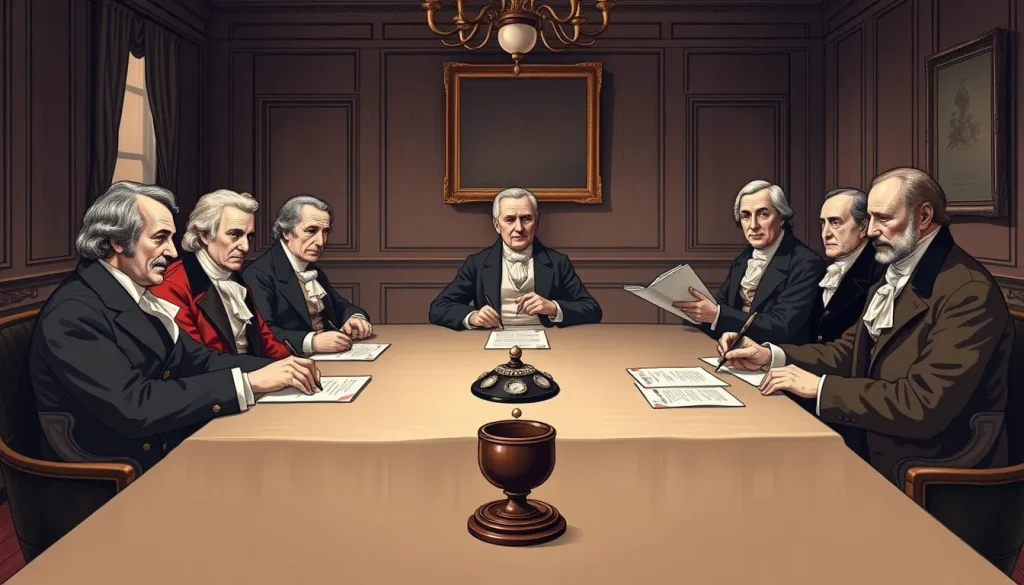
The Treaty of Peace and Amity between His Britannic Majesty and the United States, commonly known as the Treaty of Ghent, was signed on December 24, 1814, in Ghent, then in the United Kingdom of the Netherlands (now Belgium). It ended the War of 1812 between the United States and Great Britain. The treaty was negotiated by five American plenipotentiaries—John Quincy Adams, James A. Bayard, Henry Clay, Jonathan Russell, and Albert Gallatin—and three British representatives—Admiral James Gambier, Henry Goulburn, and William Adams. Their deliberations produced a peace that restored territory and relations to the status quo ante bellum, setting the stage for a lasting Anglo-American peace.
Historical Context
The War of 1812 had its roots in maritime disputes, impressment of American sailors, trade restrictions, and tensions on the North American frontier. After more than two years of conflict, by late 1814 both sides faced exhaustion. The United States had struggled to achieve its war aims, while Britain, emerging from the Napoleonic Wars, was reluctant to commit more resources to a distant North American conflict. The British blockade had damaged American commerce, and the federal government was nearly bankrupt. In Britain, the war was unpopular, and the government of Lord Liverpool faced pressure to reach peace. The Congress of Vienna, then reshaping Europe, further complicated Britain’s focus. Both sides had made tentative overtures since 1813, including Russian mediation attempts, but meaningful talks only began after direct negotiation was agreed upon.
What Happened
In 1813, President James Madison accepted an offer from Tsar Alexander I of Russia to mediate, appointing John Quincy Adams, Albert Gallatin, and James A. Bayard as commissioners. The British declined Russian mediation but later agreed to direct talks. In January 1814, the United States expanded the delegation to five by adding Henry Clay and Jonathan Russell. The British appointed Admiral James Gambier, Henry Goulburn (Under Secretary of State for War and the Colonies), and Dr. William Adams, a civilian lawyer.
The delegations met in Ghent from August 8, 1814, onward. The American commissioners were a fractious group—Adams, the polished diplomat; Clay, the Western nationalist; Gallatin, the financial expert; Bayard, a conservative Federalist; and Russell, a minor diplomat. The British team was more homogeneous but had limited authority, regularly consulting London. Initial British proposals demanded a Native American buffer state in the Northwest, an enlarged Canada, and demilitarization of the Great Lakes. The Americans rejected these terms, insisting on a return to prewar boundaries and no concessions on impressment, which had become moot as the Napoleonic Wars ended. Negotiations stalemated through the autumn, but the British, facing fiscal strain and military reversals (including the defeats at Baltimore and Plattsburgh), gradually abandoned their demands. On November 26, Britain proposed a status quo ante bellum, and after further discussion, the final treaty was drafted. It was signed on December 24, 1814.
The treaty contained eleven articles. It provided for the cessation of hostilities, restoration of all captured territories and posts (except certain disputed islands), an agreement to return prisoners of war, the establishment of commissions to settle boundary disputes, and a mutual pledge to suppress the slave trade. It made no mention of impressment or neutrality rights—the original causes of the war.
Why It Matters
The Treaty of Ghent ended the War of 1812 without territorial changes for the United States or Great Britain, but it had significant long-term effects. It initiated an era of improved Anglo-American relations, culminating in the Rush-Bagot Agreement (1817) that demilitarized the Great Lakes. For the United States, the war’s end brought a sense of independence and national identity, despite the war’s ambiguous outcome. For Canadian and Indigenous peoples, the treaty’s restoration of prewar boundaries offered no protections against American expansion, leading to continued encroachment on Indigenous lands. The treaty also set a precedent for peaceful arbitration of international disputes through commissions. Historians have debated whether the war was a “second American Revolution” or a failed attempt to secure maritime rights; the treaty is often seen as a diplomatic victory for the United States because it achieved peace without losing territory.
Definition
The Treaty of Ghent is a peace treaty signed on December 24, 1814, that formally ended the War of 1812 between the United States and Great Britain. Its negotiators were the plenipotentiaries appointed by each side: for the United States, John Quincy Adams, James A. Bayard, Henry Clay, Jonathan Russell, and Albert Gallatin; for Great Britain, Admiral James Gambier, Henry Goulburn, and William Adams. The treaty restored relations to the status quo ante bellum and established a framework for resolving future disputes.
Background
The peace process began as early as 1812, when Tsar Alexander I of Russia offered to mediate. The United States accepted, while Britain initially rejected the offer. In 1813, the U.S. appointed a delegation; Britain later agreed to direct negotiations. The choice of Ghent—a neutral location in the Netherlands—was agreed upon in early 1814. Both sides were motivated by war-weariness and the changing European situation. Impressment, a key American war aim, lost relevance as the Napoleonic War ended, while Britain’s military successes and failures in North America shaped its demands.
How It Worked
The negotiators held full powers, meaning they could negotiate and sign without immediate ratification, but they often corresponded with their governments. The American commissioners met almost daily, engaging in heated debates. Henry Clay, representing the West, insisted on securing Canadian territory or rights for the frontier; Adams prioritized commercial and maritime issues; Gallatin served as a mediator, while Bayard and Russell added regional and political perspectives. The British commissioners—Gambier, Goulburn, and Adams—were a team of military, administrative, and legal expertise, but they lacked diplomatic experience and relied on instructions from London. Negotiations proceeded through formal notes and informal meetings. The Americans presented counterproposals and used delaying tactics to strengthen their position, while the British, worried about the costs of continued war, gradually softened their demands.
Competing Viewpoints
British negotiators initially sought to redraw frontiers in Canada’s favor, create an Indigenous buffer state in the Northwest, and secure permanent British maritime rights, including impressment. They also pushed for demilitarization of the Great Lakes. The Americans, led by the firmness of Adams and Gallatin, rejected these proposals as unacceptable, asserting that the United States would continue fighting rather than lose territory or independence. The British demands were also opposed by the American public, and President Madison’s release of British proposals in October 1814 hardened American opinion. As the British faced financial troubles and military setbacks, they conceded most points. The final treaty was largely a British retreat from their maximalist position, though it did not address impressment or neutrality rights. From the American side, there were internal disagreements—Clay often demanded more aggressive terms, while Adams and Gallatin favored a more pragmatic approach.
Role in the War of 1812
The negotiation process was directly tied to the military events of the war. Britain’s setbacks—such as the failed attack on Baltimore and the defeat at Plattsburgh—weakened its bargaining position. The American victories at Chippewa and Lundy’s Lane had also stabilized the Niagara frontier. The treaty’s signing did not immediately end hostilities, as news traveled slowly. The Battle of New Orleans on January 8, 1815, occurred after the treaty was signed but before it was ratified by the U.S. Senate, leading to a famous American victory that later came to be seen as the war’s conclusion. The treaty’s ratifications were exchanged on February 17, 1815, officially terminating the war.
Consequences and Historical Interpretation
The Treaty of Ghent had immediate and lasting consequences. It restored the status quo antem, with no gain or loss of territory for either the United States or British North America. It also established commissions to arbitrate boundary disputes, which would settle the Maine–New Brunswick border and the Great Lakes boundaries. The treaty’s failure to address impressment and maritime rights meant that these issues were left to later diplomacy. For Indigenous peoples, the treaty ignored their interests; the British promise to restore their pre-war situation did not prevent continued American expansion. Historians have interpreted the treaty in various ways: some see it as a pragmatic agreement that avoided future conflict, while others argue it represented a failure for both sides. Many American scholars emphasize the war’s role in fostering national unity, while Canadian historians note the defense of colonial territory. The treaty is nonetheless a landmark in Anglo-American relations, paving the way for the “special relationship.”
Primary Sources
The primary source for the Treaty of Ghent is the treaty document itself, available at the U.S. National Archives and via the Avalon Project (avalon.law.yale.edu). The full transcription includes the list of negotiators and the eleven articles. Additional primary sources include the diplomatic correspondence between the negotiators and their governments, published in collections such as the American State Papers and British and Foreign State Papers. The memoirs of John Quincy Adams (including his diary) and Henry Clay provide personal insights into the negotiations. These sources are invaluable for understanding the negotiation process, but they are biased by the authors’ perspectives and incomplete coverage of British decision-making.
Further Reading
- Hickey, Donald R. The War of 1812: A Forgotten Conflict. University of Illinois Press, 1989.
- Stagg, J.C.A. The War of 1812: Conflict for a Continent. Cambridge University Press, 2012.
- Black, Jeremy. The War of 1812 in the Age of Napoleon. University of Oklahoma Press, 2009.
- The National Archives. “Treaty of Ghent (1814).” Available at archives.gov.
- American Battlefield Trust. “The Treaty of Ghent: Ending the War of 1812.” Available at battlefields.org.
References
- National Archives. “Treaty of Ghent (1814).” https://www.archives.gov/milestone-documents/treaty-of-ghent.
- U.S. Senate. “Transcript: Treaty of Ghent.” https://www.senate.gov/about/powers-procedures/treaties/treaty-of-ghent/transcript-treaty-of-ghent.htm.
- Avalon Project. “British-American Diplomacy: Treaty of Ghent; 1814.” https://avalon.law.yale.edu/19th_century/ghent.asp.
- American Battlefield Trust. “The Treaty of Ghent: Ending the War of 1812.” https://www.battlefields.org/learn/articles/treaty-ghent-ending-war-1812.
- Lossing, Benson. Harper’s Encyclopedia of United States History. Perseus Digital Library. https://www.perseus.tufts.edu/hopper/text?doc=Perseus%3Atext%3A2001.05.0132.
FAQ
Who were the American negotiators at Ghent?
The American commission consisted of John Quincy Adams, James A. Bayard, Henry Clay, Jonathan Russell, and Albert Gallatin.
Who were the British negotiators at Ghent?
The British team was led by Admiral James Gambier, with Henry Goulburn and Dr. William Adams as his colleagues.
What did the Treaty of Ghent accomplish?
It ended the War of 1812, restored prewar borders, and established commissions to settle boundary disputes, but it did not address impressment or maritime rights.



Leave a Reply