
Short Answer
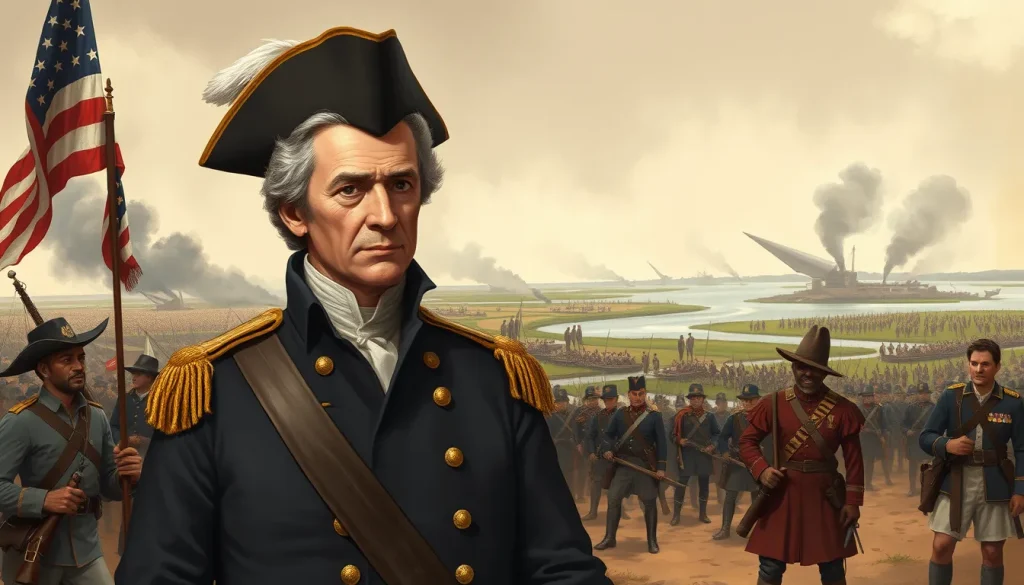
Andrew Jackson’s rise after the War of 1812 is a story of military success, calculated image-making, and the emergence of a new political style. His command at the Battle of New Orleans on January 8, 1815, made him a household name, and his earlier actions in the Creek War (1813–1814) demonstrated the ruthless determination that would later define his presidency. This article examines how Jackson’s wartime exploits, combined with a deliberate public relations campaign, transformed him from a frontier militia officer into a national hero and ultimately the seventh president of the United States.
Historical Context
The War of 1812 was a struggle between the United States and Great Britain over maritime rights, territorial expansion, and national honor. By 1814, the conflict had gone poorly for the Americans: the British had burned Washington, D.C., in August, and American forces had suffered a series of defeats along the Canadian frontier and in the Chesapeake. In the Gulf Coast theater, British planners threatened New Orleans, a vital port at the mouth of the Mississippi River. Into this fraught picture stepped Andrew Jackson, already a controversial figure in Tennessee politics and militia service, but little known to most Americans. The war’s desperate circumstances created an opportunity for a decisive leader to stand out, and Jackson seized it.
What Happened
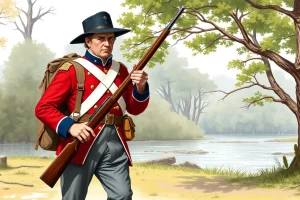
Jackson’s military career during the war began with a controversial march to Natchez in 1812–1813, when he was ordered by the War Department to lead Tennessee militia to support American forces in the South. When the order was rescinded, Jackson defied it and marched his men home, earning the nickname “Old Hickory” from his soldiers. In March 1814, he defeated the Creek Nation at the Battle of Horseshoe Bend in present-day Alabama, culminating the Creek War and breaking the power of the Creek Confederacy. That victory led to Jackson’s commission as a major general in the U.S. Army and command of the Gulf Coast.
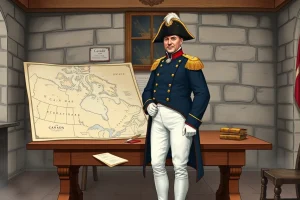
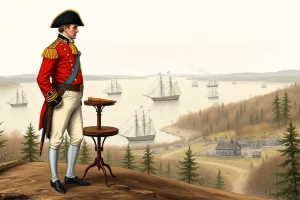
In late 1814, Jackson hurried to New Orleans, a city of mixed loyalties, and organized a defensive line along the Chalmette plantation, five miles downriver. His force included Tennessee and Kentucky militia, regular infantry, artillery, free men of color, Choctaw warriors, and even the buccaneers Jean and Pierre Laffite. On December 23, 1814, Jackson launched a surprise attack against a British advance force, buying time to strengthen his fortifications. The main British assault came on January 8, 1815, and was repelled with heavy British losses—more than 2,000 casualties—while American losses numbered only a few dozen. The battle became an iconic American victory, though it occurred after the signing of the Treaty of Ghent on December 24, 1814, which both sides had yet to ratify.
In the months after the battle, Jackson’s imposition of martial law and his clashes with civil authorities, including the imprisonment of Judge Dominic Hall, created controversy. Nevertheless, news of the victory spread as the war ended, and Jackson returned to Nashville as a national hero. His subsequent brief service as military governor of Florida (1821) and his election to the U.S. Senate (1823) kept him in the public eye, while a network of supporters, led by John Overton and John Eaton, orchestrated a publicity campaign that cast Jackson as a self-made frontiersman and the natural heir of George Washington.
Why It Matters
Jackson’s rise fundamentally changed American politics. His wartime heroism and anti-establishment appeal created the first truly successful “outsider” presidential candidacy. The 1824 election, in which Jackson won a plurality of the popular and electoral votes but lost the presidency to John Quincy Adams—after a so-called “corrupt bargain” in the House—galvanized his supporters and fed a narrative of injustice. By 1828, Jackson defeated Adams in a landslide, marking a turning point toward a more democratic, mass-based political culture known as Jacksonian Democracy. The Battle of New Orleans, and Jackson’s role in it, became a touchstone of American memory, shaping how the war itself was remembered and celebrating a new generation of leadership.
Early Life
Andrew Jackson was born in the Waxhaws region on the border of North and South Carolina in 1767. His father died before his birth, and his mother and two brothers died during the Revolutionary War, leaving him orphaned at fourteen. Jackson read law in North Carolina and moved to Nashville in 1788, where he established a legal practice, speculated in land, and married Rachel Donelson Robards in 1791 after divorcing her first husband. He served as a delegate to the Tennessee constitutional convention, a U.S. representative, a U.S. senator, and a judge of the Tennessee Superior Court before his election as major general of the Tennessee militia in 1802.
Role Before the War
Before the War of 1812, Jackson was a prominent but contentious figure in Tennessee politics. He engaged in several duels, including one in which he killed Charles Dickinson in 1806, and he brawled with the Benton brothers in 1813. His political affiliations were tied to the Blount-Overton faction, and he was an advocate for western expansion. Jackson had no combat experience prior to the war, but his militia command and his willingness to enforce discipline made him a formidable leader.
Role During the War
Jackson’s first major wartime assignment was leading Tennessee militia to Natchez in 1812, but when the Secretary of War ordered him to disband his troops without pay, he refused, marching them home and gaining loyalty. In 1813, he commanded operations against the Creek Nation in Alabama, culminating in the brutal Battle of Horseshoe Bend. His decisive victory broke the Creek resistance and opened the Southeast to American expansion. Jackson then took command of the Gulf Coast, preparing defenses in Mobile and New Orleans. His ability to integrate diverse forces—including free blacks, Native Americans, and frontiersmen—was critical to his success.
Major Actions
The two actions that most defined Jackson’s rise were the Battle of Horseshoe Bend (March 27, 1814) and the Battle of New Orleans (January 8, 1815). At Horseshoe Bend, Jackson’s forces killed an estimated 800 Creek warriors, effectively ending the Creek War and forcing the Treaty of Fort Jackson, which ceded 23 million acres of Creek land to the United States. At New Orleans, Jackson’s fortifications and decisive fire repulsed a veteran British army under Major General Edward Pakenham, inflicting about 2,000 casualties while suffering only thirteen American dead. The victory was the first decisive American battlefield success of the war and saved the city from British occupation.
Contemporary Accounts
Contemporary Americans quickly embraced Jackson as a hero. Newspapers from across the country printed celebratory editorials and resolutions. John Eaton, a Nashville lawyer, published a biography of Jackson in 1817 that emphasized his frontier authenticity and military prowess. In the early 1820s, Eaton wrote a series of anonymous letters, the “Letters of Wyoming,” that compared Jackson to George Washington and positioned him as the only candidate capable of purging corruption from Washington, D.C. John Overton, Jackson’s longtime friend, organized a network of supporters and used the popular enthusiasm to craft a presidential campaign. Ordinary citizens gathered at crossroads and town squares, discussing Jackson as if he were a neighbor. Not all accounts were favorable; critics cited his temper, his disregard for civil liberties, and his lack of political experience, but such criticisms were often dismissed as elitist attacks on a man of the people.
Later Life
After the war, Jackson served as military governor of Florida (1821) and then as a U.S. senator (1823–1825). He ran for president in 1824 and, despite winning the popular vote and the most electoral votes, lost the contingent election in the House of Representatives to John Quincy Adams. This defeat only intensified his political movement. In 1828, Jackson defeated Adams in a landslide, becoming the seventh president of the United States. His presidency was marked by the Indian Removal Act of 1830, the nullification crisis, the Bank War, and the establishment of the spoils system. He served two terms, from 1829 to 1837, and retired to his plantation, the Hermitage, where he died in 1845.
Historical Legacy
Jackson’s rise after the War of 1812 transformed American politics by institutionalizing a populist style that celebrated the common man against an elite establishment. He is remembered as the founder of Jacksonian Democracy, which expanded suffrage to white male non-landowners and shifted political power to the western and southern states. Yet his legacy is deeply contested because his policies caused the forced removal of tens of thousands of Native Americans, and he defended the institution of slavery. His wartime reputation remained a powerful symbol of American nationalism, and the Battle of New Orleans was enshrined as a mythic victory, even though the war had ended before the battle occurred.
Primary Sources
The most relevant primary sources for understanding Jackson’s rise include: (1) John Eaton’s 1817 biography, The Life of Andrew Jackson, which shaped the public image of Jackson as a frontier hero; (2) Eaton’s anonymous “Letters of Wyoming,” published in newspapers in 1823–24, which argued for Jackson’s presidential candidacy; (3) Jackson’s own letters and military correspondence, collected in The Papers of Andrew Jackson, now housed at the University of Tennessee Press; and (4) contemporary newspaper articles and official military reports concerning the Battles of Horseshoe Bend and New Orleans. These sources convey the enthusiasm of Jackson’s supporters, but they also contain deliberate propaganda and should be read critically.
Further Reading
Heidler, David S., and Jeanne T. Heidler. The Rise of Andrew Jackson: Myth, Manipulation, and the Making of Modern Politics. New York: Basic Books, 2018.
Remini, Robert V. Andrew Jackson and the Course of American Empire, 1767–1821. New York: Harper & Row, 1977.
Ward, John William. Andrew Jackson, Symbol for an Age. New York: Oxford University Press, 1955.
References
- The Public Relations Strategy That Made Andrew Jackson President. What It Means to Be American, Smithsonian Institution. https://whatitmeanstobeamerican.org/ideas/the-public-relations-strategy-that-made-andrew-jackson-president/
- Moser, Harold D. “Jackson, Andrew.” Tennessee Encyclopedia. Tennessee Historical Society. https://tennesseeencyclopedia.net/entries/andrew-jackson/
- Heidler, David S., and Jeanne T. Heidler. The Rise of Andrew Jackson. Basic Books, 2018. https://www.hachettebookgroup.com/titles/david-s-heidler/the-rise-of-andrew-jackson/9780465097562/
- Roos, Dave. “How Andrew Jackson Rode a Populist Wave to Become America’s First ‘Outsider’ President.” History.com. August 9, 2019. https://www.history.com/articles/andrew-jackson-populism
- Chick, Sean Michael. “Andrew Jackson: Old Hickory – Adored and Despised.” American Battlefield Trust. October 22, 2018. https://www.battlefields.org/learn/articles/andrew-jackson-old-hickory-adored-and-despised
FAQ
How did the War of 1812 make Andrew Jackson famous?
Jackson's decisive victories in the Creek War at Horseshoe Bend and especially at the Battle of New Orleans in January 1815 provided the first major American battlefield successes of the war, elevating him to national prominence.
Did the Battle of New Orleans matter even though the war was already over?
Yes, but only in symbolism. The Treaty of Ghent had been signed on December 24, 1814, but news had not reached the armies. The American victory at New Orleans fostered a sense of national pride and made the war's end seem triumphant, despite the treaty's stalemate.
What was the role of John Eaton in Jackson's rise?
John Eaton, a Nashville lawyer and later Secretary of War, wrote Jackson's first flattering biography in 1817 and authored the anonymous 'Letters of Wyoming' in 1823–24, which argued that Jackson was the only true patriot fit for the presidency.
Why was Jackson seen as an 'outsider' candidate?
Jackson did not come from the eastern elite, was a self-made frontiersman, had little formal education, and lived in Tennessee. His supporters portrayed him as a man of the people who would clear out corruption in Washington.
Leave a Reply