Treaty of Ghent Ratification Explained

The Treaty of Ghent, signed on December 24, 1814, ended the War of 1812 only after both governments ratified it. The British ratified on December 27, 1814, and the U.S. Senate unanimously approved it on February 16, 1815, with exchange of ratifications the next day officially concluding the war.
Read More →

Battle of Baltimore (1814)

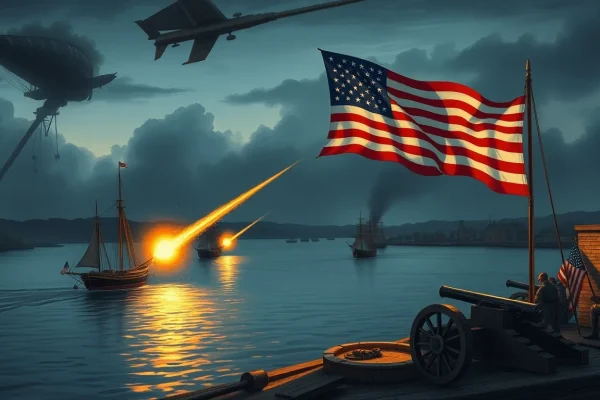
The Battle of Baltimore, fought September 12–14, 1814, was a combined British land and naval attack on Baltimore, Maryland, during the War of 1812. After burning Washington, D.C., British forces failed to seize Baltimore because American defenders held at North Point and Fort McHenry. The battle inspired Francis Scott Key to write ‘The Star-Spangled Banner.’

Read More →

Women During the War of 1812

Women played essential and varied roles during the War of 1812, managing farms and businesses, serving as nurses and spies, and defending their homes. Their contributions, often obscured by contemporary gender ideals, were crucial to both American and Canadian war efforts and shaped postwar society.

Read More →

Treaty of Fort Jackson Explained

The Treaty of Fort Jackson, signed on August 9, 1814, ended the Creek War and forced the Creek Nation to cede over 21 million acres to the United States. It was a turning point in the War of 1812 era, reshaping the American Southeast and escalating Indigenous dispossession.

Read More →

What Caused the War of 1812? Maritime Rights, Impressment, and the Road to June 1812

The War of 1812 grew out of Britain’s maritime struggle with Napoleonic France, which produced trade restrictions and the impressment of American sailors that the United States judged intolerable. Frontier violence involving British-allied Indigenous nations and the ambitions of congressional War Hawks added land and honor to the maritime grievances. Congress declared war on June 18, 1812, by the narrowest margin of any formally declared war in American history.

Read More →

The War of 1812 and Canada: Invasions, Defence, and Memory

The War of 1812 was fought largely on Canadian ground: the British provinces of Upper and Lower Canada were the main targets of American land offensives between 1812 and 1814. British regulars, Canadian militia and fencibles, provincial naval forces, and Indigenous allies repelled the invasions. The Treaty of Ghent left borders unchanged, and the successful defence of Canada became a cornerstone of English-Canadian historical memory.

Read More →