
Short Answer
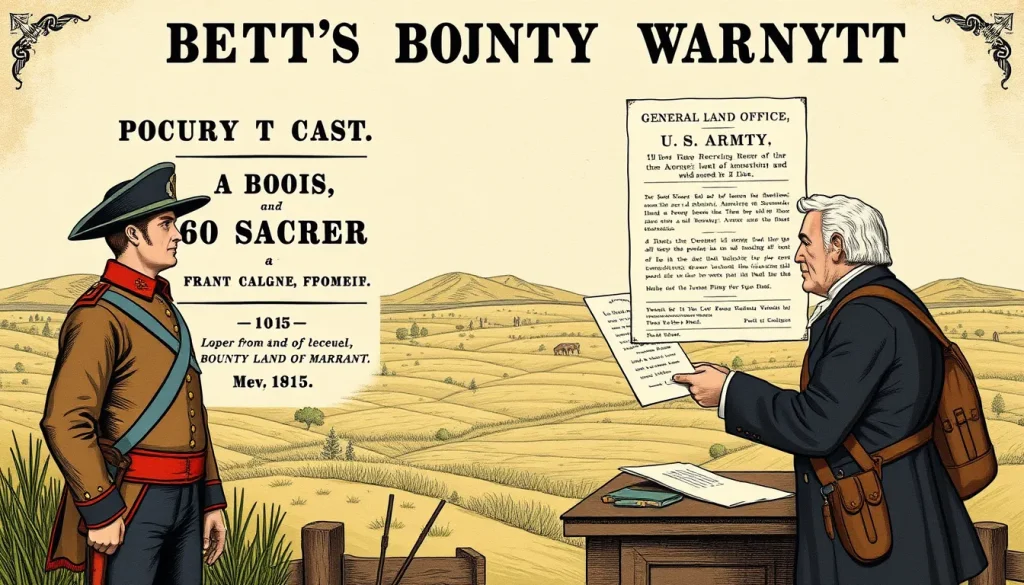
Army bounties during the War of 1812 were cash payments and land grants offered by the United States to encourage voluntary enlistment in the regular army and volunteer regiments. Congress authorized bounty land warrants—certificates that entitled veterans to free public land—as an incentive for service, beginning with acts in 1811 and 1812 and expanding with a “double bounty” in 1814. These bounties played a significant role in filling the ranks during a war fought against Great Britain, and they had long-lasting consequences for American land policy and for Native nations whose territories were reserved for those grants.
Historical Context
The United States entered the War of 1812 with a small regular army of about 10,000 men, many of them new recruits. Congress declared war on Great Britain on June 18, 1812, but the army had been authorized to expand even before that, and recruitment lagged. The republic had limited financial resources and relied on public land as a valuable asset. Since the Revolutionary War, the federal government had used land bounties to reward soldiers and attract enlistments, and the practice was well established by 1812. The Northwest Territory and other public lands had been surveyed and set aside for such purposes, and veterans of the Revolution had claimed hundreds of thousands of acres. The War of 1812 presented a renewed need for troops, and Congress turned to the same mechanism—offering land as a supplement to cash pay and bonuses.
What Happened
Congress passed several acts providing bounty land warrants to War of 1812 soldiers. The act of December 24, 1811 (2 Stat. 669) and the act of January 11, 1812 (2 Stat. 672) authorized 160 acres of public land to noncommissioned officers and soldiers who served for five years or were honorably discharged earlier. A subsequent act of May 6, 1812 (2 Stat. 729) set aside six million acres—two million each in the Territories of Michigan, Illinois, and Louisiana (present-day Arkansas)—for this purpose. Under these acts, a veteran received a certificate (a warrant) that could be used to claim a specific parcel of land from the General Land Office, though the warrant itself was not delivered directly to the soldier; instead, the soldier received a notification that a warrant had been issued in his name. The warrants were non-transferable except by inheritance, a unique feature among U.S. military bounty land warrants.
As enlistments continued to lag, Congress increased the incentive. The act of December 10, 1814 (3 Stat. 147) doubled the acreage to 320 acres for soldiers enlisting after that date, and also increased the cash bounty. According to historian Donald R. Hickey, the initial package was $31 and 160 acres, which later rose to $124 and 320 acres, a “princely sum” that surpassed civilian wages. Because of unfavorable surveyor reports about land in Michigan, Congress passed an act in 1816 (3 Stat. 332) authorizing an additional 1.5 million acres in Illinois and 500,000 acres in Missouri to be distributed in lieu of Michigan land. The restriction that warrants could only locate within the designated reservations was removed in 1842 (5 Stat. 497), allowing veterans to use warrants on any public land open to private entry. The prohibition on assignment (transfer) of warrants was lifted only in 1852 (10 Stat. 3).
Warrants were issued between 1815 and 1858 under the 1812 act, and between 1815 and 1839 under the 1814 act. The National Archives microfilm publication M848 reproduces these warrants, along with indexes. Later acts in the 1850s broadened eligibility. The act of 1855 awarded 160 acres to any veteran (or heirs) of any war since 1790 who had served at least 14 days or participated in a battle, regardless of rank. Over 500,000 warrants covering more than 61 million acres were ultimately issued under all bounty land laws between 1776 and 1855.
Why It Matters
The bounty system directly influenced recruitment during the War of 1812. The high cash and land incentives helped persuade volunteers to join the regular army, although the army remained ineffective until the war’s final year. The bounties also created a paperwork and administrative burden, and pay and warrant distribution often lagged behind enlistment. The long-term consequences included the rapid distribution of western lands, the growth of speculation, and the displacement of Native American nations, who were forced to cede lands that were then reserved for bounty grants. Historians view the bounty system as a key early example of using public land to finance military policy, setting a precedent for later conflicts such as the Mexican War. The records created by the bounty system are now invaluable for genealogists and historians studying the soldiers and their families.
Definition
In the context of the War of 1812, “army bounties” referred to the cash payments and land grants (bounty land warrants) that the U.S. Congress authorized to encourage enlistment in the regular army. A bounty land warrant was a certificate entitling a veteran to a specified number of acres of public land, which could be located (claimed) at a General Land Office. The cash bounty was paid at enlistment or after, while the land warrant was issued after the soldier completed his term of service or was discharged.
Background
The practice of granting public land to soldiers originated during the American Revolution, when the Continental Congress awarded varying amounts of land based on rank. After independence, the federal government continued to use land bounties as a cost-effective way to build armies without immediate cash outlay. By 1812, the public domain included lands in Ohio, Indiana, Illinois, Michigan, and the Louisiana Purchase, and Congress was willing to reserve portions of these territories for military service incentives. The bounty acts of 1811–1812 were modeled on earlier legislation and were intended to attract men to serve for five years, a longer term than typical militia duty.
How It Worked
Under the acts of 1811 and 1812, eligible noncommissioned officers and soldiers could receive 160 acres after serving five years (or being discharged earlier due to disability or other reasons). The soldier’s name, rank, company, and regiment were recorded on the warrant. The warrant itself was not handed to the soldier; instead, the General Land Office retained it, and the soldier received a notification that a warrant had been issued in his name. To obtain land, the veteran had to select a specific parcel within the designated military districts (Michigan, Illinois, or Louisiana/Arkansas) and have it surveyed. The process was cumbersome, and many veterans never took possession of land. Instead, they often sold their rights, even though early warrants were non-transferable except by inheritance. After 1842, veterans could locate warrants on any public land, and after 1852 warrants could be assigned to others, leading to widespread speculation. The cash bounty, meanwhile, was paid directly to the enlistee, and was increased over time.
Competing Viewpoints
Historians and contemporaries debated the effectiveness and fairness of the bounty system. Some argued that the high bounties were necessary to fill enlistment quotas and that they represented a just compensation for the dangers of military service. Others criticized them for attracting poor and desperate men who would not otherwise serve, and for rewarding speculators who bought up warrants at a discount. Native American leaders and their allies saw the reservation of six million acres for white veterans as yet another land grab, contributing to Indigenous displacement. Later historians have also noted that the system was administratively flawed, with delays in pay and warrant distribution that undermined morale. The act of 1855, which extended generous terms to all surviving veterans, was passed partly out of political pressure from aging veterans and their families, highlighting the ongoing importance of the bounty issue.
Role in the War of 1812
Army bounties directly addressed the manpower needs of the U.S. Army during the War of 1812. The initial 160-acre land grant plus cash bonus helped raise the regular army from about 10,000 to an authorized strength of 36,700 by mid-1812, and later to over 50,000 after the 1814 expansion. The increase to 320 acres and a higher cash payout in late 1814 came at a time when the war effort was faltering and recruiters needed extra inducements. The bounties also applied to volunteer regiments and militia units that were called into federal service, though the terms varied. The promise of land, combined with the patriotic fervor of the time, encouraged thousands of men to enlist. However, the system was plagued by delays and corruption, and many soldiers did not receive their warrants until years after their service. Nevertheless, the bounties remained in force throughout the war and were a central part of military recruitment.
Consequences and Historical Interpretation
The bounty system of the War of 1812 set a precedent for later military land grants, notably during the Mexican War and, indirectly, the Homestead Act of 1862. It contributed to the rapid settlement of the Midwest and the displacement of Native American tribes, who were often forced to cede lands that were then distributed to veterans. The system also fostered the growth of land speculation and a market in bounty land warrants, especially after assignment was legalized in 1852. Historians have interpreted the bounties as a clear example of how the early republic used its public lands to achieve policy goals—in this case, military recruitment—without burdening the federal budget with large cash expenditures. They have also noted the social and economic inequalities involved, as many veterans sold their warrants cheaply to speculators. The records of the bounty system have become essential for researchers studying the demographics, migration, and economic status of War of 1812 veterans.
Primary Sources
The most direct primary sources are the bounty land warrants themselves and the associated application files. The National Archives’ microfilm publication M848, War of 1812 Military Bounty Land Warrants, 1815–1858, reproduces the warrants, stubs, and indexes. These records include the veteran’s name, rank, unit, and warrant number. The NARA guide Bounty-Land Warrants for Military Service, 1775–1855 describes the records and their location. The discharge certificates for regular army soldiers (M1856) provide evidence of service that was often used to support bounty claims. Additionally, the U.S. Department of Veterans Affairs history page offers a sample warrant and explains the process. The statutes of the United States (acts of 1811, 1812, 1814, 1816, 1842, 1852, and 1855) are available in print and online. These documents reveal the government’s intent and the changes in policy over time. It is important to note that the records are not complete—some warrants were detached from the bound volumes and are now in separate notification series, and some later warrants are missing. Researchers should also consult the index to War of 1812 pension files, which often includes bounty land information.
Further Reading
- Hickey, Donald R. The War of 1812: A Forgotten Conflict. Urbana: University of Illinois Press, 1989.
- Oberly, James W. Sixty Million Acres: American Veterans and the Public Lands before the Civil War. Kent, Ohio: Kent State University Press, 1990.
- Smith, Clifford Neal. Federal Land Series: A Calendar of Archival Materials on the Land Patents Issued by the United States Government. Chicago: American Library Association, 1972.
- White, Virgil D. Index to War of 1812 Pension Files. 3 vols. Waynesboro, TN: National Historical Publishing Co., 1992.
- National Archives and Records Administration. War of 1812 Military Bounty Land Warrants, 1815–1858, Microfilm M848, and Discharge Certificates and Miscellaneous Records Relating to the Discharge of Soldiers from the Regular Army, 1792–1815, Microfilm M1856.
References
- National Archives and Records Administration. War of 1812 Military Bounty Land Warrants, 1815–1858. Microfilm publication M848. https://www.archives.gov/files/research/military/army/dc/m848.pdf
- National Archives and Records Administration. Bounty-Land Warrants for Military Service, 1775–1855. https://www.archives.gov/research/military/bounty-land-1775-1855.pdf
- Seiken, Jeffrey. “Object 2: Bounty Land Warrant.” U.S. Department of Veterans Affairs History Office. https://department.va.gov/history/object-2-bounty-land-warrant/
- National Archives and Records Administration. War of 1812 Discharge Certificates. https://www.archives.gov/research/military/war-of-1812/1812-discharge-certificates/discharge-certificates.html
- Midwest Genealogy Center. “Pathfinder for Military Bounty Land and Pensions.” https://www.mymcpl.org/sites/default/files/MGC-war1812pathfinder.pdf
FAQ
Who was eligible for a War of 1812 army bounty?
Noncommissioned officers and soldiers (not officers) who served in the regular army for five years or were honorably discharged earlier were eligible for 160 acres under the acts of 1811–1812. The 1814 act expanded the grant to 320 acres for those enlisting after that date. Later acts in the 1850s extended eligibility to all veterans of any war.
How did a veteran claim his bounty land?
A veteran had to apply for a warrant through the War Department or Pension Office. The warrant was retained by the General Land Office, and the veteran received a notification. He then selected a surveyed parcel within the designated military district (or after 1842, any public land) and requested a patent.
Did most soldiers actually settle on their bounty land?
No. Many veterans sold their warrants (especially after 1852 when assignment was legalized) at a discount to land speculators. Only a minority took direct possession. The records show extensive warrant trading, and the sale of warrants was a profitable enterprise.





Leave a Reply