
Short Answer
War of 1812 genealogy is the systematic pursuit of family history through records generated by the conflict that lasted from June 1812 to February 1815. These records—service files, pension applications, bounty land warrants, and naval muster rolls—are invaluable because they preserve personal details about soldiers, sailors, marines, and their families that are rare in other documents of the early American republic. This guide provides a step-by-step research method for locating and interpreting these records across American, British, and Canadian archives.
Historical Context
The War of 1812 engaged the United States against Great Britain, with significant participation by Indigenous nations and inhabitants of British North America (present-day Canada). Over 450,000 volunteers served in American state militias and the Regular Army, while thousands served in British and Canadian regiments, provincial marine forces, and Indigenous contingents. Governments generated extensive paperwork: muster rolls, pay lists, orderly books, and hospital returns. Following the war, the U.S. Congress authorized pensions and bounty land grants as inducements for service, creating a new wave of applications filled with family information. These administrative records were later consolidated into compiled military service records (CMSRs) and pension files, forming the backbone of genealogical research.
What Happened
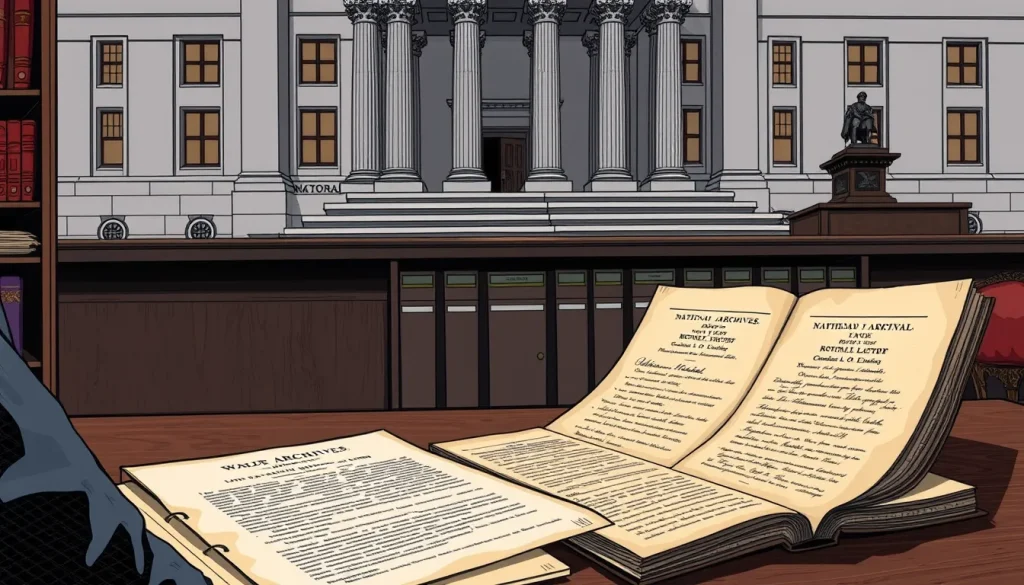
The U.S. War Department began compiling service records for volunteer soldiers in the 1890s, creating CMSRs that summarize service from muster rolls and paylists. Concurrently, the Pension Office processed thousands of applications from veterans and widows, with the most significant waves occurring after the Acts of 1871 and 1878 that granted federal pensions. Meanwhile, British and Canadian forces maintained regimental records, including muster books and pay lists now held at The National Archives (UK) and Library and Archives Canada. Modern digitization projects have made many of these records accessible online: FamilySearch hosts microfilm copies of U.S. CMSR indexes, Fold3 has digitized more than 7.2 million pension files, and Ancestry provides searchable databases for British and Canadian service records. The National Archives and Records Administration (NARA) in Washington, D.C., remains the primary repository for U.S. federal records, with microfilm and original documents available for research.
Why It Matters
Genealogical research on the War of 1812 is more than a personal quest; it illuminates the social history of a formative period for North America. The records reveal age distributions, geographic origins, enlistment patterns, and the daily lives of soldiers and sailors. They also document the experiences of African Americans, both enslaved and free, who served in various capacities, and Indigenous participants whose service is often under-recorded. For historians, these records provide quantitative data on military mobilization and the impact of the war on ordinary people. For families, they preserve ancestral stories and confirm relationships across generations.
Definition
War of 1812 genealogy research is the identification and analysis of primary records created during or after the conflict to establish family relationships and military service. It focuses on federal and provincial documents such as compiled military service records, pension files, bounty land warrant applications, muster rolls, naval ships’ rosters, and prisoner-of-war lists. The research process usually begins with a name and a set of dates, then moves from index to full record, and finally to supplementary sources like census records and local histories.
Background
The groundwork for genealogical research lies in the administrative practices of the era. Both the U.S. War Department and the British War Office maintained detailed records of soldiers’ names, units, enlistment dates, and sometimes physical descriptions. The U.S. federal government created bounty land warrants starting in 1812 to encourage enlistment, and later pensions became a major source of life-course data. In the late nineteenth century, as veterans aged, the U.S. government compiled CMSRs from original documents to facilitate claims. The preservation and eventual digitization of these records owe much to the efforts of the Federation of Genealogical Societies, which partnered with NARA and Fold3 to digitize pension files. In Canada, Library and Archives Canada holds the records of British regiments and provincial forces, including Upper Canada returns and payrolls.
How It Worked
The research process typically follows a sequence. For American volunteer soldiers, start with the Index to Compiled Service Records of Volunteer Soldiers (NARA Microfilm M602), available on FamilySearch, Fold3, and Ancestry. The index gives a name, rank, and unit. Then request the CMSR itself from NARA using NATF Form 86, or check if the unit is among those digitized in the National Archives Catalog. Pension files are often more informative: search the index on Fold3 or at NARA; most pension files are online. For bounty land, search the General Land Office (GLO) Records website to identify patentee and warrant numbers, then order the related file from NARA. For British and Canadian servicemen, examine the muster books and pay lists at Library and Archives Canada (RG 9) or The National Archives (UK) (WO 12, WO 17). Use online databases such as Ancestry’s Canada Muster Rolls and UK collections. Always be aware that names may be misspelled and that service may be recorded under alternative spellings or nicknames.
Competing Viewpoints
There is debate about the completeness and reliability of War of 1812 records. Some argue that CMSRs, being compiled decades after service, are prone to errors and omissions, especially for short-service militiamen. Others point out that pension applications, while rich in family details, may contain exaggerations or fraudulent claims. For British and Canadian records, muster rolls are more contemporary but often lack personal details such as birth dates or residency. Historians also differ on how to interpret the racial and ethnic composition of the forces, especially the role of Indigenous warriors, who are often undercounted in official returns. Researchers must therefore cross-reference multiple sources and weigh the provenance of each document.
Role in the War of 1812
The records themselves did not influence the war, but they are the direct product of military administration and subsequent government policies. Bounty land offers, for instance, were deliberately used to recruit soldiers, affecting the makeup of the armies. Pension laws shaped how veterans and widows accessed benefits, which in turn determined who appears in the records. Canadian militia returns and British regimental lists provide insight into the defence of British North America. These documents are not passive; they were created to serve administrative and financial ends, and their content reflects the priorities of the issuing authorities.
Consequences and Historical Interpretation
The availability of these records has shaped historical memory of the war. Genealogical research has expanded public engagement with the conflict, particularly in the United States and Canada, where many families trace lineage to veterans. The digitization projects have democratized access, allowing researchers worldwide to explore primary sources without travel. Historians increasingly use these records for demographic studies, such as the age and origin of enlistees, the scale of Indigenous participation, and the impact of the war on families. However, the records also present challenges: they are scattered, sometimes incomplete, and require careful interpretation. The ongoing work of archives and genealogical societies to index and digitize records continues to refine our understanding of who fought and how they lived.
Primary Sources
The most relevant primary sources include: Compiled Military Service Records (NARA Record Group 94) for U.S. volunteers and Regular Army; Pensions and Bounty Land Warrant Files (RG 15, RG 49); Naval and Marine Corps Records (RG 24, RG 45); and the published index to volunteers. For British and Canadian service, key sources are the War Office records at The National Archives (WO 12 and WO 17), Library and Archives Canada’s RG 9 (Militia and Defence) and RG 8 (British military and naval records). Prisoner of war lists, court martial papers, and regimental order books also exist.
Further Reading
- “Star-Spangled Genealogy: War of 1812 Research Guide” by David Allen Lambert, Family Tree Magazine (2020).
- Claire Kluskens, War of 1812 Military Service, Bounty Land, and Pension Records: A Step-by-Step Guide to Basic Federal Sources (NARA, 2020).
- Rebecca Whitman Koford, Genealogy at a Glance: War of 1812 Research, Updated Edition (Heritage Books, 2020).
- National Genealogical Society, The War of 1812 Records (online course).
- Eric Eugene Johnson, The Ultimate Guide in Researching War of 1812 Veterans (Heritage Books, 2024).
References
- FamilySearch, Beginning War of 1812 Research, https://www.familysearch.org/en/wiki/Beginning_War_of_1812_Research.
- Claire Kluskens, War of 1812 Military Service, Bounty Land, and Pension Records: A Step-by-Step Guide to Basic Federal Sources, NARA, https://twelvekey.com/wp-content/uploads/2020/05/war_of_1812_basic_guide_2020_05_19.pdf.
- David Allen Lambert, “Star-Spangled Genealogy: War of 1812 Research Guide,” Family Tree Magazine, https://familytreemagazine.com/records/military/war-of-1812-genealogy/.
- National Genealogical Society, “War of 1812 Records,” https://www.ngsgenealogy.org/cgs/war-of-1812-records/.
- Heritage Books, “Genealogy at a Glance: War of 1812 Research, Updated Edition,” https://heritagebooks.com/products/102-1782.
FAQ
What is the first step to finding a War of 1812 ancestor?
Start with the 1810 and 1820 federal censuses to locate the family, then search the Index to Compiled Service Records (M602) for volunteer soldiers.
Are War of 1812 pension records available online?
Yes. Fold3.com has digitized over 7.2 million pension files and is free to search; the index is also available at NARA.
What records exist for British or Canadian participants?
British and Canadian servicemen appear in regimental muster books and pay lists, held at Library and Archives Canada (RG 9) and The National Archives (UK). Some are indexed on Ancestry.
How do I order a compiled military service record from NARA?
Use NATF Form 86, available online, and submit by mail or through NARA's online ordering system. You can also check if the unit is digitized in the National Archives Catalog.



Leave a Reply