Short Answer
British soldiers’ pay and living conditions in the War of 1812 (1812–1815) refer to the wages, deductions, food, shelter, medical care, discipline, and family arrangements of British Army regulars serving in North America. The war placed British troops in Canada, along the Great Lakes and Niagara frontier, on the Atlantic coast, and in the Gulf of Mexico while Britain was also fighting Napoleonic France. Although gross pay for a private infantryman was about one shilling a day, stoppages for provisions, clothing, and necessaries often left only a few pence in cash. These conditions shaped morale, desertion, disease, and the British Army’s ability to defend Canada and conduct campaigns against the United States.
Historical Context
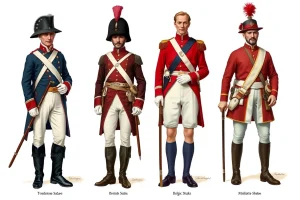
Great Britain’s Army in 1812 was a small, professional force stretched by the Napoleonic Wars. Regiments were recruited largely from the poor, the displaced, and the unemployed, with enlistment bounties and the promise of regular food, shelter, and pay. Officers purchased commissions and often relied on private income, creating a social gulf between officers and men. The British government fixed pay and allowances by royal warrant and regulations, while the Commissariat and regimental officers managed food, clothing, and transport. In North America, the army’s problem was not only money but distance: Canada’s small population, poor roads, harsh winters, and long supply lines made it difficult to feed and house regulars, militia, and Indigenous allies. The United States declared war in June 1812, and British regulars became the core of the defense of Upper and Lower Canada, later taking part in campaigns in the Chesapeake and Louisiana.
What Happened
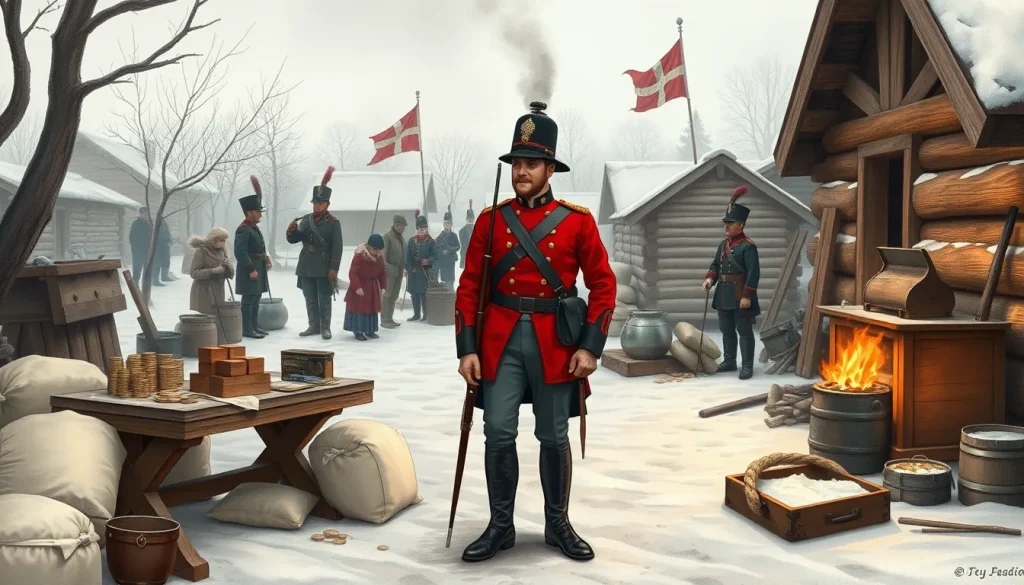
For a private of infantry, gross daily pay was normally one shilling. A corporal or sergeant earned more, but promotion was limited. From gross pay, the army deducted stoppages for food, lodging, laundry, cleaning materials, clothing, equipment repair, hospital care, and the regimental fund. In the late eighteenth and early nineteenth centuries, deductions for food and quarters alone could amount to about eight and three-quarter pence a day, with further weekly charges for barrack damages or haircutting. As a result, a private might receive only three or four pence in actual cash, and sometimes less. Soldiers in North America also encountered a mix of sterling, local currencies, and army bills, so the real value of pay could vary with exchange and arrears.
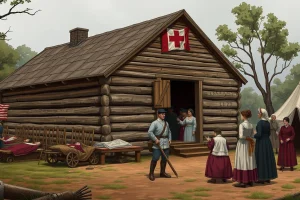
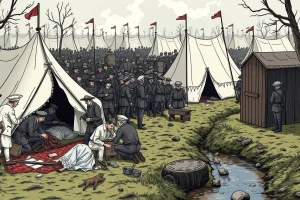
Rations were meant to supply one pound of bread or flour and one pound of beef or pork daily, with rum, peas, oatmeal, butter, or cheese when available. On campaign, full rations often failed. Troops in Canada relied on salt meat, flour, rice, and local purchases; shortages, spoilage, and transport delays were common. Soldiers foraged, bought from sutlers, or went without. Housing varied from permanent barracks and blockhouses to tents, barns, and hastily built log huts. Winter quarters in Canada were cold and crowded, and sanitation was poor. Wives and children were a small but important part of regimental life: a limited number of women, often six per company in regulations, were permitted ‘on the strength,’ selected by ballot, and worked as laundresses, nurses, and cooks. They drew rations and shared the dangers and shortages of camp life.
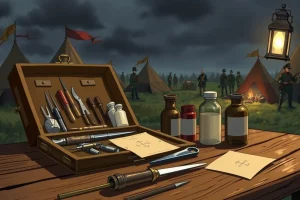
Medical care depended on regimental surgeons and assistants. Amputation was a common treatment for severe limb wounds, but disease—typhus, dysentery, malaria, and respiratory illness—killed far more soldiers than combat. Discipline was enforced by drill, courts-martial, and corporal punishment. Flogging with the cat o’ nine tails remained legal and was used for offenses ranging from drunkenness to desertion; sentences could be brutal, though medical officers sometimes intervened. Desertion was a persistent problem, especially in Upper Canada, where American recruiters offered bounties and land. British commanders responded with patrols, courts-martial, and exemplary punishments, but low net pay and hard conditions made the United States an attractive alternative for some soldiers.
Why It Matters
Pay and living conditions were not background details; they directly affected the British Army’s fighting power in the War of 1812. Soldiers who were underpaid, poorly fed, and exposed to disease were less reliable, more likely to desert, and harder to replace. The British defense of Canada depended on a relatively small number of regulars, supported by militia and Indigenous allies, and their endurance in winter quarters and on long marches was as important as their performance in battle. At the same time, the army’s pay system and discipline reflected wider British assumptions about rank, poverty, and military obedience. Officers generally saw strict discipline and deductions as necessary; many men experienced them as exploitation. Later historians have debated whether regulars were better off than the poorest civilians because they received steady food and shelter, or whether low net pay and harsh punishment made army life a form of servitude. The War of 1812 also left a memory of British professionalism, but the ordinary soldier’s experience is often overshadowed by national narratives focused on American or Canadian heroism.
Definition
In this article, ‘pay’ means the official daily or annual wages of British Army ranks, together with allowances, bounties, and deductions. ‘Living conditions’ covers food, water, shelter, clothing, medical care, sanitation, discipline, and the presence of soldiers’ wives and children. The focus is on British regulars, especially privates and non-commissioned officers, during the War of 1812, with officers and colonial forces mentioned mainly for comparison.
Background
British Army finance and welfare were governed by royal warrants, War Office regulations, and regimental practice. Pay was set centrally, but the cost of food and clothing was recovered through stoppages, and the regimental mess and quartermaster handled many daily needs. Recruitment relied on economic hardship and recruiting parties rather than conscription for the army, although impressment was used for the navy. Service could last for years or for the duration of a war. In North America, the army also depended on local contractors, Indigenous traders, and colonial officials. The result was a system that promised regularity but delivered uncertain real income, especially where prices were high or supply failed.
How It Worked
A private infantryman’s gross pay was about one shilling a day. After deductions, his cash could fall to roughly three or four pence a day. Rations, when issued, were intended to cover basic subsistence: bread or flour, salt beef or pork, and occasional extras such as peas, oatmeal, butter, cheese, or rum. Soldiers often sold or exchanged parts of their ration and bought additional food, ale, tobacco, or clothing repairs. Barracks provided beds, straw, fuel, and candles, but men paid small monthly charges for blankets, utilities, and bedding. On campaign, tents and huts replaced barracks, and overcrowding increased the spread of disease. Medical treatment was rudimentary by modern standards, and recovery rates depended on the surgeon’s skill, hospital supplies, and the season. Discipline combined drill, surveillance, and physical punishment. Flogging was the most visible sanction, and desertion could bring severe sentences. Soldiers’ wives on the strength received rations and sometimes pay for nursing or washing, but they and their children faced the same shortages and dangers as the men.
Competing Viewpoints
Contemporary officers often argued that strict pay deductions and flogging were necessary to maintain order among men drawn from the lowest ranks of society. Some pointed out that the army offered regular meals, clothing, shelter, and medical care that many labourers lacked. Critics, including some reformers and veterans, emphasized that net pay was lower than unskilled civilian wages, that punishments were degrading, and that disease and neglect killed more men than battle. Historians continue to debate the balance. Social historians tend to stress the structural poverty and coercion behind enlistment, while military historians sometimes emphasize the professionalism, camaraderie, and resilience that made British regulars effective. Memoirs by ordinary soldiers are valuable but retrospective, often shaped by later poverty, religion, or a desire to entertain readers.
Role in the War of 1812
British regulars were the backbone of the defense of Canada. Regiments such as the 41st, 49th, 100th, 104th, 8th, and 40th Foot served in Upper and Lower Canada, the Niagara frontier, the Detroit corridor, the Chesapeake, and Louisiana. Their pay and living conditions affected every campaign. In Upper Canada, supply shortages and hard winters weakened units, while desertion to the United States eroded strength. In 1814, reinforcements arrived after Napoleon’s abdication, but they too faced long marches, crowded transports, and unfamiliar disease environments. At Bladensburg and Washington, British regulars fought under harsh summer conditions; at New Orleans in 1814–1815, cold, rain, swampy ground, and disease added to the misery of the campaign. The army’s ability to keep men fed, paid, and disciplined was therefore a strategic as well as a humanitarian issue.
Consequences and Historical Interpretation
After 1815, the British Army demobilized thousands of soldiers with limited support. Some received pensions or land grants, especially in Canada, but many ordinary veterans returned to poverty. Flogging remained in the British Army until 1881, and debates over pay, pensions, and soldiers’ welfare continued through the nineteenth century. For historians of the War of 1812, the pay and living conditions of British regulars reveal the limits of British military power in North America and the human cost of a war often remembered through battles and leaders. The subject also connects the War of 1812 to broader military social history: the experiences of poor men, soldiers’ families, and medical care in an era before modern logistics and welfare.
Primary Sources
Several contemporary or near-contemporary sources illuminate British soldiers’ pay and conditions. Regimental pay lists and muster rolls in The National Archives (UK), especially WO 12 and WO 17, record daily pay, stoppages, desertion, and casualties; they are official and often terse, but they are the most direct evidence for pay and service. Shadrach Byfield, a private in the 41st Foot, published a narrative of his service in North America that describes marches, rations, captivity, and hardship; his account is valuable but retrospective and shaped by memory. William Lawrence, a sergeant in the 40th Foot, left an autobiography describing discipline, campaigning, and the American war. William Wood’s Select British Documents of the Canadian War of 1812 collects official correspondence, general orders, and returns, providing command-level context. The Royal Warrant and Regulations regarding Army Services (1848) gives later official rates and deductions, useful for comparison but not a direct record of 1812. These sources differ in perspective: pay lists show the system, while memoirs show how soldiers experienced it.
Further Reading
- William Wood, ed., Select British Documents of the Canadian War of 1812, 3 vols. (Toronto: Champlain Society, 1920–1928).
- Shadrach Byfield, A Narrative of the Life and Adventures of Shadrach Byfield, Late a Soldier in the 41st Regiment of Foot.
- William Lawrence, The Autobiography of Sergeant William Lawrence (London: Sampson Low, 1886).
- Alan Taylor, The Civil War of 1812: American Citizens, British Subjects, Irish Rebels, and Indian Allies (New York: Alfred A. Knopf, 2010).
- Jon Latimer, 1812: War with America (Cambridge, MA: Harvard University Press, 2007).
- Donald E. Graves, Field of Glory: The Battle of Crysler’s Farm, 1813 (Toronto: Robin Brass Studio, 1999).
- The National Archives (UK), WO 12: General Muster Books and Pay Lists; WO 17: Monthly Returns.
- Canadian War Museum, War of 1812 resources and online exhibitions.
- Library and Archives Canada, War of 1812 records and digitized documents.
References
- The Napoleonic Archive, ‘Life as a British Soldier in the Napoleonic Wars,’ https://www.napoleonicarchive.com/stories/life-as-a-soldier.
- King’s Own Royal Regiment Museum, ‘Soldiers Life 1700s,’ http://www.kingsownmuseum.com/mus07-04.htm.
- National Park Service, ‘The British Soldier of 1775,’ https://www.nps.gov/mima/learn/historyculture/the-british-soldier-of-1775.htm.
- Royal Warrant and Regulations regarding Army Services (London: W. Clowes & Sons, 1848), https://rapc-association.org.uk/Assets/User/2491-Royal_Warrant_and_Regulations_for_Army_Services_1848.pdf.
- William Wood, ed., Select British Documents of the Canadian War of 1812, 3 vols. (Toronto: Champlain Society, 1920–1928).
- Shadrach Byfield, A Narrative of the Life and Adventures of Shadrach Byfield, Late a Soldier in the 41st Regiment of Foot (19th-century memoir; modern reprints vary).
- William Lawrence, The Autobiography of Sergeant William Lawrence (London: Sampson Low, 1886).
- Alan Taylor, The Civil War of 1812 (New York: Alfred A. Knopf, 2010).
- Jon Latimer, 1812: War with America (Cambridge, MA: Harvard University Press, 2007).
- Donald E. Graves, Field of Glory: The Battle of Crysler’s Farm, 1813 (Toronto: Robin Brass Studio, 1999).
- The National Archives (UK), WO 12: General Muster Books and Pay Lists; WO 17: Monthly Returns.
FAQ
How much was a British soldier paid in the War of 1812?
A private of infantry normally received about one shilling a day in gross pay. After stoppages for food, clothing, lodging, and other necessaries, he might receive only three or four pence in cash, and sometimes less.
What did British soldiers eat during the War of 1812?
When full rations were available, they received bread or flour, salt beef or pork, and items such as peas, oatmeal, butter, cheese, or rum. In North America, supply shortages, spoilage, and long transport routes often reduced or delayed rations, so soldiers foraged or bought extra food.
Did British soldiers bring their wives and children on campaign?
A limited number of wives were allowed 'on the strength,' often six per company in regulations, selected by ballot. They drew rations and worked as laundresses, nurses, and cooks, but they and their children shared the shortages and dangers of campaign life.
Why did British soldiers desert during the War of 1812?
Low net pay, harsh discipline, disease, and hard living conditions made desertion attractive, especially when American recruiters offered bounties and land. British commanders used patrols, courts-martial, and severe punishments to deter it.
Was flogging used in the British Army during the War of 1812?
Yes. Flogging with the cat o' nine tails remained a common punishment for offenses including drunkenness and desertion. Sentences varied widely, and medical officers sometimes intervened, but the practice continued until 1881.
Leave a Reply