

Short Answer
Medicine during the War of 1812 (1812–1815) reflected the medical knowledge and practices of the early nineteenth century, when disease killed more soldiers than combat did. The conflict between the United States and Great Britain, fought along the North American frontier, on the Great Lakes, and at sea, placed enormous strain on the small, underprepared medical establishments of both armies and navies. The war also prompted significant organizational reforms, including the creation of the U.S. Army Surgeon General’s office, and left a lasting record of the challenges of military medicine in the pre-germ era.
Historical Context
In 1812, the scientific understanding of disease was fundamentally different from today. Most physicians adhered to the ancient humoral theory, articulated by Galen, which held that the body contained four humors—blood, phlegm, black bile, and yellow bile—that had to remain in balance for health. Disease was thought to arise from an excess or deficiency of these humors, influenced by climate, diet, and environment. The concept of microscopic organisms spreading disease did not gain acceptance until later in the nineteenth century.
Military medical services were small and poorly organized. The U.S. Army had no permanent medical department; it relied on regimental surgeons and occasional hospital surgeons appointed for specific campaigns. The Navy, similarly, assigned surgeons to ships but lacked a coordinated system. The British Army and Navy had more established medical corps, but they also faced serious challenges in maintaining the health of troops in the harsh conditions of North America.
The War of 1812 began amid disputes over impressment, trade restrictions, and Indigenous resistance, and the United States launched invasions of Canada. These campaigns moved soldiers through frontier regions with poor sanitation, contaminated water, and exposure to harsh weather, creating ideal conditions for infectious diseases.
What Happened
Disease was the overwhelming killer. According to the U.S. National Park Service, three-quarters of American war deaths resulted from disease, most commonly typhoid fever, pneumonia, malaria, measles, typhus, smallpox, and diarrhea. The crowded, unsanitary conditions of camps and ships facilitated outbreaks. Surgeon James Mann, who served in the Northern Army, recorded high rates of dysentery, intermittent fever, typhus, and rheumatism among troops at Greenbush, New York, in the fall of 1812.
Medical treatments were rudimentary and often harmful. Physicians practiced “heroic” medicine, which included bloodletting (opening a vein to remove blood), blistering (creating skin irritations to draw out infection), and inducing vomiting or purging to expel supposed bad humors. These methods were based on the humoral theory and aimed to restore balance, but they frequently weakened patients further. Surgeons also used opium and alcohol for pain, and quinine for malaria, but many remedies were ineffective or toxic, such as mercury compounds used for syphilis.
Surgery in the field was brutal and dangerous. As described by the USS Constitution Museum, bullet probes and extractors were used to locate and remove musket balls, but probing unsterilized instruments into wounds often caused infections that proved fatal. Amputations were common for severe limb injuries, and the lack of anesthesia (other than alcohol or opium) made procedures agonizing.
Naval medicine faced similar challenges. Surgeon Amos Evans of USS Constitution observed dysentery among the crew, likely from contaminated drinking water. Treatments on board followed the same humoral logic; for example, a sailor with catarrh might be bled, given tartar emetic to vomit, then a cathartic to purge the bowels.
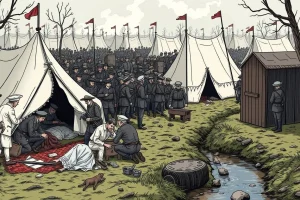
The U.S. Army’s medical organization was stretched thin. At the start of the war, there was no standardized system for medical supplies or personnel. Surgeon James Mann described being the only physician for thousands of troops at Greenbush, with no prepared hospital buildings. The sick often stayed in their own tents, and the lack of authority to hire nurses or orderlies hindered care.
Why It Matters
The war’s medical crisis had immediate and lasting effects. In 1813, Congress created the post of Surgeon General and established professional qualifications for military surgeons, marking the beginning of a permanent Army Medical Department. The War Department standardized medical supplies and improved camp sanitation, including separating latrines from cooking areas and enforcing cleanliness. The conflict also spurred the development of a hospital system with permanent base hospitals and mobile “flying hospitals” closer to the front lines.
Historians interpret the War of 1812 as a pivotal, albeit painful, learning experience for American military medicine. The high death toll from disease underscored the urgent need for organizational reform, even though the underlying scientific understanding of disease remained incomplete. The war also highlighted the importance of preventive measures, such as sanitation and hygiene, that would later become central to military medicine.
Definition
Military medicine during the War of 1812 refers to the medical practices, personnel, and institutions that served soldiers, sailors, and civilians affected by the conflict. It includes the treatment of wounds, management of disease, surgical interventions, and the administrative structures—or lack thereof—that supported these efforts.
Background
The humoral theory dominated medical thought, but the practical delivery of care was shaped by the military context. Both the American and British forces drew on physicians trained in the European tradition, often with similar approaches. However, the U.S. military medical establishment was smaller and less organized than Britain’s, which had a more substantial Navy and Army medical corps. The war forced both sides to adapt to North American conditions, including frontier logistics and a harsh climate.
How It Worked
In practice, military medicine in 1812 relied on regimental surgeons and hospital surgeons. On ships, the surgeon was often the sole medical professional, responsible for everything from treating combat injuries to pulling teeth. The surgeon’s kit included basic instruments—scalpels, saws for amputation, bullet probes, and extractors—as well as medicines like opium, quinine, and mercury compounds. Diagnosis was largely subjective, based on symptoms and the physician’s observation of the patient’s “constitution.”
Treatments aimed to restore humoral balance. Bloodletting could be performed by opening a vein or using leeches. Purging with cathartics like jalap root or calomel was common, as was inducing vomiting with tartar emetic. “Heroic” doses were often administered to produce dramatic effects, as physicians believed visible responses indicated effectiveness. Camp sanitation was sometimes addressed, but it depended on the commander’s willingness to listen to surgeons, who could only advise.
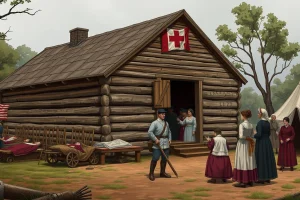
Hospitals were improvised in buildings, tents, or even barns. The lack of standardized procedures meant that care varied widely. In 1812, for example, the camp at Greenbush lacked prepared buildings, leaving the sick in tents with healthy soldiers. Over the course of the war, the establishment of general hospitals improved, but they remained overcrowded and understaffed.
Competing Viewpoints
Contemporary physicians disagreed over the effectiveness of heroic treatments. Some, like Surgeon James Mann, advocated for moderation and better diet, although they still adhered to bleeding and purging. Others clung to aggressive methods, believing they were necessary. There was also debate over the role of sanitation: while some surgeons insisted on clean camps, others saw disease as an unavoidable consequence of military service.
Modern historians view the war’s medical practice critically. They emphasize that many treatments were not only ineffective but harmful, and that the high death toll from disease was largely preventable with better hygiene and understanding of contagion. However, they also acknowledge that physicians worked within the limits of contemporary science and that the war led to significant institutional reforms.
Role in the War of 1812
Medicine directly shaped the course of campaigns. Disease outbreaks often incapacitated troops, forcing postponements or cancellations. For instance, the American invasion of Canada in 1812 was weakened by sickness among soldiers. The British and their Indigenous allies also suffered from disease, though to a lesser degree in some areas. Naval crews were particularly vulnerable to epidemics in cramped, damp conditions.
The medical crisis also affected morale and public perception. Reports of scurvy, dysentery, and typhus reached newspapers, and the poor state of military medicine became a public concern. This pressure contributed to congressional reforms in 1813.
Consequences and Historical Interpretation
The long-term consequences of the war’s medical failures were transformative for the U.S. military. The establishment of the Surgeon General’s office and the professionalization of medical staff created a foundation for future conflicts, including the Civil War. The war also highlighted the need for better training of surgeons and the value of preventive medicine.
Historians have interpreted the War of 1812 as a reluctant laboratory for medical change. The reforms, while incomplete, demonstrated that organizational innovation could mitigate disease even without a full understanding of its causes. The war’s experience reinforced the importance of sanitation and hospital management, principles that were later codified in military regulations. The story also serves as a reminder of the immense human cost of disease in pre-modern warfare.
Primary Sources
Primary sources from the period include the published memoirs and medical observations of surgeons such as Dr. James Mann, whose Medical Sketches of the Campaigns of 1812, 13, 14 (1816) documented the health of American forces. Surgeons’ journals and letters, like those of William Swift, a U.S. Navy surgeon, offer firsthand accounts of naval medical practice. Official records, such as the returns of sick and wounded in the National Archives, provide statistical data on mortality.
The USS Constitution Museum holds surgical instruments and medical chest items, which provide material evidence of the tools available. The National Park Service’s article on military medicine during the war offers a concise overview. Each source has limitations: personal accounts are subjective, official returns may undercount, and material objects give only a partial picture of practice.
Further Reading
- Gillett, Mary C. The Army Medical Department, 1775–1818. Washington, D.C.: Center of Military History, 1981.
- Gillett, Mary C. The Army Medical Department, 1818–1865. Washington, D.C.: Center of Military History, 1987.
- Mann, James. Medical Sketches of the Campaigns of 1812, 13, 14. Dedham, MA, 1816.
- USS Constitution Museum, “Naval Medicine during the War of 1812” and “Medicine in 1812” educational resources.
- National Park Service, “Wounded soldiers Contend with Crude Treatments” (article on military medicine in the War of 1812).
References
- National Park Service, “Wounded soldiers Contend with Crude Treatments,” https://www.nps.gov/articles/military-medicine.htm.
- USS Constitution Museum, “Naval Medicine during the War of 1812,” PDF, https://ussconstitutionmuseum.org/wp-content/uploads/2018/09/Naval-Medicine-during-the-War-of-1812-Cockpit-After-Battle-1.pdf.
- USS Constitution Museum, “Medicine in 1812,” PDF, https://ussconstitutionmuseum.org/wp-content/uploads/2018/09/Medicine-in-1812.pdf.
- Gillett, Mary C., The Army Medical Department, 1818–1865, Center of Military History, U.S. Army, 1987, https://www.govinfo.gov/content/pkg/GOVPUB-D114-PURL-gpo80699/pdf/GOVPUB-D114-PURL-gpo80699.pdf.
- U.S. Army Medical Department Center of History & Heritage, “Early Campaigns in the North, 1812 to 1813,” https://achh.army.mil/history/book-rev-gillett1-ch8/.
FAQ
What killed more soldiers in the War of 1812: combat or disease?
Disease killed far more soldiers. About three-quarters of American war deaths were from diseases like typhoid, dysentery, and malaria, not from battle wounds.
What medical treatments were used during the War of 1812?
Physicians used heroically aggressive treatments based on humoral theory, including bloodletting, blistering, purging, and inducing vomiting. They also used opium, alcohol, quinine, and mercury compounds.
How did the War of 1812 change military medicine?
The war highlighted critical organizational weaknesses and led to the creation of the U.S. Army Surgeon General's office, standardization of medical supplies, and improved hospital systems, laying foundations for future military medical care.

Leave a Reply