
Short Answer
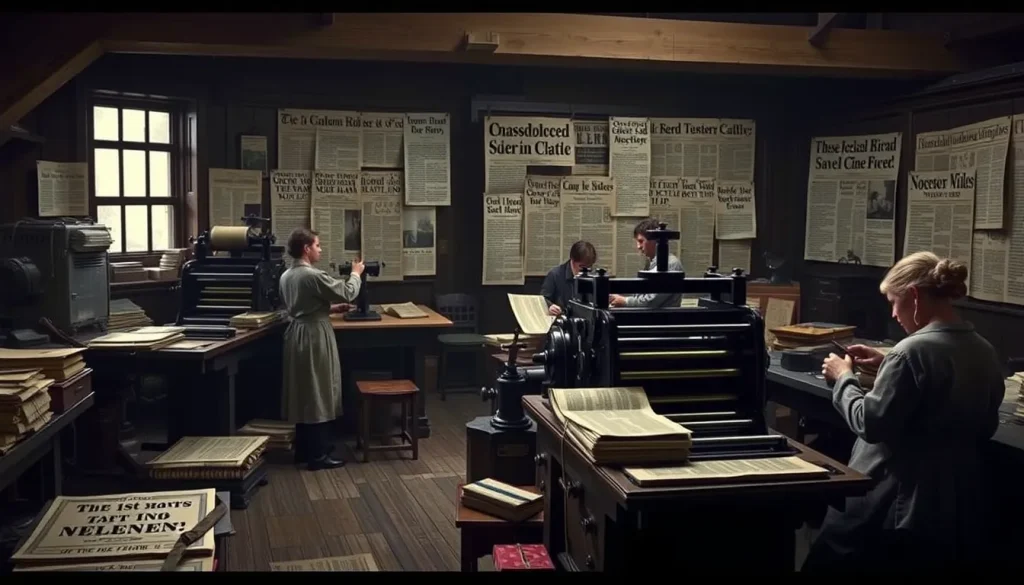
During the War of 1812 (1812–1815), propaganda was a critical tool for both the United States and Great Britain in shaping public understanding of battlefield events. From the Chesapeake raids to the Great Lakes campaigns, newspaper accounts, official reports, and patriotic slogans transformed ambiguous military outcomes into narratives of heroism or atrocity. This article examines how propaganda influenced contemporary accounts of the war’s battles, how it was produced and disseminated, and how its legacy persists in the conflicting memories of the conflict.
Historical Context
The War of 1812 erupted amid the Napoleonic Wars, when British restrictions on neutral trade and impressment of American sailors drove the United States to declare war in June 1812. Both nations had literate populations and active print cultures that rapidly circulated news. In the United States, a deeply partisan press—especially Democratic-Republican newspapers—shaped public opinion. In British North America (Canada), a much smaller press existed, but British naval commanders and colonial officials filed official reports that were published in London and sometimes reprinted. The shared language allowed propaganda to cross borders, and both sides used it to justify military actions, recruit soldiers, and maintain domestic support.
What Happened
Propaganda flourished in the immediate aftermath of military engagements, as each side sought to present its own version of events. One notable example occurred on July 30, 1814, when British forces under Rear-Admiral George Cockburn raided the small Chesapeake community of Chaptico, Maryland. Cockburn’s official report described the operation as peaceful and orderly, noting that he “caused no further Inconvenience” to inhabitants beyond requisitioning cattle and tobacco. By contrast, the Niles’ Weekly Register of Baltimore published an American account claiming the British “made a most furious attack on every window, door, and pane of glass in the village,” desecrated a church, and rifled family vaults in search of treasure. The two narratives offered radically different pictures of the same event, reflecting deliberate attempts to shape public perception.
Another powerful example was the aftermath of the Battle of Frenchtown (River Raisin) in January 1813, when a British and Indigenous force overwhelmed American troops and wounded American prisoners were killed. Reports of the killings, soon dubbed the “River Raisin Massacre,” sparked outrage across the United States and produced the rallying cry “Remember the Raisin.” American propagandists used the event to portray the British as barbaric and to justify continued warfare, while British accounts downplayed or ignored the incident. The cry was later invoked to recruit soldiers and bolster morale, even as it obscured the larger failure of the American campaign.
Later in the war, after the American victory at the Battle of New Orleans in January 1815—fought after the peace treaty was signed—American propagandists seized on the triumph to construct a narrative of overall victory. In April 1815, a deadly incident at Dartmoor Prison in England, where British guards fired on American prisoners, was quickly labeled the “Dartmoor Massacre” in U.S. newspapers, though a joint commission later deemed it an accident. These episodes illustrate how both sides manufactured or magnified claims to support their political aims.
Why It Matters
The propaganda of the War of 1812 shaped not only wartime morale but also the enduring historical memory of the conflict. In the United States, the narrative of a successful “Second War of Independence” prevailed, despite significant military setbacks earlier in the war. This myth was promoted by the Madison administration and its supporters to reinforce national unity and Republican Party agendas. In British North America, however, the war was remembered primarily as a defensive struggle, and Canadian histories emphasized the repulsion of American invasions. The contrasting narratives resulted in the different ways the war is commemorated today: Americans celebrate naval victories and New Orleans, Canadians celebrate the defense of their homeland, and Britons largely ignore the conflict. Historians like Henry Adams and later scholars have challenged these myths, but the propaganda of 1812 left a lasting imprint on national identities.
Definition
Propaganda is the deliberate dissemination of information—often biased, exaggerated, or untrue—to influence public opinion and promote a particular agenda. In a military context, it is used to demonize the enemy, justify tactics, and sustain civilian morale.
Background
Both the United States and Great Britain had established systems for spreading wartime information. American newspapers, which were frequently affiliated with political parties, acted as outlets for official reports and eyewitness accounts. British authorities relied on official dispatches to the Admiralty and colonial governors, which were often published in London papers or reprinted in the United States. In British North America, local newspapers occasionally reprinted British reports, but the press was far smaller. The democratic nature of the American press made it particularly susceptible to partisan propaganda, while British reporting was more centralized and official.
How It Worked
Propaganda operated through the selection and framing of facts. Military commanders crafted reports to their superiors that emphasized their own competence and minimized losses or misconduct. These reports were then passed to newspapers, which might embellish or extract dramatic details. For example, Cockburn’s report of the Chaptico raid omitted any mention of vandalism, while American newspapers amplified and sensationalized the damage. Similarly, American accounts of the River Raisin focused on the killings of prisoners, while British accounts stressed the battle itself and the capture of American troops. Emotional language, such as describing the enemy as “savages” or “free-booters,” was common. Slogans like “Remember the Raisin” condensed complex events into memorable calls to action.
Competing Viewpoints
Historians disagree over the extent to which propaganda distorted the reality of the War of 1812. Some, like Andrew Lambert, argue that Americans used propaganda to convert a military stalemate into a myth of victory, obscuring failures such as the capture of the USS President. Others, like Donald Graves, emphasize that both sides engaged in propaganda and that Canadian accounts were equally selective in building a defensive narrative. A middle view holds that while exaggeration occurred, there were also genuine atrocities, such as the River Raisin killings, which were exploited for propaganda purposes. The competing narratives complicate any simple assessment of what truly happened on battlefields.
Role in the War of 1812
Propaganda served concrete wartime functions: it aided recruitment, maintained public support, and influenced diplomatic stance. The “Remember the Raisin” cry boosted enlistment in the U.S. Army, while tales of British atrocities stoked anti-British sentiment. British reports of their own successes, such as the capture of Detroit and the defense of Upper Canada, helped sustain British confidence and discouraged American incursions. Propaganda also affected Indigenous peoples: American depictions of Allied Indigenous warriors as “savages” hardened American attitudes and justified aggressive expansion into Indigenous territories, undermining any diplomatic accommodation.
Consequences and Historical Interpretation
The propaganda of the War of 1812 had long-term consequences for national narratives. In the United States, the triumphant interpretation persisted well into the nineteenth century, shaping textbooks and popular memory. In Canada, a parallel narrative of heroic defense became central to national identity. British indifference allowed American versions to flourish globally. Later historians, however, used official records and international perspectives to correct the record. Modern scholarship recognizes that the war’s memory was constructed through deliberate propaganda, and that understanding it requires critical examination of contemporary sources.
Primary Sources
Key primary sources include the official report of Rear-Admiral George Cockburn regarding the Chaptico raid, reproduced in secondary accounts, and the Niles’ Weekly Register article of August 14, 1814, with its opposing narrative. The American account of the River Raisin massacre appeared in newspapers and in the official correspondence of General James Winchester. The British side is represented in the correspondence of Major-General Henry Procter and other officers. The Dartmoor incident is documented in the 1815 report of the joint Anglo-American commission, as well as American newspaper coverage. These sources are inherently biased and must be read with attention to their intended audiences and purposes.
Further Reading
- Lambert, Andrew. The Challenge: Britain Against America in the Naval War of 1812. Faber & Faber, 2012.
- Eshelman, Ralph E., and Burton K. Kummerow. In Full Glory Reflected: Discovering the War of 1812 in the Chesapeake. Maryland Historical Society, 2012.
- Graves, Donald E. “Everybody Gets a Trophy: Claiming Victory in the War of 1812.” National Park Service, 2015.
- Dennis, Matthew. “Short Term Memory: Eeking a Victory from the Depths of Defeat.” National Park Service, 2015.
- Adams, Henry. History of the United States of America. 1891.
References
- National Park Service. “Propaganda during Wartime.” Star-Spangled Banner National Historic Trail. https://www.nps.gov/stsp/learn/historyculture/propaganda-during-wartime.htm.
- Lambert, Andrew D. “‘Faithful History’: British Representations of the War of 1812.” Historically Speaking 13, no. 4 (2012): 8–11. doi:10.1353/hsp.2012.0049.
- Graves, Donald E. “Everybody Gets a Trophy: Claiming Victory in the War of 1812.” National Park Service. https://www.nps.gov/articles/everybody-gets-a-trophy.htm.
- Dennis, Matthew. “Short Term Memory: Eeking a Victory from the Depths of Defeat.” National Park Service. https://www.nps.gov/articles/short-term-memory.htm.
FAQ
What was the main purpose of propaganda in War of 1812 battlefield accounts?
Propaganda aimed to shape public opinion to support the war effort, justify military actions, and maintain morale, often by demonizing the enemy and magnifying successes.
How did American and British propaganda differ?
American propaganda often emphasized atrocities and British brutality, while British reports focused on military efficiency and downplayed civilian effects. American propaganda was more widespread due to a larger, partisan press.
How did propaganda affect Indigenous peoples during the war?
Propaganda depicting Indigenous allies as 'savages' reinforced American anti-Indian sentiment and helped justify expansion into Indigenous territories, regardless of their actual role.

Leave a Reply