Short Answer
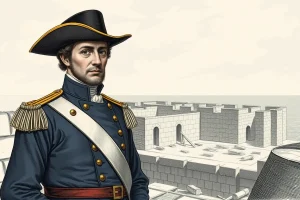
Stephen Decatur (January 5, 1779 – March 22, 1820) was a United States naval officer whose career spanned the Quasi-War, the Barbary Wars, and the War of 1812. He commanded the frigate USS United States to a celebrated victory over HMS Macedonian in 1812, becoming a national hero. Later, he led a squadron against the Barbary states and served on the Board of Naval Commissioners. He died in a duel with Commodore James Barron.
Historical Context
The War of 1812 arose from long-standing disputes between the United States and Great Britain over maritime rights, impressment of American sailors, and trade restrictions. At the outbreak of war in June 1812, the Royal Navy was the world’s largest maritime force, while the United States Navy comprised only a handful of frigates and smaller vessels. American strategy relied on commerce raiding and single-ship duels to harass British merchant shipping and bolster national morale. British blockades, however, increasingly confined American warships to port, limiting their opportunities for action.
What Happened
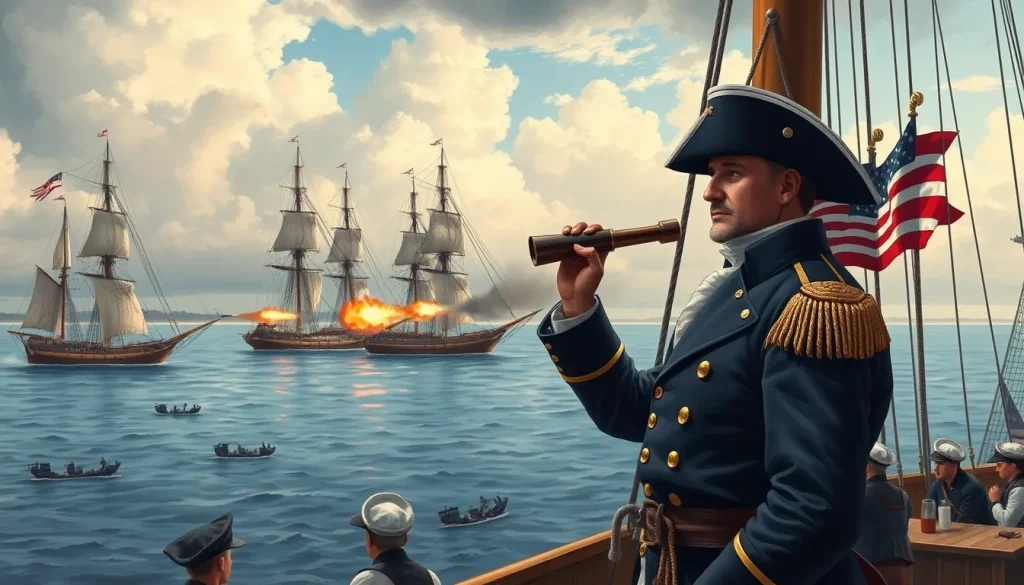
Decatur commanded the 44-gun frigate USS United States when the war began. On October 25, 1812, while cruising near the Madeira Islands, he encountered the British frigate HMS Macedonian. In a skillful two-hour engagement, Decatur’s superior gunnery and seamanship forced the enemy to strike her colors. The prize was brought to the United States, and Decatur was hailed as a hero. In the following months, the tightening British blockade kept the United States at anchor, first in New York and later in New London, Connecticut. In January 1815, Decatur, now commanding the frigate President, attempted a breakout from New York but ran aground on a sandbar and was damaged. The next day, he was chased by a British squadron and, after a running fight with HMS Endymion and others, was forced to surrender. He was soon paroled and returned home, but the war had already ended with the ratification of the Treaty of Ghent in February 1815.
Why It Matters
The capture of HMS Macedonian was one of the most important American naval victories early in the war, demonstrating that American frigates could defeat their British counterparts. It boosted national confidence and helped build the reputation of the U.S. Navy. Decatur’s later surrender of President, though less glorious, was attributed to unforeseen ship damage and was not viewed as a personal failure. His actions shaped public perception of the Navy and reinforced the professionalism and daring of its officers. His death in a duel underscored the code of honor that governed many naval officers’ conduct and became part of his legend.
Early Life
Stephen Decatur Jr. was born at Sinepuxent, Maryland, to Stephen Decatur Sr., a naval captain and privateer during the American Revolution, and his wife. The family later moved to Philadelphia, where young Stephen attended the Episcopal Academy and enrolled at the University of Pennsylvania. His interest in the sea was awakened during a voyage to Europe in 1787. In 1798, he accepted a midshipman’s warrant in the U.S. Navy, serving under Commodore John Barry aboard USS United States.
Role Before the War
Decatur rose to prominence during the Quasi-War with France (1798–1800) and the First Barbary War (1801–1805). In 1804, he led the expedition that burned the captured frigate Philadelphia in Tripoli harbor, an act of exceptional daring that earned him promotion to captain at age 25. He later served on the court-martial that suspended James Barron following the Chesapeake-Leopard affair in 1807, a decision that created lasting enmity. He also commanded naval forces during the embargo period.
Role During the War
At the outbreak of the War of 1812, Decatur commanded the frigate United States. His victory over HMS Macedonian on October 25, 1812, was his most significant contribution. After returning to port, he was blockaded for most of the war. In 1814, he took command of the President, which had been built as a large frigate. On January 15, 1815, he attempted to run the blockade from New York but ran aground. The following day, he was captured by a British squadron. He was paroled and returned to the United States after the war ended.
Major Actions
Beyond the War of 1812, Decatur’s major actions include the burning of USS Philadelphia in 1804, the bombardment of Tripoli in 1804 where he led gunboat attacks, and the Second Barbary War (1815), during which he commanded a squadron that forced Algiers, Tunis, and Tripoli to sign treaties favorable to the United States. His capture of HMS Macedonian remains his best-known achievement at sea.
Contemporary Accounts
Decatur’s official after-action report of the Macedonian engagement, addressed to Secretary of the Navy Paul Hamilton, described the battle in detail and was published widely. Newspapers celebrated the victory, and Congress awarded Decatur a gold medal. In 1816, he made a famous toast at a dinner in Norfolk, Virginia: “Our country! In her intercourse with foreign nations may she always be in the right; but our country, right or wrong.” This phrase became a lasting expression of American patriotism. Theodore Roosevelt, in his later naval history, praised Decatur’s handling of the ship, noting his skillful tactics.
Later Life
After the War of 1812, Decatur led a successful expedition against the Barbary states, securing peace and gaining concessions. Upon returning to Washington, he was appointed to the Board of Naval Commissioners in December 1815. He became involved in a personal and professional feud with Commodore James Barron, stemming from Barron’s court-martial and perceived slights. The conflict culminated in a duel at Bladensburg, Maryland, on March 22, 1820. Decatur was mortally wounded and died later that day at his home in Lafayette Square.
Historical Legacy
Decatur is remembered as one of the first and most celebrated naval heroes of the young United States. His daring and skill helped establish the reputation of the U.S. Navy. Numerous towns, schools, and ships have been named in his honor. His famous toast is still quoted as a symbol of patriotic zeal. Historians generally rate his tactical abilities highly, though some note his later career was overshadowed by the duel and the controversial surrender of President. His legacy endures as a model of naval professionalism and courage.
Primary Sources
Key primary sources include Decatur’s official reports and letters, many of which are preserved in the Naval History and Heritage Command. His account of the Macedonian engagement, published in the Naval Chronicle and other periodicals, is a fundamental source. The USS Constitution Museum provides biographical information and artifact records. The records of his court-martial and of the court of inquiry concerning the loss of President are also available in national archives. Contemporary journals and newspapers offer insight into his public reception.
Further Reading
- Alexander Slidell Mackenzie, Life of Stephen Decatur, A Commodore in the Navy of the United States, 1846.
- Charles Lee Lewis, The Romantic Decatur, 1937 (reprint 1971).
- Alfred Thayer Mahan, Sea Power in Its Relation to the War of 1812, 2 vols., 1905.
- Donald R. Hickey, The War of 1812: A Forgotten Conflict, 2006.
References
- Britannica, “Stephen Decatur,” https://www.britannica.com/biography/Stephen-Decatur
- USS Constitution Museum, “Stephen Decatur,” https://ussconstitutionmuseum.org/crew/stephen-decatur/
- White House Historical Association, “Commodore Stephen Decatur: An Early American Naval War Hero,” https://www.whitehousehistory.org/commodore-stephen-decatur-an-early-american-naval-war-hero
- Naval History and Heritage Command, “Commodore Stephen Decatur, USN,” https://ibiblio.org/hyperwar/OnlineLibrary/photos/pers-us/uspers-d/s-decatr.htm
- Encyclopedia.com, “Stephen Decatur,” https://www.encyclopedia.com/people/history/us-history-biographies/stephen-decatur
FAQ
What was Stephen Decatur's most famous quote?
“Our country! In her intercourse with foreign nations may she always be in the right; but our country, right or wrong.” He made this toast in 1816.
How did Stephen Decatur die?
He was mortally wounded in a duel with Commodore James Barron at Bladensburg, Maryland, on March 22, 1820, and died later that day.
What was Decatur's most significant achievement in the War of 1812?
His capture of HMS Macedonian in October 1812, which was a major American naval victory early in the conflict.
Leave a Reply