Short Answer
Henry Clay and the War Hawks were a group of young Democratic-Republican congressmen from the South and West who, in the Twelfth United States Congress (1811–1813), pressed President James Madison to declare war on Great Britain. Led by Clay, who was elected Speaker of the House on his first day in that body, the War Hawks argued that British violations of American neutral rights, impressment of American sailors, and alleged British support for Indigenous resistance on the frontier made war necessary. Their agitation was instrumental in the United States’ declaration of war on June 18, 1812, which began the War of 1812.
Historical Context
The Napoleonic Wars (1803–1815) between Great Britain and France created a severe crisis for American neutral shipping. Britain’s Orders in Council (1807) declared a blockade of French-controlled Europe, subjecting neutral vessels to seizure if they traded with France. France responded with the Berlin and Milan Decrees, authorizing capture of any ship that complied with British regulations. These conflicting restrictions crushed American trade, and by 1810 both powers had seized hundreds of American ships. More provocative to American pride was impressment: the Royal Navy stopped American merchantmen and removed sailors alleged to be British deserters, often naturalized Americans, forcing them into naval service.
American efforts to avoid war, such as Jefferson’s Embargo Act of 1807 and Madison’s non-intercourse policy, failed to secure respect for neutral rights and damaged the U.S. economy. In the western territories and states, settlers also blamed British agents in Canada for supplying arms and encouragement to Indigenous confederacies led by Tecumseh and the Prophet. The Battle of Tippecanoe (November 1811) heightened frontier tensions and convinced many that a war with Britain would break Indigenous resistance once and for all. Against this backdrop, the Twelfth Congress assembled in November 1811 with a surge of new, younger members eager for action.
What Happened
Henry Clay, a 34-year-old Kentucky lawyer, entered the House of Representatives after a brief Senate appointment. On November 4, 1811, the House elected him Speaker on the first ballot, a sign of the new mood. Clay immediately used his power to appoint War Hawk majorities to key committees, selecting Langdon Cheves of South Carolina as chairman of the Naval Committee, Ezekiel Bacon as chairman of Ways and Means, and placing Peter B. Porter of New York as chairman of Foreign Relations. With these appointments, Clay ensured that the war faction controlled the flow of legislation and debate.
The War Hawks, though never a formal party, were a cohesive group of about a dozen congressmen from the South and West, including John C. Calhoun of South Carolina, Richard Mentor Johnson of Kentucky, and Felix Grundy of Tennessee. They argued that a conquest of Canada would be swift and easy, cutting British supply lines to the frontier and providing leverage to force concessions on impressment and trade. In debates, Clay famously declared that “the militia of Kentucky alone” could capture Montreal and Quebec. He also dismissed fears of British invasion, insisting that Britain was too occupied in Europe to defend its North American colonies.
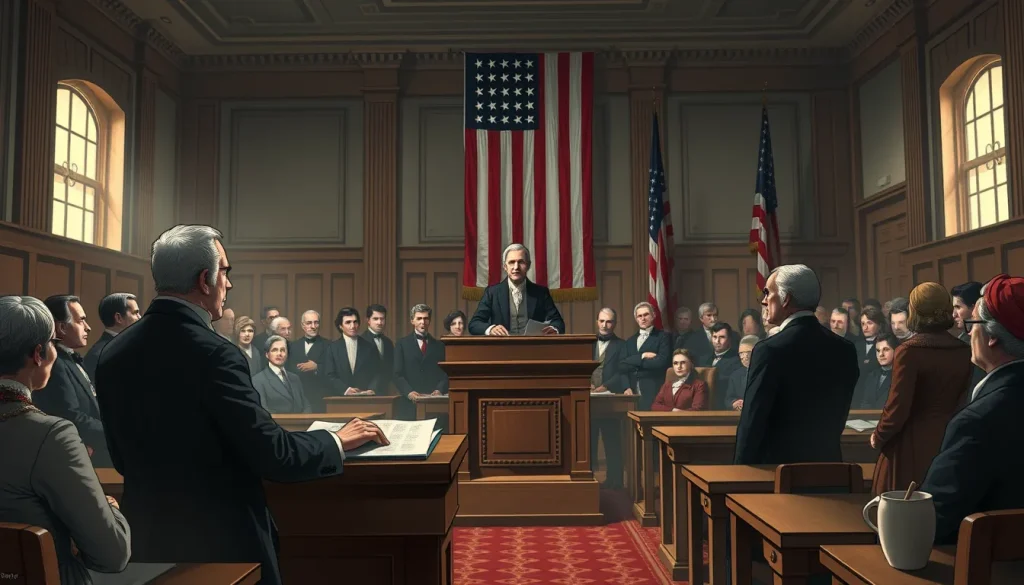
Throughout the spring of 1812, Clay and his allies pushed for war. On April 14, 1812, Clay published an editorial in the National Intelligencer urging immediate war, dismissing the unpreparedness argument as “idle.” The final vote came on June 4, when the House approved a declaration of war by 79 to 49, followed by the Senate on June 17 by 19 to 13. All supporters were Republicans; Federalists unanimously opposed war. President Madison signed the declaration on June 18, 1812.
Why It Matters
The War Hawks’ pressure transformed a reluctant Madison administration into one that accepted war. Their actions had immediate consequences: the United States entered a conflict for which it was militarily unprepared, leading to defeats on the frontier and along the Atlantic coast, but also to victories such as the Battle of New Orleans. Over time, the war solidified American independence and encouraged westward expansion. For Clay, the war catapulted him to national prominence, setting the stage for his later career as a statesman and compromiser. Historical interpretation varies: some historians see the War Hawks as sincere defenders of neutral rights and national honor, while others emphasize their expansionist ambitions regarding Canada and Indigenous lands.
Early Life
Henry Clay was born on April 12, 1777, in Hanover County, Virginia. His father died when he was young, and he received limited formal schooling. After studying law under George Wythe and Robert Brooke, Clay moved to Lexington, Kentucky, in 1797, where he established a successful legal practice. He quickly became involved in politics, serving in the Kentucky legislature and filling an unexpired Senate term in 1806–1807. His oratorical skills and charm earned him the nickname “the Western Star.”
Role Before the War
Clay served in the U.S. Senate from 1806 to 1807 and again in 1810–1811, but he found the Senate too sedate. He preferred the House, where he could engage in spirited debate. By the time he entered the House in 1811, he was already a firm advocate of strong measures against Britain. He, like many westerners, believed that British agents were inciting Tecumseh’s confederation and that only the conquest of Canada would secure the frontier. His election as Speaker on the first ballot demonstrated the influence of the newly minted war faction, and he used parliamentary rules to accelerate war-related legislation.
Role During the War
As Speaker, Clay was more than a presiding officer; he used the Committee of the Whole to participate in debate. He delivered passionate speeches calling for war, and his editorial of April 14, 1812, published anonymously in the National Intelligencer, articulated the hawk position. After war was declared, Clay supported efforts to raise troops and funding, though he and many War Hawks opposed heavy taxes and naval expansion, reflecting a reluctance to commit government funds. He remained Speaker during the war, coordinating legislative support for the administration’s wartime measures.
Major Actions
Clay’s primary actions included: engineering War Hawk dominance on committees; delivering key speeches linking impressment, Orders in Council, and frontier security; writing the April 1812 editorial; and shepherding the war declaration through the House. He also promoted the invasion of Canada, which became the main U.S. strategic objective. After the war, he was appointed to the delegation that negotiated the Treaty of Ghent (1814), though the treaty said nothing about impressment or neutral rights—the very issues the War Hawks had championed.
Contemporary Accounts
The term “War Hawks” was coined by Virginia congressman John Randolph of Roanoke, a bitter opponent of war. He used it mockingly, comparing the young firebrands to predatory birds. Federalist politicians and newspapers often depicted them as reckless warmongers. Conversely, western and southern constituents often praised them for defending American honor. Clay’s own contemporaries noted his persuasive power; one Federalist described the new members as “young politicians, half hatched.” These contemporary accounts reveal deep regional and partisan divides.
Later Life
After the war, Clay achieved national fame as a diplomat and legislator. He was appointed Secretary of State in 1825 and later served as Senator, where he became known as the “Great Compromiser” for crafting the Missouri Compromise (1820), the Compromise Tariff of 1833, and the Compromise of 1850. He ran for president three times but never succeeded. He died in 1852. The War Hawks, as a faction, dissolved after the war, but many, including Calhoun and Johnson, went on to long political careers.
Historical Legacy
Historians generally view Clay as the driving force behind the War Hawks’ success. His leadership in the Twelfth Congress helped overcome Madison’s hesitations and the Federalists’ opposition. The War Hawks themselves are seen as representing the new nationalist, expansionist sentiment of the West and South. Some historians, such as Donald R. Hickey, argue that the war was unnecessary and badly managed, while others emphasize that it secured American sovereignty and opened the door to westward settlement. Clay’s memory as a war hawk has persisted, though he is more often remembered for his later compromise efforts.
Primary Sources
The most direct primary source is Clay’s editorial of April 14, 1812, published in the National Intelligencer. In it, he argued that “the final step ought to be taken; and that step is WAR.” The editorial is reprinted in the Annals of Congress. Also important are the speeches of War Hawks in the House and Senate debates, recorded in the Annals of Congress for the Twelfth Congress. John Randolph’s speeches against the war offer a counterpoint. A collection of Clay’s papers, The Papers of Henry Clay, edited by James F. Hopkins, contains his letters and other documents.
Further Reading
- Heidler, David S., and Jeanne T. Heidler. Henry Clay: The Essential American. New York: Random House, 2010.
- Hickey, Donald R. The War of 1812: A Forgotten Conflict. Urbana: University of Illinois Press, 1989.
- Schurz, Carl. Life of Henry Clay. Boston: Houghton Mifflin, 1887.
- “War Hawks’ urge military confrontation with Britain.” National Park Service. https://www.nps.gov/articles/war-hawks.htm.
References
- “War Hawks’ urge military confrontation with Britain.” National Park Service. https://www.nps.gov/articles/war-hawks.htm.
- “Editorial Written by War-Hawk Henry Clay in Favor of War with Great Britain.” American Battlefield Trust. https://www.battlefields.org/learn/primary-sources/editorial-written-war-hawk-henry-clay-favor-war-great-britain.
- “Madison and the Pressure for War.” Boundless U.S. History. http://www.boundless.com/u-s-history/textbooks/boundless-u-s-history-textbook/securing-the-republic-1800-1815-11/the-war-in-europe-98/madison-and-the-pressure-for-war-528-1770/index.html.
- “Life of Henry Clay (Schurz)/Chapter 05.” Wikisource. https://en.wikisource.org/wiki/Life_of_Henry_Clay_(Schurz)/Chapter_05.
FAQ
Who were the War Hawks?
The War Hawks were a group of Democratic-Republican congressmen from the South and West who advocated war with Great Britain in 1811–1812. Led by Henry Clay, they favored conquest of Canada and an end to British impressment and trade restrictions.
Why did Henry Clay want war with Britain?
Clay believed Britain had violated American neutral rights, impressed American sailors, and incited Indigenous attacks on the frontier. He argued that a war would stop these abuses and restore national honor.
Did the War Hawks achieve their goals?
The war ended with the Treaty of Ghent in 1814, which did not address impressment or neutral rights. However, the fighting did stop British support for Indigenous resistance in the Northwest, and the United States solidified its independence.


Leave a Reply