Short Answer
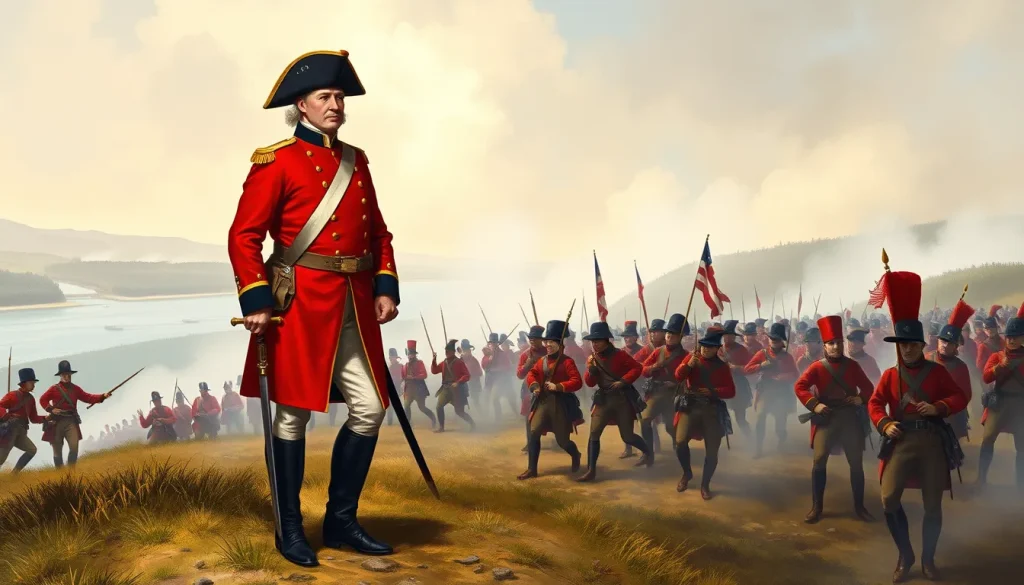
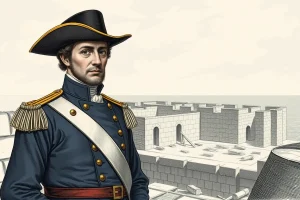
Major-General Sir Isaac Brock (1769–1812) was a British army officer and colonial administrator who served as commander of British forces in Upper Canada during the early years of the War of 1812. He is best remembered for his decisive role in the capture of Fort Detroit and his death at the Battle of Queenston Heights, which made him a celebrated hero in Canadian historical memory. Brock’s leadership helped repel American invasions during the critical opening months of the conflict.
Historical Context
When the War of 1812 broke out, Great Britain was deeply engaged in the Napoleonic Wars in Europe. The United States, resentful of British impressment of American sailors, trade restrictions, and perceived support for Indigenous resistance to American expansion, declared war on 18 June 1812. Upper Canada (present-day Ontario) was a thinly populated British colony with a large American-born minority and only a small regular garrison. The British command under Governor General Sir George Prevost favored a cautious defensive posture, but local commanders like Isaac Brock recognized the need for bold action to secure the loyalty of the settlers and to counter American offensives along the Niagara River and Detroit frontier. Indigenous nations, particularly those led by Tecumseh, sought British alliance to resist American land grabs, creating a complex and fragile coalition.
What Happened
Brock, who had been in Canada since 1802, took immediate offensive steps upon the outbreak of war. He dispatched a force that captured the American post of Fort Mackinac in July 1812, giving the British control of the Upper Great Lakes. In August, he confronted the American army under General William Hull, which had invaded Upper Canada but then retreated to Fort Detroit. Brock, accompanied by Tecumseh and his warriors, crossed the Detroit River and bluffly demanded Hull’s surrender, which Hull, fearing an Indian massacre, unexpectedly accepted on 16 August. This stunning victory secured the Michigan territory and buoyed British confidence.
Hull’s collapse allowed Brock to rush to the Niagara frontier, where a new American invasion threatened. On 13 October 1812, American forces crossed the Niagara River at Queenston and seized the heights. Brock, riding from Fort George, arrived to lead a counterattack but was killed by a musket ball while rallying his troops. His subordinate, Major-General Roger Hale Sheaffe, arrived with reinforcements and conducted a flanking movement that trapped and defeated the American force. The Battle of Queenston Heights was a British victory, but Brock’s death proved a major blow to the province’s morale and leadership.
Why It Matters
Brock’s victories at Mackinac and Detroit, and the successful defense at Queenston, prevented the early collapse of Upper Canada and helped secure the colony until the war’s end. His aggressive tactics, combined with the crucial alliance with Tecumseh, turned the tide in the first months of the war. His death elevated him to legendary status as the “saviour of Upper Canada.” Historians debate whether his boldness was strategically sound or recklessly risky, but all agree that his leadership had a profound influence on the war’s outcome and on Canadian national identity.
Early Life
Isaac Brock was born on 6 October 1769 in St Peter Port, Guernsey, the eighth son of John Brock and Elizabeth De Lisle. He attended school in Guernsey, Southampton, and Rotterdam, where he learned French. At age fifteen, he purchased an ensigncy in the 8th (King’s) Regiment of Foot, beginning a military career that saw him rise through the ranks. He transferred to the 49th Regiment in 1791 and served in the West Indies and the Netherlands, fighting at the Battle of Egmont-op-Zee in 1799 and participating in the Battle of Copenhagen in 1801. He was promoted to lieutenant-colonel in 1797 and became a trusted and respected officer known for his courage and concern for his men’s welfare.
Role Before the War
Brock arrived in Canada in 1802 with the 49th Regiment. In 1811, with the departure of Lieutenant-Governor Francis Gore, Brock became administrator of Upper Canada and commander of British forces in the province. Even before war broke out, he worked to strengthen militia, improve fortifications, and forge alliances with Indigenous leaders. He recognized the vulnerability of the colony to American invasion and sought to prepare its defenses despite limited resources and the cautious policies of Governor General Prevost.
Role During the War
At the outbreak of war, Brock took immediate action. He authorized the surprise capture of Fort Mackinac, which opened a vital fur trade route and secured Indigenous support. When Hull invaded Upper Canada, Brock moved west, and his audacious demand for surrender at Detroit brought a bloodless victory. After Detroit, he raced back to the Niagara River, where he organized the defense against the American invasion. His death at Queenston occurred while he was personally leading a charge to retake the vital heights, a decision typical of his leadership style but ultimately fatal.
Major Actions
Brock’s most significant acts were the capture of Fort Detroit and the defense of Queenston Heights. At Detroit, he faced a larger American force but exploited Hull’s fears and indecision, presenting a show of force that led to a surrender without a battle. At Queenston, he attempted to retake the high ground with a small force, but was killed. The subsequent British victory under Sheaffe vindicated his strategic instinct, though it came at the cost of his life. He also fostered the alliance with Tecumseh, which was crucial for both offensive and defensive operations.
Contemporary Accounts
Contemporary sources include Brock’s own letters and official dispatches, which reveal his strategic thinking and frustration with Prevost’s caution. One celebrated but likely apocryphal quote from the battlefield, “Push on brave York Volunteers,” is not supported by reliable testimony. American accounts from Detroit and Queenston describe shock at British boldness and the psychological impact of Indigenous warriors. The official reports of Hull’s surrender and the battle at Queenston provide essential primary evidence, though they naturally present partisan perspectives.
Later Life
Brock never married and had no children. He died on 13 October 1812 at Queenston Heights, leaving no later life in the personal sense. However, his posthumous life is rich: he was initially buried at Fort George, but in 1824 his remains were moved to a grand monument on Queenston Heights. That monument was destroyed by a rebel bomber in 1840 and replaced in 1853. His legacy as a martyr-hero was cultivated in the 19th century, making him a foundational figure in Canadian historical memory.
Historical Legacy
Brock’s legacy is inseparable from the War of 1812’s narrative in Canada. He is venerated as the “Hero of Upper Canada” and a symbol of successful resistance against American invasion. Monuments, towns, streets, and Brock University (founded 1964) bear his name. Modern historians have reassessed some aspects, noting his aggressive tactics sometimes risked unnecessary casualties, and that the British victory at Queenston was largely due to Sheaffe’s flanking maneuver rather than Brock’s frontal assault. Yet his reputation endures as an example of leadership and dedication to the defense of British North America.
Primary Sources
Key primary sources include Brock’s correspondence, published in the collections by Ernest Alexander Cruikshank (e.g., The Documentary History of the Campaign upon the Niagara Frontier) and Ferdinand Brock Tupper’s The Life and Correspondence of Major-General Sir Isaac Brock. The official dispatches of Generals Brock, Hull, and Sheaffe, along with eyewitness accounts from both sides, are printed in various collections. The National Archives (UK) holds many original military records. Brock’s own letters to his brothers and superiors provide insight into his thinking, though they reflect the biases of a British military officer.
Further Reading
- Tupper, Ferdinand Brock. The Life and Correspondence of Major-General Sir Isaac Brock. 1845.
- Auchinleck, Gilbert. History of the War between Great Britain and the United States of America, 1812–1814. 1853.
- Cruikshank, Ernest Alexander. The Documentary History of the Campaign upon the Niagara Frontier. 1896–1908.
- Hitsman, J. Mackay. The Incredible War of 1812: A Military History. 1965.
- Berton, Pierre. The Invasion of Canada, 1812–1813. 1980.
References
- “Sir Isaac Brock” – The Canadian Encyclopedia. http://www.thecanadianencyclopedia.ca/en/article/sir-isaac-brock/
- “Isaac Brock” – U.S. National Park Service. https://www.nps.gov/people/isaac-brock.htm
- “BROCK, Sir ISAAC” – Dictionary of Canadian Biography. https://www.biographi.ca/en/bio/brock_isaac_5E.html
- Nursey, Walter R. The Story of Isaac Brock. Toronto: William Briggs, 1908. Project Gutenberg eBook #18025. https://www.gutenberg.org/files/18025/18025-h/18025-h.htm
FAQ
Why is Isaac Brock considered a hero?
Brock is celebrated for his leadership in defending Upper Canada during the early War of 1812, particularly his capture of Fort Detroit and his death leading troops at Queenston Heights, which made him a symbol of Canadian resistance.
What was Brock's role in the capture of Detroit?
Brock, with Tecumseh's warriors, confronted General William Hull's larger American force at Fort Detroit and bluffed him into surrendering without a battle on 16 August 1812, securing a major British victory.
How did Isaac Brock die?
Brock was killed by a musket ball on 13 October 1812 while leading a counterattack against American forces that had seized the heights at Queenston, Upper Canada.

Leave a Reply