Short Answer
British–Indigenous alliances during the War of 1812 (1812–1815) were military and diplomatic partnerships between the British Empire and numerous First Nations and Native American groups, primarily in the Great Lakes region and Upper Canada. These alliances were essential to the British defence of their North American territories against American invasion, and they profoundly shaped the conflict’s outcome. The partnerships, however, ultimately proved detrimental to Indigenous peoples, who were abandoned by Britain after the war and lost vast lands to the United States.
Historical Context
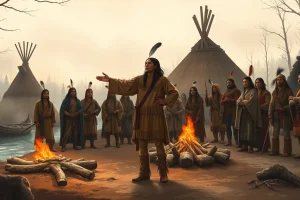
Following the American Revolution, Britain cultivated alliances with Indigenous nations to counter American expansion and protect the fur trade. The Indian Department, a British colonial agency, managed these relationships through gift-giving, treaties, and military cooperation. By the early 1800s, American westward expansion threatened Indigenous lands, leading to resistance movements. Tecumseh, a Shawnee war chief, and his brother Tenskwatawa (the Prophet) built a pan-Indian confederation to resist American encroachment. The Battle of Tippecanoe in November 1811, where American forces under William Henry Harrison attacked Prophet’s Town, drove Tecumseh decisively into the British camp. As tensions between Britain and the United States escalated over maritime issues and territorial ambitions, Britain recognized the strategic value of Indigenous allies to defend Canada, which was thinly populated and poorly garrisoned due to the Napoleonic Wars.
What Happened
When the war began on June 18, 1812, British officials, through the Indian Department, called upon Indigenous allies. Thousands of warriors from nations such as the Shawnee, Ojibwa, Odawa, Potawatomi, Mohawk, and others responded. The fall of Fort Michilimackinac on July 17, 1812, involved about 400 Indigenous warriors and 45 British regulars, securing British control of the upper Great Lakes and encouraging further Indigenous support. In August, Tecumseh and approximately 600 warriors helped force the surrender of Fort Detroit by British General Isaac Brock, a victory that inspired additional Indigenous allies to flock to the British cause. This success was repeated at Queenston Heights in October, where Mohawk warriors played a significant role, though Brock was killed. The alliance reached its zenith in 1813 with key operations, including the defence of British positions and raids such as the Battle of Beaver Dams, where Indigenous warriors helped capture an American force. However, the tide turned after the American naval victory on Lake Erie in September 1813. British forces withdrew eastward, and on October 5 they were defeated at the Battle of the Thames, where Tecumseh was killed. This shattered the confederation and significantly weakened the Anglo-Indian alliance. In the South, the Creek War (1813–1814) saw the British attempt to ally with Red Stick Creeks, but their defeat at Horseshoe Bend ended that prospect. By 1814, the alliance was reduced to small-scale operations, and the Treaty of Ghent in December 1814 ended the war without addressing Indigenous land rights.
Why It Matters
The British–Indigenous alliances were vital to the British defence of Upper Canada; without Indigenous warriors, British military strength would have been grossly insufficient. For Indigenous peoples, the alliances were a strategic choice to resist American expansion, but they led to catastrophic losses. The Treaty of Ghent ignored Indigenous sovereignty, and the British abandoned their allies in subsequent peace negotiations. The collapse of Tecumseh’s confederation opened the Northwest to American settlement and paved the way for the removal policies of the 1830s. Historians debate the extent of Indigenous agency, the British commitment, and the alliance’s long-term significance. Many scholars emphasize that Indigenous peoples fought for their own survival rather than simply as British pawns.
Definition
British–Indigenous alliances during the War of 1812 refer to the formal and informal agreements of mutual military and political support between the British Crown and various Indigenous nations. These alliances were not single treaties but a series of relationships rooted in the colonial era’s ‘Covenant Chain’ of alliances, maintained through the Indian Department’s presents, trade, and councils. During the war, they involved joint operations, intelligence sharing, and the coordination of raids.
Background
The alliances grew out of a long tradition of British-Indigenous cooperation dating back to the seventeenth century. After 1783, Britain sought to preserve its influence in the Great Lakes region and to prevent American expansion into Indigenous lands, which would threaten the fur trade. The Indian Department, under officials like Sir William Johnson and later his successors, sustained alliances through ceremonies, gift-giving, and military service. Tecumseh’s confederation, though independent, aligned with the British because they shared a common enemy. The British supplied arms, ammunition, and provisions to Indigenous allies, while Indigenous warriors provided military skill, knowledge of terrain, and numbers that the British lacked.
How It Worked
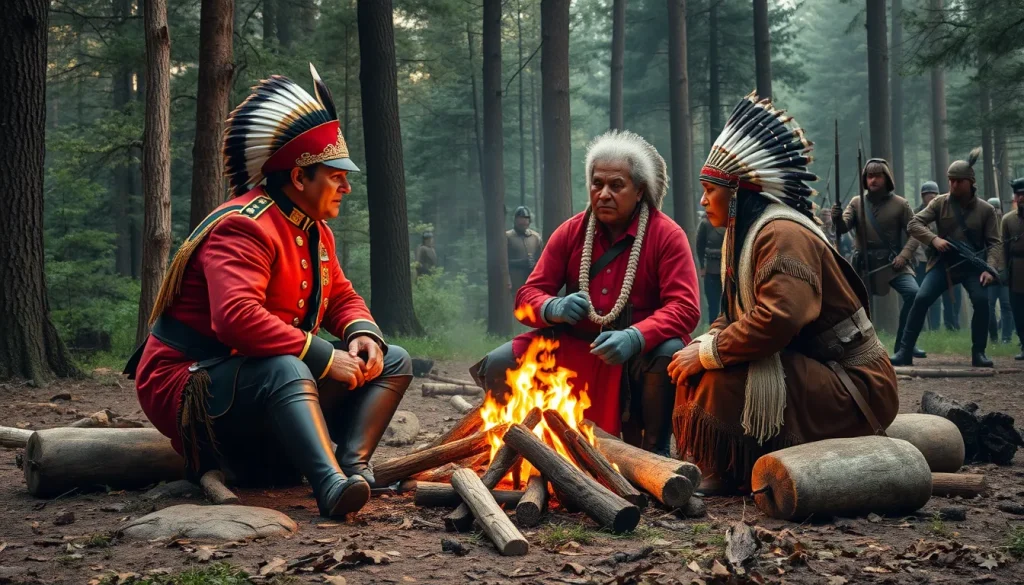
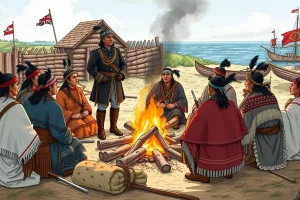
The alliances functioned through a symbiotic military and diplomatic exchange. British officers, often of the Indian Department, lived among Indigenous communities, distributing presents and coordinating war parties. Both sides held councils to plan campaigns. In combat, Indigenous warriors often fought independently, using their expertise in woodland warfare, while British regulars provided artillery and fortified positions. The British relied on Indigenous fighters to intimidate American opponents and to gather intelligence. In return, Indigenous peoples received European goods, weapons, and the promise of British support for their territorial claims. However, the alliance was fragile; Indigenous communities had their own agendas and could not always be directed by British command.
Competing Viewpoints
Historians differ on the nature of these alliances. Some portray Indigenous peoples as British tools, manipulated for imperial aims. Others, such as Donald Fixico and Gregory Dowd, argue that Indigenous leaders like Tecumseh acted with agency, using the British as a counterweight to American expansion. The British were equally wary, fearing dependence on Indigenous allies and the brutal warfare they could inflict. American contemporaries viewed the alliances as barbaric, citing atrocities like the River Raisin massacre. Later interpretations, especially in Canada, celebrate Indigenous contributions, while American narratives often ignore them. The debate rests on whether the alliances were primarily a British strategy or an Indigenous one—both perspectives have merit.
Role in the War of 1812
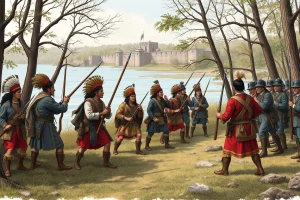
Indigenous allies were instrumental in several key British victories. The capture of Fort Detroit was secured largely by Tecumseh’s demonstrations of strength. At Queenston Heights, Mohawk warriors helped prevent a British defeat. The Battle of Beaver Dams (June 1813) saw an American force surrenders to a British-Iroquois force, largely due to Indigenous ambushes. Conversely, the alliance’s collapse after the Battle of the Thames severely weakened British options. In the West, the British attempted to maintain alliances with Dakota and other nations, but without Tecumseh’s leadership, the confederation dissolved. The war in the South involved separate Anglo-Creek attempts, which also failed. Overall, without Indigenous allies, the British likely would have lost Upper Canada early in the war.
Consequences and Historical Interpretation
The immediate consequence was the British abandonment of Indigenous territorial claims at the Treaty of Ghent and subsequent negotiations. The United States demanded and received lands from both allies and enemies, leading to the Treaty of Fort Jackson (1814) and later treaties that removed Indigenous peoples from the Northwest and South. The war marked the end of significant British-Indian alliances in North America, as Britain shifted away from frontier warfare. Historians view this as a tragic turning point: the war hastened Indigenous dispossession and contributed to the policy of Indian removal. Some Canadian historians, however, highlight how Indigenous participation fostered a sense of partnership and a legacy of respect, though this view is often criticized as celebratory. The alliances are essential to understanding the war’s outcome and its long-term impact on North American expansion.
Primary Sources
Key primary sources include official reports from the British Indian Department, such as letters from Indian Department officials like William Claus and Matthew Elliott. Tecumseh’s speeches, though not directly recorded, are preserved in British accounts. The Treaty of Ghent itself is a crucial document that omits any Indigenous participation. American records, like those of William Henry Harrison and reports of the Battle of the Thames, provide opposing perspectives. The memoir of John Norton (Teyoninhokarawen), a Mohawk leader, offers an Indigenous viewpoint. These sources vary in bias; British and American records often exaggerate Indigenous numbers or portray them as savages, while Norton’s account strives for balance. Many documents are held at Library and Archives Canada and the National Archives in London.
Further Reading
- Allen, Robert S. His Majesty’s Indian Allies: British Indian Policy in the Defence of Canada, 1774–1815. Toronto: Dundurn Press, 1992.
- Willig, Timothy D. Restoring the Thin Red Line: British Policy and the Indians of the Great Lakes, 1783–1812. PhD diss., University of Massachusetts Amherst, 2003.
- Benn, Carl. The Iroquois in the War of 1812. Toronto: University of Toronto Press, 1998.
- Heidler, David and Jeanne T. “Courting Victory: British, Native and American Alliances.” National Park Service, 2017.
- Canadian Encyclopedia. “First Nations and Métis Peoples in the War of 1812.” Accessed 2023.
References
- Heidler, David and Jeanne T. “Courting Victory: British, Native and American Alliances.” National Park Service. Last modified August 15, 2017. https://www.nps.gov/articles/courting-victory.htm.
- Canadian Encyclopedia. “First Nations and Métis Peoples in the War of 1812.” By Michael Eamon and Tabitha Marshall. Last edited January 26, 2017. https://www.thecanadianencyclopedia.ca/en/article/first-nations-in-the-war-of-1812.
- Government of Canada. “Exhibit: Indigenous Contributions to the War of 1812.” Crown-Indigenous Relations and Northern Affairs Canada. Accessed 2023. https://www.rcaanc-cirnac.gc.ca/eng/1348771334472/1607906032957.
- Allen, Robert S. His Majesty’s Indian Allies: British Indian Policy in the Defence of Canada, 1774–1815. Toronto: Dundurn Press, 1992.
FAQ
Why did Indigenous peoples ally with the British during the War of 1812?
Indigenous nations allied with the British primarily to resist American territorial expansion and to protect their lands and way of life. They saw Britain as a 'lesser evil' compared to American land hunger, and sought a strategic ally to counter U.S. aggression.
What happened to Indigenous alliances after the War of 1812?
After the war, the British abandoned their Indigenous allies in the Treaty of Ghent and subsequent peace negotiations. The United States demanded and received lands, leading to treaties such as the Treaty of Fort Jackson. This collapse undermined Indigenous sovereignty and contributed to the later policy of Indian removal.
How significant were Indigenous contributions to the British war effort?
Indigenous warriors were vital to British success, particularly in the early years. They participated in key battles like Detroit, Queenston Heights, and Beaver Dams, and helped secure the frontier. Without them, the British likely would have lost Upper Canada. Their contributions were celebrated at the time but later became obscured.
Leave a Reply