Short Answer
Laura Secord’s walk from Queenston to Beaver Dams in June 1813 to warn British lieutenant James FitzGibbon of an impending American attack was a genuine act of bravery, but it remained almost unremarked for decades. The story of her warning only became widely famous in the late nineteenth and twentieth centuries, when it was adapted to symbolize Canadian loyalty, pioneer courage, and women’s contribution to the nation. This article examines how a historically verifiable event was gradually refashioned into a celebrated national myth.
Historical Context
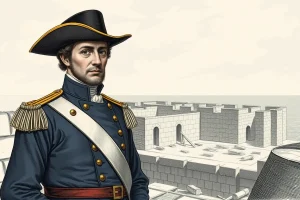
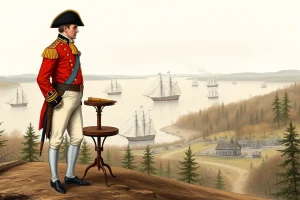
During the War of 1812, the Niagara frontier was a critical battleground. After American forces captured Fort George on May 27, 1813, they occupied the surrounding area, including Queenston and St. Davids. The British withdrew but maintained an outpost at Beaver Dams (near present-day Thorold, Ontario), led by Lieutenant James FitzGibbon of the 49th Regiment. The Americans, under Colonel Charles Boerstler, planned to surprise and destroy this outpost. Indigenous warriors from Kahnawake and other Mohawk communities played a crucial role in the region as British allies, often serving as scouts and raiders. The Secord family, Loyalists of American origin, lived in Queenston, where Laura and her wounded husband James endured the occupation.
What Happened
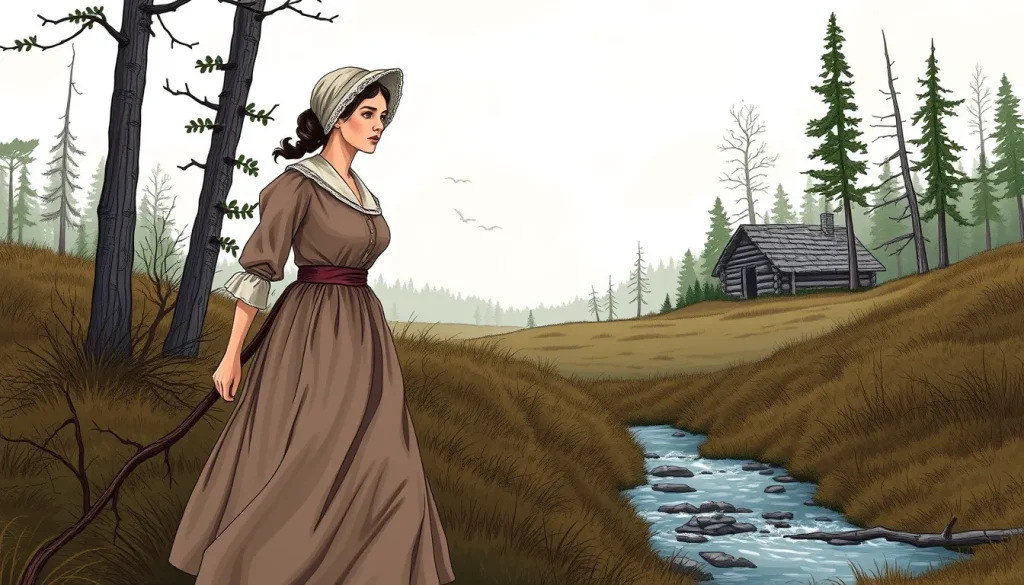
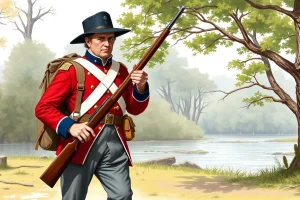
In mid-June 1813, American officers were billeted in the Secord home. Laura Secord overheard plans for a forthcoming American assault on FitzGibbon’s position. With James still recovering from wounds suffered at the Battle of Queenston Heights, Laura decided to carry the warning herself. On or around June 22, 1813, she walked roughly 30 kilometres, avoiding roads and travelling through woods and swamps, reportedly crossing Twelve Mile Creek. She encountered an encampment of Mohawk warriors, who escorted her to FitzGibbon’s headquarters at the DeCew house. FitzGibbon did not mention Secord in his official report of the battle. On June 24, American troops were ambushed by Mohawk forces supported by FitzGibbon’s regulars, and Boerstler surrendered. The victory kept the British position in the Niagara Peninsula secure, but Secord’s role went unacknowledged for many years.
Why It Matters
Laura Secord’s warning may have contributed to the American defeat at Beaver Dams, but its significance is debated. More clearly, the story became a cornerstone of Canadian historical memory, used to promote ideals of loyalty, sacrifice, and national identity. Because there is little contemporary documentation of Secord’s own actions, later generations have projected onto her a variety of meanings, from Imperial patriotism to feminist courage. Her fame is less a direct result of the event than a product of active commemoration and political and cultural needs.
Definition
In this context, “becoming famous” refers to the process by which Laura Secord’s walk and warning were transformed from a relatively obscure personal incident into a widely known, celebrated story in Canadian popular history. This did not happen immediately; it involved decades of petitioning, publications, memorials, and cultural adaptations.
Background
Secord was born in Massachusetts in 1775 but moved to Upper Canada with her family in 1795. She married James Secord, a merchant in Queenston. During the War of 1812, James served in the 1st Lincoln Militia and was wounded at Queenston Heights. The American occupation placed the family in close contact with enemy officers, providing Laura with the opportunity to overhear the plot. At the time of her walk, she was 37 years old and the mother of several children.
How It Worked
Secord’s ascent to fame occurred in several stages. After the war, she and James sought recognition and financial relief through petitions to the government. Supporting letters from FitzGibbon in 1820, 1827, and 1837 acknowledged that she had brought information, but they were not enough to secure a military pension. In 1860, when Albert Edward, Prince of Wales, visited Canada, Secord—then aged 85—presented a memorial of her service. The Prince later sent her £100, marking the first formal recognition of her act. After her death in 1868, the story began to circulate more widely, particularly through biographies and school readers in the late 1800s. The women’s suffrage movement seized on her as an example of female courage, and during World War I her image was used to encourage women to buy Victory Bonds. The founding in 1913 of the Laura Secord Candy Company cemented her name in popular consciousness, though often in a commercialized form.
Competing Viewpoints
Historians have examined the reliability of the Laura Secord story with varying conclusions. Some accept the basic account, noting that FitzGibbon corroborated it, and the timing of warnings from Indigenous scouts makes Secord a plausible messenger. Others emphasize the lack of primary evidence and the inconsistencies in FitzGibbon’s later recollections. The addition of a cow, barefoot walking, and other embellishments are widely viewed as later inventions. The degree to which her warning influenced the ambush is also debated; some argue that the Mohawk warriors would have warned FitzGibbon regardless, while others credit her with providing crucial advance notice.
Role in the War of 1812
In the immediate military sense, Secord’s warning may have helped prepare British and Indigenous forces for the American attack on June 24, 1813. FitzGibbon’s later testimonial states that he took action based on information she delivered. However, official reports of the Battle of Beaver Dams do not mention her, and Indigenous scouts were already monitoring American movements. Most historians agree that her action was brave but that its strategic significance is secondary to the broader defense of Upper Canada.
Consequences and Historical Interpretation
The long-term consequence of Secord’s warning is primarily cultural. She became enshrined as a Canadian heroine, with monuments at Queenston Heights, a memorial trail, a commemorative stamp, and the chocolate company bearing her name. The story has been adapted in plays, books, and “Heritage Minutes” commercials, reinforcing a narrative of loyalist sacrifice. Historians such as Pierre Berton and Cecilia Morgan have critiqued this mythologization, noting that it often exaggerates her role and overlooks the contributions of Indigenous allies, who actually conducted the ambush. Secord’s fame thus reflects the needs of nation-building more than the historical record.
Primary Sources
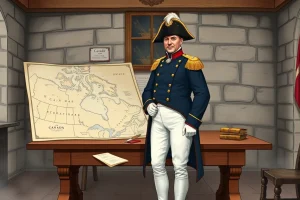
Relevant primary sources include official military reports of the Battle of Beaver Dams, which do not mention Laura Secord. More direct evidence appears in letters from Lieutenant James FitzGibbon to the Secords, written in 1820, 1827, and 1837, in which he acknowledges receiving information from her. Secord’s own petition to the Prince of Wales in 1860 is a first-hand account of her journey. These documents are held in archival collections in Canada, including the Library and Archives Canada, but no diaries or letters from Secord herself are known to survive.
Further Reading
- Coates, Colin M., and Cecilia Morgan. Heroines & History: Representations of Madeleine de Verchères and Laura Secord. University of Toronto Press, 2002.
- Berton, Pierre. The Flames of War: The War of 1812. McClelland & Stewart, 1985.
- Benn, Carl. Iroquois in the War of 1812. University of Toronto Press, 1998.
- Hitsman, J. Mackay. The Incredible War of 1812: A Military History. University of Toronto Press, 1965.
References
- “Laura Secord.” The Canadian Encyclopedia. https://thecanadianencyclopedia.ca/index.php/en/article/laura-secord
- “Laura Secord.” U.S. National Park Service. https://nps.gov/people/laura-secord.htm
- Martin, Sandra. “Creating the Cult of Laura Secord.” Friends of Fort York. https://www.fortyorkfoundation.ca/newsletter/creating-the-cult-of-laura-secord/
- “Spotlight: Laura Secord.” All About Canadian History. https://cdnhistorybits.wordpress.com/2015/06/23/laura-secord-journey/
- “Early Canada Historical Narratives — LAURA SECORD, HOMESPUN HEROINE.” http://www.uppercanadahistory.ca/1812/18127.html
FAQ
Did Laura Secord's warning actually affect the Battle of Beaver Dams?
Historians have debated this. FitzGibbon later stated that her information helped him prepare, but Indigenous scouts were already monitoring American movements. The battle was primarily won by the ambush of Mohawk warriors, and her warning may have been supplementary rather than decisive.
Why was Laura Secord not recognized during her lifetime?
Official reports of the battle did not mention her, and she was not eligible for a military pension. She and her husband petitioned for years, but only in 1860 did the Prince of Wales send her £100 in recognition.
What are the most common myths about Laura Secord?
Common embellishments include that she walked barefoot, took a cow for protection, and gave troops chocolates. Historians consider these later inventions. The cow story and the barefoot claim are widely seen as symbolic additions to make her appear more self-sacrificing.
Leave a Reply