

Short Answer
The War of 1812, fought between the United States and Great Britain from 1812 to 1815, is often described as a “second American Revolution” or a “second war for independence.” This interpretation holds that the conflict confirmed American sovereignty and secured the rights of the young republic against British maritime aggressions. However, the war’s limited aims and inconclusive military results lead many historians to question whether it truly represented a revolutionary transformation comparable to the first American Revolution. This article examines the historical context, major events, and competing scholarly interpretations of the War of 1812 as a potential second revolution.
Historical Context
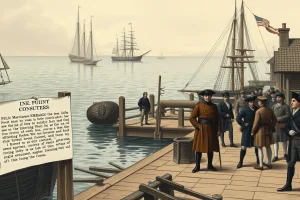
After 1783, the United States faced challenges to its commercial and territorial independence. British policies, including the impressment of American sailors and trade restrictions under the Orders-in-Council, violated American neutral rights during the Napoleonic Wars. Meanwhile, British support for Native American resistance in the Northwest threatened American expansion. These tensions escalated, leading to the declaration of war on June 18, 1812. The war thus grew directly from unresolved issues dating to the Revolutionary era.
What Happened
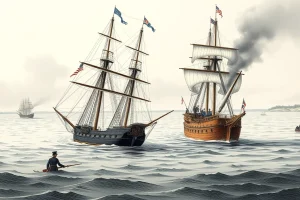
The war featured American attempts to invade British Canada, naval engagements such as the USS Constitution’s victories, the burning of Washington in 1814, and the defense of Baltimore and Fort McHenry. British offensives were repulsed at Lake Champlain and New Orleans. The conflict ended with the Treaty of Ghent on December 24, 1814, ratified in February 1815, restoring pre-war boundaries. Key participants included American, British, Canadian, and Indigenous forces, with leaders like Tecumseh, Andrew Jackson, and Sir Isaac Brock.
Why It Matters
The war’s immediate consequences included the end of impressment (though not specified in the treaty) and a wave of American nationalism. It also led to the decline of the Federalist Party and the opening of westward expansion. The war’s memory is complicated: in Canada, it is seen as a defense against American invasion; in the United States, it fostered national symbols and a sense of maturity. The question of whether it was a “second revolution” remains central to its legacy.
Definition
The term “Second American Revolution” in reference to the War of 1812 suggests that the conflict completed the unfinished business of the American Revolution by securing full independence, national sovereignty, and the rights of American citizens on the high seas. It implies a transformative effect on the nation’s identity and position.
Background
The American Revolution had won political independence from Britain, but economic and maritime subordination persisted. The British continued to impress American sailors, restrict trade through the Orders-in-Council, and support Native American resistance to U.S. expansion. These issues formed the core grievances that led to war in 1812.
How It Worked
Proponents of the “second revolution” interpretation argue that the war vindicated American neutral rights, ended impressment, and unified the nation. The Treaty of Ghent, while not addressing these issues, nevertheless resulted in their cessation in practice. The war also produced national symbols like “The Star-Spangled Banner” and heroes such as Andrew Jackson, reinforcing a sense of American identity.
Competing Viewpoints
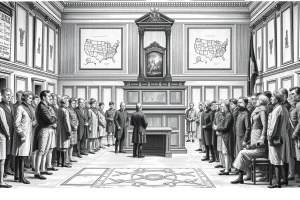
Historians are divided. Some, like Donald Hickey, emphasize the war’s limited goals and outcomes, calling it a “forgotten conflict” rather than a revolution. Others note that the term “revolution” implies fundamental social or political change, which the War of 1812 did not bring about—unlike the Civil War, which is also sometimes called the Second American Revolution. The war restored the status quo ante bellum and did not alter the structure of society. Thus, many scholars prefer “Second War of Independence” to emphasize the completion of political independence without invoking revolutionary transformation.
Role in the War of 1812
The concept of a “second revolution” is retrospective. During the war itself, Americans used the rhetoric of “Free Trade and Sailors’ Rights” and saw the conflict as a defense of national honor. The war’s role as a second revolution lies in its symbolic value for American nationhood, but its military and diplomatic results were modest.
Consequences and Historical Interpretation
In the years after 1815, the war’s interpretation shifted. The “Era of Good Feelings” reflected nationalism, and the war’s status as a successful defense of independence grew. However, the war did not produce major social upheaval. The primary long‑term consequence was the end of British interference in American affairs, allowing westward expansion at the expense of Indigenous peoples. The label “Second American Revolution” captures the war’s significance in consolidating American sovereignty, but most historians regard it as an overdrawn characterization.
Primary Sources
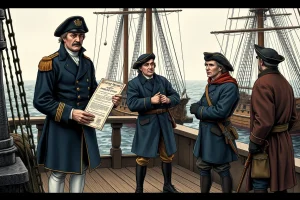
The most relevant contemporary documents include President James Madison’s war message to Congress of June 1, 1812, which outlined the grievances against Great Britain, and the Treaty of Ghent of December 24, 1814, which ended the conflict. Madison’s message focuses on impressment, trade restrictions, and British incitement of Native American attacks, providing insight into the official American rationale. The treaty itself returns to the status quo ante bellum and makes no mention of the issues that caused the war, underscoring the limited official outcome. Other sources, such as personal letters of participants like Andrew Jackson or British officers, reveal the experiences and attitudes of the era, but they are often one-sided. These documents are available in published editions from the National Archives and the Library of Congress.
Further Reading
- Hickey, Donald R. The War of 1812: A Forgotten Conflict. Urbana: University of Illinois Press, 1989.
- Taylor, Alan. The Civil War of 1812: American Citizens, British Subjects, Irish Rebels, & Indian Allies. New York: Alfred A. Knopf, 2010.
- Stagg, J.C.A. The War of 1812: Conflict for a Continent. Cambridge: Cambridge University Press, 2012.
- American Battlefield Trust. “Two Wars for Independence.” Accessed 2023. https://www.battlefields.org/learn/articles/two-wars-independence.
- ushistory.org. “The Second War for American Independence.” Accessed 2023. http://ushistory.org/us/21e.asp.
References
- American Battlefield Trust. “Two Wars for Independence.” https://www.battlefields.org/learn/articles/two-wars-independence.
- ushistory.org. “The Second War for American Independence.” http://ushistory.org/us/21e.asp.
- Hickey, Donald R. “The Legacy of 1812: How a Little War Shaped the Transatlantic World.” London Journal of Canadian Studies 28, no. 1 (2013): 1–18.
- Ransom, Roger L. “Fact and Counterfact: The ‘Second American Revolution’ Revisited.” Civil War History 45, no. 1 (1999): 28–60.
- Commonplace. “You Say You Want A Second Revolution?: The War of 1812 and Theater in the United States.” https://commonplace.online/article/you-say-you-want-a-second-revolution/.
FAQ
Did the War of 1812 achieve its goals?
Though the treaty did not address impressment or neutral rights, these issues ceased in practice after the war, and American independence was confirmed.
Why is the War of 1812 called a second war of independence?
Because it was fought to end British maritime violations and secure the sovereignty of the United States, completing the work of the American Revolution.
Is 'Second American Revolution' an accurate label?
Most historians argue it is an exaggeration, as the war produced no fundamental social or political change and restored the pre-war status quo.

Leave a Reply