
Short Answer
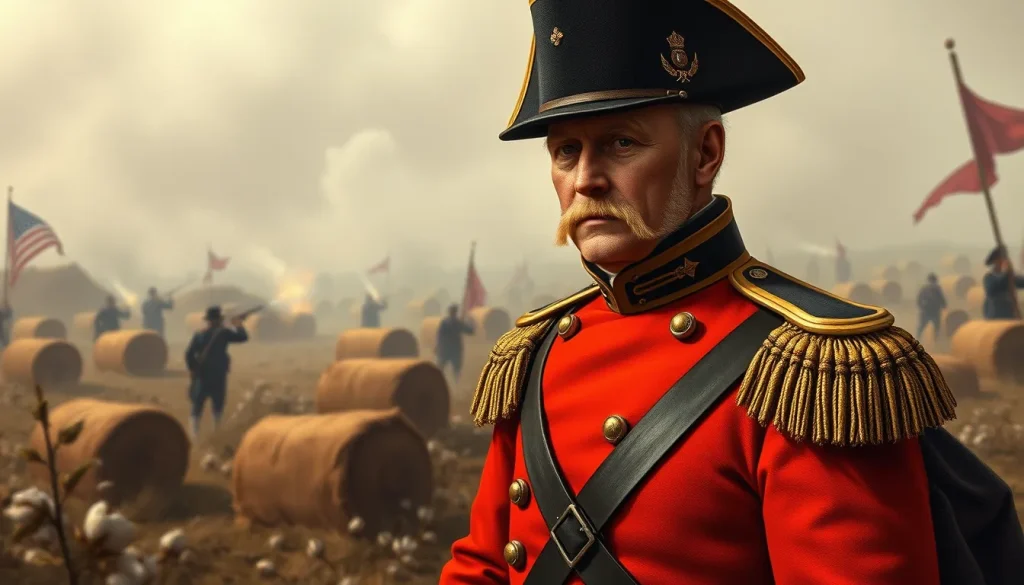
Major-General Sir Edward Michael Pakenham (19 March 1778 – 8 January 1815) was an Anglo-Irish officer in the British Army, a politician, and the brother-in-law of Arthur Wellesley, the Duke of Wellington. He served with distinction in the Peninsular War and was appointed to command British forces in North America during the War of 1812. Pakenham is best known for his death while leading the British attack at the Battle of New Orleans on 8 January 1815, a defeat that came after the signing of the Treaty of Ghent but before its ratification.
Historical Context
By 1814, the War of 1812 had reached a stalemate, with British forces undertaking a series of coastal attacks along the American seaboard. After the burning of Washington in August 1814, Vice-Admiral Alexander Cochrane persuaded the Admiralty that a campaign against the strategic port of New Orleans would weaken American resolve, challenge the legality of the Louisiana Purchase, and potentially hasten an end to the war. The British planned an amphibious expedition to seize the mouth of the Mississippi River and capture New Orleans, a thriving commercial hub. The expedition was initially placed under Major-General Robert Ross, but Ross was killed at the Battle of Baltimore in September 1814. Pakenham, then a major-general and fresh from the Peninsular War, was selected to replace him. The campaign took place during the final phase of the war; the Treaty of Ghent was signed on 24 December 1814, but news did not reach the combatants until February 1815, so the Battle of New Orleans occurred after the peace was concluded but before it was ratified.
What Happened
Pakenham arrived in the Gulf Coast in mid-December 1814 and took command of the British forces on Christmas Day, 1814. He found the army already ashore and positioned about 14 km (9 miles) from New Orleans, having fought an engagement on 23 December. The American forces, commanded by Major-General Andrew Jackson, had constructed a formidable defensive line, known as Line Jackson, stretching from the Mississippi River to an impassable swamp. Pakenham reorganized his command into four brigades and ordered a reconnaissance-in-force on 28 December to probe the American defenses.
On 1 January 1815, a British artillery bombardment failed to breach the American line, silenced by the more effective fire of American guns. Pakenham then planned a complex assault for the morning of 8 January. His plan called for a diversionary attack on the west bank of the Mississippi, while the main force struck the center and left of the American line. Colonel William Thornton was to cross the river and capture an American battery, but he was delayed, and the main attack went forward without the necessary support.
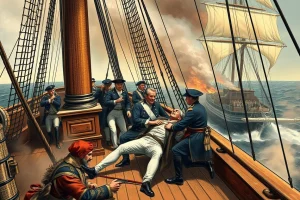
In the early morning of 8 January, the British advanced across an open field toward the American earthworks. The Americans, protected by earthworks and well-served artillery, poured a devastating fire into the British ranks. Pakenham, while rallying his troops, was struck by grapeshot in the leg and then again in the arm, and finally a bullet to the chest proved fatal. He died on the battlefield. Command devolved to Major-General John Lambert, who called off the attack and withdrew. British casualties exceeded 2,000, while American losses were light. The British re-embarked and left the Gulf of Mexico.
Why It Matters
Pakenham’s death symbolically ended the British campaign against New Orleans and contributed to the American victory. The battle, which occurred after the Treaty of Ghent was signed, nonetheless shaped American national memory as a great triumph over the British. For the British, Pakenham’s death was a significant loss of an able commander. Historians have debated Pakenham’s decisions, particularly his decision to proceed with the main assault despite the failed crossing of the Mississippi. Some argue he was overly aggressive and underestimated American defenses; others contend that his plans were sound but poorly executed due to delays and the nature of the ground. Pakenham’s legacy is tied to the defeat, yet he is often remembered as a brave and competent officer who died in a lost cause.
Early Life
Edward Michael Pakenham was born on 19 March 1778 at Pakenham Hall (now Tullynally Castle) in County Westmeath, Ireland, to Edward Pakenham, 2nd Baron Longford, and Catherine Rowley. He was educated at The Royal School, Armagh. At age sixteen, he purchased a commission as a lieutenant in the 92nd Regiment of Foot on 28 May 1794. He was quickly promoted, becoming a captain and then a major in the 33rd Light Dragoons by the end of 1794. In 1799, he was appointed lieutenant-colonel of the 64th Foot and served in Ireland during the rebellion of 1798. He also represented Longford Borough in the Irish House of Commons from 1799 to 1800.
Role Before the War
Pakenham served in the West Indies in 1801 and was wounded at the capture of St Lucia in 1803. He commanded a battalion at the Battle of Copenhagen (1807) and at the reduction of Martinique (1809). In 1806, his sister Catherine married Arthur Wellesley, the future Duke of Wellington. Pakenham joined Wellington in the Peninsula after the Battle of Talavera in 1809, initially as an assistant adjutant-general, then as a brigade commander. He fought at Busaco, Fuentes de Oñoro, and at the Battle of Salamanca in 1812, where he commanded the Third Division. Wellington praised him for his role in that victory. He was appointed adjutant-general in the Peninsula in 1813 and fought in several Pyrenees battles. He received a knighthood (K.B.) and later was made G.C.B. on 4 January 1815.
Role During the War
Pakenham was promoted to major-general in 1812 and, after Ross’s death, accepted the command of the expedition against New Orleans in September 1814. He was personally opposed to the war, but obeyed his orders. He reached the army on Christmas Day, 1814, delayed by adverse winds. He reorganized the force and conducted reconnaissance. He faced a difficult position: the American line was strong, the terrain exposed his troops, and he had disagreements with Admiral Cochrane over the landing site. He attempted an artillery bombardment on 1 January 1815, which failed, and then planned the final assault that resulted in his death.
Major Actions
Pakenham’s key actions during the campaign included the reconnaissance-in-force on 28 December 1814, the artillery duel on 1 January 1815, and the decisive infantry assault on 8 January 1815. His plan for 8 January involved a four-brigade attack, including a diversion across the Mississippi River. The failure of the crossing force and the strong American defense led to disaster. Pakenham’s decision to press the attack without that support remains a point of historical debate.
Contemporary Accounts
Contemporary accounts from British officers, such as those collected from subordinates after his death, described Pakenham as a true British soldier who died in the discharge of his duty. His family and brother-in-law Wellington regarded him highly; Wellington wrote in 1812 that Pakenham was “one of the best we have.” American sources noted his bravery but criticized the assault. There is also an anecdote of Wellington saying to Pakenham at Salamanca, “Now’s your time, Ned,” showing their close personal and professional relationship.
Later Life
Pakenham died on 8 January 1815 from wounds received at the Battle of New Orleans. His body was transported to Ireland and buried in the family vault at St. Etchen’s Church in Killucan, County Westmeath. He left no children, and his title as a baron’s son was inherited by his brother.
Historical Legacy
Pakenham is primarily remembered for the disastrous Battle of New Orleans, which tarnished his otherwise distinguished military career. American historiography celebrates the American victory, while British accounts treat it as a tragic postscript to the war. Historians have analyzed Pakenham’s tactics and the conditions that led to the defeat, often focusing on his decision to attack the strongest part of the American line. He is also remembered as a competent officer whose career was cut short, and as an example of the human cost of the war.
Primary Sources
Key primary sources include Pakenham’s own letters and dispatches to his superiors, particularly those to the Adjutant-General and the War Office. His official correspondence from the Louisiana campaign is held in British archives, including The National Archives in Kew. The reports of American officers, including Andrew Jackson’s battle report of 9 January 1815, provide the opposing perspective. British officer accounts, such as those collected in the 1941 essay mentioned in the NPS source, offer posthumous assessments. A useful documentary collection is John K. Mahon’s “The War of 1812” which includes related documents. However, no complete collection of Pakenham’s personal letters is known to exist in a published edition. Researchers may consult the Wellington Papers at the University of Southampton for his brother-in-law’s correspondence.
Further Reading
- Grodzinski, John R. “Edward Pakenham.” In The Canadian Encyclopedia, 2011.
- Remini, Robert V. The Battle of New Orleans. New York: Viking, 1999.
- Smith, Zachary F. The Battle of New Orleans. Louisville, KY: J. P. Morton, 1904.
- Gurwood, John, ed. The Dispatches of Field Marshal the Duke of Wellington. London: 1837.
- National Park Service. “Sir Edward Pakenham.” Accessed from nps.gov.
References
- “Edward Pakenham.” Wikipedia, accessed 2023. URL: https://en.wikipedia.org/wiki/Edward_Pakenham
- National Park Service. “Sir Edward Pakenham.” U.S. Department of the Interior, 2015. URL: https://www.nps.gov/people/edward-pakenham.htm
- Grodzinski, John R. “Edward Pakenham.” The Canadian Encyclopedia, updated 2025. URL: https://thecanadianencyclopedia.ca/en/article/edward-pakenham
- Dictionary of National Biography, 1885-1900, s.v. “Pakenham, Edward Michael.” URL: https://en.wikisource.org/wiki/Dictionary_of_National_Biography,_1885-1900/Pakenham,_Edward_Michael
- Seward Family Digital Archive. “Edward Pakenham.” University of Rochester. URL: https://urprojects.lib.rochester.edu/s/seward/item/94317
FAQ
How did Edward Pakenham die?
Pakenham was killed on 8 January 1815 during the Battle of New Orleans. He was struck by grapeshot in the leg, then in the arm, and finally a bullet to the chest proved fatal as he rallied his troops.
What was Pakenham's relationship to the Duke of Wellington?
Pakenham was Wellington's brother-in-law; his sister Catherine married Arthur Wellesley in 1806. They served together in the Peninsular War, where Wellington praised Pakenham's abilities.
Why is the Battle of New Orleans significant despite the Treaty of Ghent?
The battle occurred after the treaty was signed on 24 December 1814 but before it was ratified by the U.S. Senate in February 1815. It was a decisive American victory that boosted national morale and shaped the memory of the war.


Leave a Reply