Short Answer
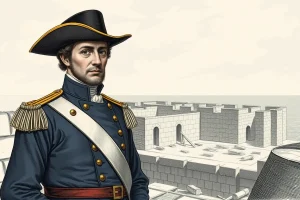
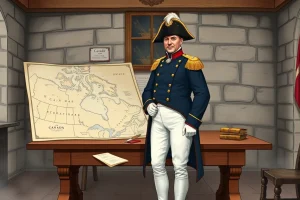
Alexander Macomb, a young American brigadier general, commanded the Right Division of the Northern Army during the Battle of Plattsburgh, fought on September 11, 1814, near Plattsburgh, New York, along the shores of Lake Champlain. This engagement, part of the War of 1812, marked a crucial American defensive success against a major British invasion from Canada. Macomb’s leadership, combined with the naval victory of Master Commandant Thomas Macdonough, ended the British threat to the northern frontier and bolstered American standing in the peace negotiations then underway at Ghent.
Historical Context
By 1814, the War of 1812 had reached a critical phase. With the defeat of Napoleon in Europe, Britain could devote more resources to the American conflict. A British invasion from Canada into northern New York was intended to secure control of Lake Champlain and sever New England from the rest of the United States. The British governor-general of Canada, Lieutenant General Sir George Prevost, assembled a force of over 10,000 regulars and militia for the campaign. The American defense of the region fell to Macomb, who had been promoted to brigadier general in 1814 and assigned to command on the northern frontier.
What Happened
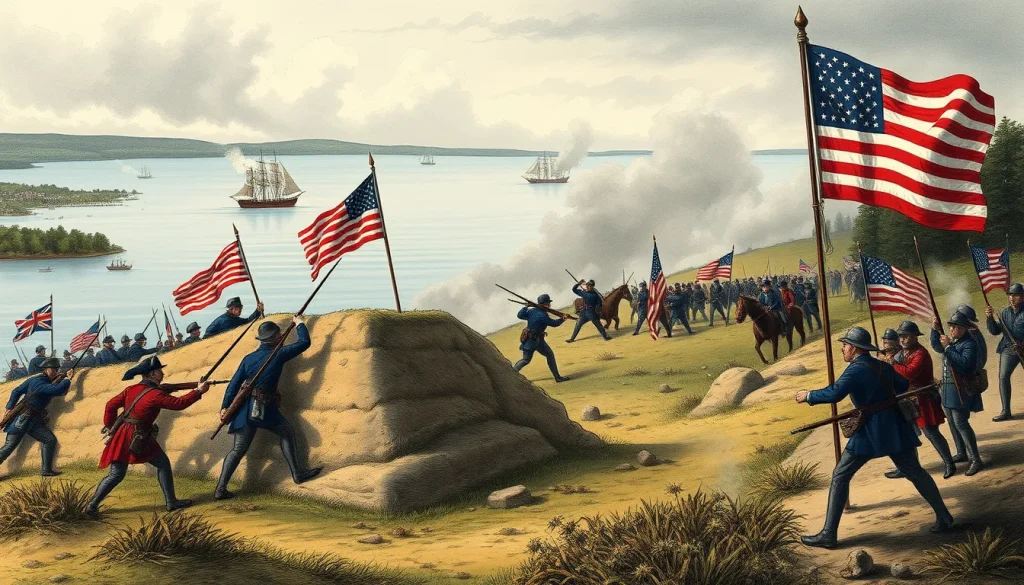
In early September 1814, Prevost’s army advanced south from Canada, crossing the border near Plattsburgh. Macomb, with only about 1,500 regular troops and additional militia, could not match the British numbers. He conducted a fighting retreat, using defensive measures including felled trees and false roads (abattis) to slow and confuse the British advance. The British reached Plattsburgh on September 10 and prepared to attack the American earthworks. Meanwhile, the British naval squadron on Lake Champlain, commanded by Captain George Downie, engaged the American fleet under Macdonough in Plattsburgh Bay on the morning of September 11. Macdonough’s decisive victory disabled the British ships, and Prevost, lacking naval support and seeing the American defenses still intact, ordered the army to withdraw to Canada that evening. The battle was a victory for the Americans, but it was primarily a defensive success that repelled the invasion rather than a pursuit of the retreating enemy.
Why It Matters
The Battle of Plattsburgh ended the British campaign into northern New York and secured the American northern frontier for the rest of the war. It also influenced the Treaty of Ghent negotiations, as the British, having failed to gain territorial advantages, were unable to press for major concessions. For Macomb, the victory established his reputation as a capable commander and earned him national acclaim. Historians have debated the relative significance of Macdonough’s naval victory versus Macomb’s land defense, but the battle is generally seen as a joint achievement that thwarted a major British strategic move.
Early Life
Alexander Macomb was born on April 3, 1782, in Detroit, then part of British America. His father, also named Alexander Macomb, was a merchant and fur trader, and his mother, Mary Catherine Navarre, came from a French-descended family. The family moved to New York City when Macomb was a child, where his father became a successful land speculator. Macomb received a classical education at Newark Academy in New Jersey.
Role Before the War
Macomb entered the militia at age sixteen and received a commission as a cornet in the Regular Army in 1799, with the recommendation of Alexander Hamilton. He served briefly before resigning in 1800. In 1801, he was commissioned a second lieutenant and soon joined the newly established Army Corps of Engineers at West Point, where he was one of the first officers trained. Over the next decade, Macomb directed construction of coastal fortifications in the South and helped establish posts in the western territories.
Role During the War
At the outbreak of the War of 1812, Macomb was promoted to colonel and given command of the 3rd Artillery Regiment. He participated in the capture of Fort George in May 1813 and served in the St. Lawrence campaign under Major General James Wilkinson, earning a brigade command. In 1814, Macomb was promoted to brigadier general and placed in charge of the Right Division of the Northern Army, responsible for defending the New York–Canada border. It was in this capacity that he faced the British invasion at Plattsburgh.
Major Actions
Macomb’s principal action was the defense of Plattsburgh in September 1814. He organized the American defensive positions and coordinated with naval forces on Lake Champlain. His use of abattis, deceptive roads, and careful positioning of his small force delayed the British advance. When the British launched their assault on September 11, Macomb’s troops held the lines, and the simultaneous American naval victory sealed the British retreat. Macomb’s leadership was marked by calm determination despite being heavily outnumbered.
Contemporary Accounts
Macomb’s own official report to the Secretary of War, dated September 15, 1814, described the battle and praised the conduct of his men. American newspapers celebrated the victory, and Macomb received the thanks of Congress and a Congressional Gold Medal. British accounts, however, emphasized the naval defeat as the primary reason for Prevost’s retreat. Contemporary letters and journals from participants provide firsthand perspectives on the battle.
Later Life
After the war, Macomb continued in the army, rising to become the Chief of Engineers in 1821. In 1828, he was promoted to Major General and appointed Commanding General of the U.S. Army, a position he held until his death. He dealt with administrative issues and advocated for a larger and more professional army. Macomb died on June 25, 1841, in Washington, D.C., and is buried in Congressional Cemetery.
Historical Legacy
Macomb’s reputation rests primarily on his victory at Plattsburgh. He was styled “The Hero of Plattsburgh” by some newspapers, although later historians have often given more credit to Macdonough’s naval victory. Macomb’s defensive tactics and leadership have been studied as examples of effective use of limited resources. His later career as head of the army is also noted, though it lacked the drama of the battle.
Primary Sources
Key primary sources include Macomb’s official battle report (September 15, 1814), which provides the American command perspective. Lieutenant General Prevost’s dispatch to London offers the British assessment. Commodore Macdonough’s naval report details the sea engagement. Contemporary newspaper accounts, such as those from Albany and New York papers, capture the public reaction. These sources must be read with awareness of their authors’ positions and biases.
Further Reading
- Raines, Edgar F., and Allan S. Everest. “The Military Career of Alexander Macomb and Alexander Macomb at Plattsburg, 1814.” Journal of Military History (1990).
- Quaife, Milo M., ed. “Detroit Biographies: Alexander Macomb.” Burton Historical Collection Leaflet 10, no. 1 (1931).
- Jenkins, John S. “Alexander Macomb.” In Daring Deeds of American Generals, 295–322. New York: A. A. Kelley, 1856.
- Everest, Allan Seymour. The Military Career of Alexander Macomb and Alexander Macomb at Plattsburg, 1814. (Detailed study).
References
- Raines, Edgar F., and Allan S. Everest. “The Military Career of Alexander Macomb and Alexander Macomb at Plattsburg, 1814.” Journal of Military History, 1990.
- Quaife, Milo M., ed. “Detroit Biographies: Alexander Macomb.” Burton Historical Collection Leaflet 10, no. 1 (1931).
- Jenkins, John S. “Alexander Macomb.” In Daring Deeds of American Generals, 295–322. New York: A. A. Kelley, 1856.
- Army Historical Foundation. “Major General Alexander Macomb.” Accessed via armyhistory.org.
FAQ
What was the outcome of the Battle of Plattsburgh?
The American forces under Alexander Macomb and Thomas Macdonough defeated a larger British invasion force, forcing the British to retreat to Canada and ending the campaign in northern New York.
How did Alexander Macomb contribute to the victory?
Macomb organized the defensive positions, used deceptive tactics such as abattis and false roads, and led his outnumbered troops in repelling the British land attack while the naval victory sealed the retreat.
Why is Alexander Macomb remembered as a key figure in the War of 1812?
Macomb's leadership at Plattsburgh halted a major British offensive, contributed to the peace negotiations, and earned him the title 'Hero of Plattsburgh'.


Leave a Reply