Short Answer
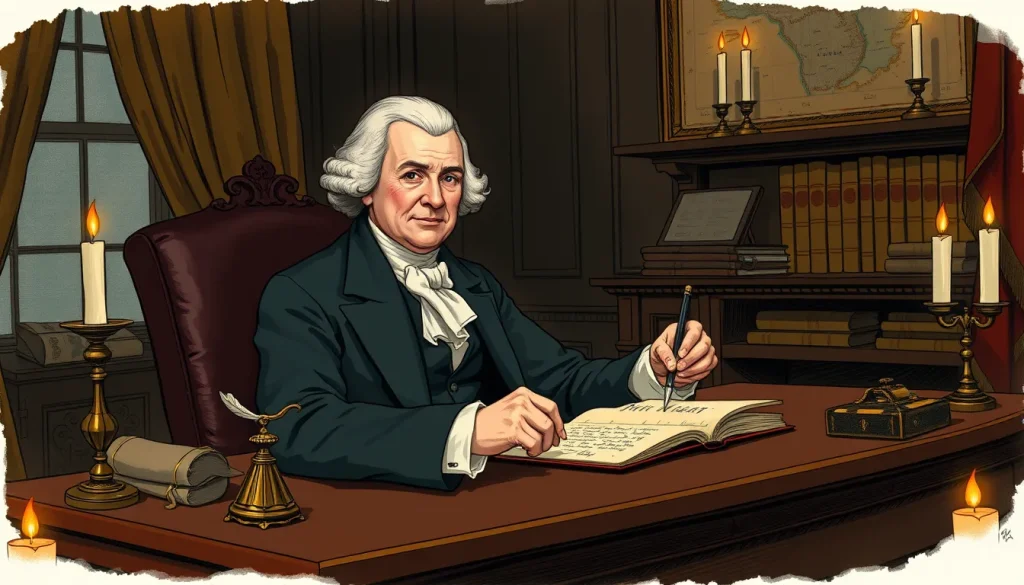
James Madison’s War Message to Congress, delivered on June 1, 1812, was a formal presidential communication asking Congress to consider whether to declare war on Great Britain. It enumerated four principal grievances—impressment of American sailors, illegal blockades, the Orders in Council, and British encouragement of Indian warfare in the Northwest—and argued that a state of war already existed between the two nations. The message directly led to the U.S. declaration of war on June 18, 1812, marking the first time the United States formally declared war under its own Constitution.
Historical Context
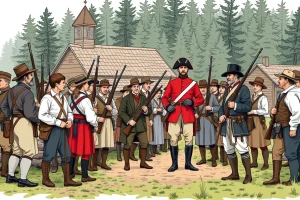
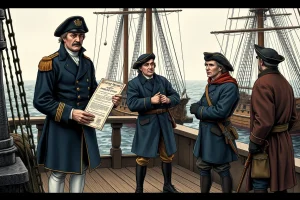
After the renewal of the Napoleonic Wars in 1803, the United States struggled to maintain its neutrality and trade rights. The British Royal Navy, in its war against France, routinely stopped American merchant ships to search for deserters, a practice known as impressment that swept up thousands of American citizens. Additionally, Britain issued the Orders in Council (1807–1809), which declared a blockade of French-controlled European ports and required neutral ships to call at British ports, effectively strangling American commerce. In the frontier regions, British agents in Canada maintained alliances with Indigenous nations who resisted American settlement, fueling violence and suspicion. American diplomatic efforts, including the embargo of 1807–1808 and the Non-Intercourse Act of 1809, failed to force British concessions, creating a political climate in which Republican “War Hawks” in Congress increasingly called for armed conflict.
What Happened
On June 1, 1812, President Madison sent a special message to the Senate and House of Representatives, accompanied by diplomatic correspondence. The message laid out a systematic indictment of British actions: (1) continued impressment of persons from American ships, including American citizens; (2) illegal blockades that were not effectively enforced or gave no notice, and the “sweeping system” of the Orders in Council; (3) violations of American sovereignty along U.S. coasts and harbors, including the killing of American seamen; and (4) British encouragement of Indian hostilities against the United States in the Northwest. Madison insisted that these actions constituted a series of warlike acts and concluded: “We behold, in fine, on the side of Great Britain a state of war against the United States, and on the side of the United States a state of peace toward Great Britain.” He did not explicitly request a declaration of war, writing that the “solemn question” belonged to the constitutional authority of Congress. The House debated the matter and voted 79–49 in favor of war on June 4, and the Senate followed on June 17 with a 19–13 vote. Madison signed the declaration of war on June 18, 1812.
Why It Matters
The War Message was the constitutional trigger for the War of 1812—the first exercise by the United States of its congressional power to declare war. The message’s four grievances framed the official American rationale and shaped public debate. Historians note that the vote reflected deep regional and partisan splits: all Federalists opposed the war, while Republican support was not unanimous. The message’s claim that war already existed became a central justification for military action. Its long-term significance lies in the interpretation of neutral rights, the role of Indigenous sovereignty, and the contentious relationship with Britain, which eventually led to the Treaty of Ghent (1814) that restored peace without resolving the original grievances. Scholarly interpretations vary: some view the message as a principled defense of American rights, while others emphasize the influence of westward expansionist interests and domestic politics.
Document
The message is officially known as “Special Message to Congress on the Foreign Policy Crisis,” and is commonly called the War Message. It was submitted in writing rather than delivered orally, and it is addressed to the Senate and House of Representatives.
Date
June 1, 1812.
Author
President James Madison, fourth president of the United States (1809–1817), who also played a central role in the constitutional framing.
Historical Context
The message came after years of escalating diplomatic and economic pressure. In November 1811, Congress convened with a strong Republican majority and a vocal faction of War Hawks. Debate centered on military preparedness and whether to respond to British actions with arms. The message was delivered just as the British were considering relaxing the Orders in Council—a fact Madison did not yet know. The immediate military situation was dire: the U.S. Army had only about 6,700 troops and the Navy fewer than a dozen seagoing ships compared to the Royal Navy’s hundreds.
Transcript
The following are key passages from the full text as published by the Miller Center and the National Archives. Full transcription is available from those institutions. The message begins: “Without going back beyond the renewal in 1803 of the war in which Great Britain is engaged, and omitting unrepaired wrongs of inferior magnitude, the conduct of her Government presents a series of acts hostile to the United States as an independent and neutral nation.” It then details impressment (“British cruisers have been in the continued practice of violating the American flag… and of seizing and carrying off persons sailing under it”), illegal blockades (“Under pretended blockades, without the presence of an adequate force… our commerce has been plundered in every sea”), the Orders in Council (“the cabinet of Britain resorted at length to the sweeping system of blockades, under the name of orders in council”), and Indian warfare (British agents “have been in the practice also of violating the rights and the peace of our coasts,” and the message later references “the warfare renewed by the savages on one of our extensive frontiers”). The message concludes: “We behold, in fine, on the side of Great Britain a state of war against the United States, and on the side of the United States a state of peace toward Great Britain.”
Modernized Transcript
Madison tells Congress that since 1803 Britain has repeatedly acted with hostility toward the United States as a neutral country. He accuses British warships of stopping American ships and forcing American citizens to serve in the Royal Navy. He argues that Britain has imposed fake blockades without adequate naval force and has used the Orders in Council to interfere with American trade. He also condemns British support for Native American attacks on American frontier settlements. He declares that these actions are acts of war and that the United States may choose to respond accordingly, but the final decision belongs to Congress under the Constitution.
What the Document Tells Us
The message reveals how the Madison administration framed the grievances to justify war: it emphasized neutral rights, the sovereignty of the flag, and the claim that Britain had initiated hostilities. It also underscores the importance of the frontier issue (Indian wars) in building political support for war. The document shows that Madison deliberately chose not to recommend war outright, but left the decision to Congress, respecting the constitutional separation of powers.
Limitations and Bias of the Source
As a presidential message, the document is part of the political justification for a policy and therefore presents only the American viewpoint. It omits Britain’s perspective—specifically its war against Napoleon and its claims of a need to enforce blockades and recover deserters. The message also reflects a particular interpretation of international law and does not acknowledge the complex interests of Indigenous peoples. The language is deliberately legalistic and emotional, aiming to persuade Congress and rally public opinion, so it should be read as a rhetorical document rather than an objective analysis.
Citation
James Madison, “Special Message to Congress on the Foreign Policy Crisis,” June 1, 1812, in Annals of Congress, 12th Congress, 1st session, Washington, D.C.: Gales and Seaton, 1853, pp. 1713–1714; also available via the Miller Center, University of Virginia, and the National Archives.
Primary Sources
War Message (June 1, 1812) – The central document discussed above; available in the Annals of Congress and online from the Miller Center and National Archives. It provides the official American justification.
Declaration of War (June 18, 1812) – The congressional resolution signed by President Madison, declaring war against Great Britain. It is available at the National Archives.
Speech of Henry Clay (1812) – Clay, a leading War Hawk, gave speeches urging Congress to declare war; they illustrate the legislative debate. Published in the Annals of Congress.
British Orders in Council (1807) – The British directives that restricted neutral trade; available via British historical records. They are essential for understanding the British side.
Indigenous Perspectives – For the frontier grievance, accounts from Indian leaders (such as Tecumseh’s speeches) and British-Indian communications contextualize the situation, though not directly part of the war message.
Further Reading
- Hickey, Donald R. The War of 1812: A Forgotten Conflict. Urbana: University of Illinois Press, 1989.
- Stagg, J.C.A. Mr. Madison’s War: Politics, Diplomacy, and Warfare in the Early American Republic, 1783–1830. Princeton: Princeton University Press, 1983.
- Bickham, Troy. The Weight of Vengeance: The United States, the British Empire, and the War of 1812. New York: Oxford University Press, 2012.
- Risjord, Norman K. “1812: Conservatives, War Hawks, and the Nation’s Honor.” The William and Mary Quarterly 18, no. 2 (1961): 196–210.
- Miller Center, University of Virginia. “James Madison: War Message.” URL: https://millercenter.org/the-presidency/presidential-speeches/june-1-1812-special-message-congress-foreign-policy-crisis-war
- National Archives. “President James Madison’s War Message, June 1, 1812.” URL: https://www.visitthecapitol.gov/artifact/president-james-madisons-war-message-june-1-1812
References
- James Madison, “Special Message to Congress on the Foreign Policy Crisis,” June 1, 1812, Miller Center, University of Virginia, accessed [date], https://millercenter.org/the-presidency/presidential-speeches/june-1-1812-special-message-congress-foreign-policy-crisis-war.
- James Madison, “Special Message to Congress on the Foreign Policy Crisis,” June 1, 1812, National Archives and Records Administration, accessed via U.S. Capitol Visitor Center, https://www.visitthecapitol.gov/artifact/president-james-madisons-war-message-june-1-1812.
- “Summer 1812: Congress Stages Fiery Debates Over Whether to Declare War on Britain,” National Park Service, last updated May 24, 2016, https://www.nps.gov/articles/mr-madison-s-war.htm.
- James M. Lindsay, “The United States Declares War on Britain in 1812,” Council on Foreign Relations, June 18, 2026, https://www.cfr.org/articles/the-united-states-declares-war-on-britain-in-1812.
FAQ
What did Madison argue in his War Message?
Madison enumerated four grievances: impressment, illegal blockades, the Orders in Council, and British support of Indian warfare, and he asserted that these actions constituted a state of war against the United States.
How did Congress respond to the message?
Congress debated for two weeks. The House voted 79–49 on June 4 and the Senate 19–13 on June 17 to declare war; Madison signed it on June 18.
Why did the vote for war lack unanimous support?
The vote was split along partisan and regional lines. Federalists, especially in New England, opposed the war because of its likely impact on trade and feared it would alienate Britain. Even some Republicans voted no, reflecting fears of military unpreparedness.

Leave a Reply