
Short Answer
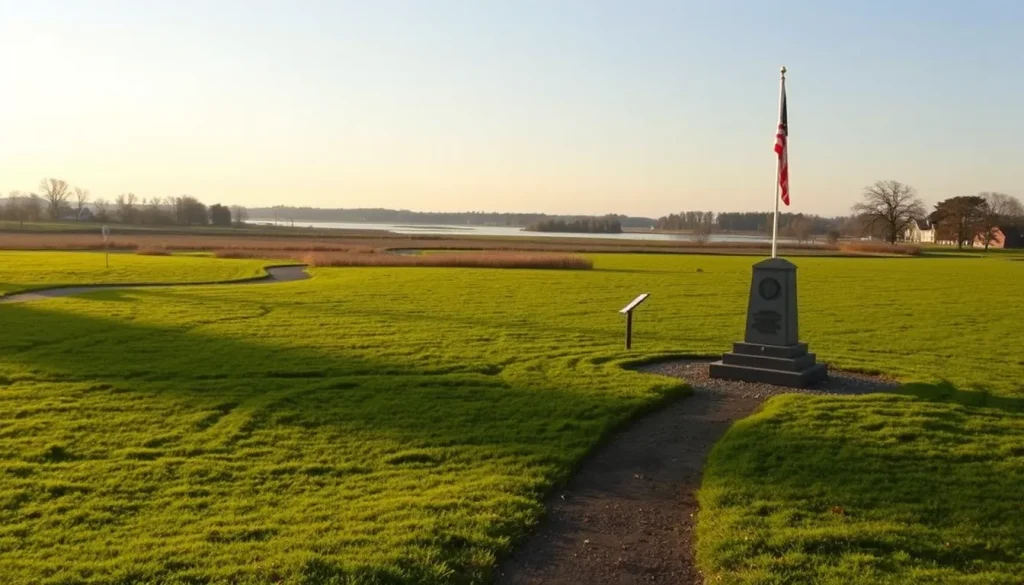
The War of 1812 (1812–1815) left behind numerous battlefields across the present-day United States and Canada, from the Niagara frontier to the Gulf Coast. Today, these sites function as public parks, national historic sites, and community landmarks, allowing visitors to walk the ground where British, American, Canadian, and Indigenous forces clashed. The preservation and interpretation of these battlefields reflect evolving historical memory and the ongoing negotiation of a complex, multinational conflict.
Historical Context
The War of 1812 arose from unresolved issues between the United States and Great Britain, including impressment of American sailors, trade restrictions, and British support of Indigenous resistance to American expansion. Fighting occurred on multiple fronts: the U.S.–Canadian border, the Great Lakes, the Chesapeake Bay, and the Gulf Coast. Major battles included Queenston Heights (1812), Lake Erie (1813), Chippawa and Lundy’s Lane (1814), the Burning of Washington (1814), North Point and Baltimore (1814), and New Orleans (1815). The Treaty of Ghent ended the war in December 1814, but news did not reach all fronts until later, resulting in the Battle of New Orleans in January 1815.
What Happened
Over two hundred years, many battlefields were lost to agricultural expansion, urban development, or neglect. Yet a significant number were preserved, often starting in the late nineteenth century when veterans and historical societies erected monuments. In the twentieth century, federal and provincial agencies began to acquire and manage key sites. For example, Chalmette Battlefield, site of the Battle of New Orleans, became part of Jean Lafitte National Historical Park and Preserve, operated by the U.S. National Park Service (NPS). The Chippawa Battlefield in Ontario is owned by the Niagara Parks Commission and features a self-guided walking tour across 300 acres. River Raisin National Battlefield Park in Michigan, established in 2009, preserves the site of the January 1813 battles that resulted in the greatest victory for Tecumseh’s confederacy and British forces, and a major American defeat. North Point State Battlefield in Maryland preserves nine acres of the defense of Baltimore, where Maryland militia fought British regulars on September 12, 1814. These sites, along with others such as Fort McHenry, Queenston Heights, and Lundy’s Lane, represent a diverse array of preservation and interpretation approaches.
Why It Matters
War of 1812 battlefields are tangible connections to a conflict that shaped national identities in the United States, Canada, and Indigenous nations. Their preservation allows people to engage with the physical landscape, understand military tactics, and reflect on the war’s consequences. Moreover, these sites have become arenas for debating historical memory. American narratives once stressed a “second war of independence”; Canadian narratives emphasize successful defense and the emergence of a distinct Canadian identity; Indigenous perspectives highlight the war’s devastating aftermath, including loss of land and sovereignty. Modern interpretation increasingly incorporates these multiple viewpoints, making the battlefields sites of ongoing historical dialogue.
Definition
War of 1812 battlefields today are the physical locations of significant engagements of the conflict that have been preserved, interpreted, or commemorated for public access and historical study. They include national parks, provincial heritage sites, state battlefields, and private properties with monuments or markers.
Background
The preservation movement for War of 1812 sites grew in the late nineteenth and early twentieth centuries, fueled by centennial commemorations and the efforts of patriotic societies. In the United States, the American Battlefield Trust and state agencies have since acquired land, while in Canada, the Niagara Parks Commission and provincial heritage organizations protected key sites. The bicentennial of the war (2012–2015) spurred renewed investment and reinterpretation, including archaeological studies and new visitor facilities.
How It Worked
Preservation methods vary by jurisdiction and location. Some battlefields, like Chalmette, are fully within the U.S. National Park Service with visitor centers and ranger-led programs. Others, like Chippawa, remain open without staff but feature interpretive panels and self-guided trails. Many sites include monuments, memorial cairns, and reproduced earthworks. Interpretation has evolved from simple narration of battles to broader contexts, including civilian experiences, the role of Indigenous allies, and the consequences of the war. The NPS, for example, now addresses the River Raisin’s aftermath in relation to federal Indian removal policies. Some sites are free, while others charge admission or fees for special programs.
Competing Viewpoints
Historical interpretation of the War of 1812 is not uniform. American narratives traditionally celebrate victories like New Orleans and Chippawa, framing the war as confirming American independence. Canadian perspectives highlight the successful defense of home soil and the war as a foundation of national unity. Indigenous commemorations often emphasize the war’s role in accelerating land loss and the erosion of sovereignty, as seen in the aftermath of the River Raisin battles. These competing viewpoints affect how sites are presented, leading to controversy over which stories are told and how. For instance, the Battle of Chippawa memorial cairn honours the peace between Canada and the United States, but does not explicitly address Indigenous sacrifice. Many modern sites now seek to include Indigenous voices, acknowledging the war’s complex legacy.
Role in the War of 1812
These battlefields were sites of decisive moments. Chippawa and Lundy’s Lane saw the largest and bloodiest battles of the Niagara campaign. Chalmette witnessed Andrew Jackson’s victory that boosted American morale and made Jackson a national hero. The battles at River Raisin led to the rallying cry “Remember the Raisin!” and hardened attitudes against Indigenous peoples. North Point contributed to the successful defense of Baltimore, inspiring “The Star-Spangled Banner.” Each site offers a window into the war’s military operations and human cost.
Consequences and Historical Interpretation
The preservation of these battlefields carries consequences for how the war is remembered. Modern interpretation increasingly challenges older patriotic narratives by presenting the perspectives of all participants, including the devastating impact on Indigenous nations. Scholars like Alan Taylor argue the war was a civil war within the British Empire and a tragedy for Native peoples. As a result, battlefields have become places of reflection, not just celebration. The bicentennial prompted many institutions to update exhibits, include more diverse voices, and address the war’s legacy in shaping the modern border between Canada and the U.S. Historical interpretation continues to evolve, ensuring these sites remain relevant to contemporary audiences.
Primary Sources
Primary sources for understanding the battles and their current interpretation include official military reports from British and American commanders, soldiers’ letters and diaries, and Indigenous oral traditions. For example, the U.S. National Archives holds the 1815 report of Major General Andrew Jackson on the Battle of New Orleans. Canadian archives preserve records of the British Indian Department and militia rosters. The National Park Service maintains historical research files for sites like River Raisin and Chalmette. These sources provide the evidential basis for modern interpretations, though they carry the biases of their authors. For battlefield preservation specifically, early twentieth-century correspondence and legislation document the establishment of parks and monuments.
Further Reading
- Donald R. Hickey, The War of 1812: A Forgotten Conflict (University of Illinois Press, 1989).
- Alan Taylor, The Civil War of 1812: American Citizens, British Subjects, Irish Rebels, & Indian Allies (Knopf, 2010).
- Pierre Berton, The Invasion of Canada and Flames Across the Border (McClelland and Stewart, 1980–1981).
- The National Park Service War of 1812 website: https://www.nps.gov/subjects/warof1812/index.htm
- American Battlefield Trust – War of 1812 Battlefields: https://www.battlefields.org/war-1812
- Niagara Parks Commission – Battle of Chippawa: https://www.niagaraparks.com/visit/heritage/battle-of-chippawa/
References
- National Park Service, “River Raisin National Battlefield Park,” https://nps.gov/rira
- Niagara Parks Commission, “Battle of Chippawa – Self-Guided Historical Tour,” https://www.niagaraparks.com/visit/heritage/battle-of-chippawa/
- National Park Service, “Chalmette Battlefield,” https://www.nps.gov/jela/planyourvisit/chalmette-battlefield.htm
- Maryland Department of Natural Resources, “North Point State Battlefield,” https://dnr.maryland.gov/publiclands/pages/central/NorthPointBattlefield.aspx
- American Battlefield Trust, “Chippawa Battlefield Park,” https://www.battlefields.org/visit/battlefields/chippawa-battlefield
FAQ
Can I visit War of 1812 battlefields today?
Yes, many battlefields are open to the public. Facilities range from fully staffed national parks with visitor centers to self-guided walking trails with interpretive panels. Some sites charge entrance fees; others are free.
What can I see at a War of 1812 battlefield?
Visitors typically find monuments, interpretive signs, and sometimes reconstructed fortifications or buildings. Many sites offer trails that lead through the actual terrain, and some include archaeological exhibits or visitor centers with artifacts.
How is the War of 1812 remembered at these sites?
Interpretation has evolved to include multiple perspectives. While American and Canadian narratives often focus on national defense or identity, many sites now also address the war's impact on Indigenous peoples and African Americans. The bicentennial of the war led to more inclusive and critical presentations.



Leave a Reply