
Short Answer
The Treaty of Ghent ended the War of 1812 by establishing peace between the United States and Great Britain and providing for the return of territory captured during the conflict. Signed on December 24, 1814, in Ghent, in present-day Belgium, it became binding when the two governments exchanged ratifications in Washington on February 17, 1815.
The agreement is often remembered for what it omitted. It did not explicitly settle impressment, the British practice of taking sailors into naval service, or comprehensively resolve the maritime disputes that had helped bring the United States into the war. Instead, the negotiators found a way to stop fighting without requiring either government to concede defeat.
That solution mattered. After unsuccessful invasions, destructive raids, naval battles, economic disruption, and heavy human losses, peace allowed both governments to leave the conflict with their principal North American possessions intact. But restoration between states did not mean restoration for everyone. Indigenous nations faced weakened diplomatic options, while the treaty’s treatment of enslaved people created further disputes over freedom and property.
Understanding Ghent therefore requires asking three questions: why did the governments accept peace, what did the agreement actually say, and how did its promises work in practice?
Short answer: how did the Treaty of Ghent end the war?
The treaty supplied the agreed terms for ending the Anglo-American conflict. It required the return of captured possessions, arranged the release of prisoners, established procedures for boundary disputes, and made commitments concerning Indigenous hostilities and the slave trade.
Signing was only the first stage. Britain ratified the agreement in December 1814. The United States Senate gave unanimous advice and consent on February 16, 1815; President James Madison ratified it, and ratifications were exchanged the following day. The treaty was proclaimed on February 18.
The Battle of New Orleans, fought on January 8, 1815, therefore occurred after signing but before the treaty became binding. News and orders then took additional time to reach scattered military forces. [1]
Why both governments wanted peace
The American war had become costly and uncertain
The United States entered the war in June 1812 amid disputes over maritime rights, British interference with shipping, impressment, territorial security, and relations with Indigenous nations.
American leaders also saw opportunities in British North America. Some hoped military success might bring territorial gains or provide leverage for a favorable settlement.
Events frustrated those expectations. American campaigns against Canada suffered serious setbacks, while the British blockade restricted commerce. The conflict placed substantial demands on government finances and military resources.
Successes at sea and on particular fronts mattered, but they did not produce an overwhelming American victory. By 1814, the government had strong reasons to accept a settlement preserving the country’s territory and independence without delivering every original objective. [3]
Britain’s priorities extended beyond North America
Britain fought the American war within a much larger struggle shaped by the Napoleonic Wars. The defeat of Napoleon in 1814 freed military resources for North America, making the British position appear stronger.
Yet additional resources did not make another year of campaigning attractive. Britain had already borne immense wartime costs. Its government also faced difficult negotiations over Europe’s political settlement.
A North American war could consume troops and money needed elsewhere. British leaders had to assess whether securing additional advantages justified those demands.
Peace became acceptable when the potential gains from continuing appeared uncertain and the costs remained substantial. [4]
Neither side needed to admit defeat
A settlement restoring captured territory offered a politically usable solution.
The United States could say that it had preserved its sovereignty and resisted coercion. Britain could say that it had defended its North American possessions against invasion.
Those claims did not erase military failures or suffering. They did, however, make agreement possible. A peace treaty does not always require one government to recognize the other as the victor.
At Ghent, the essential bargain was that neither government would insist on a decisive territorial punishment as the price of ending the war.
Why negotiations took place in Ghent
Negotiations opened in August 1814 in Ghent, a city now in Belgium. References to “Belgium” help modern readers locate it; the independent Belgian state did not yet exist.
The talks took place away from the North American fighting, but they were closely connected to events there. Delegates received reports of campaigns and instructions from their governments as circumstances changed.
Distance complicated the work. Letters and dispatches crossed the Atlantic by ship. Information could already be outdated when it reached the negotiators, and instructions could reflect assumptions that later military events had undermined.
The delegates therefore negotiated under uncertainty. They could not continuously consult their governments or know immediately whether an offensive had succeeded.
This was diplomacy conducted at the speed of sailing ships, with consequences for both the talks and the eventual implementation of peace. [5]
Who negotiated the Treaty of Ghent?
Five American commissioners and three British commissioners signed the treaty.
| United States delegation | British delegation |
|---|---|
| John Quincy Adams | James, Lord Gambier |
| James A. Bayard | Henry Goulburn |
| Henry Clay | William Adams |
| Jonathan Russell | |
| Albert Gallatin |
The American delegation brought together men with substantial experience in public office and diplomacy. Its size did not mean that its members shared every preference, but they ultimately signed a common settlement.
The British commissioners likewise acted within instructions from their government. The negotiations cannot be understood merely as a contest of personalities: ministers in London and officials in Washington helped determine what their representatives could accept. [6]
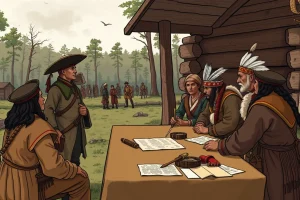
Neither Indigenous nations nor representatives of people escaping slavery participated as equal signatories. British North America was represented through the British imperial government, rather than through a sovereign Canadian delegation.
That structure shaped the agreement. The treaty settled relations between its two governmental parties while also addressing people whose own priorities were not represented independently at the negotiating table.
What did the negotiators want?
The positions at the beginning of a peace negotiation are not necessarily the terms a government ultimately expects to secure. Demands can express strategic priorities, establish bargaining positions, or test an opponent’s willingness to compromise.
American priorities
American concerns included neutral commerce, impressment, and the restoration of prewar territorial arrangements.
But the international circumstances behind the maritime dispute had changed. The end of the immediate struggle against Napoleon reduced British naval manpower pressures. American instructions and negotiating priorities adjusted accordingly.
The final treaty did not contain an explicit British renunciation of impressment. Accepting peace without that concession was a major departure from the grievances associated with the declaration of war. [5]
British priorities
British demands included measures intended to improve the security of Canada and limit American expansion. These involved an Indigenous barrier territory, strategic territorial concessions, restrictions affecting the Great Lakes, and questions concerning fishing privileges.
Britain subsequently proposed settlement on the basis of uti possidetis: each side would retain territory it occupied. That approach could have given military occupation lasting political value.
The Americans rejected it. The eventual settlement instead adopted restoration of the prewar territorial position as its general principle. [4]
| Issue | Negotiating concern | Final result |
|---|---|---|
| Captured territory | Whether occupation would produce permanent gains | General restoration rather than a settlement based on current occupation |
| Impressment | American objection to British seizure of sailors | No explicit resolution in the treaty |
| Indigenous territory | British proposal for a protected barrier against expansion | Barrier proposal abandoned; Article IX included instead |
| Great Lakes security | Military balance and defensive arrangements | No comprehensive disarmament settlement at Ghent |
| Uncertain boundaries | Competing interpretations of earlier boundary descriptions | Commissioners and possible outside arbitration |
| Fishing and other commercial questions | Rights requiring further clarification | Important questions continued into later diplomacy |
The differences between opening demands and final terms show how far both governments moved to achieve peace.
How military events influenced the negotiations
The talks continued while armies and fleets operated in North America. Neither side had suspended the war simply because its delegates were meeting.
Britain’s attack on Washington in August 1814 demonstrated American vulnerability. Public buildings were burned, and the raid carried a major symbolic impact.
But the campaign did not deliver a decisive settlement. American resistance at Baltimore and victory on Lake Champlain in September checked other British operations.
British leaders therefore had to consider the difference between the ability to inflict damage and the ability to secure lasting territorial advantages. Destruction could demonstrate strength without producing a sustainable conquest.
The Duke of Wellington’s assessment reinforced that distinction. Consulted about the American war, he questioned the basis for demanding territorial concessions without the necessary military control, particularly over the lakes. [7]
No single battle explains Ghent. The agreement emerged from military uncertainty, financial pressures, political calculations, and European priorities acting together.
The Battle of New Orleans cannot belong to this explanation of the treaty’s negotiated terms: it occurred after those terms had already been signed.
What did the Treaty of Ghent say?
The eleven articles combined immediate arrangements for peace with procedures for questions that could not be fully settled in December 1814.
| Article | Principal subject |
|---|---|
| I | Peace; cessation of hostilities following ratification; restoration of captured possessions, with specified qualifications |
| II | Orders to forces and geographic time limits governing restitution of maritime captures |
| III | Release and return of prisoners of war |
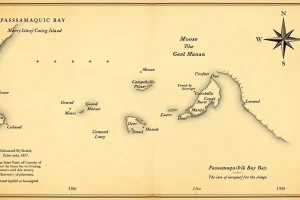
| IV | Commission for disputed islands in Passamaquoddy Bay and the Bay of Fundy |
| V | Commission for the northeastern boundary |
| VI | Commission for boundary questions along the St. Lawrence and Great Lakes |
| VII | Commission for the boundary onward toward the Lake of the Woods |
| VIII | Administrative arrangements for commissions and protection of certain land grants |
| IX | Ending Indigenous hostilities and restoring specified possessions, rights, and privileges associated with 1811 |
| X | Cooperation toward abolition of the slave trade |
| XI | Ratification without alteration and exchange of ratifications |
The agreement therefore did more than declare friendship. It addressed evacuation, captives, maritime captures, boundaries, and continuing disputes. [8]
Returning captured territory
The central territorial bargain was restoration. Possessions taken from the other party during the war were to be returned, including those captured between signing and the treaty’s implementation.
This prevented an occupation from automatically becoming a permanent annexation. It also made sense of continuing military operations: a late capture could matter militarily without necessarily changing the settlement.
Disputed islands required separate handling. The treaty did not simply erase every uncertainty along the frontier.
Returning prisoners
The release of prisoners made peace concrete for people held by the opposing side. The agreement linked diplomatic settlement to the practical work of getting captives home.
A war’s ending involves these administrative tasks as well as public celebration. Troops must receive orders, occupied posts must change hands, and detained people must be released.
Establishing boundary commissions
Earlier agreements had described boundaries using rivers, islands, latitude, and geographical features that were not always clearly mapped or mutually understood.
Ghent used commissions to investigate those questions. Where commissioners disagreed, specified procedures allowed referral to a friendly outside power.
This was a choice to resolve disputes through evidence and negotiation rather than continue fighting over every uncertain feature of the frontier.
What does “status quo ante bellum” mean?
The phrase means the state of affairs before the war. In discussions of Ghent, it usually refers to restoring the territorial position between Britain and the United States.
It should not be understood as a claim that the war changed nothing.
Destroyed homes were not recreated by treaty language. Soldiers and civilians who died did not return. Economic losses remained real. Political reputations, military institutions, and communities had changed.
Nor did restoring Anglo-American possessions guarantee the security of Indigenous territories. The governments’ territorial settlement and the future of Indigenous nations were related questions, but they were not equivalent.
The phrase is useful as a description of the general interstate territorial bargain. It becomes misleading when used as a description of the entire human outcome of the war. [6]
Why did the treaty omit impressment?
Impressment was among the grievances that made war politically compelling in the United States. British officers claimed the right to recover British sailors, and American vessels could become the setting for disputes over nationality and naval service.
American opposition concerned both the treatment of individuals and the government’s ability to protect people sailing under its flag.
Yet Ghent contained no explicit settlement of the practice. The United States accepted peace without securing a written British concession on that central issue.
Changed European circumstances help explain the omission. Once the immediate war against Napoleon had ended, the pressures driving British naval recruitment had eased. The practical dispute became less urgent even though the treaty had not resolved the principle. [9]
This distinction is important: a problem can recede because circumstances change, without the opposing government formally accepting one’s legal position.
Ghent ended the war through an agreement the parties could accept. It did not provide a complete legal vindication of every American argument made in 1812.
Indigenous nations and Article IX
Indigenous peoples participated in the war according to distinct national and community interests. Many British allies sought protection against American expansion; other communities supported the United States or sought neutrality.
For British-allied nations, a protected territorial barrier could have offered a stronger safeguard than general treaty assurances. Britain initially pursued such a proposal but abandoned it during negotiations.
Article IX substituted a reciprocal commitment to end hostilities and restore specified Indigenous possessions, rights, and privileges associated with 1811, conditional on the affected nations ending hostilities after notification. [10]
The reference to 1811 is significant because Indigenous conflict in the Northwest preceded the United States’ declaration of war against Britain.
But the article did not create the proposed barrier territory. Indigenous nations were not independent signatories, and the settlement offered no durable guarantee that further demands for land would stop.
British instructions after the agreement encouraged Indigenous allies to make peace with the United States rather than assume continued British support for fighting. The diplomatic options available to those allies narrowed. [10]
These consequences do not mean that Indigenous political life or resistance ended in 1815. They mean that the peace between the two imperial and national powers did not secure the future many Indigenous participants had fought to defend.
Calling Ghent a return to normal without specifying whose normal obscures this difference.
Slavery, freedom seekers, and Article X
The treaty addressed slavery in ways that reveal tension between the governments’ priorities and the interests of enslaved people.
Article X committed the parties to efforts toward abolishing the slave trade. This was not an agreement to abolish slavery itself. The distinction matters: a promise concerning the trade in people did not automatically establish freedom for people already enslaved.
Another provision, concerning restoration of captured possessions, referred to enslaved people as property. That language became entangled with the wartime actions of people who had escaped to British forces.
American claimants sought their return or compensation. British officials resisted the broad interpretation demanded by the Americans, and many freedom seekers left with British protection.
For the individuals involved, the question was not merely how to implement a clause. It concerned whether escape from slavery would remain effective after peace.
The dispute continued beyond the treaty’s ratification. The settlement between governments had not settled the meaning of freedom for everyone affected by the war. [11]
Why was the Battle of New Orleans fought after signing?
The answer involves both communication and ratification.
The treaty was signed on December 24, 1814. The principal Battle of New Orleans occurred on January 8, 1815. The agreement had not yet become binding, and commanders in Louisiana did not possess the completed instructions necessary to implement it.
It is therefore inaccurate to describe the battle simply as fighting after the war had legally ended.
A signed diplomatic agreement awaited approval and exchange of ratifications. Article XI required that process; signing alone did not complete it.
Slow communication added another problem. Dispatches had to travel across the Atlantic and onward to governments and military commands. A decision made in Europe could not instantly stop an operation on the Gulf Coast. [12]
Did New Orleans force Britain to sign the treaty?
No. The treaty had already been signed fifteen days before the battle.
New Orleans affected the American experience of the peace. The victory gave Americans a powerful story of military success, and news of it helped shape the reception of the settlement.
It did not cause terms negotiated and signed in December.
Was the battle meaningless?
The diplomatic chronology does not make the battle inconsequential. Soldiers were killed and wounded; an American city was defended; military and political reputations changed.
Its meaning should be explained accurately. It influenced public memory and the political reception of peace rather than producing the signed agreement. [13]
When did the war officially end?
Several dates answer different questions.
| Date | What happened | Why it matters |
|---|---|---|
| December 24, 1814 | Treaty signed in Ghent | The negotiators agreed on the text. |
| December 27, 1814 | British ratification | Britain approved the agreement. |
| January 8, 1815 | Battle of New Orleans | Fighting continued before the treaty became binding. |
| February 11, 1815 | Treaty arrived in New York aboard the packet ship Favorite | The agreement reached the United States. |
| February 16, 1815 | Senate gave unanimous advice and consent | The U.S. constitutional approval process advanced. |
| February 17, 1815 | Presidential ratification and exchange of ratifications | The treaty became binding; this is the standard formal ending date. |
| February 18, 1815 | Madison proclaimed the treaty | The completed agreement was publicly announced. |
A precise account uses December 24 for signing and February 17 for the formal completion of the peace process. February 18 belongs to proclamation rather than the exchange itself. [1][14]
Why did some fighting continue even after ratification?
The exchange in Washington did not instantly inform ships and distant commands.
On February 20, 1815, USS Constitution fought and captured HMS Cyane and HMS Levant. The action occurred after the exchange of ratifications, but Constitution had not received news of the cessation of hostilities.
The episode illustrates the gap between the legal end of a conflict and the practical ability to communicate that ending. [15]
The treaty anticipated communication delays at sea. Article II set different periods for restitution of maritime captures according to location.
These provisions recognized a world in which ships could spend long periods beyond the reach of current orders. Peace required both a legal decision and a network of notifications capable of reaching the forces still operating.
That is why searching for one universally observed “last moment” of the war can be less useful than distinguishing signing, ratification, notification, and implementation.
Who won the peace settlement?
The United States
The United States preserved its territorial position without accepting the principal punitive demands Britain had advanced.
That was a meaningful diplomatic outcome after a costly and uneven war. It was not the same as achieving every goal associated with entering the conflict.
The absence of an impressment settlement makes sweeping claims of complete American diplomatic victory difficult to sustain.
Britain and British North America
Britain retained its North American possessions. American invasions had not produced the annexation of Canada.
The British government also escaped the cost of continuing an uncertain war while managing wider international responsibilities.
For communities in British North America, survival under British rule was a consequential result. Canada was not yet a sovereign party signing its own peace.
Indigenous peoples and freedom seekers
The experiences of these groups do not fit neatly into a two-country scorecard.
Many Indigenous objectives remained unsecured, despite wartime military contributions. People who escaped slavery had to defend gains that American property claims threatened.
The question “who won?” therefore needs a stated measure: territory, military success, diplomatic objectives, political security, or personal freedom.
Ghent looks different depending on which of those measures is used. [16]
How Americans received the peace
Public celebration combined relief at the war’s ending with pride in military resistance.
Madison’s message to Congress on February 18 framed the conflict as a defense of national rights and independence. He presented peace as honorable and associated it with the achievements of American forces.
That message is evidence of how the administration interpreted the settlement. It should not be confused with the treaty text itself.
The difference matters. Governments explain agreements to their populations, often placing compromise within a narrative of national success.
American memory increasingly associated the peace with New Orleans and the defense of the republic. A settlement that restored possessions could consequently acquire the emotional force of a victory. [17]
What Ghent left for later diplomacy
The treaty created an opening for improved relations, but it did not establish every arrangement later associated with the peaceful U.S.–Canadian frontier.
Great Lakes naval restrictions
The Rush–Bagot arrangements of 1817 limited naval armaments on the Great Lakes. These were later measures, not disarmament provisions already contained in Ghent.
The Convention of 1818
The Convention of 1818 addressed further issues, including fishing rights and a western boundary along the forty-ninth parallel toward the Rocky Mountains. It also provided for joint occupation of the Oregon Country.
Remaining boundary disputes
Commissions resolved some questions, while others required additional negotiation. The northeastern boundary dispute was not fully settled until the Webster–Ashburton Treaty of 1842.
These later agreements demonstrate that ending a war and completing a stable relationship are different tasks. Ghent stopped the Anglo-American conflict and established procedures; subsequent diplomacy developed the settlement. [18]
Common misconceptions about the Treaty of Ghent
The war ended immediately on Christmas Eve 1814.
The treaty was signed then. It became binding following ratification and exchange in February 1815.
New Orleans made Britain agree to peace.
The agreement was signed before the battle.
The treaty forced Britain to end impressment.
It contained no explicit settlement of impressment.
The United States acquired Canada.
The treaty did not award Canada to the United States.
Ghent created the entire modern U.S.–Canada border.
It established commissions; later agreements resolved additional boundaries.
The treaty demilitarized the Great Lakes.
The relevant naval restrictions came through later Rush–Bagot arrangements.
Article X abolished slavery.
It addressed efforts against the slave trade, not universal emancipation.
Returning territory meant everyone recovered what they lost.
The interstate settlement did not restore lives, rebuild communities, or secure every Indigenous objective.
Why the Treaty of Ghent matters
Ghent shows how a war can end through compromise rather than decisive conquest. The negotiators separated the immediate need for peace from disputes they could not fully resolve.
The agreement preserved the territorial position of its governmental parties and gave them procedures for further diplomacy. Those accomplishments helped make a more stable relationship possible.
Its limits are equally revealing. Peace between states did not guarantee justice or security for everyone drawn into the conflict. Indigenous nations and freedom seekers faced questions that the two governments’ agreement did not resolve on their terms.
The treaty’s history therefore encompasses more than a signature on Christmas Eve. It includes bargaining, ratification, delayed orders, evacuation, contested promises, and the continuing work of turning an agreement into an actual peace.
References and further reading
- James Madison’s proclamation of the Treaty of Ghent, American Presidency Project.
- War’s End, National Park Service.
- War of 1812–1815, U.S. Department of State, Office of the Historian.
- Probing for Peace: Weighing the Burdens of War on Two Continents, National Park Service.
- Americans and British Open Peace Negotiations at Ghent, National Park Service.
- The Treaty of Ghent, National Archives.
- Baltimore Saved, National Park Service.
- Treaty of Ghent: Original Document and Transcript, National Archives; additional transcript, Yale Law School’s Avalon Project.
- Impressment and the War of 1812, National Park Service.
- In Defence of Their Homelands, Government of Canada.
- Black Freedom Seeking During the War of 1812, Part 2, National Park Service.
- The Treaty of Ghent and the Battle of New Orleans, National Park Service. Some dates in this interpretive page conflict with the ratification record; the chronology above follows the proclamation and Senate account.
- The Senate Approves for Ratification the Treaty of Ghent, U.S. Senate.
- Treaty of Ghent: Primary Documents in American History, Library of Congress.
- USS Constitution: Capture of Cyane and Levant, Naval History and Heritage Command.
- Americans Struggle to Define Victory in an Ambiguous War, National Park Service.
- Madison’s February 18, 1815, Message to Congress, Miller Center.
- Rush–Bagot Pact, 1817, and Convention of 1818, U.S. Department of State, Office of the Historian.
FAQ
Did the Treaty of Ghent resolve the issues that caused the War of 1812?
No. The treaty was silent on impressment, neutral shipping rights, blockades, and the Orders in Council. Those disputes lost their force when the Napoleonic Wars ended, and later agreements such as the commercial convention of 1815 and the Rush–Bagot agreement of 1817 regulated the remaining questions.
Why was the Battle of New Orleans fought after the peace was signed?
The treaty ended hostilities upon signature on December 24, 1814, but transatlantic communication took weeks. News of the peace did not reach the Gulf campaign in time, so British forces attacked New Orleans on January 8, 1815, and were repulsed by Andrew Jackson's army; fighting continued until the peace was formally known.
What did the treaty promise Indigenous nations, and was it honored?
One article committed the United States to end hostilities with Indigenous nations and to restore the possessions, rights, and privileges they had held in 1811, provided those nations also ceased hostilities. Historians agree the provision was never effectively enforced, and it is now seen as marking the end of Indigenous leverage between Britain and the United States.

Leave a Reply