Political Cartoons of the War of 1812 Explained

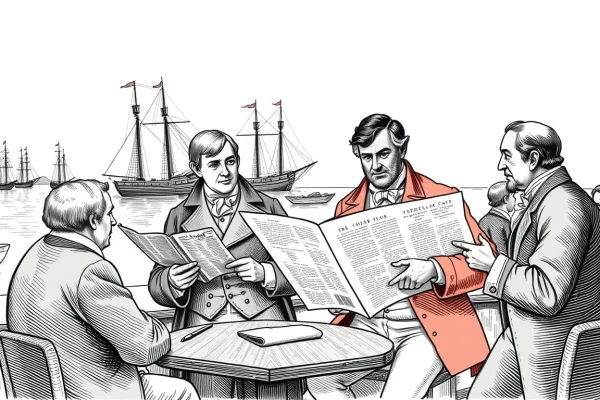
During the War of 1812, political cartoons by artists such as William Charles and William Elmes used satire to shape public opinion, criticize leadership, and express emerging nationalism. These prints blended British caricature traditions with American themes, becoming an influential form of wartime propaganda and a significant historical source.

Read More →

The 1812 Presidential Election and the War

The 1812 United States presidential election, held during the early months of the War of 1812, saw incumbent James Madison defeat DeWitt Clinton in a contest widely viewed as a referendum on the conflict. Madison’s victory ensured the continuation of the war and the survival of the Democratic-Republican administration.

Read More →

American Politics During the War of 1812

American politics during the War of 1812 pitted the dominant Democratic-Republicans, who favored the conflict, against a Federalist minority that opposed it as a ‘war of party.’ This internal struggle shaped military recruitment, funding, and culminated in the Hartford Convention, leaving a lasting impact on the nation’s party system.

Read More →

Why Did Federalists Oppose the War of 1812?

Federalists opposed the War of 1812 because they regarded it as an unnecessary conflict waged for Republican partisan advantage, commercially destructive to New England, and dangerously favorable to Napoleonic France. Their opposition ranged from near-unanimous congressional votes and state militia refusals to the Hartford Convention of 1814-15, and it ultimately discredited and doomed the Federalist Party.

Read More →