Short Answer
Baltimore, the third-largest city in the United States in 1812, served as a vital commercial hub and home port for a fleet of privateers that inflicted heavy damage on British shipping. When the British launched an amphibious assault in September 1814, Baltimore’s defenses—including Fort McHenry and a fortified line on Hampstead Hill—repelled the attack, inspiring Francis Scott Key’s poem that later became the United States national anthem.
Historical Context
By 1812, Baltimore had grown from a small colonial town into a bustling port of about 47,000 residents. Its deep harbor on the Patapsco River provided easy access to the Chesapeake Bay and the Atlantic, making it a center for trade, shipbuilding, and especially privateering. The city’s population included many recent immigrants—Irish, German, and French refugees—who held strong anti-British sentiments. When the United States declared war on Britain in June 1812, Baltimore’s Democratic-Republican majority enthusiastically supported the conflict, in contrast to the more divided loyalties in other eastern cities.
The U.S. Navy was vastly outnumbered by the Royal Navy, so the government turned to privateers—armed merchant vessels licensed by letters of marque—to harass British commerce. Baltimore privateers captured hundreds of British ships, causing an estimated $16 million in damages and accounting for as much as one-third of all British vessels seized during the war. This privateering earned the city the British epithet of a “nest of pirates” and made it a target for British retaliation.
The war in the Chesapeake intensified in 1813 when British naval squadrons entered the bay, launching raids along its shores. In August 1814, after defeating Napoleon, the British committed significant forces to the American campaign, culminating in the burning of Washington, D.C., on August 24 and the subsequent advance on Baltimore.
What Happened
The defense of Baltimore began well before the British arrived. As early as 1813, Maryland Governor Levin Winder and Major General Samuel Smith of the Maryland militia prepared the city’s defenses. Fort McHenry guarded the harbor’s entrance, reinforced with additional guns, chains, and sunken hulls to obstruct the channel. On the eastern approach, soldiers and civilians constructed a two-and-a-half-mile fortified line on Hampstead Hill, bristling with over 100 cannons. The city militia, numbering between 10,000 and 15,000, drilled regularly.
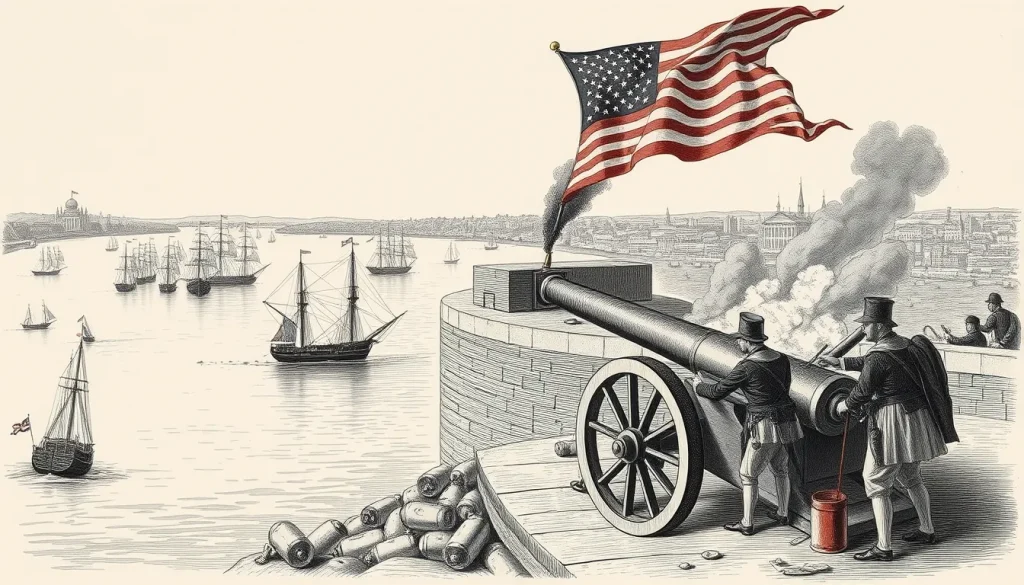
After burning Washington, British forces under Major General Robert Ross pushed toward Baltimore. On September 12, 1814, they encountered American skirmishers at the Battle of North Point, where Ross was killed. Despite this setback, the British continued toward Baltimore. On September 13, the Royal Navy began a heavy bombardment of Fort McHenry, while ground troops prepared to assault the Hampstead Hill fortifications. The bombardment lasted over 24 hours, but the American defenders, led by Major George Armistead, refused to surrender. The British ground forces, facing strong defensive works and substantial militia, called off the planned assault and withdrew. The British fleet also abandoned the attack, and the Battle of Baltimore ended as an American victory.
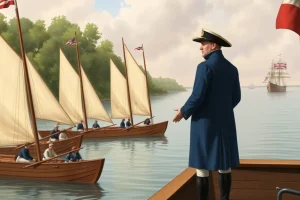
Francis Scott Key, a Washington lawyer detained aboard a British ship during the bombardment, witnessed the attack and saw the American flag still flying over Fort McHenry on the morning of September 14. He wrote the poem “The Star-Spangled Banner,” which was later set to music and became the official national anthem.
Why It Matters
The successful defense of Baltimore was a turning point in the War of 1812. It marked a rare American victory in the Chesapeake theater after the humiliating burning of Washington, and it boosted national morale. The battle discouraged further British attacks on the region and contributed to the willingness of both sides to negotiate the Treaty of Ghent, signed in December 1814.
Historians regard Baltimore’s defense as strategically significant because it preserved a major commercial and military port and demonstrated the effectiveness of prepared land defenses when supported by naval artillery. The event’s cultural legacy is enormous: Francis Scott Key’s poem, inspired by the sight of the flag at Fort McHenry, became a symbol of American endurance and eventually the national anthem. The battle also reinforced the image of Baltimore as a determined city, a reputation that shaped its subsequent development.
Historical Map Context
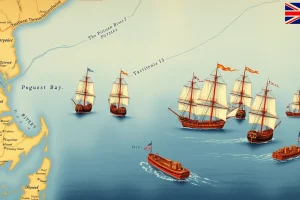
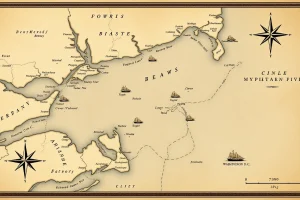
Baltimore’s geography—the deep Patapsco River leading to the Chesapeake Bay—made it a natural harbor and a difficult target for attackers. The city’s defenses were positioned to exploit that geography: Fort McHenry guarded the narrow channel leading to the inner harbor, while Hampstead Hill, a ridge east of the city, protected the land approach from the Patapsco’s northern shore. Maps from the period show the British fleet anchoring in the Patapsco and the American fortifications extending across the peninsula at Hampstead Hill. The modern city retains many of these landmarks, and the National Park Service’s Star-Spangled Banner National Historic Trail traces the route of the campaign.
Modern Location
Baltimore is now a large metropolitan city in Maryland. Fort McHenry is a National Monument and Historic Shrine operated by the National Park Service, located at the entrance to the harbor. Hampstead Hill is now within Patterson Park, a city park that preserves part of the defensive line. The Star-Spangled Banner National Historic Trail links sites across Maryland, including the Battle of North Point and the city’s defenses.
Events at the Site
Fort McHenry was the focus of the British bombardment on September 13–14, 1814. The fort’s defenders, about 1,000 troops under Major Armistead with 24-pound cannon, faced a fleet of British warships. The famous flag that flew during the bombardment was made by local flagmaker Mary Pickersgill. The Hampstead Hill line, manned by thousands of militia, was never assaulted directly, but its presence deterred the British infantry. Nearby, the Battle of North Point on September 12 was a delaying action that cost the British their commander, Robert Ross.
Associated People
Samuel Smith, a militia general and later U.S. senator, coordinated the city’s defense. Major George Armistead commanded Fort McHenry. Francis Scott Key, the poet, was onboard a British ship during the bombardment. Other notable figures include Governor Levin Winder, who ordered the defenses, and privateer captains like Thomas Boyle, who captured many British prizes. The city was also home to a large free African American population, some of whom served in the militia or worked on the defenses; historians have noted their contributions, though the details are sparse.
Surviving Monuments and Site
Fort McHenry is preserved as a national shrine and visitor center. The original star-shaped fort remains, along with a replica of the 1814 flag. The site houses a museum and hosts daily flag ceremonies. In Patterson Park, the Hampstead Hill earthworks are partially visible, and a monument commemorates the defenders. Other markers along the Star-Spangled Banner National Historic Trail interpret the events of September 1814, including the Battle of North Point and the Patterson Park vantage point. The flag that inspired Key is preserved at the National Museum of American History in Washington, D.C.
Primary Sources
Contemporary newspapers, such as the Federal Republican (which was the target of the 1812 riots) and the Baltimore Patriot, reported on the battle and its aftermath. Official military reports from Samuel Smith and George Armistead provide detailed accounts of the engagement. Francis Scott Key’s manuscript poem, later titled “The Star-Spangled Banner,” is a primary source of the bombardment; his personal letters describe the event. The diary of British naval officer James Scott, who participated in the attack, offers a British perspective. These sources must be interpreted with awareness of each author’s bias—American reports emphasized heroism, while British accounts often criticized the decision to withdraw.
Further Reading
- Brodine, Charles E., Jr. “War Visits the Chesapeake.” Naval History 28, no. 5 (October 2014).
- George, Christopher T. Terror on the Chesapeake: The War of 1812 on the Bay. Shippensburg, PA: White Mane Books, 2000.
- Leepson, Marc. What So Proudly We Hailed: Francis Scott Key, a Life. New York: Palgrave Macmillan, 2014.
- “Maryland in the War of 1812.” Maryland State Archives. https://msa.maryland.gov/msa/mdmanual/01glance/chron/html/war1812.html.
- “War of 1812 in Baltimore.” Baltimore City Archives. https://msa.maryland.gov/bca/war-of-1812-in-baltimore/index.html.
References
- American Battlefield Trust. “Baltimore during the War of 1812.” Accessed 2023. https://www.battlefields.org/learn/articles/baltimore-during-war-1812.
- Maryland State Archives. “Maryland in the War of 1812.” Accessed 2023. https://msa.maryland.gov/msa/mdmanual/01glance/chron/html/war1812.html.
- National Park Service. “Defense of a Nation: Maryland’s Role in the War of 1812 – A Teacher’s Guide.” Accessed 2023. https://www.nps.gov/teachers/classrooms/defense-of-a-nation-maryland-s-role-in-the-war-of-1812-a-teacher-s-guide.htm.
- Baltimore City Archives. “War of 1812 in Baltimore.” Accessed 2023. https://msa.maryland.gov/bca/war-of-1812-in-baltimore/index.html.
- Brodine, Charles E., Jr. “War Visits the Chesapeake.” Naval History 28, no. 5 (October 2014). https://www.usni.org/magazines/naval-history-magazine/2014/october/war-visits-chesapeake.
FAQ
Why did the British attack Baltimore in 1814?
Baltimore was a major American city and a hub of privateering that had inflicted heavy losses on British shipping. After burning Washington, British commanders sought to destroy Baltimore's military and commercial capabilities.
What was the significance of the Battle of Baltimore?
The American victory at the Battle of Baltimore, including the bombardment of Fort McHenry, boosted national morale after the burning of Washington and helped bring about the Treaty of Ghent. It also inspired Francis Scott Key to write the poem that became the Star-Spangled Banner.
How did Baltimore prepare for the British attack?
Under General Samuel Smith, Baltimore strengthened Fort McHenry with heavier guns and harbor obstructions, and built a fortified line on Hampstead Hill with over 100 cannons. The militia drilled and the citizens constructed earthworks.
Leave a Reply