Remember the Raisin: Meaning and Historical Context

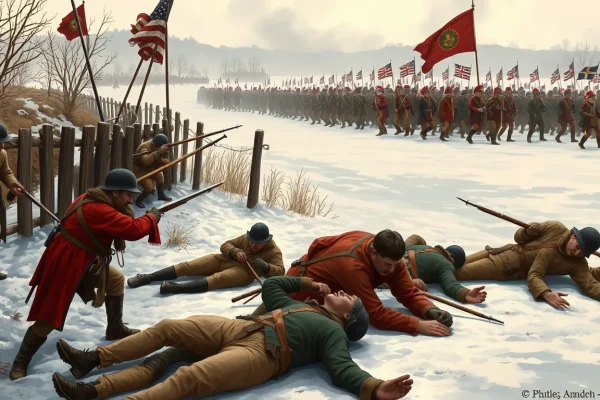
Remember the Raisin was a rallying cry that emerged after the January 1813 Battle of Frenchtown (River Raisin) in which American prisoners were killed by Potawatomi warriors. It symbolized American determination to avenge the defeat and the massacre, fueling military efforts in the Old Northwest and contributing to the eventual U.S. victory at the Battle of the Thames.

Read More →

Farming During the War of 1812

Farming during the War of 1812 involved both agricultural production and destruction, as armies on both sides depended on local food supplies while military operations devastated farms, livestock, and mills. This article explores how the war disrupted farming communities, the labor shortages that arose, and the long-term economic and social consequences.

Read More →

Battle of Lake Erie

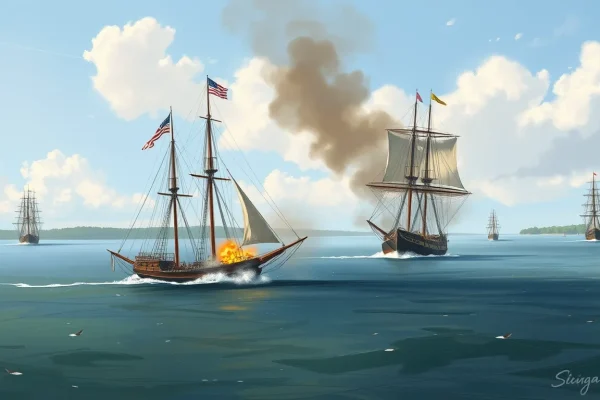
The Battle of Lake Erie, fought on 10 September 1813 near Put-in-Bay, Ohio, was a decisive American naval victory that secured control of the lake, enabled the recovery of Detroit, and led directly to the Battle of the Thames and the death of Tecumseh.

Read More →

Francis Scott Key and the War of 1812

Francis Scott Key (1779–1843) was an American lawyer and poet whose poem ‘Defence of Fort M’Henry,’ written after witnessing the British bombardment of Fort McHenry in 1814, became the lyrics of the U.S. national anthem, ‘The Star-Spangled Banner.’ His role as a negotiator for prisoner release placed him directly in the War of 1812’s pivotal Battle of Baltimore.

Read More →

Federalists and the War of 1812

The Federalist Party, strongest in New England, was the principal organized opponent of the War of 1812. Federalists in Congress, state governments, and the press challenged the conflict’s legitimacy and strategy, culminating in the Hartford Convention of 1814–15, and the party’s opposition contributed to its permanent decline after the war.

Read More →

Robert Heriot Barclay at Lake Erie

Robert Heriot Barclay commanded the British naval squadron on Lake Erie during the War of 1812 and was defeated by Oliver Hazard Perry at the Battle of Lake Erie on September 10, 1813. His surrender marked the first time a British naval squadron had been captured in battle, shifting control of the lake to the United States.

Read More →