Short Answer
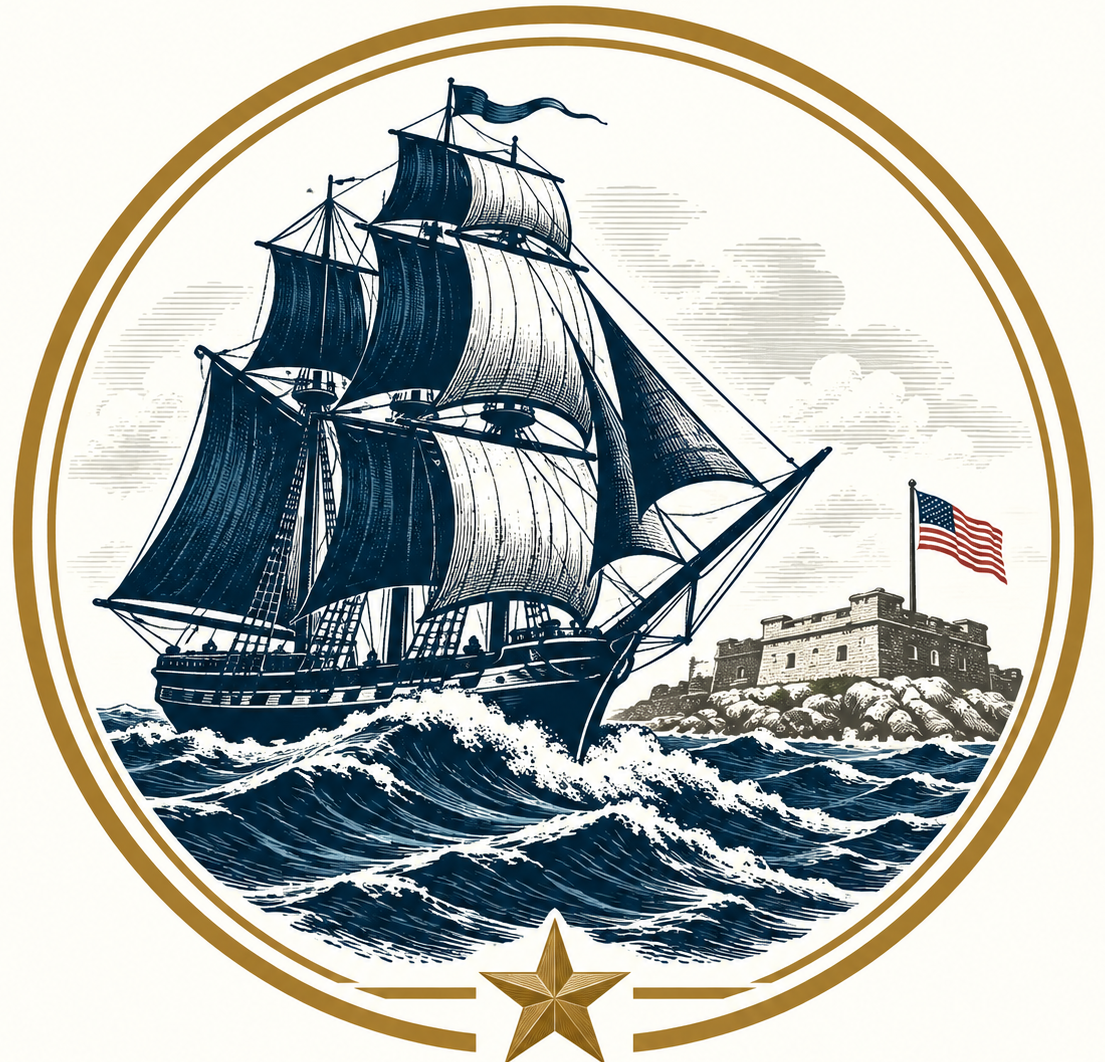
USS Chesapeake was a 38-gun frigate of the United States Navy, captured by the Royal Navy frigate HMS Shannon on 1 June 1813 in the action off Boston often called the Battle of Boston Harbor. Her captors carried her into Halifax, Nova Scotia, repaired her, and commissioned her into the Royal Navy as HMS Chesapeake, in which service she remained until 1819, when she was sold and broken up at Portsmouth, England. This article covers the ship’s history from her capture to her destruction as a warship; it does not treat the separate 1807 Chesapeake–Leopard affair or later vessels that carried the same name.
Historical Context
The United States declared war on Great Britain in June 1812, and much of the early fighting took place at sea. During 1812 the small United States Navy won a series of widely publicised single-ship victories — Constitution over HMS Guerriere, United States over HMS Macedonian, and Constitution over HMS Java — that embarrassed the Royal Navy and encouraged American expectations of further success. Britain responded by tightening its blockade of the American coast, including the approaches to Boston, and by keeping frigates cruising off major ports to intercept American warships and merchantmen.
One of those blockading frigates was HMS Shannon, commanded since 1806 by Captain Philip Bowes Vere Broke. Broke had spent years training his crew in aimed, rapid gunfire, using improved sights, marked quoins, and constant practice against targets; this systematic gunnery was unusual for the period and gave Shannon an advantage not visible in a comparison of gun counts. Chesapeake herself had a long and uneven career: launched in 1799, she had served in the Quasi-War with France and the First Barbary War, and in 1807 had been fired on by HMS Leopard in the incident that helped push the United States toward war. Early in the War of 1812 she made one cruise and took five British merchant ships, but by 1813 she was refitting at Boston under a new commander, Captain James Lawrence, who had been transferred from the sloop Hornet.
Halifax, Nova Scotia, was the Royal Navy’s principal North American station and the nearest base where a captured British or American warship could be surveyed, repaired, condemned as a prize, and — if suitable — taken into British service. It also possessed a prison depot capable of holding large numbers of captives for the duration of the war.
What Happened
In late May 1813 Shannon was cruising off Boston, and reports state that she had been at sea for weeks and was short of provisions. Broke wrote a formal challenge inviting Chesapeake to fight a ship-to-ship duel; Lawrence never received the letter, but word of an impending contest spread through Boston, where the general expectation was an American victory. Contemporary accounts say local arrangements were even made in anticipation of the captured British frigate being brought in as a prize.
Lawrence was also under pressure to get to sea. According to the National Park Service account, part of Chesapeake‘s crew had refused to re-enlist until a dispute over the distribution of pay was settled, and Lawrence filled out his complement with less experienced recruits before sailing. Chesapeake left Boston on 1 June 1813 and met Shannon in the afternoon. The two frigates were closely matched in size and armament — Chesapeake in fact carried the larger crew — so material superiority does not explain the outcome.
The close action lasted roughly ten to fifteen minutes, with the whole encounter from first shot to surrender lasting well under half an hour. Shannon‘s fire shot away Chesapeake‘s wheel and her fore topsail halyard, leaving her unable to manoeuvre, and swept her quarterdeck, killing or wounding much of her command structure. First Lieutenant William Ludlow was mortally wounded; Lawrence was hit and carried below by Acting Lieutenant William Cox. Lawrence is traditionally reported to have called on his men not to give up the ship, a phrase remembered in the United States as “Don’t give up the ship!” but it did not restore control on deck. Broke led a boarding party across, was severely wounded in the fighting, and survived; organised American resistance collapsed and Chesapeake was taken.
Casualty returns vary between accounts and contemporary reports were incomplete. The figures most often cited are about 23 killed and 56 wounded on Shannon, against roughly 48 killed and 99 wounded on Chesapeake, making the action one of the bloodiest single-ship engagements of the age of sail; other summaries give approximately 50 dead and 90 wounded for the American ship. Around 230 of Chesapeake‘s crew were taken prisoner.
Lawrence died of his wounds on 4 June 1813, before the prize reached port. Shannon, with Chesapeake in company, arrived at Halifax on 6 June 1813; Lieutenant Provo Wallis, the senior surviving officer of Shannon, commanded the ship and her prize on the passage and later rose to Admiral of the Fleet. Lawrence was buried at Halifax with naval honours at the Old Burying Ground on Barrington Street, and his remains were later repatriated to Trinity Churchyard in Manhattan. Chesapeake‘s surviving crew were held at the Melville Island military prison for the remainder of the war, and some of her dead were buried on nearby Deadman’s Island; casualties from Shannon were interred at the Royal Navy Burying Ground, now part of Canadian Forces Base Halifax.
Why It Matters
The capture ended the run of celebrated American frigate victories and restored British confidence in single-ship combat. Because the two frigates were so evenly matched, the result was read at the time as a vindication of Broke’s long programme of gunnery drill and shipboard organisation rather than of superior force, and it brought Broke wide public acclaim in Britain. In the United States the defeat was felt as a humiliation, intensified by the public expectation of victory in Boston and by the fact that the frigate became a British warship instead of returning as an American prize. Recrimination followed quickly: Acting Lieutenant William Cox was court-martialled over his conduct in taking Lawrence below and was released from the service, Midshipman James W. Forest was reprimanded, and a Black bugler, William Brown, received 100 lashes for failing to sound his bugle at a critical moment. Modern assessments generally treat these punishments as misplaced, attributing the loss instead to the difference in crew experience, familiarity with commanders, and training practice.
Lawrence himself was memorialised rather than blamed, and his reported dying words became an enduring United States Navy motto, later carried on Commodore Oliver Hazard Perry’s battle flag at Lake Erie. For historians, the subsequent history of the ship raises questions that the battle alone does not: how prizes were absorbed into the Royal Navy, how prisoners of war were administered at Halifax, and how the material remains of a famous defeat ended up in an English village mill.
Type and Construction
Chesapeake was one of the original six frigates authorised by the Naval Act of 1794 and designed under the influence of Joshua Humphreys, who intended a long, narrow, strongly framed hull able to overpower opposing frigates while escaping ships of the line. Construction at Gosport (now part of Portsmouth, Virginia) was interrupted and the design altered by builder Josiah Fox, so that Chesapeake emerged as the smallest of the six, of about 1,244 tons, roughly 152 feet on the lower length and 41 feet in beam, launched on 2 December 1799. These characteristics matter to her later history because her comparatively compact, heavily built hull survived the battering of 1 June 1813 in repairable condition: the punishment fell mainly on her spars, rigging, wheel, and exposed upper decks, so that she could be taken to Halifax and restored to service rather than condemned and sold as wreckage.
Nation
The ship served the United States from her commissioning in 1800 until 1 June 1813, when she became a prize of the British Crown. She then served the United Kingdom as HMS Chesapeake from 1813 until 1819. This change of flag is the central fact of the topic: the frigate did not return to American service, and no attempt to recapture or refloat her for the United States is recorded.
Armament
At the time of her capture Chesapeake was rated as a 38-gun frigate but carried a heavier actual armament, commonly listed as 29 long 18-pounders, 18 carronades of 32 pounds, and three smaller guns, giving a broadside weight that contemporary accounts placed at about 580 pounds. Sources differ on exact gun counts — the National Park Service summary cites about 50 guns for Chesapeake against about 52 for Shannon — and such discrepancies reflect differences in how carronades, chase guns, and swapped pieces were counted. No reliable documentation of her Royal Navy armament after 1813 has been identified in the sources used here, and the point should be treated as unverified rather than assumed.
Crew
Chesapeake‘s authorised complement was about 340 officers and men, though roughly 379 were aboard at the action, a larger crew than Shannon‘s. Its weakness was quality rather than numbers: many men were recent recruits taken on after a pay dispute delayed re-enlistment. After the capture, approximately 230 survivors became prisoners of war and were held at Melville Island at Halifax until the end of the war. The fates of individual prisoners, and the extent to which American sailors later exchanged or released returned to the United States, are documented unevenly in surviving records.
Commander
Chesapeake was commanded at her capture by Captain James Lawrence, who died of his wounds on 4 June 1813 and was buried at Halifax before his remains were later moved to New York. Her opponent, Captain Philip Broke of HMS Shannon, was severely wounded while leading the boarding party but survived. On the passage to Halifax the prize was in the charge of officers and men of Shannon, with Lieutenant Provo Wallis exercising command of the ship and her prize. The names of subsequent Royal Navy officers who commanded HMS Chesapeake between 1813 and 1819 are not established in the sources used for this article.
Engagements
As a United States ship, Chesapeake saw service in the Quasi-War with France and the First Barbary War, was fired upon by HMS Leopard in 1807, and early in the War of 1812 captured five British merchant vessels before her defeat on 1 June 1813. As HMS Chesapeake, her operational record is far less documented than her capture: she was taken into Royal Navy service at Halifax, but the sources consulted here do not identify specific cruises, actions, or captures involving her under the British flag. Any claim that she fought against the United States after 1813 would require documentary evidence beyond what is currently available in these accounts.
Fate
After repair at Halifax, Chesapeake was commissioned into the Royal Navy and served until 1819, when she was decommissioned. She was sold at Portsmouth, England, in 1819 and broken up, and surviving timbers from her hull were used in the construction of Chesapeake Mill at Wickham, Hampshire, which still stands and is publicly identified with the ship. HMS Shannon outlived her opponent by four decades, being broken up in 1859. In Halifax, memory of the action survives in a cairn and bronze plaque at Point Pleasant Park, in cannon attributed to the two ships displayed at Province House, and in artefacts including Shannon‘s bell and an officer’s chest and mess kettle from Chesapeake held by the Maritime Museum of the Atlantic.
Primary Sources
Several contemporary documents bear directly on the ship’s fate. Broke’s written challenge to Lawrence, sent in May 1813, survives in British records and shows the British commander actively seeking a single-ship action; it also demonstrates that the challenge never reached Lawrence, which shaped American expectations of the encounter. Broke’s official report of the action, written after the battle and circulated in the British press, is the principal British narrative source, but it is a self-serving document by a victorious and wounded commander and should be read alongside American accounts. United States Navy court-martial and disciplinary records concerning Acting Lieutenant William Cox, Midshipman James W. Forest, and the bugler William Brown provide evidence of how the defeat was attributed and punished, though they record the judgments of the court rather than the full circumstances. Ships’ logs, muster books, and Admiralty prize and prison records for Halifax would document the prize crew, the repair period, and the imprisonment of the survivors, but the details of those records have not been verified for this article. Contemporary Boston and Halifax newspapers supply useful detail about public expectation, casualty reports, and the arrival of the prize, yet they are partisan, hastily compiled, and frequently contradictory on numbers. Where quotations appear in later works — notably Lawrence’s reported order not to give up the ship — they rest on second-hand testimony rather than a surviving autograph order.
Further Reading
- William S. Dudley (ed.), The Naval War of 1812: A Documentary History, Naval Historical Center — documentary volumes reproducing American official correspondence.
- Andrew Lambert, The Challenge: Britain Against America in the Naval War of 1812 (Faber, 2012) — British strategic and naval perspective.
- Ian W. Toll, Six Frigates: The Epic History of the Founding of the U.S. Navy (2006) — the construction and early careers of the original six frigates.
- Roy and Lesley Adkins, The War for All the Oceans (2006) — Royal Navy context, impressment, and the Shannon–Chesapeake action.
- Robert E. Cray Jr., “Explaining Defeat: the Loss of the USS Chesapeake,” Naval History (U.S. Naval Institute, 2007).
- Adam Bisno, “The Capture of the Chesapeake, 1 June 1813, and What it Meant,” Naval History and Heritage Command (2019).
- Halifax Military Heritage Preservation Society, “HMS Shannon vs. USS Chesapeake” — site-based summary including Halifax burial and memorial information.
- Maritime Museum of the Atlantic, Halifax, and Chesapeake Mill, Wickham, Hampshire — surviving artefacts and structure associated with the ship.
References
- Wikipedia, “Capture of USS Chesapeake,” https://en.wikipedia.org/wiki/Capture_of_USS_Chesapeake
- National Park Service, “Capture of USS Chesapeake,” https://www.nps.gov/articles/000/capture-of-uss-chesapeake.htm
- Roy and Lesley Adkins, “‘Don’t Give Up the Ship’,” HistoryNet, https://historynet.com/dont-give-up-the-ship/
- Wikipedia, “USS Chesapeake (1799),” https://en.m.wikipedia.org/wiki/USS_Chesapeake_(1799)
- Halifax Military Heritage Preservation Society, “HMS Shannon vs. USS Chesapeake,” https://hmhps.ca/sites/shannon-vs-chesapeake
FAQ
What happened to USS Chesapeake after she was captured?
She was carried into Halifax, Nova Scotia, arriving on 6 June 1813, repaired, and commissioned into the Royal Navy as HMS Chesapeake. She served under the British flag until 1819, when she was sold at Portsmouth, England, and broken up; surviving timbers were used to build Chesapeake Mill at Wickham, Hampshire.
How many of Chesapeake's crew were killed or taken prisoner?
The most frequently cited figures are about 48 killed and 99 wounded, with roughly 230 survivors taken prisoner and held at Melville Island at Halifax. Contemporary reports and later summaries differ, so these numbers should be treated as approximate.
Did HMS Chesapeake fight against the United States after her capture?
She was taken into Royal Navy service in 1813 and remained in it until 1819, but the sources used here do not document specific cruises or actions by her against American forces. The claim should not be repeated without documentary evidence.
Where can remains of the ship be seen today?
Chesapeake Mill at Wickham, Hampshire, incorporates timbers from the frigate. In Halifax, the Maritime Museum of the Atlantic holds artefacts from the action, including Shannon's bell and an officer's chest and mess kettle from Chesapeake, and memorial markers survive at Point Pleasant Park.



Leave a Reply