
Short Answer
British North America learned that the War of 1812 had ended not at a single moment but in stages, as news of the Treaty of Ghent travelled by ship, dispatch rider, and newspaper from Europe to Halifax, Quebec, and the interior posts between roughly late January and April 1815. The treaty was signed at Ghent on 24 December 1814 and ratified by Britain days later, but the ratified text did not reach New York until 11 February 1815, and the United States did not proclaim peace until 17 February. For Upper Canada, Lower Canada, Nova Scotia, New Brunswick, and Newfoundland, the result was an uneven end to the war in which some garrisons, settlements, and Indigenous allies learned of the peace weeks after it had been concluded.
Historical Context
By the autumn of 1814 the war had reached a military and diplomatic stalemate. The abdication of Napoleon Bonaparte in April 1814 released British regulars for service in North America, and Britain mounted offensives in the Chesapeake, on the Niagara frontier, and in eastern Maine, while American forces held at Baltimore and won at Lake Champlain in September. Peace commissioners met at Ghent from August 1814, and the treaty they signed on Christmas Eve returned all conquests and said nothing about impressment, neutral shipping rights, or the maritime grievances that had helped cause the war. Crucially for what followed, the British delegation insisted that the treaty take effect only after both governments had ratified it, a clause intended to press Washington into swift acceptance and one that shaped how and when commanders in North America could act.
British North America in 1814 comprised the Canadas, the Maritime colonies, Newfoundland, and scattered military posts from Amherstburg on the Detroit River to Castine in occupied Maine. Authority ran through separate chains: civil governors reported to the Colonial Office in London, the army to the Horse Guards, and the Royal Navy to the Admiralty. Halifax, Nova Scotia, was the principal British naval and military station in the region, while Quebec was the seat of the governor-in-chief. Governor-in-Chief Sir George Prevost had been recalled to answer for the defeat at Plattsburgh; he sailed for England and died in London on 5 January 1815 before his court-martial. Lieutenant-General Sir Gordon Drummond commanded in Upper Canada, and Vice-Admiral Sir Alexander Cochrane directed the naval campaign from Bermuda, which served the North American station.
What Happened
The Treaty of Ghent was signed on 24 December 1814 and ratified by the British government on 27 December. The ratified copy left Europe on 2 January 1815 but was delayed by winter weather and reached New York City on 11 February. The United States Senate ratified it on 16 February, and President James Madison proclaimed peace on 17 February 1815.
British authorities in North America did not wait for American ratification to prepare for a ceasefire. London sent duplicate orders to Halifax, to Bermuda, and to naval and military commanders instructing them to suspend offensive operations once the treaty was confirmed. Because a fast packet or frigate could cross the Atlantic in roughly three to five weeks in winter, and because dispatches left London immediately after ratification, official word most plausibly reached Halifax in late January or early February 1815, probably ahead of the American government’s formal receipt of the ratified text. Exact arrival dates for individual posts are not fully documented, and the sequence is best reconstructed from newspaper notices, garrison orders, and officers’ letters rather than from a single authoritative timetable.
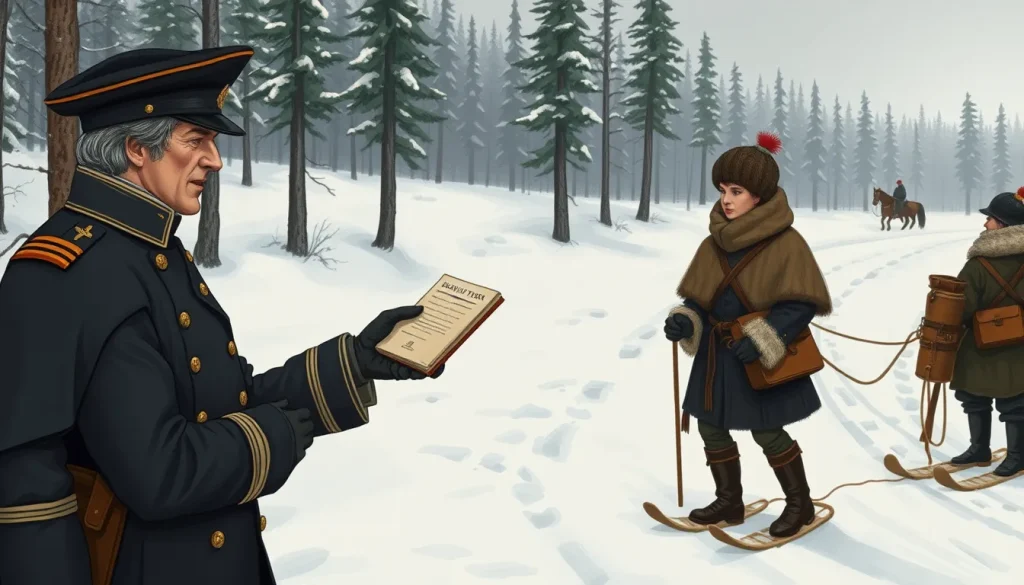
From Halifax the news moved inland along the routes the colonies used in winter. With the St. Lawrence River closed by ice, expresses travelled overland by way of Truro and Fort Cumberland, across the Isthmus of Chignecto to Saint John and Fredericton, and then by the Temiscouata portage to the lower St. Lawrence, from which the word could be carried on to Quebec, Montreal, Kingston, Niagara, and Amherstburg. Coastal shipping and the naval establishment spread it to Newfoundland, Cape Breton, and Prince Edward Island. News also crossed the border in the other direction: American newspapers printed the treaty text in February, and copies carried north by travellers, merchants, and flags of truce reached Montreal and Quebec within days.
Colonial gazettes, including the Quebec Gazette, the Montreal Gazette, the Nova Scotia Royal Gazette at Halifax, and the Upper Canada Gazette at York, reprinted the treaty and the governors’ notices announcing the cessation of hostilities. Military and militia units stood down in stages, prisoners were assembled for return under the treaty’s terms, and captured territory and property were to be restored. Some places learned much later. The British garrison at Castine, Maine, occupied since September 1814, did not evacuate until late April 1815. In the south, the Battle of New Orleans had been fought on 8 January 1815 and the British captured Fort Bowyer near Mobile in mid-February; at sea, the capture of the USS President on 15 January and the USS Constitution’s captures of HMS Cyane and Levant on 20 February all occurred before the peace was known on those stations.
Indigenous nations allied with Britain generally learned of the peace through British Indian Department agents and post commanders, often after the terms had already been settled. The treaty required the United States to end hostilities with the Indigenous nations and, in principle, to restore them to their 1811 territories and rights, but the British proposal for a protected Indigenous territory in the Old Northwest had already been dropped during the negotiations.
Why It Matters
The communications lag had immediate military consequences. It allowed New Orleans, Fort Bowyer, and several naval actions to be fought after the peace was signed, it meant that British and American commanders on different stations ended the war on different days, and it left prisoners, occupied territory, and blockading squadrons in place until orders caught up with events. The treaty’s ratification clause compounded the problem by making the peace formally conditional rather than immediate.
For British North America, the arrival of the news confirmed that the colonies had survived the war with their boundaries and British institutions intact. The peace produced relief and, in many quarters, a sense of vindication: contemporaries argued that the defence of Canada had succeeded and that the colonies had earned a distinct identity within the empire. Historians such as J. Mackay Hitsman and George Sheppard have qualified the popular memory of the war, arguing that British regulars rather than part-time militia bore the weight of the fighting in most major engagements, and that the militia myth served post-war political purposes in the Canadas. For Indigenous nations, the peace confirmed a different outcome: their wartime alliance had been traded away in a treaty that promised restoration but delivered continued American expansion.
Definition
Learning about the end of the war means, in this context, the receipt and onward transmission in British North America of two related but distinct kinds of information: the fact that a treaty had been signed and ratified, and the practical order to stop fighting. The two did not always arrive together. A commander might know that peace had been concluded while still awaiting explicit instructions on when to halt operations, and a newspaper reader in Halifax might know before a militia officer at Amherstburg.
Background
There was no telegraph, and news in 1815 moved at the speed of sail and horse. Transatlantic crossings by packet or frigate commonly took three to eight weeks depending on season and weather, and winter passages were slower and less predictable. Within British North America, Halifax functioned as the gateway for European correspondence, while Quebec was the administrative centre from which orders were distributed. A dispatch from Halifax to Quebec covered several hundred miles of difficult country and could take a week or more by the winter overland route, and further time was required to reach the Niagara frontier, Amherstburg, or the posts of the upper Great Lakes.
How It Worked
Official news followed the institutions of empire. The Colonial Office wrote to colonial governors, the Horse Guards to military commanders, and the Admiralty to the naval commander-in-chief and to the Halifax station. Because dispatches were duplicated and sent by different ships, the first copy to arrive could be acted upon before the formal documentation caught up. Naval vessels carried orders to blockading squadrons, and flags of truce carried messages between opposing commanders along the Niagara and Lake Champlain frontiers. Unofficial channels supplemented the official ones: American newspapers were read in Montreal and Quebec, private merchants and travellers carried letters, exchanged prisoners carried accounts of the peace, and colonial gazettes reprinted treaty texts and proclamations for a general readership.
Competing Viewpoints
Historians differ on which channel brought the news first. One view emphasizes the British official system, arguing that the Colonial Office and Admiralty dispatches sent to Halifax and Bermuda after ratification were the earliest reliable word in the region. Another emphasizes the American press and private correspondence, noting that newspapers published the treaty text quickly and that border communities had frequent contact with American neighbours. The evidence supports a mixed picture rather than a single route.
A second debate concerns whether the delay changed the war’s outcome. Some contemporaries and later writers argued that the New Orleans campaign would have been avoided if the news had travelled faster. Most modern accounts treat the delay as unavoidable given the ratification clause, winter weather, and sailing technology, and note that the British expedition had been dispatched long before the treaty was signed. A third disagreement concerns the meaning of the peace itself: whether it represented a British and Canadian defensive success, an American moral victory, or a negotiated stalemate that settled none of the issues that had caused the war.
Role in the War of 1812
The transmission of the news determined the shape of the war’s final months. It ended the blockade of American ports as squadrons received orders, halted planned operations in the Canadas, began the demobilization of militia and the return of regulars, initiated the exchange of prisoners, and set in motion the restoration of captured posts such as Castine. It also created one of the war’s persistent ironies: the largest battle, at New Orleans, and the last significant land and naval actions were fought by men who did not yet know that their governments had made peace. For British North America, the mechanics of receiving the news were the mechanics of ending a war that had been fought largely on and near its own territory.
Consequences and Historical Interpretation
The treaty restored boundaries to their pre-war state and left impressment, neutral rights, and the proposed Indigenous buffer territory unaddressed. Border questions were referred to later commissions, and the demilitarization of the Great Lakes followed in 1817. In the Canadas, the peace accelerated a sense of distinct identity within the British Empire and produced a durable popular memory of the war centred on survival and defence. Recent scholarship has emphasized the war’s social costs, the experiences of civilians, and the dispossession of Indigenous nations whose alliance had been central to the defence of Upper Canada. Historians continue to debate how much the timing of the peace news mattered militarily, but the broader consensus is that the war ended in a negotiated stalemate whose consequences were felt most strongly in British North America and among Indigenous peoples.
Primary Sources
- Treaty of Ghent, 24 December 1814. The signed and ratified text, published in contemporary gazettes and reprinted in colonial newspapers. It establishes the terms, the ratification clause, and the provision concerning Indigenous nations. Its limitation is that it records the agreement itself, not how or when it was received.
- Colonial Office and Admiralty dispatches to North America, late 1814 and early 1815. Letters from the Colonial Secretary to colonial governors and from the Admiralty to naval commanders, held among British government records at The National Archives, Kew. They document the instructions to suspend hostilities, though many such letters survive only in draft or in governors’ entry books.
- Colonial newspapers, January to April 1815. The Quebec Gazette, the Montreal Gazette, the Nova Scotia Royal Gazette at Halifax, and the Upper Canada Gazette at York printed the treaty, official notices, and reports from the United States. These are useful for dating when particular communities learned the news, but they depend on second-hand reports and are subject to editorial bias.
- American newspapers, February 1815. Niles’ Weekly Register and the National Intelligencer reprinted the treaty and the documents surrounding its ratification. They show what information was available across the border, and their partisan alignments must be considered.
- Letters, journals, and memoirs of British officers and colonial officials. These frequently record the arrival of the peace and the reaction to it, but they are retrospective in many cases and were often written for family, patrons, or later publication.
Further Reading
- Jason Ridler, Treaty of Ghent, The Canadian Encyclopedia.
- The Treaty of Ghent: Ending the War of 1812, American Battlefield Trust.
- J. Mackay Hitsman, The Incredible War of 1812: A Military History, revised edition edited by Donald E. Graves.
- Donald R. Hickey, The War of 1812: A Forgotten Conflict.
- Alan Taylor, The Civil War of 1812: American Citizens, British Subjects, Irish Rebels, and Indian Allies.
- George Sheppard, Plunder, Profit, and Paroles: A Social History of the War of 1812 in Upper Canada.
- Carl Benn, The Iroquois in the War of 1812.
- Library and Archives Canada, War of 1812 collection and digitized colonial newspapers.
References
- Ridler, Jason. Treaty of Ghent. The Canadian Encyclopedia. https://thecanadianencyclopedia.ca/en/article/treaty-of-ghent
- The Treaty of Ghent: Ending the War of 1812. American Battlefield Trust. https://www.battlefields.org/learn/articles/treaty-ghent-ending-war-1812
- Hitsman, J. Mackay. The Incredible War of 1812: A Military History. Revised edition edited by Donald E. Graves. Toronto: University of Toronto Press, 1965; Robin Brass Studio, 1999.
- Hickey, Donald R. The War of 1812: A Forgotten Conflict. Urbana: University of Illinois Press, 1989; bicentennial edition, 2012.
- Taylor, Alan. The Civil War of 1812: American Citizens, British Subjects, Irish Rebels, and Indian Allies. New York: Alfred A. Knopf, 2010.
- Sheppard, George. Plunder, Profit, and Paroles: A Social History of the War of 1812 in Upper Canada. Montreal and Kingston: McGill-Queen’s University Press, 1994.
- Benn, Carl. The Iroquois in the War of 1812. Toronto: University of Toronto Press, 1998.
- Treaty of Ghent, signed at Ghent, 24 December 1814. Text as printed in contemporary gazettes and in published documentary collections.
FAQ
How long did it take for news of the Treaty of Ghent to reach British North America?
The treaty was signed on 24 December 1814 and ratified by Britain on 27 December. British dispatches sent immediately after ratification most plausibly reached Halifax in late January or early February 1815, and the news then moved inland to Quebec and the frontier posts over the following weeks. Precise arrival dates for individual garrisons are not fully documented, and the British evacuation of occupied Castine, Maine, did not occur until late April 1815.
Did British North America learn of the peace before the United States did?
British authorities likely received official word through direct dispatches to Halifax and Bermuda in late January or early February 1815, while the ratified text reached New York City on 11 February and the United States proclaimed peace on 17 February. However, American newspapers and private correspondence also carried the news across the border quickly, so different communities learned through different channels at different times.
Why did fighting continue after the treaty was signed?
Two factors were decisive. The treaty was to take effect only after both governments ratified it, so commanders awaited formal confirmation, and winter sailing conditions slowed the passage of ships and dispatches. As a result, the Battle of New Orleans was fought on 8 January 1815, Fort Bowyer was captured in mid-February, and several naval actions took place before the peace was known on those stations.


Leave a Reply