
Short Answer
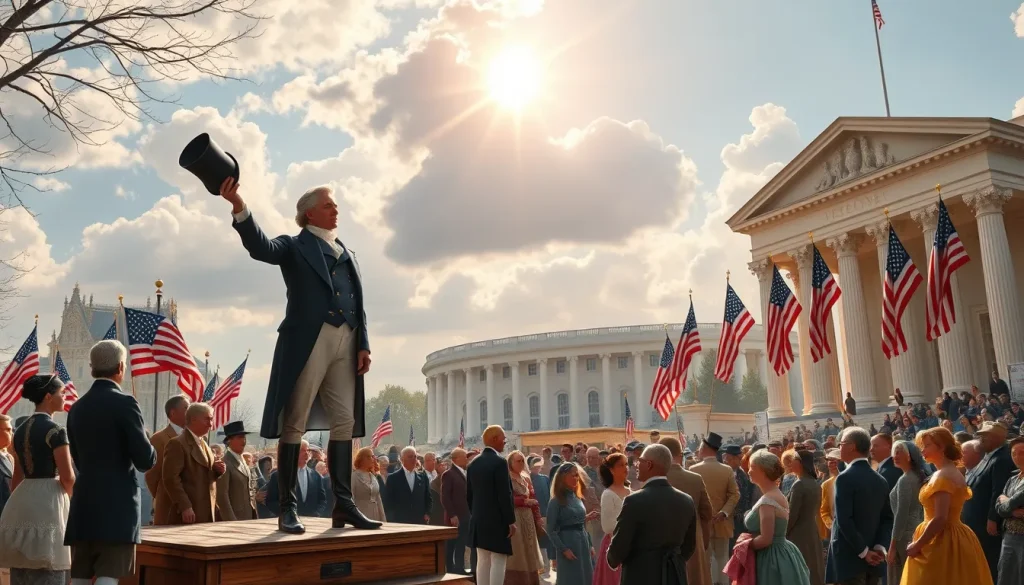
Nationalism after the War of 1812 refers to the heightened sense of American national unity and loyalty that emerged following the signing of the Treaty of Ghent on December 24, 1814, and the subsequent military success at the Battle of New Orleans in January 1815. This nationalism, which reached its zenith during President James Monroe’s administration (1817–1825), reshaped American politics, culture, and foreign policy, even as it coexisted with unresolved sectional and social conflicts. Its significance lies not only in the immediate post-war period but also in its role in laying the groundwork for later American expansion and identity.
Historical Context
The War of 1812 grew out of long-standing disputes between the United States and Great Britain over maritime neutral rights, impressment of American sailors, and British support for Indigenous resistance to American expansion. The war ended in a stalemate: the Treaty of Ghent restored pre-war boundaries and made no mention of impressment or neutral rights, yet Americans treated it as a victory, largely because of Andrew Jackson’s dramatic triumph at New Orleans after the treaty was signed. The war also exposed the young republic’s military unpreparedness and internal divisions—New England Federalists had even discussed secession at the Hartford Convention in 1814. With peace, a wave of relief and pride swept the nation, and many believed the war had vindicated American independence.
What Happened
The immediate post-war years saw an explosion of nationalist sentiment. President James Monroe’s tour of the nation in 1817, during which he was enthusiastically received in Federalist New England, prompted a Boston newspaper to coin the phrase “Era of Good Feelings.” The Democratic-Republican Party, which had long championed states’ rights, now embraced federal power to promote economic development and national defense. Congress chartered the Second Bank of the United States in 1816, passed the Tariff of 1816 to protect infant American industries, and debated internal improvements such as roads and canals. The Supreme Court, under Chief Justice John Marshall, reinforced national supremacy in cases like McCulloch v. Maryland (1819) and Gibbons v. Ogden (1824). Diplomatically, the Rush-Bagot Treaty (1817) and the Convention of 1818 demilitarized the Great Lakes and settled the northern border, while the Adams-Onís Treaty (1819) acquired Florida. President Monroe’s 1823 proclamation, later known as the Monroe Doctrine, asserted American continental hegemony against European colonization. Culturally, Americans celebrated naval heroes like Oliver Hazard Perry and commemorated the war in public monuments, painted histories, and literature, often linking the war to the memory of the Revolution.
Why It Matters
The nationalism that followed the War of 1812 had immediate effects: it solidified the shift away from Federalist opposition, fostered a sense of shared national purpose, and encouraged federal investment in infrastructure and institutions. Over the longer term, it contributed to the expansion westward, the growth of a market economy, and the development of a distinct American cultural identity. However, historians note that this nationalist fervor was neither universal nor permanent. By 1819, the Panic of 1819 and the Missouri Compromise crisis revealed deep sectional fractures, and the “Era of Good Feelings” proved short-lived. Scholars debate whether the nationalism was primarily a political project of elites or a genuine popular sentiment, and whether it represented a decisive break from earlier republican fears of centralized power. Despite these disagreements, scholars generally agree that the war’s outcome gave Americans a new confidence in their republic and helped set the stage for the contentious, but nation-building, politics of the 1820s and 1830s.
Definition
In the context of the early United States, nationalism is defined as a sense of loyalty and devotion to the nation as a whole, rather than to individual states or regions. It involved pride in the country’s institutions, history, and destiny, and a belief in the legitimacy and permanence of the federal union. After 1815, this nationalism was expressed through political programs, cultural productions, and popular attitudes that stressed American unity and exceptionalism.
Background
American nationalism predated the War of 1812. The Revolution and the ratification of the Constitution in 1788 established a federal republic that inspired patriotic attachment, but political factionalism and regional differences constantly challenged national unity. The Jeffersonian Democratic-Republicans, who took power in 1801, were often wary of strong central authority, while Federalists favored commercial and diplomatic ties with Britain. The Embargo Act of 1807 and non-importation measures disrupted trade and alienated many Americans, while the war itself produced bitter opposition, especially in New England. By 1815, the successful conclusion of the war, though mixed, provided a common experience that could be interpreted as a national triumph and a vindication of republican government.
How It Worked
Post-war nationalism worked through multiple channels. Politically, the Democratic-Republican Party adopted nationalist economic policies—the national bank, protective tariffs, and internal improvements—to bind the nation together and reduce dependence on foreign goods and capital. Federalists, who had been discredited by the Hartford Convention, faded as a national force, allowing one-party rule and a sense of unity. Culturally, nationalism was expressed through public celebrations, such as the July 4 oratory at Bunker Hill in 1817, where President Monroe linked the War of 1812 to the Revolutionary cause. Monuments to naval victories and soldiers’ graves became sites of patriotic pilgrimage. Literature and art increasingly celebrated American themes, from the landscapes of the Hudson River School to the historical paintings of John Trumbull. The government also promoted national identity through the expansion of postal routes, roads, and eventually the Erie Canal, which physically connected the states.
Competing Viewpoints
Historians have offered competing interpretations of post-war American nationalism. The “consensus” school, exemplified by George Dangerfield, saw the Era of Good Feelings as a period in which moderate nationalism prevailed, with politicians like Henry Clay promoting an “American System” of tariffs and internal improvements, while Andrew Jackson’s democratic nationalism appealed to common white men. More recent scholars, such as those in the “new political history,” emphasize that nationalism was contested and often benefited the wealthy or promoted white supremacy. Others argue that the nationalism of the era was not a genuine mass movement but a rhetorical tool used by elites to consolidate power. Intellectual historians, like Eran Zelnik, suggest that nationalism served as a way for post-revolutionary generations to prove themselves by pursuing war and empire, absorbing anxieties about republican virtue into a quest for glory.
Role in the War of 1812
The War of 1812 itself was both a cause and an expression of nationalism. Its declaration was partly driven by war hawks like Henry Clay and John C. Calhoun, who sought to assert American honor and challenge British restrictions. The war allowed a younger generation, which had missed the Revolution, to earn martial glory and prove their loyalty to the republic. The conflict also exposed serious weaknesses—the army was small and ill-trained, and regional opposition was strong—but after the war these problems were downplayed or addressed through nationalist reforms. The war solidified the federal government’s ability to manage national defense and finances, and it demonstrated that the United States could survive a major international conflict without disunion.
Consequences and Historical Interpretation
The nationalism of the post-war decade had lasting consequences. It facilitated the acquisition of Florida, the declaration of the Monroe Doctrine, and the westward expansion that would lead to the Texas annexation and the Mexican-American War. Domestically, it encouraged the growth of a market economy and the consolidation of federal authority, but it also sharpened sectional tensions over slavery, as seen in the Missouri Compromise. Historians debate whether the wartime nationalism was a genuine popular sentiment or a constructed ideology. Most agree that the war and its aftermath accelerated the transformation from an eighteenth-century republic of jealous states to a more unified nation, even as deep contradictions remained. The “Era of Good Feelings” thus appears in scholarship as both a decisive moment of national consolidation and a prelude to the sectional struggles of the antebellum period.
Primary Sources
One key contemporary document is a letter from Treasury Secretary Albert Gallatin to his friend, written in 1816, in which he observed that the war “has renewed and reinstated the national feelings which the Revolution had given and which were daily lessened. The people have now more general objects of attachment with which their pride and political opinions are connected. They are more American; they feel and act more like a nation.” This quote, preserved in George Dangerfield’s study, captures the spirit of the moment. Another important source is President James Monroe’s 1817 tour speeches, which promoted national unity and reconciled Federalists. Additionally, the Monroe Doctrine (1823) and the debates over the Missouri Compromise in 1819 reveal both the nationalist rhetoric and its limits. These sources illustrate the era’s mixture of genuine enthusiasm and political calculation, and they must be read with awareness of their authors’ partisan and regional biases.
Further Reading
- George Dangerfield, The Era of Good Feelings (1952).
- George Dangerfield, The Awakening of American Nationalism, 1815–1828 (1965).
- Steven Watts, The Republic Reborn: War and the Making of Liberal America, 1790–1820 (1987).
- Nicole Eustace, 1812: War and the Passions of Patriotism (2012).
- U.S. National Park Service, “New nationalism in an ‘Era of Good Feelings,’” (2015). nps.gov.
References
- Dangerfield, George. The Era of Good Feelings. New York: Harcourt, Brace, 1952.
- Dangerfield, George. The Awakening of American Nationalism, 1815–1828. New York: Harper & Row, 1965.
- Dennis, Matthew. “New nationalism in an ‘Era of Good Feelings.’” U.S. National Park Service, April 2, 2015. https://nps.gov/articles/new-nationalism-in-an-era-of-good-feelings.htm.
- Zelnik, Eran. “Era of Good Feelings Roundtable, Part II: The Era of Nationalist Feelings.” Society for US Intellectual History, July 11, 2017. https://s-usih.org/2017/07/era-of-good-feelings-roundtable-part-ii-the-era-of-nationalist-feelings/.
- “Nationalism: 1815.” Encyclopedia.com. Accessed 2023. https://www.encyclopedia.com/history/encyclopedias-almanacs-transcripts-and-maps/nationalism-1815.
FAQ
Did the War of 1812 truly increase American nationalism?
Yes, though the war ended in a stalemate, Americans celebrated it as a victory, especially after the Battle of New Orleans. This led to a surge of national pride and prompted federal initiatives to strengthen the nation.
Why is the Era of Good Feelings considered a misnomer?
The term 'Era of Good Feelings' was coined by a Boston newspaper, but it exaggerated harmony. By 1819, the Panic and Missouri Compromise exposed sharp sectional and political conflicts, undermining the unity it implied.
How did nationalism after the War of 1812 affect political parties?
The Federalist Party, discredited by its opposition to the war and the Hartford Convention, virtually disappeared, leading to one-party rule by the Democratic-Republicans, but this unity soon fractured over sectionalism.


Leave a Reply