Short Answer
Disease and medicine played a decisive but often overlooked role in the War of 1812 (1812–1815). Although battles and naval engagements dominate popular memory, sickness killed far more soldiers and sailors than combat. Medical practice remained pre-germ-theory, and military medical organization was improvised on both sides. Understanding disease and medicine helps explain why the war was so costly, how armies actually functioned, and why the conflict prompted lasting reforms in American military medicine.
Historical Context
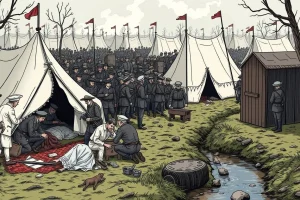
When the United States declared war on Great Britain in June 1812, military and naval forces operated across a vast region: the Great Lakes and St. Lawrence Valley, the Niagara frontier, the Chesapeake Bay, the southern Atlantic coast, and the Gulf Coast. American regulars, state militia, British regulars, Canadian militia, and Indigenous nations allied to both sides moved through camps, forts, barracks, and ships. These environments were ideal for infectious disease. Overcrowding, poor ventilation, contaminated water, inadequate food, and limited sanitation were common.
Early nineteenth-century medicine lacked the germ theory of disease. Most physicians believed that illness arose from miasma—foul air or noxious vapors—or from imbalances in the body. They had no antibiotics, no sterile surgical technique, and no effective anesthesia beyond opium and alcohol. Military surgeons could sometimes identify risk factors such as filthy camps and bad water, but they could not explain why disease spread. The result was a therapeutic system that often did more harm than good.
Military medical organization was also underdeveloped. The U.S. Army Medical Department existed before the war but was small and unprepared for large-scale campaigning. Congress expanded the medical establishment during the conflict and created a surgeon general–style office, but supply, staffing, and training remained uneven. British and Canadian forces had more administrative experience, yet they too struggled with disease in crowded barracks, transports, and frontier posts. Indigenous communities faced additional dangers from displacement, close contact with military forces, and limited access to their usual healing and subsistence practices.

What Happened
Disease quickly became the dominant cause of death. According to the National Park Service, fully three-quarters of American war deaths resulted from disease rather than wounds. The most common killers were typhoid fever, pneumonia, malaria, measles, typhus, smallpox, and diarrhea or dysentery. These illnesses swept through camps along the Niagara River, the Great Lakes, the Chesapeake, and the Gulf Coast, often before troops ever reached a battlefield. Sickness reduced effective strength, delayed operations, filled hospitals, and forced commanders to leave large numbers of men behind.
Medical care was rudimentary and often harmful. Surgeons used “heroic” treatments such as bleeding, blistering, and deliberately induced vomiting. They stocked medicine chests with opium and alcohol for pain, quinine for malaria, and mercury for syphilis, though mercury was toxic. Surgery was performed without modern anesthesia; amputations were common for severe limb wounds, and infection frequently followed. In naval service, surgeons treated burns, fractures, and wounds aboard crowded ships. U.S. Navy surgeon William Swift, who served on the Chesapeake and Syren, was captured with both vessels, illustrating how medical personnel shared the risks of combat and captivity.
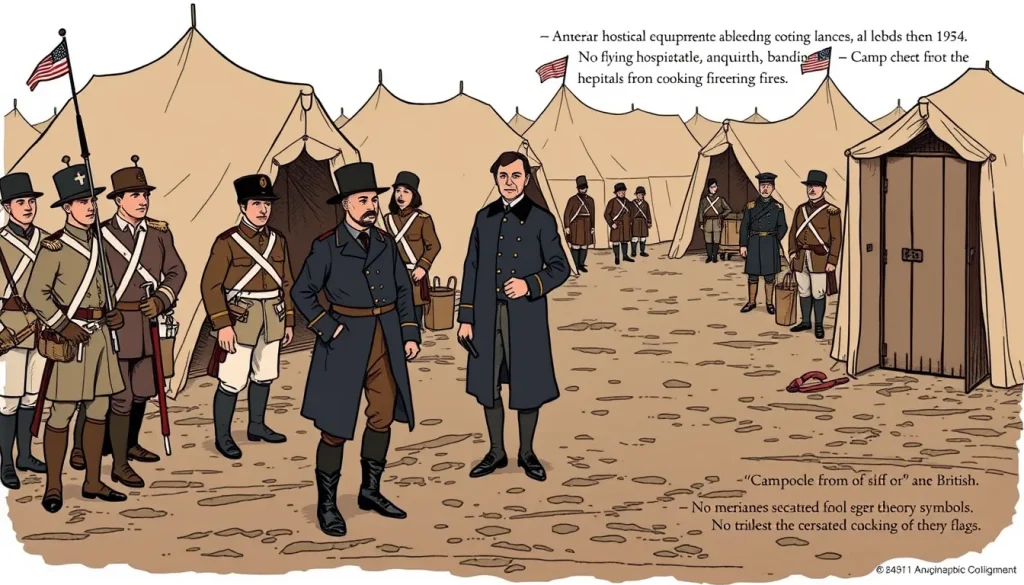
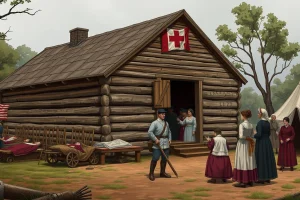
Medical logistics were a persistent weakness. The War Department had no standardized system for accounting for or replenishing medical supplies, and there was no uniform way to evaluate the competence of medical staff. As the war continued, Congress created the post of surgeon general and set professional qualifications for selecting surgeons. Officials also tried to improve camp sanitation, separate latrines from cooking and water sources, and reduce hospital overcrowding. A more organized hospital system emerged, with permanent hospitals well to the rear linked to mobile “flying hospitals” closer to the front. Medicine chests became more standardized, but the fundamental scientific unknowns remained unsolved.
After hostilities ended in 1815, the army was drastically reduced. The office of Physician and Surgeon General was eliminated, and many experienced physicians were dismissed. Yet the wartime experience convinced Secretary of War John C. Calhoun and others that a permanent professional medical staff was necessary. In 1818, legislation created a permanent Army Medical Department with a Surgeon General, allowing systematic collection of medical data and a cadre of experienced military surgeons for future wars.
Why It Matters
Disease shaped the War of 1812 more than any single battle. It depleted armies, disrupted campaigns, and caused suffering that contemporaries recognized but could not fully explain or prevent. For the United States, the war exposed the dangers of unprepared military medicine and helped justify the creation of a permanent Medical Department in 1818. That reform did not instantly solve the problem—germ theory and modern sanitation lay decades in the future—but it established an institutional framework for collecting statistics, standardizing supplies, and training medical officers.
The war also matters for how historians interpret military effectiveness. Traditional narratives emphasize battles, leaders, and diplomacy. Medical history shows that armies were often fighting two enemies: the opposing force and the microbial environment of camps and ships. British, Canadian, and Indigenous experiences of disease are less fully documented in English-language military records, but they were no less real. Historians continue to debate how much disease determined specific campaigns and whether medical failures were primarily organizational or the inevitable result of limited scientific knowledge.
Definition
Disease and medicine in the War of 1812 refers to the prevention, diagnosis, treatment, and consequences of illness and injury among soldiers, sailors, militia, Indigenous allies, and civilians associated with the conflict. It includes the work of military surgeons, the operation of hospitals and supply systems, and the broader demographic impact of epidemics and camp diseases.
Background
The medical world of 1812 was shaped by humoral theory, miasma theory, and the practice of heroic medicine. Physicians tried to restore bodily balance through bleeding, purging, blistering, and powerful drugs. They had no understanding of bacteria or viruses, no antibiotics, and no antiseptic surgery. Military medicine was further constrained by weak supply chains, limited numbers of trained surgeons, and the difficulty of maintaining hygiene in field camps. These limitations affected all combatants, though resources and organization varied.
How It Worked
When troops fell ill, they were usually treated in regimental hospitals, general hospitals, or temporary flying hospitals near the front. Surgeons relied on medicine chests containing opium, alcohol, quinine, mercury, and other substances. They advised commanders on camp sanitation, but their recommendations were often ignored or impossible to implement. Wounded men faced amputation, wound cleaning, and bandaging without modern anesthesia or sterile technique. Sick men were sometimes sent to the rear, where overcrowded hospitals could become centers of infection rather than recovery. Naval surgeons worked in cramped quarters with limited supplies and no ability to evacuate the seriously ill.
Competing Viewpoints
Historians generally agree that disease killed far more troops than combat, but they disagree about how to interpret the medical effort. One view emphasizes organizational failure: the U.S. Army was unprepared, supply systems were chaotic, and medical leadership was weak. Another view stresses the limits of contemporary science: even the best-organized surgeons could not prevent diseases whose causes were unknown. A third perspective argues that disease was a decisive strategic factor, shaping manpower and operations as much as enemy action. Some scholars caution that casualty and sickness records are incomplete, especially for British, Canadian, and Indigenous forces, so precise comparisons are difficult.
Role in the War of 1812
Disease affected every major theater. American armies on the Niagara and Great Lakes frontiers suffered repeated outbreaks of dysentery, typhoid, and malaria. British and Canadian garrisons also reported high sickness rates, and Indigenous communities allied with both sides experienced epidemics that added to the devastation of war. Naval crews faced fevers and infections on blockading squadrons and lake fleets. Medical officers treated wounds and disease under difficult conditions, and their reports document both suffering and improvisation. The war also revealed that sanitation, supply, and organization could matter as much as surgical skill.
Consequences and Historical Interpretation
The immediate consequence was human suffering on a scale that combat casualties alone do not capture. The longer-term consequence was reform. The permanent Army Medical Department of 1818 and the establishment of the Surgeon General’s office created an institutional memory and a system for future mobilization. Later historians have used War of 1812 medical records to study disease ecology, military logistics, and the limits of pre-germ-theory medicine. The conflict is now seen as a bridge between the improvised medicine of the Revolutionary era and the more organized, though still deadly, military medicine of the nineteenth century.
Primary Sources
- The National Park Service article “Wounded Soldiers Contend with Crude Treatments” preserves the observation of an American army surgeon: “It is among soldiers in the field that filth and bad provisions abound. It is among that class of men that dysentery appears with all its hideous forms.” The quotation reflects contemporary awareness of camp conditions, but it is a single surgeon’s testimony and should be read alongside official returns and hospital records.
- American State Papers: Military Affairs collects official reports, including medical and supply correspondence from the War Department and army officers. These documents provide details on hospitals, medicine chests, and sick returns, though they are often written to justify decisions or request resources.
- British War Office records held by The National Archives (UK) include hospital returns, sick lists, and medical correspondence for British and Canadian forces. They are essential for comparing British experience with American records, but they are fragmentary and use period terminology.
- The medical kit of U.S. Navy surgeon William Swift, held by the Massachusetts Historical Society, is a material source for naval medicine. It shows the instruments and medicines available to a surgeon who served on the Chesapeake and Syren, but an artifact alone cannot document treatment outcomes.
- Indigenous perspectives on disease are less represented in written military records. Historians must combine fur-trade papers, treaty councils, missionary accounts, oral traditions, and archaeological evidence, recognizing that these sources have their own biases and gaps.
Further Reading
- Gillett, Mary C. The Army Medical Department, 1775–1818. Washington, DC: Center of Military History, U.S. Army, 1981.
- Hickey, Donald R. The War of 1812: A Forgotten Conflict. Urbana: University of Illinois Press, 2012.
- Taylor, Alan. The Civil War of 1812: American Citizens, British Subjects, Irish Rebels, and Indian Allies. New York: Knopf, 2010.
- Heidler, David S., and Jeanne T. Heidler, eds. Encyclopedia of the War of 1812. Annapolis: Naval Institute Press, 1997.
- National Park Service. “Wounded Soldiers Contend with Crude Treatments.” https://www.nps.gov/articles/military-medicine.htm.
- U.S. Army Medical Department Center of History and Heritage. “The Lessons of War: 1815 to 1818.” https://achh.army.mil/history/book-rev-gillett1-ch10/.
- The National Archives (UK), War Office records relating to medical returns and hospitals.
- Massachusetts Historical Society, William Swift medical instruments and related collections.
References
- National Park Service. “Wounded Soldiers Contend with Crude Treatments.” https://www.nps.gov/articles/military-medicine.htm.
- Gillett, Mary C. The Army Medical Department, 1775–1818. Washington, DC: Center of Military History, U.S. Army, 1981. Chapter 10, “The Lessons of War: 1815 to 1818.” https://achh.army.mil/history/book-rev-gillett1-ch10/.
- Hickey, Donald R. The War of 1812: A Forgotten Conflict. Urbana: University of Illinois Press, 2012.
- Taylor, Alan. The Civil War of 1812: American Citizens, British Subjects, Irish Rebels, and Indian Allies. New York: Knopf, 2010.
- Heidler, David S., and Jeanne T. Heidler, eds. Encyclopedia of the War of 1812. Annapolis: Naval Institute Press, 1997.
FAQ
How many War of 1812 deaths were caused by disease?
According to the National Park Service, about three-quarters of American military deaths in the War of 1812 were caused by disease rather than wounds. Records for British, Canadian, and Indigenous forces are less complete, but they also suffered heavily from camp diseases and epidemics.
What diseases were most common in the War of 1812?
Common diseases included typhoid fever, pneumonia, malaria, measles, typhus, smallpox, and diarrhea or dysentery. These spread in crowded camps, forts, and ships with poor sanitation.
How did the War of 1812 change military medicine?
The war exposed severe weaknesses in supply, sanitation, and organization. In 1818, the United States created a permanent Army Medical Department and the office of the Surgeon General, improving the framework for future military medical care.

Leave a Reply