
Short Answer
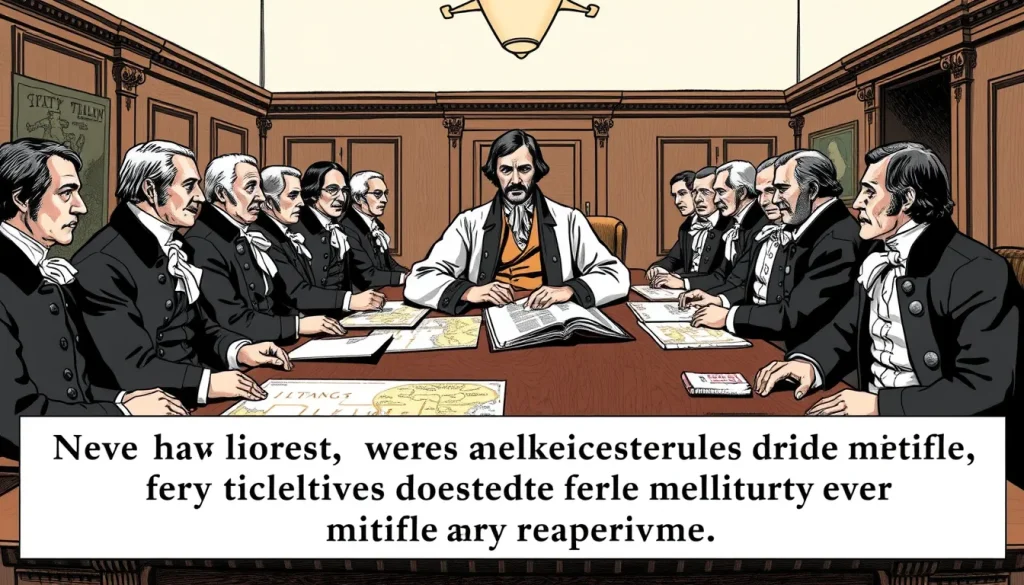
New England’s refusal to provide militia for federal service during the War of 1812 was a significant act of political opposition that hampered American military operations, especially in the northeastern theater. Rooted in Federalist resistance to “Mr. Madison’s War” and a constitutional interpretation that state militias were for local defense only, this refusal affected the course of the conflict by weakening planned invasions of British North America and by deepening sectional divisions. The standoff between the states and the federal government over militia command remains a notable episode in the history of U.S. federalism and military policy.
Historical Context
The United States declared war on Great Britain on June 18, 1812, after years of diplomatic conflict over impressment, trade restrictions, and alleged British support for Indigenous resistance in the trans-Appalachian West. The regular army at the start of the war numbered fewer than 12,000 men, and the government relied heavily on state militias to meet its manpower needs. The Militia Act of 1792 had established a uniform militia system, but it also left authority over the militia in the hands of state governors, who could refuse to call them out for federal service if they judged it unconstitutional.
New England was the stronghold of the Federalist Party, which opposed the war on political, economic, and ideological grounds. Federalists viewed the war as a tool of the Republican Party, and many believed it would lead to disaster. Opposition was particularly intense in Massachusetts, Connecticut, and Rhode Island, where governors were staunch Federalists. They argued that the federal government could not compel state militias to serve outside their own states, a stance that set the stage for direct confrontation with the Madison administration.
What Happened
At the outset of the war, when Major General Henry Dearborn, the senior American commander on the northern frontier, attempted to call out state militia for an offensive into Canada, the governors of Connecticut, Rhode Island, and Massachusetts refused. They maintained that the militia could only be used to repel invasion, not for offensive operations beyond their borders. Governor Caleb Strong of Massachusetts was a prominent critic and resisted placing state troops under regular army command. In November 1813, Vermont’s Governor Martin Chittenden ordered the state’s militia serving at Plattsburgh, New York, to return home, arguing that they were being used for national rather than local defense.

These refusals directly impacted American military plans. Dearborn’s planned assaults on Montreal and Kingston were weakened by the absence of the well-equipped New England militias, which were among the best in the country. The U.S. offensive efforts along the Niagara frontier and Lake Champlain also suffered from a lack of militia support. While New England did supply substantial numbers of recruits to the regular army and outfitted many privateers, the governors’ obstruction of militia service deprived the federal army of its most effective state troops at the critical moments of invasion.
Why It Matters
The refusal of New England to provide militia had immediate consequences on the battlefield and longer-term political repercussions. Militarily, it contributed to the failure of American invasions of British North America in 1812 and 1813, as the northern campaigns lacked sufficient troops. This prolongment of the war, combined with economic and financial resistance from New England banks, complicated federal efforts to raise funds and supplies. Politically, the standoff intensified sectional animosity and culminated in the Hartford Convention (December 1814–January 1815), where Federalists aired grievances and discussed, but did not adopt, the possibility of secession. Historians continue to debate the full impact of New England’s obstruction, with some arguing that it was a major factor in American military reversals, while others contend that incompetence and poor logistics played a larger role.
Definition
In the context of the War of 1812, the term “New England’s refusal to provide militia” refers to the decisions by the governors of several New England states—primarily Massachusetts, Connecticut, and Rhode Island—to withhold their state militias from federal service. They did so on the constitutional principle that the president could not call out state militias for offensive operations outside their home states. These refusals were part of a broader Federalist strategy to oppose the war and to limit the power of the national government.
Background
The constitutional basis for these refusals lay in the militia clauses of the U.S. Constitution, which gave Congress the power to call forth the militia to execute federal laws, suppress insurrections, and repel invasions, but left the actual command of state militia units in the hands of state governors. The Militia Act of 1792 formalized these arrangements, but it did not specify when the militia could be used for offensive purposes. New England Federalists argued that the Constitution only permitted militia to be used defensively, and they rejected federal attempts to deploy them on foreign soil (i.e., Canada) or even outside the state itself.
How It Worked
In practice, when the federal government requested militia detachments for a specific campaign, the governor of each state could either comply or refuse, citing the state’s rights. Governors communicated their refusals through official correspondence to the Secretary of War. For example, after General Dearborn requested troops from Massachusetts, Governor Strong declined, insisting that the militia could be used only for defense of the state. Similarly, when the administration called for militia to reinforce the northern frontier, several governors demurred. In some cases, militia units initially volunteered, but their terms were limited and they often refused to pass beyond state borders. This created a patchwork of troop availability that hampered planning and execution of offensive operations.
Competing Viewpoints
Federalists argued that the war was unnecessary and unconstitutional, and they insisted that the president had no authority to compel state militias to serve outside the United States. They believed that the militia existed primarily for local defense and that federal use beyond that was an infringement of states’ rights. Republicans, on the other hand, contended that the Constitution’s power to “call forth the militia” and the war powers of the federal government allowed the president to employ the militia in any lawful military operation. They viewed the governors’ refusals as a form of obstructionism that endangered national security. The dispute was framed as a fundamental constitutional question, but it was also deeply politicized, with each side using its interpretation to advance its own agenda.
Role in the War of 1812
The refusal of New England militia was a critical factor in the northern theater. The planned American invasions of Canada in 1812 and 1813 depended on a rapid buildup of troops, and the absence of the New England militia, which were better trained and equipped than most state contingents, weakened the offensive. For instance, General Dearborn’s advance toward Montreal in 1812 stalled partly because his militia refused to cross the border. Similarly, the campaign on the Niagara frontier and the naval battles on Lake Champlain were conducted with reduced forces. While the U.S. eventually achieved some successes (e.g., Perry’s victory on Lake Erie), the lack of New England troops at key moments contributed to the overall failure of the invasion strategy. Moreover, the political standoff diverted attention and resources and undermined public confidence in the war effort.
Consequences and Historical Interpretation
Immediately after the war, the consequences of New England’s refusal were debated. Many contemporaries, including President Madison, blamed Federalist obstruction for American military failures. The Hartford Convention, though it produced only moderate demands, was widely seen as a symbol of disloyalty and further eroded Federalist influence. In the long term, the dispute over militia command influenced later debates about federalism and the military. Historians have offered varying assessments: some, like Emory Upton, argued that the militia system was fundamentally flawed and that the refusal demonstrated the need for a professional standing army. Others, like Donald Hickey, contend that New England’s obstruction, while real, was only one of many problems and that the war’s outcome was determined by a combination of factors including poor leadership and inadequate logistics. Regardless of interpretation, the episode stands as a notable example of state resistance to federal military authority during a time of war.
Primary Sources
Key primary documents include Governor Caleb Strong’s correspondence with Secretary of War William Eustis, in which he refused militia for federal service; Governor Martin Chittenden’s order of November 1813 recalling Vermont militia from Plattsburgh; and the Hartford Convention’s official report, issued in January 1815. Additionally, the Federalist minority in Congress published an “Address to the People of the United States” in 1812 outlining their objections to the war. These documents are available in printed collections such as the American State Papers and in various state archives and historical society collections.
Further Reading
- Hickey, Donald R. The War of 1812: A Forgotten Conflict. University of Illinois Press, 1989.
- Stagg, J.C.A. Mr. Madison’s War: Politics, Diplomacy, and Warfare in the Early American Republic, 1783–1830. Princeton University Press, 1983.
- Kerby, Robert L. “The Militia System and the State Militias in the War of 1812.” Indiana Magazine of History 73, no. 2 (1977): 102–124.
- National Park Service. “Federalists Oppose Madison’s War.” Accessed 2023. https://www.nps.gov/articles/federalist-opposition-to-the-war.htm.
- National Park Service. “America’s Citizen Soldiers: The Better Bargain of Militias?” Accessed 2023. https://www.nps.gov/articles/americas-citizen-soldiers.htm.
References
- National Park Service. “Federalists Oppose Madison’s War.” U.S. Department of the Interior. Accessed March 22, 2016. https://www.nps.gov/articles/federalist-opposition-to-the-war.htm.
- National Park Service. “America’s Citizen Soldiers: The Better Bargain of Militias?” U.S. Department of the Interior. Accessed March 10, 2015. https://www.nps.gov/articles/americas-citizen-soldiers.htm.
- Kerby, Robert L. “The Militia System and the State Militias in the War of 1812.” Indiana Magazine of History 73, no. 2 (1977): 102–124.
- Hickey, Donald R. The War of 1812: A Forgotten Conflict. University of Illinois Press, 1989.
- Stagg, J.C.A. Mr. Madison’s War: Politics, Diplomacy, and Warfare in the Early American Republic, 1783–1830. Princeton University Press, 1983.
FAQ
Why did New England governors refuse to provide militia?
They argued that the Constitution only allowed state militia to be used for defense against invasion, not for offensive operations on foreign soil. Their refusal was also a political protest against 'Mr. Madison's War' and the Republican administration.
What impact did the refusal have on military operations?
The absence of New England's well-equipped militia weakened planned invasions of Canada in 1812 and 1813, contributing to the failure of the northern campaigns and allowing the British to remain on the offensive in the region.
What were the political consequences of the refusal?
It intensified sectional divisions, led to the Hartford Convention and accusations of disloyalty, and contributed to the decline of the Federalist Party after the war. It also raised constitutional questions about federal authority over state militias.

Leave a Reply