
Short Answer
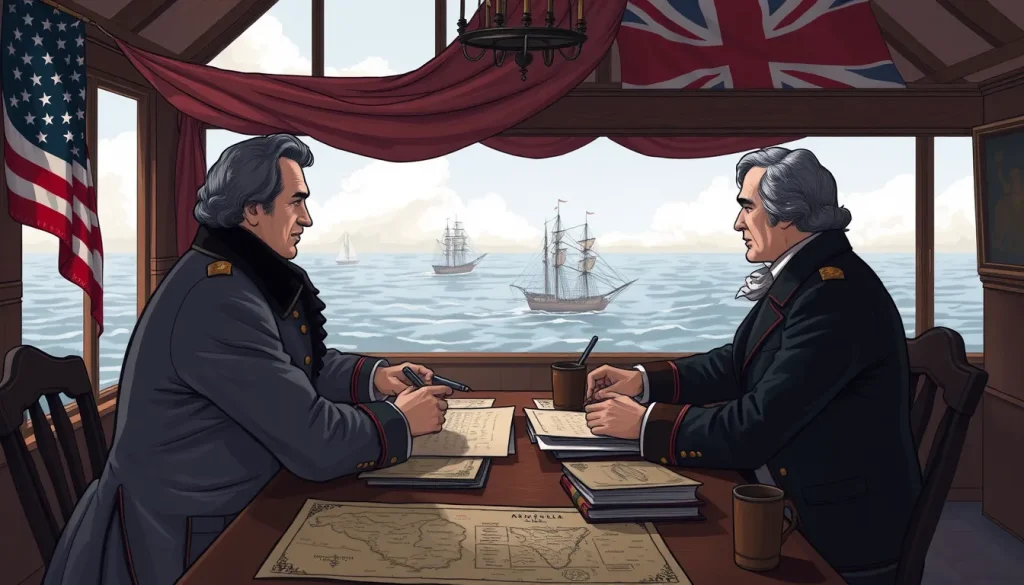
The War of 1812, fought between the United States and Great Britain from June 1812 to February 1815, erupted over maritime rights, impressment, and frontier tensions. Whether this conflict could have been avoided remains a subject of historical debate, hinging on the timing of diplomatic decisions, the intransigence of both sides, and the deep-seated political and economic pressures of the Napoleonic era. This article examines the key factors that led to war and evaluates the plausibility of alternative outcomes.
Historical Context
During the Napoleonic Wars (1803–1815), Britain and France imposed trade restrictions on neutral nations, particularly the United States. Britain’s Orders in Council (1807) blockaded French-controlled ports and required neutral ships to obtain licenses, while France issued the Milan and Berlin Decrees, threatening seizure of any neutral vessel complying with British regulations. The Royal Navy also impressed American sailors, claiming them as British deserters, an estimated 6,000 Americans by 1812. In addition, British support of Indigenous nations resisting American expansion in the Northwest created grievances among frontier settlers. U.S. efforts to coerce Britain through economic sanctions, such as the Embargo Act of 1807 and the Non-Intercourse Act of 1809, failed to resolve these issues. Domestic politics divided the Federalists, who favored peace and trade with Britain, and the Republicans, led by President James Madison, who saw British actions as violations of American sovereignty.
What Happened
On June 1, 1812, President Madison sent a war message to Congress, citing impressment, violations of neutral rights, and alleged British incitement of Indigenous attacks. The House voted 79–49 on June 4, and the Senate followed on June 17 with a 19–13 vote. Madison signed the declaration on June 18. Two days earlier, on June 16, the British government had announced the suspension of the Orders in Council, but news had not yet reached America. The war proceeded, with U.S. attempts to invade Canada failing, British naval blockades and raids, and the burning of Washington, D.C., in 1814. The Treaty of Ghent, signed December 24, 1814, restored the prewar status quo, with the war effectively ending in a draw.
Why It Matters
The question of avoidability matters because it reveals the relative importance of specific grievances versus broader political and ideological factors. If war was avoidable, then diplomatic failures or miscommunication were decisive; if unavoidable, the war arose from irreconcilable interests. Historians use this debate to understand the causes of the conflict and the nature of early American nationalism. The war also had significant consequences: it solidified U.S. independence, boosted American national identity, and led to improved relations with Britain after 1815.
Definition
The question “Could the War of 1812 Have Been Avoided?” asks whether alternative decisions, better communication, or different policies could have prevented armed conflict between the United States and Great Britain. It is a counterfactual inquiry that assesses the causes of the war and the points at which escalation might have been prevented.
Background
The immediate causes of the war were British interference with American trade and impressment, both stemming from the Napoleonic Wars. However, American territorial ambitions toward Canada and friction with Indigenous nations also played roles. The United States had repeatedly protested these practices, but Britain, preoccupied with the war against France, saw concessions as impossible without undermining its war effort. Meanwhile, the U.S. government, under Republican leadership, grew convinced that national honor and sovereignty required resistance.
How It Worked
The decision for war was not inevitable; it emerged from a political process shaped by domestic pressures. President Madison, initially cautious, faced pressure from “War Hawks” in Congress, such as Henry Clay and John C. Calhoun, who advocated for expansion into Canada and defense of American rights. The Federalists opposed war, arguing it would aid Napoleon and devastate trade. The war vote was close, and the House and Senate decisions were among the narrowest in U.S. history. The outcome depended on Republican unity, which was fragile, as some Southern and Western representatives voted for war while many New England Federalists voted against. Had the news of the Orders in Council suspension arrived earlier, it might have undermined the case for war, but the lack of transatlantic communication made that impossible.
Competing Viewpoints
Historians have long debated whether war was avoidable. Some, like the British historian Jeremy Black, argue that Britain did not want war and that the conflict was a tragic accident caused by slow communication—if the suspension had been known, war might not have occurred. Others, such as Donald Hickey, emphasize that the United States went to war for honor and expansion, not just specific grievances, making conflict likely even without the Orders in Council. The NPS article by Alan Taylor highlights that Republicans saw war as necessary to preserve republican government, while Federalists opposed it for economic reasons. Jasper Trautsch’s historiography notes that the war seemed “absurd” because the main cause had been removed, yet the deeper issues of impressment and frontier conflict remained unresolved.
Role in the War of 1812
In this context, the role of the question is to evaluate whether the war’s stated causes were sufficient to justify the conflict. The Orders in Council were suspended but not yet repealed, and impressment remained a sticking point. Britain refused to yield on impressment, as it was essential to the Royal Navy’s manpower needs, and the United States refused to accept it as a violation of sovereignty. Additionally, American designs on Canada and Indigenous resistance were linked to a struggle for the continent, which could not be settled by diplomacy alone. While the war might have been postponed, the fundamental tensions over maritime rights and territorial expansion made a future conflict plausible.
Consequences and Historical Interpretation
The war ended in status quo ante bellum, with no changes to boundaries or mention of impressment. The Treaty of Ghent did not address the causes, and the war’s outcome was often seen as a draw. Post-war, Anglo-American relations improved as Britain and the U.S. turned to other issues. Historians who argue the war was avoidable point to the timing of the Orders in Council suspension and the lack of communication as the decisive factor. Those who see it as inevitable emphasize the irreconcilable issues of impressment and Native American resistance, which were not resolved by diplomacy. The debate reflects broader questions about the nature of pre-1812 diplomacy and the role of nationalism in driving policy.
Primary Sources
Key primary sources include President James Madison’s war message to Congress (June 1, 1812), which enumerated the grievances. The British government’s announcement of the suspension of the Orders in Council (June 16, 1812), recorded in the London Gazette, shows the potential for peace. Also important are the Federalist protests, such as the Massachusetts legislature’s 1812 report opposing war. These documents reveal the arguments on each side, though each has bias: Madison’s message emphasizes American victimhood, while British statements stress their own wartime necessity. They must be read critically.
Further Reading
- Donald R. Hickey, The War of 1812: A Forgotten Conflict (University of Illinois Press, 1989).
- Alan Taylor, The Civil War of 1812: American Citizens, British Subjects, Irish Rebels, & Indian Allies (Alfred A. Knopf, 2010).
- Jasper M. Trautsch, “The Causes of the War of 1812: 200 Years of Debate,” Journal of Military History 77 (2013): 273–293.
- Walter R. Borneman, 1812: The War That Forged a Nation (HarperCollins, 2004).
- National Park Service, “Stark Alternatives: War or Compromise?” (2015), at nps.gov.
References
- Taylor, Alan. “Stark alternatives: War or compromise?” U.S. National Park Service, 2015. https://www.nps.gov/articles/stark-alternatives.htm.
- Trautsch, Jasper M. “The Causes of the War of 1812: 200 Years of Debate.” Journal of Military History 77 (2013): 273–293.
- “Causes of the War of 1812.” American Experience, Smithsonian Institution. https://americanexperience.si.edu/wp-content/uploads/2014/10/Causes-of-the-War-of-1812_.pdf.
- “The Causes of the War of 1812.” Foreign Policy Research Institute, 2017. https://www.fpri.org/article/2017/03/causes-war-1812/.
- Lindsay, James M. “The United States Declares War on Britain in 1812.” Council on Foreign Relations. https://www.cfr.org/articles/the-united-states-declares-war-on-britain-in-1812.
FAQ
Was there a point at which war could have been avoided?
Many historians argue that if news of the British suspension of the Orders in Council had reached Washington before June 18, 1812, the U.S. might not have declared war. However, other issues like impressment remained unresolved, so war might still have occurred.
Why did the United States declare war despite military unpreparedness?
President Madison and war hawks in Congress believed that national honor and sovereignty required action, and they hoped for a quick victory by invading Canada. They also feared that submission would damage republican government.
What was the British perspective on avoiding war?
Britain was preoccupied with the Napoleonic Wars and did not want war with the United States. They suspended the Orders in Council as a concession, but only after the U.S. had already committed to war. Britain also refused to compromise on impressment, which was essential to its navy.

Leave a Reply