
Short Answer
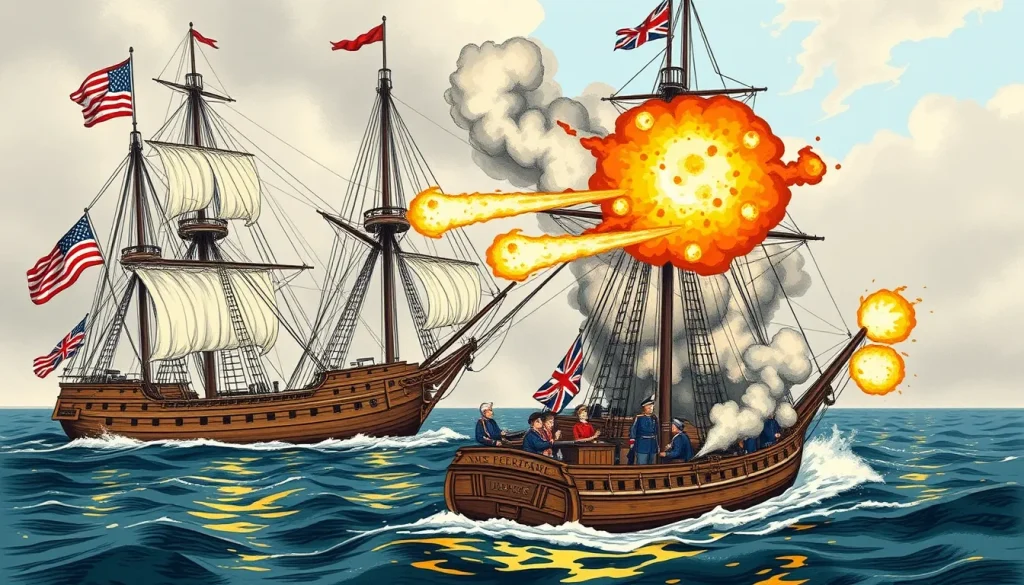
On 22 June 1807, the British fifth-rate ship HMS Leopard fired on the American frigate USS Chesapeake off the coast of Norfolk, Virginia, killing three Americans and wounding eighteen. The British then boarded the crippled vessel and removed four crewmen whom they claimed were deserters from the Royal Navy. This incident, known as the Chesapeake–Leopard Affair, inflamed American public opinion, contributed directly to the passage of the Embargo Act of 1807, and became a major stepping stone on the road to the War of 1812.
Historical Context
During the Napoleonic Wars (1799–1815), Britain faced a severe shortage of sailors for its vast Royal Navy. Impressment—the practice of forcing men into naval service—was common, and British naval authorities routinely stopped neutral ships to search for deserters. American merchant vessels were frequent targets, and the British often seized sailors born in the United States by mistake. By 1807, France and Britain were also engaged in economic warfare: Britain issued Orders in Council that restricted neutral trade with France, while France imposed the Continental System. Tensions between the United States, which remained neutral and sought to trade with both belligerents, and both European powers were high.
In early 1807, several British warships were blockading French vessels in Chesapeake Bay. Desertion from these ships was common; American ports offered better treatment and higher wages. In the spring of 1807, five crewmen deserted from HMS Melampus and three from HMS Halifax. Some of them enlisted in the American frigate Chesapeake, which was then preparing for a voyage to the Mediterranean. The British ambassador demanded their return, but the American authorities refused, arguing that the men were American citizens. This refusal set the stage for the confrontation.
What Happened
USS Chesapeake, under the command of Commodore James Barron, sailed from Hampton Roads on 22 June 1807, bound for the Mediterranean. As she passed a British squadron anchored near Lynnhaven, a 50-gun ship, HM Leopard, followed her out to sea. Once the ships were about three leagues from the squadron, Commander Salusbury Pryce Humphreys of the Leopard hailed Barron and dispatched a boat with an order from Vice-Admiral George Berkeley, commander of the British North American station. The order required the Chesapeake to muster its crew to allow a search for three alleged deserters from the Melampus.
Barron refused, insisting that his crew would not be inspected by any officer other than his own. He had, however, underestimated the British willingness to use force. The Chesapeake had just begun a voyage and was not cleared for action: her guns were stowed, powder horns were empty, and rammers were missing. The Leopard opened fire without warning, delivering several broadsides at close range. The American ship managed to fire only one shot, ignited by a live coal from the galley. Within about fifteen minutes, the Chesapeake suffered heavy damage: twenty-two round shot hit the hull, the foremast and mainmast were destroyed, and the mizenmast was severely damaged. Three men were killed outright, and eighteen were wounded, including Barron, who was struck by a flying splinter.
Barron hauled down his flag to signal surrender. A British boarding party came aboard and removed four men: three who were identified as deserters from the Melampus and Halifax, and a fourth who had actually been a British subject. The British officer refused to accept the Chesapeake as a prize, stating that his orders were only to remove the men. The American ship was left to limp back to port, while the Leopard returned to the British squadron. The four seized men were taken to Halifax, where the British subject, Jenkin Ratford, was court-martialed and hanged from the yardarm. The three Americans initially received sentences of 500 lashes each, though these were later commuted, and they were eventually returned to the United States.
Why It Matters
The Chesapeake–Leopard Affair had profound immediate and long-term consequences. It enraged the American public, who saw it as an attack on national sovereignty. President Thomas Jefferson wrote that he had never seen the country in such a state of exasperation, and even the battle of Lexington had not produced such unanimity. Republican and Federalist factions, normally bitterly divided, both called for action. However, the United States was militarily unprepared, with most of its navy deployed in the Mediterranean and the army drastically reduced. Jefferson instead chose economic coercion, and in December 1807 he signed the Embargo Act, which banned American exports and imposed restrictions on trade—a measure that hurt the U.S. economy far more than Britain and ultimately failed to change British practices.
Diplomatic negotiations dragged on for years. Britain did not formally disavow the attack until 1811, when it returned two of the three surviving American sailors (the third had died in custody). The incident remained a burning grievance and was cited by many Americans as a cause for war. When the United States declared war on Britain in June 1812, the Chesapeake affair was a vivid symbol of British impressment and violation of American rights. Historians have long debated whether the embargo or later events were more decisive in the coming of war, but the affair is consistently identified as a crucial turning point in Anglo-American relations.
Prelude
The immediate origins lay in desertions from British ships in Chesapeake Bay and the American refusal to return the men. Vice-Admiral Berkeley, already frustrated by American resistance to impressment searches, issued an order to all commanders on the North Atlantic station to watch for the Chesapeake and search her for deserters. This order was issued before the Chesapeake even sailed, indicating that the British were prepared to act forcefully. The American authorities had investigated the claims and concluded that the majority of the men were American citizens, not British subjects, and thus not subject to impressment.
Forces and Commanders
USS Chesapeake: a 38-gun sailing frigate, commanded by Commodore James Barron (1768–1851), a veteran of the American Revolution and the Barbary Wars. The ship had a full crew of about 340 men, but was not cleared for action at the time of the attack. Most of her guns were stowed, and no powder homs or rammers were available on deck.
HMS Leopard: a 50-gun fourth-rate ship of the line, commanded by Captain Salusbury Pryce Humphreys (1778–1846). She was armed with eighteen-pounders on the main deck and thirty-two-pound carronades on the quarterdeck. The Leopard was part of the British squadron enforcing the blockade off the Chesapeake, and she carried 350 men.
Battlefield and Map Context
The engagement took place on 22 June 1807, approximately three leagues (about 9 nautical miles) offshore from Cape Henry, Virginia, within sight of the American coast but in international waters. The site is today within the territorial waters of the United States, near the entrance to Chesapeake Bay, southwest of Virginia Beach. No physical traces remain, but the incident is commemorated by historical interpretative signs in Norfolk and the surrounding area.
Battle Chronology
Early June 1807 – USS Chesapeake prepares for a Mediterranean cruise in Norfolk. Several deserters from British vessels are known to have enlisted.
22 June, about 8:00 a.m. – Chesapeake sails from Hampton Roads, passing the anchored British squadron.
About 3:30 p.m. – HMS Leopard follows, comes within hailing distance, and sends a boat to Chesapeake with Berkeley’s order.
Barron refuses a muster. He returns a written reply and sends the British boat away.
About 4:00 p.m. – Leopard open fire with several broadsides. Chesapeake fires a single gun using a live coal from the galley. The American ship is hit repeatedly; after about fifteen minutes, Barron strikes his colors.
Boarding party from Leopard removes four sailors, then departs. Chesapeake returns to Norfolk with difficulty.
Late June 1807 – News reaches the United States, sparking outrage.
Casualties and Losses
The Chesapeake suffered three killed outright and eighteen wounded. Among the wounded, eight were considered dangerous, and two lost arms. Commodore Barron was struck by a splinter but recovered. The ship itself was severely damaged: the hull had received twenty-two round shot, the foremast and mainmast were gone, and rigging and sails were cut to pieces. The Leopard reported no casualties and no damage.
Result
The British achieved their immediate objective: they removed four men from the Chesapeake and took them to Halifax for trial. Only one, Jenkin Ratford, was a confirmed British subject; he was hanged for desertion. The other three were American citizens who had served in the Royal Navy (one had claimed to be an American). They were eventually released and returned to the United States after diplomatic protests. The Chesapeake was allowed to return to port, but the American flag had been humiliated.
Strategic Consequences
The incident precipitated a diplomatic crisis. The United States demanded reparations and an end to impressment, but Britain initially refused. Unable to wage war, Jefferson pushed the Embargo Act through Congress in December 1807. The embargo crippled American commerce and caused widespread economic hardship but did little to alter British policies. It was repealed in 1809. The Chesapeake–Leopard Affair remained a sore point until Britain formally disavowed the attack in 1811 and paid reparations. It also contributed to the climate of hostility that led to the declaration of war in 1812.
Primary Accounts
Contemporary accounts include newspaper reports such as the one printed in the North Star (Danville, Vermont) on July 14, 1807, which provided details of the attack and called it a “savage outrage on the American flag.” Commodore Barron’s official report to the Secretary of the Navy is a key primary source, as is the British order from Vice-Admiral Berkeley. President Jefferson’s private letters contain remarks such as his observation that the country was more exasperated than at Lexington. These sources vary in accuracy and tone; American newspapers often exaggerated the British intention to attack, while British accounts tended to justify the search as a legitimate exercise of impressment.
Battlefield Today
The site of the engagement lies in the Atlantic Ocean near the entrance to Chesapeake Bay, now accessible only by sea. The Virginia coast near Norfolk and Virginia Beach has several historical markers and interpretive displays in local museums, including the Hampton Roads Naval Museum and the Norfolk History Museum. No shipwrecks or physical remnants are on the site, but the affair is a significant stop on any tour of War of 1812–era sites.
Primary Sources
The most direct contemporary source is the American newspaper account that appeared in 1807, often reprinted as “British Outrage,” which gives a detailed narrative of the attack and the immediate American reaction. Another important document is Vice-Admiral Berkeley’s order, which is quoted in many histories and survives in British Admiralty records. Commodore Barron’s report to the Secretary of the Navy, submitted on June 23, 1807, explains his decisions and the ship’s unpreparedness. Later, the court-martial transcript of Barron provides his defense and the verdict. The diary and letters of President Jefferson also offer insight. All these sources are available in published collections, including the American State Papers and the naval records of the period.
Further Reading
- Spivak, Burton. Jefferson’s English Crisis: Commerce, Embargo, and the Republican Revolution. Charlottesville: University Press of Virginia, 1979.
- Clark, George R., et al. A Short History of the United States Navy. Philadelphia and London: J. B. Lippincott Company, 1939. See Chapter 6.
- “Summer 1807: The British attack the USS Chesapeake and remove American sailors.” National Park Service, 2016. Accessed at nps.gov.
- “Chesapeake Affair 1807.” The Canadian Encyclopedia, 2019. Accessed at thecanadianencyclopedia.ca.
- “1807: ‘Outrage on the American Flag.’” American Battlefield Trust. Accessed at battlefields.org.
References
- National Park Service, “Summer 1807: The British attack the USS Chesapeake and remove American sailors.” http://nps.gov/articles/chesapeake-leopard-affair.htm
- The Canadian Encyclopedia, “Chesapeake Affair 1807.” https://thecanadianencyclopedia.ca/en/article/chesapeake-affair-1807
- Clark, George R., et al. A Short History of the United States Navy (1939), Ch. 6. https://penelope.uchicago.edu/Thayer/E/Gazetteer/Places/America/United_States/_Topics/history/_Texts/A_Short_History_of_the_United_States_Navy/6*.html
- Encyclopedia.com, “Chesapeake-Leopard Incident.” https://www.encyclopedia.com/history/dictionaries-thesauruses-pictures-and-press-releases/chesapeake-leopard-incident
- American Battlefield Trust, “1807: ‘Outrage on the American Flag.’” https://www.battlefields.org/learn/primary-sources/1807-outrage-american-flag
FAQ
What happened during the Chesapeake-Leopard Affair?
On 22 June 1807, HMS Leopard attacked USS Chesapeake off Virginia because the American captain refused to allow a search for alleged British deserters. The British killed three Americans, wounded eighteen, and removed four sailors.
Why did the British attack the USS Chesapeake?
Vice-Admiral Berkeley ordered the Leopard to search the Chesapeake because he believed that deserters from British ships were aboard. The attack was motivated by the broader British practice of impressment and the need to recover deserters.
What were the consequences of the Chesapeake-Leopard Affair?
It inflamed American public opinion, led to the Embargo Act of 1807, and intensified diplomatic tensions that contributed to the War of 1812. Britain eventually disavowed the attack and paid reparations in 1811.


Leave a Reply