
Short Answer
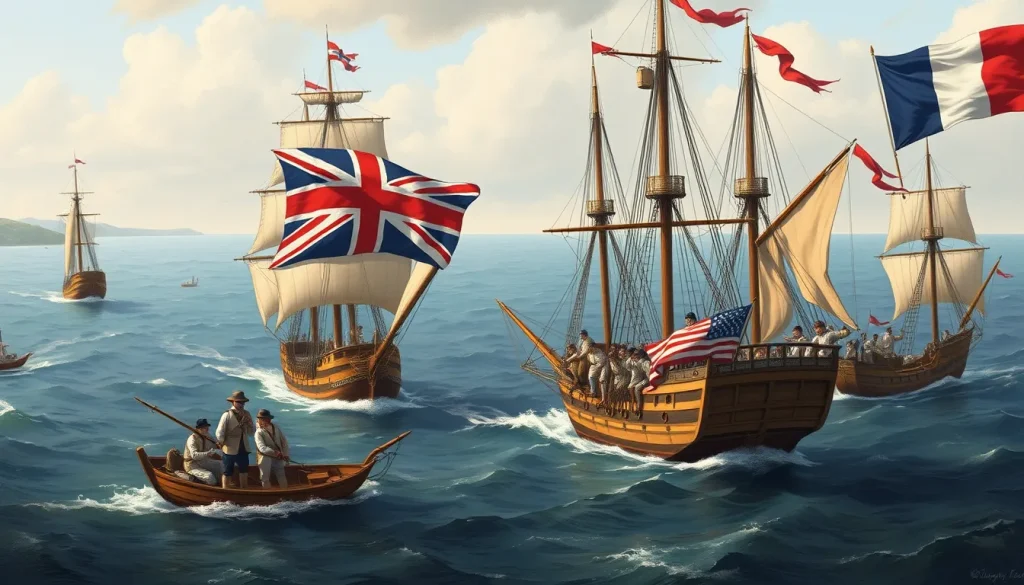
The War of 1812 was not an isolated event but a direct outgrowth of the Napoleonic Wars (1803–1815), the final phase of the long Anglo-French struggle. Great Britain, locked in a life-and-death economic conflict with Napoleon, adopted maritime policies that encroached on American neutral rights, including the Orders-in-Council and impressment. The U.S. declaration of war on June 18, 1812, was a response to these Napoleonic-era measures.
Historical Context
At the turn of the nineteenth century, Great Britain and France were locked in a global war. Britain’s decisive naval victory at Trafalgar in October 1805 gave it undisputed control of the seas, while Napoleon’s victory at Austerlitz in December 1805 made France the master of continental Europe. With each power supreme in its element, both turned to economic warfare to cripple the other. Britain used its navy to restrict trade with French-controlled ports, and Napoleon deployed the Continental System to exclude British goods from Europe. The United States, as the largest neutral trading nation with a vast merchant fleet, was caught in the crossfire.
Britain’s Orders-in-Council (first issued in 1806 and renewed in 1807) required neutral ships to stop at British ports and obtain licenses before trading with the continent, while also prohibiting trade between neutrals and French ports. Napoleon responded with the Milan and Berlin Decrees, threatening to seize any neutral vessel that complied with British regulations. The result was a web of restrictions that effectively shut off American trade to Europe and subjected American ships to seizure by both belligerents, although the British were seen as more egregious because they operated directly off American shores.
Another primary source of tension was impressment—the Royal Navy’s practice of stopping American merchant vessels to search for deserters and British subjects, and conscripting them into service. With Britain’s need for sailors to man its fleet in the naval war against France, impressment grew to enormous proportions. An estimated 6,000 Americans were impressed between 1803 and 1812, many of them seized from U.S. merchant ships.
What Happened
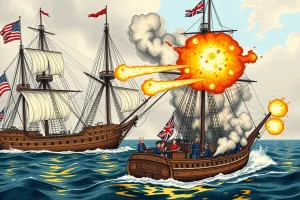
The Napoleonic Wars directly precipitated the diplomatic crisis that led to war. The Chesapeake-Leopard Affair of June 1807, when a British naval ship fired on an American frigate and boarded it to seize alleged deserters, nearly brought the two nations to blows. President Thomas Jefferson responded with the Embargo Act of 1807 and later the Non-Intercourse Act, but these measures failed to coerce either Britain or France to respect American neutral rights.
By 1812, American anger had peaked. President James Madison, in his war message to Congress on June 1, 1812, cited a list of grievances centered on maritime violations: the plundering of American commerce, the impressment of thousands of American seamen, and the blockade of American ports. He also mentioned British encouragement of Indigenous conflict in the northwest, but the maritime issues were the central and repeated theme. Congress responded with a declaration of war against Great Britain on June 18, 1812—just days after Napoleon had begun his invasion of Russia.
The war itself was shaped by the Napoleonic context. The U.S. invasion of British North America (Canada) was planned as a three-pronged attack along the northern frontier, but it was seriously under-resourced because the regular army numbered only about 11,700 men. Meanwhile, Britain’s primary military efforts were focused on Europe, leaving limited regular forces to defend Canada. However, British naval supremacy, reinforced by the Royal Navy’s global commitments, allowed it to impose a blockade on American coastal trade. The war’s major battles on land—including those at Detroit, Queenston Heights, and Lundy’s Lane—involved relatively small numbers compared to Napoleonic battles, but were heavily influenced by control of the Great Lakes and Lake Champlain, which served as strategic lifelines for both sides.
Why It Matters
The War of 1812 was a secondary theater in a global conflict, yet its results were significant for all parties. For the United States, the war was a test of its independence and national sovereignty; despite early setbacks, the successful defense of Baltimore, the Battle of Plattsburgh, and Andrew Jackson’s victory at New Orleans gave Americans a sense of victory, although neither side gained clear military advantage. For Britain, the war was a distraction from the struggle against Napoleon, and its end in the Treaty of Ghent on December 24, 1814 restored the status quo ante bellum. For Indigenous peoples, the war was devastating, as they lost a key ally when British support was withdrawn after peace.
Historians today recognize that the War of 1812 was fundamentally a consequence of the Napoleonic Wars. American memory has often cast it as a “Second War of Independence,” but this interpretation oversimplifies the causal connection. As historian Donald Hickey has described, the war was a “byproduct of a much larger conflict in Europe.” The removal of British maritime restrictions and the defeat of Napoleon in 1815 removed the immediate causes, but the war also solidified American independence and fostered a distinct national identity. It likewise contributed to the end of British influence among northwest Indigenous nations and set the stage for American westward expansion.
Definition
“How the Napoleonic Wars Shaped the War of 1812” refers to the direct causal relationship between the conflict between Great Britain and France (1803–1815) and the outbreak of war between the United States and Great Britain in June 1812. The Napoleonic Wars created a maritime and economic crisis for neutral nations, and American grievances over British interference with trade and impressment of sailors are inseparable from Napoleon’s continental strategy.
Background
For over a decade, Britain and France had been locked in a global contest for dominance. Britain’s naval mastery after Trafalgar gave it the power to control the seas, while Napoleon’s victories on land made him the arbiter of Europe. Both powers sought to cripple the other economically: Britain aimed to blockade the continent and France to exclude British goods through the Continental System. The United States, with a rapidly expanding merchant fleet, sought to maintain neutral trade with both, but found itself trapped by the conflicting restrictions.
The British Orders-in-Council were a series of royal decrees that effectively forced neutral nations to trade with Britain and her allies on British terms, while prohibitively restricting trade with French-controlled ports. The French Milan and Berlin Decrees threatened to confiscate any neutral ship that complied with Britain’s orders. These measures made the Atlantic and European seas dangerous for American shipping, and both belligerent navies seized American vessels.
How It Worked
The key mechanisms through which the Napoleonic Wars operated were two: economic warfare and impressment.
Economic Warfare: Britain’s Royal Navy enforced blockades and the Orders-in-Council, turning American merchant ships away from French ports, seizing cargo, and sometimes taking the ships as prizes. France similarly seized American ships that submitted to British regulations. American trade with both belligerents was thus systematically disrupted, devastating the U.S. economy.
Impressment: To man its huge navy, Britain resorted to impressment—the forcible recruitment of seamen from neutral ships. The Royal Navy stopped American merchantmen, searched for deserters, and often seized American citizens, ignoring their passports and naturalization papers. Approximately 6,000 American citizens were impressed in the years before the war. This practice was a direct consequence of Britain’s massive naval mobilization against Napoleon, and it became one of the strongest American grievances.
Competing Viewpoints
Historians have long debated the exact weight of these factors. The traditional American view, espoused in the era’s political rhetoric and later popular histories, emphasized American defense of “Free Trade and Sailors’ Rights” as a principled stand against British oppression. Critics, however, point out that the War of 1812 also involved American expansionist ambitions toward Canada and pressure from Southern and Western “war hawks” who opposed British support of Indigenous resistance to American settlement.
Donald Hickey, in his work on the war, emphasizes that the conflict was a sideshow in the Second Hundred Years’ War, but he also notes that the maritime causes overshadowed all others in Madison’s war message. Some revisionist historians argue that the British, distracted by Napoleon, could have avoided the war had they withdrawn the Orders-in-Council and ended impressment, but they saw both as essential to their survival against France. Another perspective holds that the war was the culmination of long-term tensions over American sovereignty and British imperial ambitions, with the Napoleonic wars merely the immediate trigger.
Role in the War of 1812
The Napoleonic Wars directly caused the War of 1812 by creating the very issues that led to the U.S. declaration of war. The Orders-in-Council and impressment were not incidental abuses but deliberate British instruments in the war against France. The American response was to defend its neutral rights, a stance that President Madison articulated in his war message. Moreover, the war itself was limited in scope because Britain could spare only a fraction of its forces from the European theater, while the United States lacked the military infrastructure to launch a larger campaign. The result was a series of campaigns along the Canadian border and the ocean, with key naval battles fought for control of the interior lakes—elements that would have been impossible if not for the strategic priorities set by the Napoleonic conflict.
Consequences and Historical Interpretation
The conclusion of the War of 1812 in the Treaty of Ghent effectively restored the prewar status quo, with Britain dropping its maritime restrictions and impressment ending in practice after Napoleon’s defeat. The coincidence of the war’s end with the final defeat of Napoleon in 1815 meant that the specific causes of the war disappeared. Later historians have interpreted the conflict as both a manifestation of American nationalism and a peripheral event in the larger Napoleonic world war. While U.S. national memory often celebrated the war as a successful defense of sovereignty, more recent scholarship situates it firmly in the global context of the Napoleonic Wars, recognizing that American grievances were not unique but rather common to all neutrals caught in the Anglo-French economic war.
Primary Sources
The most relevant primary sources include:
- President James Madison’s war message to Congress, June 1, 1812, which enumerates the British maritime violations as the central grounds for war.
- The Orders-in-Council (1807 and subsequent orders) issued by the British government, which restricted neutral trade with the French empire.
- Royal Navy records of impressment raids, including logbooks and press gang reports, which document the seizure of American seamen.
- Correspondence between British and American diplomats, such as the letters of David Erskine and later Augustus Foster, which reveal the attempts to resolve these issues before the war.
- The diary and letters of American naval officers like Stephen Decatur, which provide insight into the maritime tensions leading to war.
These sources are biased by national perspective, but they collectively demonstrate the centrality of maritime and economic issues in the outbreak of the war.
Further Reading
- Hickey, Donald R. The War of 1812: A Forgotten Conflict. University of Illinois Press, 1989.
- Hickey, Donald R. “1812: A Sideshow in the ‘Second Hundred Years’ War?’” U.S. National Park Service, 2015. https://www.nps.gov/articles/1812-sideshow.htm
- Arnold, James R. “America’s Napoleonic War.” The War of 1812 Magazine, Issue 19, December 2012. https://www.napoleon-series.org/military-info/Warof1812/2012/Issue19/AmericasNapoleonicWar.pdf
- Brodine, Charles E. Jr. “The War’s Pervasive Naval Dimensions.” Naval History Magazine, Vol. 26, No. 3, June 2012. https://www.usni.org/magazines/naval-history-magazine/2012/may/wars-pervasive-naval-dimensions
- Pagé, Sylvain. “Naval warfare of a new kind during the Napoleonic age: The case of the Anglo-American war of 1812-1814 – part 1.” napoleon.org. https://www.napoleon.org/en/history-of-the-two-empires/articles/naval-warfare-of-a-new-kind-during-the-napoleonic-age-the-case-of-the-anglo-american-war-of-1812-1814-part-1/
References
- Hickey, Donald R. “1812: A Sideshow in the ‘Second Hundred Years’ War?’” U.S. National Park Service, 2015. Accessed June 2023. https://www.nps.gov/articles/1812-sideshow.htm
- Arnold, James R. “America’s Napoleonic War.” The War of 1812 Magazine, Issue 19, December 2012. https://www.napoleon-series.org/military-info/Warof1812/2012/Issue19/AmericasNapoleonicWar.pdf
- Brodine, Charles E. Jr. “The War’s Pervasive Naval Dimensions.” Naval History Magazine, June 2012, Vol. 26, No. 3. https://www.usni.org/magazines/naval-history-magazine/2012/may/wars-pervasive-naval-dimensions
- American Experience, Smithsonian Institution. “Causes of the War of 1812.” 2014. https://americanexperience.si.edu/wp-content/uploads/2014/10/Causes-of-the-War-of-1812_.pdf
- Pagé, Sylvain. “Naval warfare of a new kind during the Napoleonic age: The case of the Anglo-American war of 1812-1814 – part 1.” napoleon.org. Accessed June 2023. https://www.napoleon.org/en/history-of-the-two-empires/articles/naval-warfare-of-a-new-kind-during-the-napoleonic-age-the-case-of-the-anglo-american-war-of-1812-1814-part-1/
FAQ
Did the Napoleonic Wars directly cause the War of 1812?
Yes. The maritime restrictions and impressment that angered America were direct tools of Britain's war against France. Without the Napoleonic Wars, these policies would not have existed.
Why did the British impressment of American sailors become so common?
Britain needed large numbers of sailors to fight the French fleet. Impressment was used to recover deserters and fill crew shortages, often leading to the seizure of American citizens.
How did the end of the Napoleonic Wars affect the War of 1812?
The British defeat of Napoleon in 1815 removed the strategic need for maritime restrictions, and the Treaty of Ghent restored peace, making the war's causes moot.

Leave a Reply