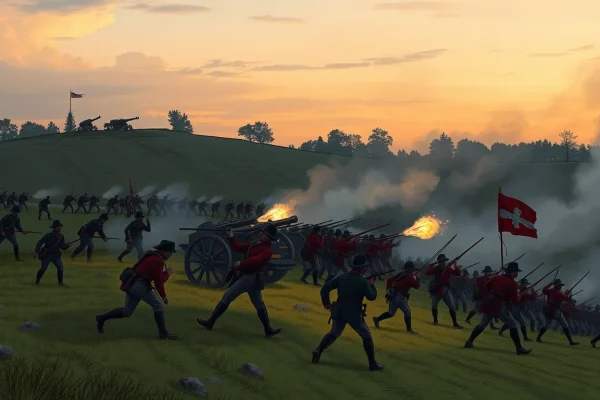
Battle of Lundy’s Lane

The Battle of Lundy’s Lane, fought near Niagara Falls on 25 July 1814, was the bloodiest engagement of the War of 1812. The American invasion of Upper Canada was halted, and both armies suffered more than 1,700 combined casualties.
Read More →

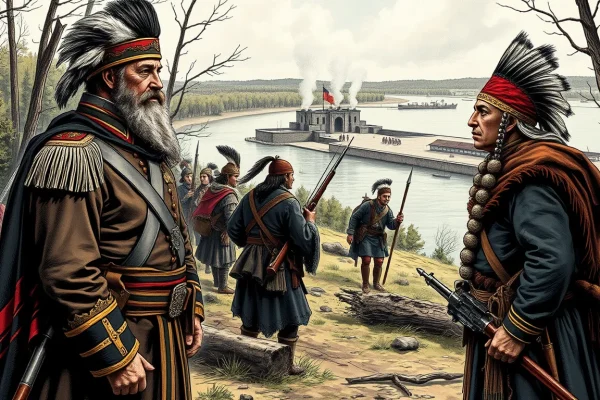
Why Did General William Hull Surrender Detroit?

On August 16, 1812, American Brigadier General William Hull surrendered Fort Detroit and its 2,500-man garrison to a smaller British and Indigenous force led by Major General Isaac Brock and Tecumseh. The surrender resulted from a combination of British psychological warfare, Hull’s fears of an Indigenous massacre, his isolation and supply problems, and his own wavering confidence.

Read More →

The Northwest Campaign of 1812

The Northwest Campaign of 1812–1813 was the series of operations along the Detroit frontier, Lake Erie, and the Ohio Country that opened the War of 1812. It saw the American surrender of Detroit, the River Raisin massacre, the siege of Fort Meigs, and ended with the Battle of the Thames and the death of Tecumseh.

Read More →

Tecumseh’s Confederacy Explained

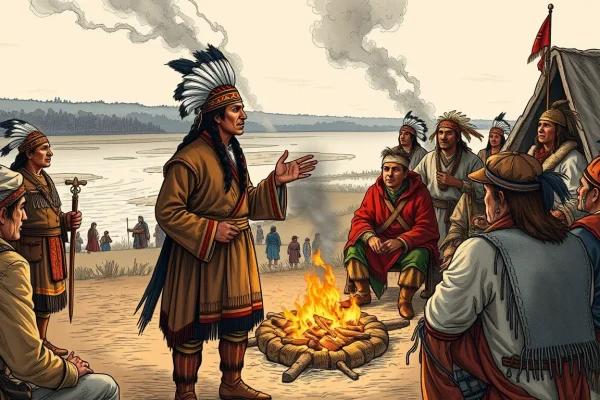
Tecumseh’s Confederacy was a pan-Indigenous political and military alliance formed in the early 19th century by Shawnee chief Tecumseh and his brother Tenskwatawa. Its goal was to resist American expansion and protect Indigenous lands. The confederacy allied with the British during the War of 1812 and collapsed after Tecumseh’s death at the Battle of the Thames in 1813.

Read More →

Siege of Fort Erie

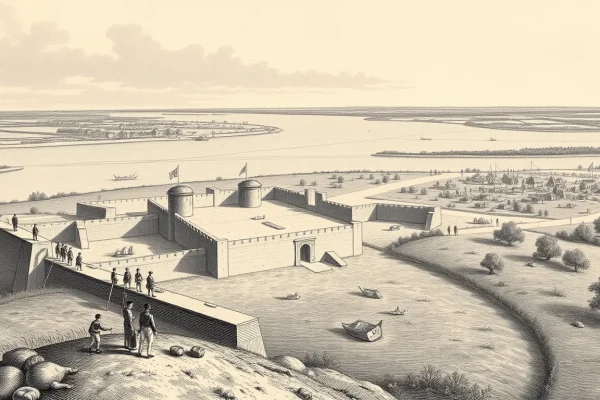
The Siege of Fort Erie (4 August–21 September 1814) was a British attempt to recapture the American-held fort at the entrance to the Niagara River during the War of 1812. The siege ended in an American defensive victory after a failed British assault and a successful American sortie, leading to the British withdrawal and the eventual demolition of the fort.

Read More →

Indigenous Strategy During the War of 1812

During the War of 1812, Indigenous nations and confederacies employed military and diplomatic strategies to defend their homelands from American expansion. While most allied with the British, they did so on their own terms, seeking to preserve autonomy, territory, and trading relationships. The war’s outcome and the Treaty of Ghent ultimately undermined these goals, leading to forced removal in the United States and lasting consequences for Indigenous peoples.

Read More →

The British Blockade of the United States (1812–1815)

The British blockade of the United States during the War of 1812 progressively closed American ports to trade and naval movement, devastating the economy and constraining the U.S. Navy. Extended from the Chesapeake in 1812 to include the entire Atlantic and Gulf coasts by 1814, the blockade was a significant instrument of British economic warfare and remains a subject of scholarly debate over its decisiveness.

Read More →

Medicine During the War of 1812

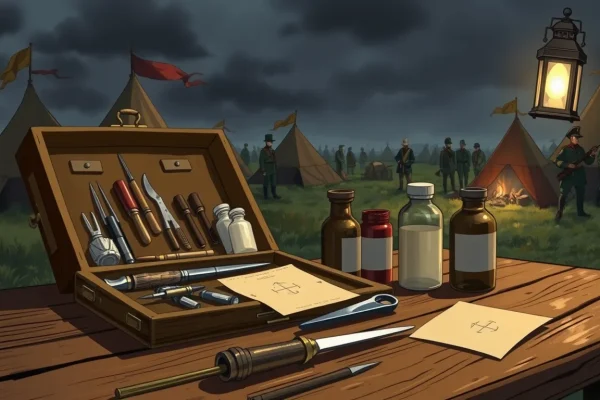
During the War of 1812, disease killed far more soldiers than combat, and medical practice relied on humoral theory, emphasizing treatments like bloodletting and purging. The conflict exposed major weaknesses in military medical organization and prompted reforms, including the creation of the U.S. Army Surgeon General’s office.

Read More →

Riflemen in the War of 1812

The U.S. Regiment of Riflemen and its wartime-expanded sister regiments were specialized light infantry who fought with rifles and green uniforms. They played key roles at York, Fort George, Crysler’s Farm, and Big Sandy Creek, and their performance shaped American military thinking.

Read More →

Why Was the War of 1812 So Politically Divisive?

The War of 1812 was politically divisive due to sharp party and sectional splits between Federalists, who opposed the conflict as ruinous to commerce and aid to Napoleon, and Democratic-Republicans, who saw it as necessary to defend American honor and sovereignty. The close votes in Congress, New England obstructionism, and the Hartford Convention reflected deep disagreements that shaped the war’s conduct and outcome.

Read More →