Where to Find War of 1812 Records Online
A guide to the major online repositories for War of 1812 records, covering U.S. and Canadian archives, genealogical databases, and digital collections, with practical tips for researchers.

A guide to the major online repositories for War of 1812 records, covering U.S. and Canadian archives, genealogical databases, and digital collections, with practical tips for researchers.
Civilians across North America faced dislocation, economic hardship, violence, and profound social change during the War of 1812. Their experiences varied by region, race, and allegiance, but all were touched by the conflict.
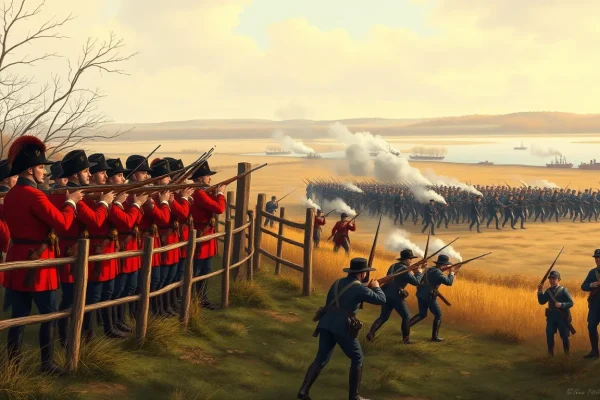
The Battle of Crysler’s Farm (11 November 1813) was a decisive British victory in the War of 1812 that halted the American Saint Lawrence Campaign, preventing the capture of Montreal. A smaller force of British regulars, Canadian militia, and Indigenous warriors under Lieutenant-Colonel Joseph Morrison defeated a larger American army under Brigadier-General John Boyd on a farmer’s field beside the St. Lawrence River.
The Niagara Campaign of 1813 was a series of battles and raids along the Niagara River during the War of 1812, including the American capture of Fort George, the British night attack at Stoney Creek, and the destruction of Newark. The campaign ended in a stalemate, demonstrating the difficulty of invading Canada and intensifying the cycle of retaliation.
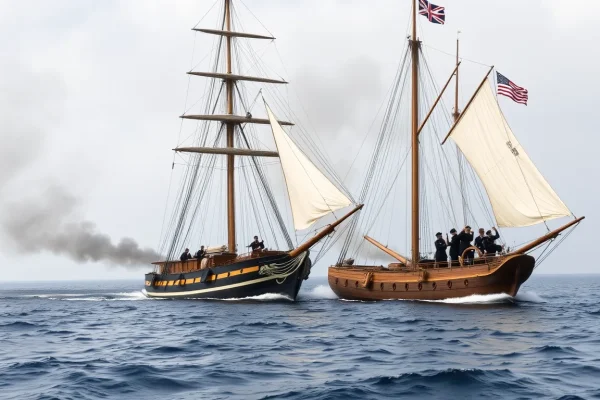
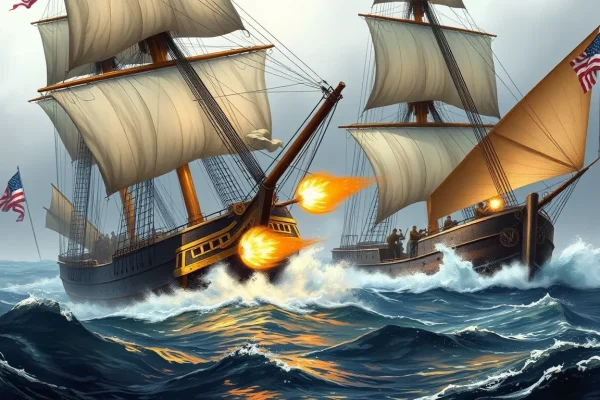
On 28 June 1814, the American sloop-of-war USS Wasp under Master Commandant Johnston Blakeley defeated and destroyed the British brig-sloop HMS Reindeer west of Plymouth, England. The short, ferocious action — decided by boarding after the British captain was killed — showcased the effectiveness of the U.S. Navy’s commerce-raiding strategy in the final year of the War of 1812.
The War of 1812 was fought primarily between the United States and Great Britain, with British North America and numerous Indigenous nations allied with Britain, while some Indigenous nations and Spain played peripheral roles. The conflict shaped national identities and the future of North America.
On 18 October 1812, the American sloop-of-war USS Wasp defeated the British brig-sloop HMS Frolic in a fierce single-ship action, only to be captured with her prize hours later by the British ship of the line HMS Poictiers. The engagement highlighted American naval skill and the strategic limits of single-ship victories against Royal Navy dominance.
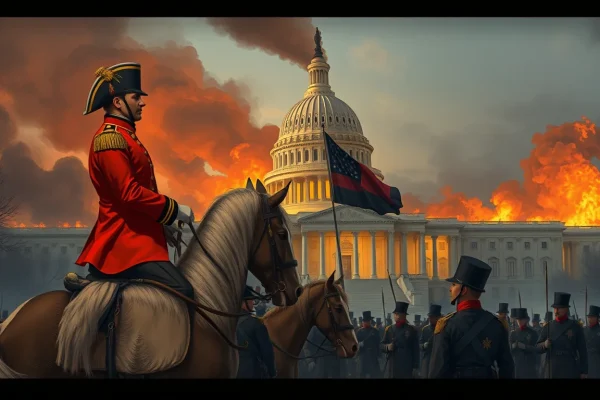
Major General Robert Ross, an Irish-born British officer, led the expedition that captured and burned Washington, D.C., in August 1814, including the White House and Capitol. His actions were retaliation for American destruction in Upper Canada and helped solidify American resolve during the War of 1812.
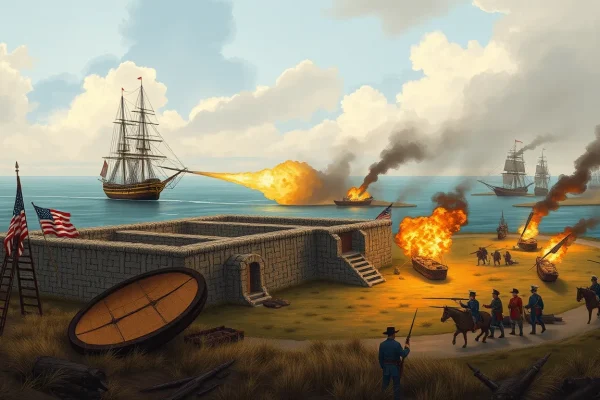
The First Battle of Fort Bowyer, fought on September 15, 1814, was an American victory that repelled a British attack on the fort guarding Mobile Bay, destroyed HMS Hermes, and shifted British strategy toward New Orleans.
In 1812, news traveled at the speed of ships, horses, and human messengers. A transatlantic message took roughly four to eight weeks, while overland journeys of a few hundred miles could take days or weeks, profoundly shaping the War of 1812’s strategy and diplomacy.