
Short Answer
The War of 1812 (1812–1815) generated a wide array of records—military muster rolls, pension applications, claims for losses, and personal papers—that are invaluable for historians, genealogists, and descendants. These documents are scattered across national and regional archives, but many have been digitized and made freely available online. This article identifies the principal online repositories for War of 1812 records, explaining what each holds and how researchers can use them.
Historical Context
The War of 1812 was fought between the United States and the United Kingdom, with British North America (now Canada) and various Indigenous nations as key allies. The conflict arose from maritime disputes, trade restrictions, and American expansionism. Over the course of the war, engagements occurred along the U.S.–Canadian border, in the Great Lakes, on the high seas, and in the South. The war ended with the Treaty of Ghent in December 1814, which restored pre-war boundaries.
During and after the conflict, both the U.S. and British/Canadian governments created records to administer soldiers, pay troops, compensate losses, and grant land. Volunteer militia units, regular army forces, naval personnel, and Indigenous allies were all documented to varying degrees. These records were later deposited in national archives.
What Happened
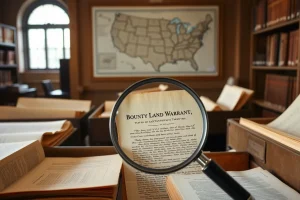
Key military events—such as the burning of Washington, the battles of Queenston Heights, Lake Erie, and New Orleans—produced official reports, correspondence, and casualty lists. After the war, claims commissions in both the U.S. and Canada processed thousands of compensation requests for property damage and service-related losses. The U.S. government issued bounty land warrants to veterans, and later, pension laws provided for veterans and widows. This administrative activity created the rich documentary trail that survives today.
Why It Matters
War of 1812 records are primary sources that offer direct evidence of individuals’ service, movements, and experiences. For genealogists, they often contain personal details such as age, residence, and family relationships. For historians, they provide insight into military organization, logistics, and the war’s impact on civilians. The increasing digitization of these records has made them accessible to a global audience, enabling new research and public engagement.
Definition
War of 1812 records encompass a broad range of documents created by governments, military units, and individuals. Common types include compiled military service records, muster rolls, paylists, pension applications, bounty land warrant files, claims for losses, correspondence, and maps. They may relate to American, British, Canadian, or Indigenous participants.
Background
These records were generated through official bureaucracy. In the U.S., the War Department and state governments kept service records; the Pension Office handled later applications. In British North America, the colonial government compiled muster rolls and claims. Indigenous participation is documented in correspondence and claims records, often from the perspective of colonial administrators. Over time, these papers were transferred to national archives.
How to Access Online Records
Major online repositories offer free or subscription access. The Library of Congress’s War of 1812: A Resource Guide provides links to digital collections, including the papers of Andrew Jackson, James Madison, and James Monroe, as well as digitized newspapers (Chronicling America) and congressional publications. The U.S. National Archives and Records Administration (NARA) hosts compiled service records and pension records, with many indexed and digitized on partner sites like Fold3.com and Ancestry.com. NARA’s online catalog offers free access to selected records.
Library and Archives Canada (LAC) holds muster rolls, paylists, claims, and other records for Canadian and British participants. A searchable database references 45,000 names, and many microfilms have been digitized. The LAC website provides guidance and links to Héritage for digitized microforms.
Other valuable resources include state archives (e.g., Louisiana, New York, Pennsylvania) and third-party databases like MyWarOf1812.com, which aggregates Ancestry.com collections. The Bureau of Land Management’s General Land Office Records website provides free access to bounty land patents.
Competing Viewpoints
Discussion about online record access centers on issues of completeness, cost, and accuracy. Free government sites may only offer indexes or partial digitization, while commercial sites often provide more comprehensive images for a fee. Researchers must also consider that online indexes may contain transcription errors, and that not all record series have been digitized. Consequently, some scholars advocate for continued digitization efforts and caution against treating online sources as exhaustive.
Role in the War of 1812
These records allow historians to reconstruct campaigns, unit strengths, and soldier experiences. For example, pension files often contain compelling details about hardships, while claims records illuminate civilian losses. Indigenous perspectives are harder to trace, but records like the correspondence concerning claims for Indians who served with the British provide some insight.
Consequences and Historical Interpretation
Online access has democratized War of 1812 research, enabling anyone to explore primary sources without traveling to archives. This has fostered new local histories and genealogical projects, and has broadened public memory. However, historians also note that digitization has not removed the need for careful source criticism, as online reproductions still demand interpretation of context, bias, and provenance.
Primary Sources
The Library of Congress’s digital collections include the Andrew Jackson Papers, with his account of the Battle of New Orleans, and the James Madison Papers, which document the declaration of war. The James Monroe Papers contain wartime correspondence. Chronicling America offers contemporary newspaper reports.
Library and Archives Canada provides digitized muster rolls and claims, as well as portraits and maps. The National Archives (US) hosts compiled service records and pension files, many accessible via Fold3.com.
These sources provide direct documentary evidence, though each has limitations: government records often reflect official views, and personal papers may be incomplete or biased.
Further Reading
- Library of Congress, War of 1812: A Resource Guide, https://guides.loc.gov/war-of-1812
- National Archives, War of 1812 Records, https://www.archives.gov/research/military/war-of-1812
- Claire Kluskens, War of 1812 Military Service, Bounty Land, and Pension Records: A Step-by-Step Guide (NARA)
- Donald R. Hickey, The War of 1812: A Forgotten Conflict (University of Illinois Press)
References
- Library of Congress, “Digital Collections – War of 1812: A Resource Guide,” https://guides.loc.gov/war-of-1812/digital-collections
- Library and Archives Canada, “War of 1812,” https://library-archives.canada.ca/eng/collection/research-help/military-heritage/Pages/war-1812.aspx
- National Archives, “War of 1812,” https://www.archives.gov/research/military/war-of-1812
- Claire Kluskens, “War of 1812 Military Service, Bounty Land, and Pension Records: A Step-by-Step Guide,” NARA, 2020, https://twelvekey.com/wp-content/uploads/2020/05/war_of_1812_basic_guide_2020_05_19.pdf
FAQ
Are War of 1812 records free to access online?
Some are free, such as the Library of Congress digital collections and Library and Archives Canada's database, but others require a subscription, such as Fold3 and Ancestry.
What types of records are available?
Muster rolls, paylists, pension applications, bounty land warrants, claims for losses, newspapers, maps, and personal correspondence.
How do I find a specific soldier?
Start with the National Archives' compiled service records index or the Library and Archives Canada database, then consult free and subscription sites for digitized images.


Leave a Reply