
Short Answer
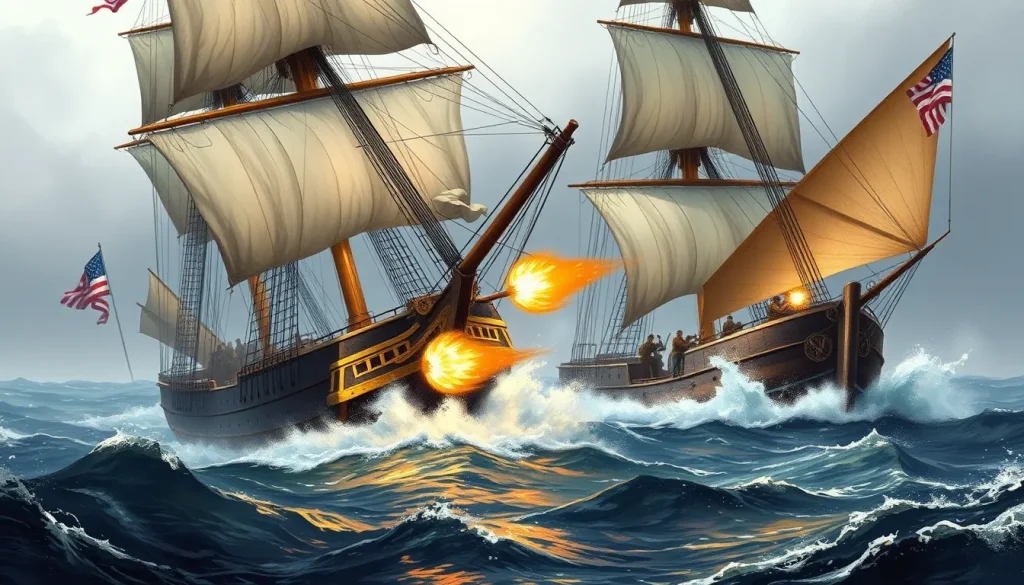
On 18 October 1812, the American sloop-of-war USS Wasp defeated the British brig-sloop HMS Frolic in a fierce single-ship action in the Atlantic. The victory was quickly nullified when the British ship of the line HMS Poictiers captured both vessels within hours. The engagement exemplified the early naval successes of the United States and their strategic limits against the overwhelming power of the Royal Navy.
Historical Context
The War of 1812 began with American grievances over impressment, trade restrictions, and frontier conflicts. The United States Navy was small, but its frigates and sloops achieved several celebrated victories in 1812, including Constitution versus Guerriere and United States versus Macedonian. These triumphs boosted American morale and countered expectations of British superiority at sea. The Frolic was escorting a homeward-bound convoy from British Honduras, while the Wasp had recently sailed from Delaware on a commerce-raiding cruise. This battle occurred during the early phase of the war, when the Royal Navy still controlled most Atlantic sea lanes but American single-ship actions were winning public admiration.
What Happened
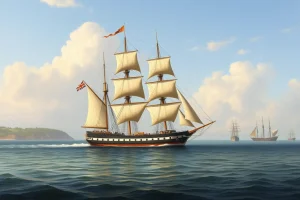
On the morning of 18 October 1812, the USS Wasp, commanded by Captain Jacob Jones, sighted a British convoy escorted by the brig-sloop HMS Frolic under Commander Thomas Whinyates. Whinyates initially hoisted Spanish colours to deceive the American, but soon engaged. In a forty-three minute close-range action fought in heavy seas, the Frolic was dismasted and suffered devastating casualties. An American boarding party seized the brig, taking possession as a prize. However, within hours the British 74-gun ship of the line HMS Poictiers arrived on the scene. The damaged Wasp and its recaptured prize could not escape, and both were captured without significant further fighting. Jones and his crew were taken prisoners, while the Poictiers carried both vessels into Bermuda.
Why It Matters
The battle was a tactical American victory, demonstrating superior gunnery and seamanship. But the strategic outcome showed the overwhelming power of the Royal Navy, which could quickly erase even the most brilliant single-ship triumphs. The event contributed to American national pride and the reputation of the U.S. Navy, but also underscored the futility of expecting commerce warfare or isolated ship victories to break British control of the seas. Later historians have used this episode to illustrate both the skill of American captains and the reality of British naval preponderance.
Prelude
The HMS Frolic, an 18-gun brig-sloop, had left the Bay of Honduras on 12 September 1812 with a convoy of about fourteen merchantmen bound for Britain. After a severe gale on 16 October, the Frolic lost its main yard, sprang its main topmast, and tore its sails. The crew, already weakened by malaria in the Caribbean, numbered about 110 men. By the morning of 18 October, only six of the convoy had rejoined the escort. The USS Wasp, an 18-gun ship-sloop, had sailed from the Delaware on 13 October with a crew of about 168, thoroughly refitted after a previous voyage to France with dispatches. Both ships were of nominally similar force, but the Frolic was in poor condition and its crew was depleted.
Forces and Commanders
The USS Wasp was an American ship-sloop mounting sixteen 32-pounder carronades and two long 12-pounder guns. Captain Jacob Jones commanded her. The HMS Frolic was a British brig-sloop carrying sixteen 32-pounder carronades and two 6-pounder long guns, according to most sources; Commander Thomas Whinyates was in command. The Frolic had been in the West Indies for five years and was very sickly. The British ship of the line HMS Poictiers, commanded by Captain Sir John Beresford, later intervened with seventy-four guns, making resistance impossible for the already-damaged Wasp.
Battlefield and Map Context
The action took place in the Atlantic Ocean at approximately latitude 36° North, longitude 64° West, about 300 miles east of the Virginia coast. The sea was rough, with waves frequently washing over the gunwales, which greatly affected gunnery accuracy. The Frolic, being a brig with reduced sail and damaged spars, laboured heavily. The Wasp, a ship with three masts, held a steadier position. This difference in stability was a key factor in the engagement.
Battle Chronology
At around 11:30 a.m. on 18 October, the Wasp closed to within sixty yards of the Frolic. The Frolic exchanged its Spanish colours for British and opened fire with musketry and carronades. The Wasp returned fire. Early in the action, the Frolic shot away the Wasp’s main topmast and gaff, but the Frolic’s gaff head-braces were also shot away, leaving her unmanageable. The Wasp then took a raking position across the Frolic’s bow and poured broadsides into her for over thirty minutes. After forty-three minutes of fighting, the Americans boarded the Frolic. Only three officers and the man at the wheel were still standing on deck according to the American account. The Frolic’s colours were struck at approximately 12:15 p.m. Two hours later, HMS Poictiers appeared and captured both the Wasp and the recaptured Frolic without further resistance.
Casualties and Losses
The Frolic suffered severe losses: according to one widely cited account, 15 killed and 47 wounded, while another contemporary account gives 30 killed and 50 wounded. The Wasp reported 5 killed and 5 wounded, though some sources list 8 killed and 8 wounded. The discrepancy reflects incomplete returns and the chaotic aftermath. The Wasp was taken into the Royal Navy as HMS Loup-Cervier and was lost with all hands in 1815; the Frolic was recaptured and continued in British service.
Result
This was an American tactical victory followed by a strategic defeat. The Wasp succeeded in defeating its immediate opponent, but was then captured by a superior British force. The American crew were taken prisoner and later exchanged. Captain Jones was rewarded with a gold medal and his crew with silver medals, and Congress awarded $25,000 as prize money for the capture of the Frolic, despite the subsequent loss of both ships.
Strategic Consequences
The battle had no significant impact on the course of the war, but it reinforced the American conviction that their navy could match British ships in single combat. However, it also demonstrated that such victories were ephemeral unless followed by a secure escape. The episode influenced later American naval strategy, emphasizing the need to avoid encounters with British ships of the line. For the British, it was a reminder that the American sloops and frigates were dangerous opponents, but the Royal Navy’s overall command of the sea was not threatened by such actions.
Primary Accounts
Captain Jacob Jones sent an official report to Secretary of the Navy Paul Hamilton, dated 24 November 1812, describing the engagement. That report, with its list of casualties, was transmitted to Congress on 11 December 1812. Commander Thomas Whinyates submitted his own report, which was used in British records. The noted naval historian William James included a detailed account of the action in his ‘Naval History of Great Britain’ (1902 edition), based on British official sources. Both the American and British narratives agree on the basic course of events but differ on certain details, such as the number of enemy survivors on deck and the exact force of the ships.
Battlefield Today
The battle took place in the open Atlantic, and no physical remains or monument mark the site. The coordinates given in contemporary sources—approximately 36°N, 64°W—place the action in waters that have never been subject to systematic archaeological survey for this engagement. No wreck has been identified. The site is best understood through the documentary record.
Primary Sources
The most important primary source is the official report of Captain Jacob Jones to the Secretary of the Navy, dated 24 November 1812, which was published in American newspapers and official records. It provides the American casualty list and a narrative of the action. The British side is documented in Commander Whinyates’s report, which is cited in William James’s history. Additionally, the British admiralty records contain the court-martial proceedings of Whinyates, who was acquitted for the loss of his ship. The U.S. Congress published the relevant documents in the American State Papers, Naval Affairs. All these sources are useful but each reflects the perspective of its author and the conventions of official reporting.
Further Reading
- The Naval History of Great Britain, Vol. 6, by William James (1902 edition).
- The War of 1812: A Forgotten Conflict, by Donald R. Hickey.
- 1812: The Navy’s War, by George C. Daughan.
- The Naval War of 1812, by Theodore Roosevelt (1882).
- American State Papers: Naval Affairs, Volume 1 (U.S. Government Printing Office).
References
- Rickard, J. (22 September 2011). “USS Wasp vs HMS Frolic, 18 October 1812”. History of War. https://www.historyofwar.org/articles/battles_wasp_frolic.html
- The War of 1812 Website. “USS Wasp vs HMS Frolic – War of 1812”. https://thewarof1812.org/battles/uss-wasp-vs-hms-frolic/
- James, William. The Naval History of Great Britain, Vol. 6. London, 1902. (Excerpt on the action at 1812privateers.org.)
- Jones, Jacob. “Letter to the Secretary of the Navy, 24 November 1812”, in American State Papers: Naval Affairs, Vol. 1, pp. 280–281. (Transmitted to Congress 11 Dec 1812; available at ibiblio.org.)
- Thompson, David. History of the Late War between Great Britain and the United States (1832). Chapter 18. (War of 1812 Bicentennial site.)
FAQ
Where did the battle between USS Wasp and HMS Frolic take place?
The action occurred in the Atlantic Ocean at approximately latitude 36°N, longitude 64°W, about 300 miles east of the Virginia coast.
What were the casualties of the action?
The Frolic suffered 15 to 30 killed and 47 to 50 wounded, depending on the source. The Wasp reported 5 to 8 killed and 5 to 8 wounded.
What happened after the Wasp captured the Frolic?
Within hours, the British 74-gun ship HMS Poictiers arrived and captured both the Wasp and the recaptured Frolic without further resistance. The American crew were taken prisoner and later exchanged.
Leave a Reply