
Short Answer
In 1812, the speed of news was constrained by wind, weather, roads, and the endurance of horses and men. A letter from New York to the frontier might take three weeks, and news from London could require nearly two months to reach American cities. These delays shaped the War of 1812’s most famous episode—the Battle of New Orleans, fought after the Treaty of Ghent had been signed but before its terms arrived.
Historical Context
In the early nineteenth century, no telegraph, railroad, or steamship service existed; communication relied on sailing vessels, horse-drawn vehicles, and foot messengers. The United States had a postal network, but it was slow and unreliable, especially west of the Appalachians. Britain’s Admiralty and government used a combination of naval dispatch vessels and overland couriers, but even the fastest routes involved weeks of travel. This was a world in which information was a scarce and often stale commodity, and its delay had direct military and diplomatic consequences.
What Happened
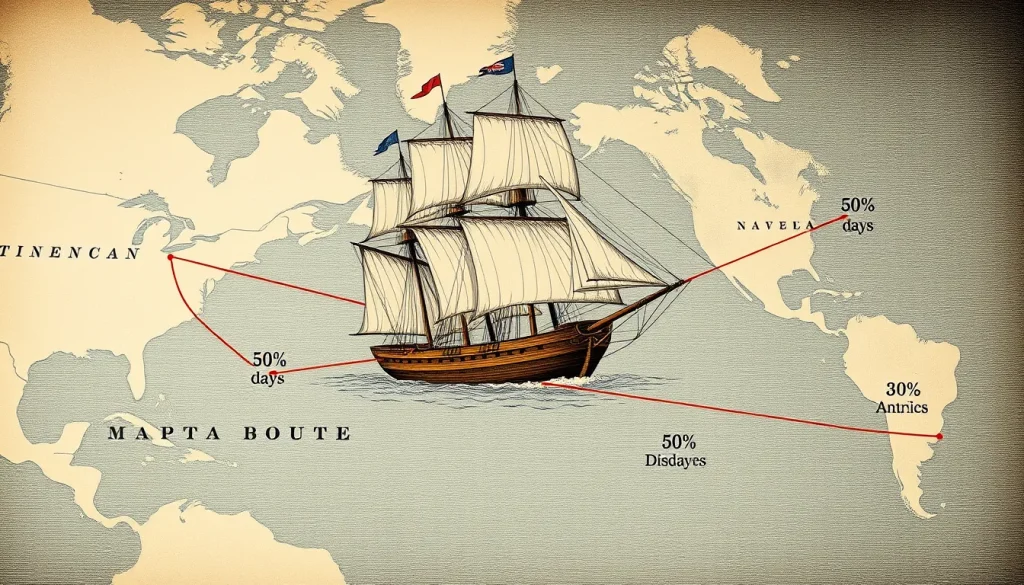
During the War of 1812, news traveled at speeds that seem impossibly slow by modern standards. On land, a dispatch from Washington to the Niagara frontier took about a week, while a letter to Detroit required roughly three weeks. Across the Atlantic, the average westward passage from Britain to New York was fifty days in 1816, though it could vary from thirty to ninety days depending on winds and weather. The Treaty of Ghent, signed on December 24, 1814, took forty-nine days to reach New York from London. That delay allowed the Battle of New Orleans to occur on January 8, 1815, killing over two thousand men even though peace had already been concluded. Similarly, the American declaration of war on June 18, 1812, took weeks to reach British commanders and even longer to reach frontier posts, leading to confusion on both sides.
Why It Matters
The slow transmission of news had immediate and long-term consequences. It directly caused the Battle of New Orleans, as neither Andrew Jackson nor the British commanders knew that the treaty had been signed. It also hampered strategic coordination; American forces on the Great Lakes, for example, could not receive timely orders from Washington. Over the longer term, the war’s communication failures spurred interest in improved roads, faster ships, and eventually the telegraph. Historians such as Daniel Walker Howe have argued that the War of 1812 highlighted the military importance of communication and contributed to the later “communications revolution.” The war also demonstrated how public opinion and political decisions could be shaped by delayed and incomplete information.
Definition
“News travel time” in 1812 refers to the interval between an event’s occurrence and its reception by a distant audience. This interval depended on the modes available: sailing ships across oceans, stagecoaches and horses overland, and human runners for short distances. It was measured in days for regional, and weeks for transatlantic, communication.
Background
Before the advent of steam and electricity, information moved only as fast as physical transportation. Sailing ships were subject to wind patterns; the Atlantic route from Britain to North America often took six to eight weeks. Overland, roads were often poor, and horse-drawn vehicles were slow. The U.S. Post Office, established in 1792, expanded rapidly but still delivered mail at an average speed of about five miles per hour over good terrain. In Europe, the British Falmouth Packet Service provided a relatively fast maritime link, but it still required weeks to reach destinations in the Mediterranean or India. These limitations were constant for both military and civilian communication.
How It Worked
News traveled through established channels: official dispatches carried by military aides or naval ships, letters sent via postal routes, and newspapers reprinted stories from other papers. In the United States, the post office was the backbone, carrying newspapers and letters along post roads. Stagecoach lines provided faster service on major routes, while express riders could be hired for urgent messages. Across the Atlantic, British packets operated on scheduled routes from Falmouth, while American merchants relied on trading vessels. Messages often went through multiple changes of conveyance: a letter from London to the American frontier might go by ship to Halifax or New York, then by post chaise and horseback to its destination. Delays were compounded by weather, poor roads, and the need to wait for connecting vessels.
Competing Viewpoints
Historians generally agree that news travel was slow, but they debate its impact on the war’s outcome. Some argue that communication delays were decisive, causing battles to be fought unnecessarily and prolonging the conflict. Others, such as Donald Hickey, contend that even faster communication would not have changed the war’s strategic stalemate, because both sides were fighting for objectives that required time. There is also debate about the reliability of specific travel times; accounts vary because actual trip durations depended on winds and roads. For example, the forty-nine-day peace-treaty crossing from London to New York in 1815 was slower than typical because of winter weather, but it remains the most cited figure.
Role in the War of 1812
Delayed news directly influenced key decisions and battles. The Declaration of War, passed by Congress on June 18, 1812, reached British commanders in Canada weeks later, giving them time to prepare. The Battle of New Orleans is the most obvious example: Andrew Jackson and British General Edward Pakenham were unaware of the Treaty of Ghent, signed three weeks earlier. On the Great Lakes, orders from Washington could take weeks to arrive, leading to missed opportunities and miscoordination. Naval commanders on both sides operated for months without updated instructions, making peace negotiations and blockades uncertain. The slow flow of news also shaped public opinion, as newspapers printed outdated reports and rumors, which could inflame or defer political responses.
Consequences and Historical Interpretation
The war’s communication failures taught both nations the value of speed. In the United States, it spurred internal improvements, such as better roads and canals, and eventually the construction of the telegraph in the 1840s. The war also led to a reevaluation of military logistics; the need for rapid communication between field commanders and central authorities became a central lesson. Historians have interpreted the Battle of New Orleans as a tragic but avoidable engagement, highlighting the human cost of delayed news. Later scholars have used the war to illustrate the broader “tyranny of distance” that shaped early American and British imperial policy.
Primary Sources
Primary sources that document news travel in 1812 include military letters, naval dispatches, and newspaper accounts. For example, the letter from Gideon Colquhoun, British Residency in Basra, dated June 20, 1814, notes that a message from London had arrived in twenty-two days via the Falmouth Packet Service, illustrating a fast route. On the American side, letters between U.S. generals and the War Department, such as those in the National Archives, show delays of weeks. Newspapers like the National Intelligencer and the Times (London) printed reports of battles days or weeks after they occurred, often with errors. These sources are invaluable but limited by their own bias, as they reflect the incomplete knowledge of their authors.
Further Reading
- Daniel Walker Howe, What Hath God Wrought: The Transformation of America, 1815–1848 (Oxford, 2007)
- Allan Pred, Urban Growth and the Circulation of Information (Harvard, 1973)
- Donald R. Hickey, The War of 1812: A Forgotten Conflict (Illinois, 1989)
- Brian Cathcart, “Why news of victory at Waterloo took three days to travel 250 miles to London,” The Irish Times, April 30, 2015
- Qatar Digital Library, “London to Basra in Twenty-Two Days,” [article](https://www.qdl.qa/en/london-basra-twenty-two-days)
References
- Digital History, “Speeding Communications,” [https://www.digitalhistory.uh.edu/disp_textbook.cfm?psid=3510&smtID=2](https://www.digitalhistory.uh.edu/disp_textbook.cfm?psid=3510&smtID=2)
- The Irish Times, “Why news of victory at Waterloo took three days to travel 250 miles to London,” [https://www.irishtimes.com/culture/books/why-news-of-victory-at-waterloo-took-three-days-to-travel-250-miles-to-london-1.2195595](https://www.irishtimes.com/culture/books/why-news-of-victory-at-waterloo-took-three-days-to-travel-250-miles-to-london-1.2195595)
- Qatar Digital Library, “London to Basra in Twenty-Two Days,” [https://www.qdl.qa/en/london-basra-twenty-two-days](https://www.qdl.qa/en/london-basra-twenty-two-days)
- Daniel Walker Howe, What Hath God Wrought (Oxford, 2007), chap. 2.
- “Speed of Information Travel to London, 1798-1914,” [https://beebo.org/lately/2009-07-12_speed-of-information-travel.html](https://beebo.org/lately/2009-07-12_speed-of-information-travel.html)
FAQ
How long did it take news to cross the Atlantic in 1812?
It typically took four to eight weeks, depending on the season and winds. The average westward crossing from Britain to New York was around fifty days.
Why did the Battle of New Orleans happen after the peace treaty was signed?
The Treaty of Ghent was signed on December 24, 1814, but news took forty-nine days to reach New York. Both American and British forces in Louisiana were unaware of the treaty and fought on January 8, 1815.
What was the fastest way to send a message in 1812?
Over short distances, express riders on horseback could cover up to 10 mph. Across the Atlantic, the fastest scheduled service was the British Falmouth Packet, which could make Lisbon in six days, but a full crossing still took weeks.

Leave a Reply