Short Answer
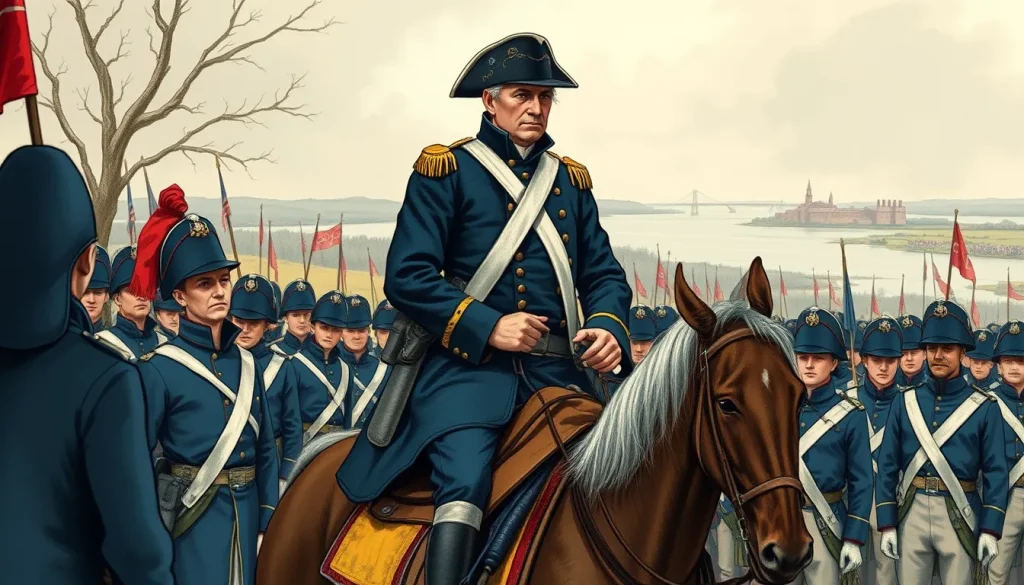
Jacob Brown (1775–1828) was a major general in the United States Army during the War of 1812 and commander of the Left Division in the Niagara campaign of 1814. The campaign, fought along the Niagara frontier from July to November 1814, was the most significant American offensive of that year, highlighted by the victories at Fort Erie and Chippawa and the bloody, indecisive Battle of Lundy’s Lane. Brown’s leadership and the performance of his regular troops marked a turning point in American military professionalism, even though the campaign ultimately failed to achieve its strategic objectives.
Historical Context
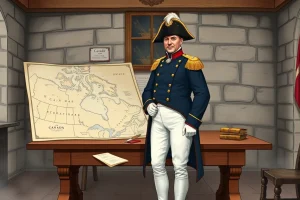
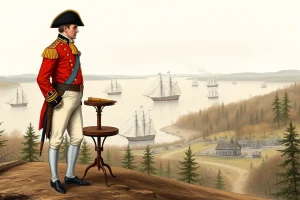
By 1814, the War of 1812 had reached a critical stage. Napoleon’s defeat in Europe allowed Britain to send veteran regiments to North America, threatening to tip the balance decisively against the United States. In response, the American government planned a renewed offensive on the Canadian front, focusing on the Niagara Peninsula as a likely invasion route. The region—a narrow strip between Lake Ontario and Lake Erie—was contested throughout the war, with both sides holding fortified positions along the Niagara River. The American strategy aimed to seize the peninsula and establish a foothold that could be used to attack Kingston or Montreal. Secretary of War John Armstrong selected Jacob Brown, a militia officer with proven leadership, to command the principal American force, designated the Left Division. Brown’s task was to cross the Niagara, capture Fort Erie, and push north to link up with the navy on Lake Ontario. The outcome of the campaign would test whether American regulars could stand against British veterans in open battle.
What Happened
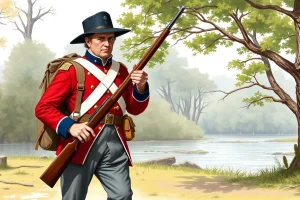
Brown’s division, numbering about 3,500 men, crossed the Niagara River on July 3, 1814, and captured Fort Erie with little resistance. The American advance continued northward along the river road. On July 5, a British force under Major General Phineas Riall sought to halt the American advance near Chippawa Creek. In the resulting Battle of Chippawa, Brown’s regulars—especially Winfield Scott’s brigade—displayed remarkable discipline, exchanging volleys with British regulars on an open plain. Despite initial British confidence that they faced militia, the Americans stood their ground, and their artillery and musketry drove the British back across the river. The battle was a clear American tactical victory, with British losses about 515 killed, wounded, and missing, while American losses were about 328. It was the first time American regulars had defeated an equally sized British force in an open-field engagement.
Following Chippawa, Brown pressed forward, but delays in supplies and the absence of American naval support on Lake Ontario slowed his advance. By late July, the British had been reinforced under Lieutenant General Gordon Drummond. On the evening of July 25, the two armies collided near Lundy’s Lane, a vital crossroads. The battle escalated into a brutal, nighttime engagement fought at close range. Both sides committed their reserves, and the fighting continued past midnight with heavy casualties. Brown and Scott were both wounded; Brown was hit twice but remained on the field. The battle was tactically inconclusive—the Americans withdrew the next morning—but strategically they had to retreat to Fort Erie. British losses were about 878, American about 743. The Siege of Fort Erie followed, lasting from August to September. A British assault on August 15 was repulsed with heavy losses, including a devastating magazine explosion. Short of men and supplies, the Americans abandoned the fort in November and withdrew to the American side of the river, ending the campaign with no permanent territorial change.
Why It Matters
The Niagara Campaign mattered in several ways. In the short term, it demonstrated that American regulars, properly trained and led, could stand against British veterans, a lesson that influenced post-war military reforms and the development of the United States Military Academy. The battles at Chippawa and Lundy’s Lane became touchstones of American martial pride, even though the strategic gains were nullified. In the longer view, historians argue that the campaign’s professional conduct set a precedent for the regular army’s role in American expansion. However, the campaign also exposed the limits of American logistics and the difficulty of sustaining offensive operations in Canada. The frontier line at the end of 1814 was essentially unchanged, underscoring the futility of invasion. Scholarly interpretation has shifted from celebration of heroism to a more sober assessment of the campaign’s cost and results, emphasizing the high casualties and the failure to achieve strategic aims.
Early Life
Jacob Brown was born on May 9, 1775, in Bucks County, Pennsylvania, to Quaker parents. As a young man, he worked as a surveyor in Ohio, then moved to New York City in 1798, where he became military secretary to Alexander Hamilton during the quasi-war crisis. In 1798, he purchased land in Jefferson County, New York, and founded the town of Brownville. There he served as county judge and rose to the rank of brigadier general in the state militia in 1810.
Role Before the War
Before the War of 1812, Brown had no combat experience but demonstrated organizational ability and leadership. His militia service and his political connections in New York positioned him for command. When war broke out, he was given command of the New York frontier from Oswego to Lake St. Francis, where he repelled British attacks on Ogdensburg in October 1812 and Sackett’s Harbor in May 1813. His success at Sackett’s Harbor earned him a commission as brigadier general in the regular army in July 1813. He later participated in the failed Wilkinson expedition, where his conduct stood out.
Role During the War
In January 1814, Brown was promoted to major general and succeeded James Wilkinson as commander of the forces at Niagara. He spent the winter training and organizing the Left Division, working closely with Winfield Scott to instill discipline and professionalism. His performance during the 1814 campaign demonstrated his ability to inspire troops and his willingness to lead from the front, though he also exhibited a tendency to push forward without adequate logistical support.
Major Actions
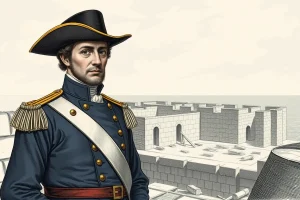
Brown’s major actions included the capture of Fort Erie (July 3, 1814), the Battle of Chippawa (July 5), and the Battle of Lundy’s Lane (July 25), where he was wounded twice but remained on the field. After the battle, he directed the withdrawal to Fort Erie and oversaw its defense. He rejected a relief expedition from the United States, but the siege was eventually lifted when the British retreated. His decision to abandon Fort Erie in November was controversial, but it reflected the exhaustion of his command.
Contemporary Accounts
Contemporary accounts, including official reports and memoirs, praise Brown’s personal bravery and his determination. Winfield Scott, who served under Brown, later described him as a “brave and able officer” though noting his lack of extensive formal training. British officers, such as Drummond, respected Brown’s tactical skill, although they often attributed American success to Scott’s drilling. Civilian observers, like militia leader Peter Porter, testified to Brown’s popularity with his troops and his attention to their welfare.
Later Life
After the war, Brown remained in the regular army. He was appointed to the command of the Northern Division and later served as commanding general of the United States Army from March 1821 until his death in Washington, D.C., on February 24, 1828. He played a role in reducing the army to peacetime strength and in preserving the professionalism developed during the war.
Historical Legacy
Brown’s legacy is closely tied to the Niagara Campaign. He is regarded as one of the most capable American generals of the War of 1812. His emphasis on discipline and professional standards contributed to the emergence of a permanent regular officer corps. The campaign’s battles, especially Chippawa, were later studied as examples of tactical proficiency. However, historians also note his strategic limitations and the ultimate futility of the campaign, which failed to achieve its objective of seizing the Niagara Peninsula. Brown’s reputation remains that of a courageous leader who helped transform the American army, even if his battlefield achievements did not translate into lasting territorial gains.
Primary Sources
Primary sources for the Niagara Campaign include official reports and correspondence from Jacob Brown, Winfield Scott, and British commanders. Brown’s report to Secretary of War Armstrong after Chippawa and Lundy’s Lane provides a first-hand account of the battles. Winfield Scott’s memoirs, published later, offer another perspective. British sources include Drummond’s dispatches and various unit logs. The Canadian Encyclopedia article by John R. Grodzinski draws on these records. A limitation is that official accounts often omit details of dissent or confusion, so historians also rely on soldiers’ letters and diaries found in archives like the Library of Congress and the National Archives of Canada.
Further Reading
- Donald R. Hickey, The War of 1812: A Forgotten Conflict (University of Illinois Press, 1989).
- John C. Fredriksen, “Niagara, 1814: The United States Army Quest for Tactical Parity in the War of 1812 and Its Legacy” (Ph.D. diss., Providence College, 1993).
- John R. Grodzinski, “Battle of Chippawa” in The Canadian Encyclopedia.
- Francis F. Beirne, The War of 1812 (E.P. Dutton, 1949).
- 1911 Encyclopædia Britannica, “Brown, Jacob”.
References
- Grodzinski, John R. “Battle of Chippawa”. The Canadian Encyclopedia. Accessed via thecanadianencyclopedia.ca.
- Fredriksen, John C. “Niagara, 1814: The United States Army Quest for Tactical Parity in the War of 1812 and Its Legacy”. Providence College, 1993.
- Beirne, Francis F. The War of 1812. E.P. Dutton, 1949.
- “Brown, Jacob”. 1911 Encyclopædia Britannica, Volume 4.
- The Niagara Campaign. thewarof1812.org.
FAQ
What was Jacob Brown's role in the Niagara Campaign?
Brown commanded the American Left Division, leading the invasion of Upper Canada, capturing Fort Erie, and directing the battles of Chippawa and Lundy's Lane.
Why was the Battle of Chippawa significant?
It was the first time American regulars defeated a British force of equal size in an open-field battle, demonstrating their improved discipline and professionalism.
What was the outcome of the Niagara Campaign?
The campaign ended in November 1814 when American forces abandoned Fort Erie and withdrew to New York, leaving the frontier essentially unchanged.
Leave a Reply