Short Answer
The War of 1812 (1812–1815) fundamentally altered the course of Native American resistance in eastern North America. By aligning with Great Britain, Indigenous nations from the Great Lakes to the Gulf of Mexico hoped to check American expansion, but the war’s outcome—including the death of Tecumseh and the Treaty of Ghent—destroyed the last credible military threat to U.S. control and opened an era of forced land cessions and removal. This article explains how the war changed Native resistance, from its pre-war confederacy to its post-war collapse.
Historical Context
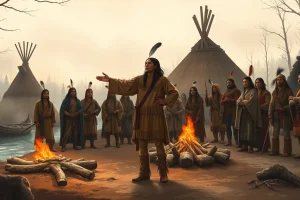
After the American Revolution, the United States aggressively expanded westward, provoking a series of conflicts with Indigenous nations. The Treaty of Paris (1783) gave the U.S. claim to land east of the Mississippi, ignoring Native claims. In the 1790s, Indigenous forces led by Little Turtle and Blue Jacket defeated U.S. armies, but the Battle of Fallen Timbers (1794) and the Treaty of Greenville (1795) forced massive land cessions. In response, a new pan-Indian movement emerged: the Shawnee leader Tecumseh and his brother Tenskwatawa (the Prophet) founded Prophetstown in 1808, preaching unification and resistance to land sales. British agents in Canada, alarmed by American expansion, supplied arms to these Indigenous groups, viewing them as a buffer against U.S. aggression. However, relations between Britain and the U.S. deteriorated over maritime issues, leading to war in June 1812.
What Happened
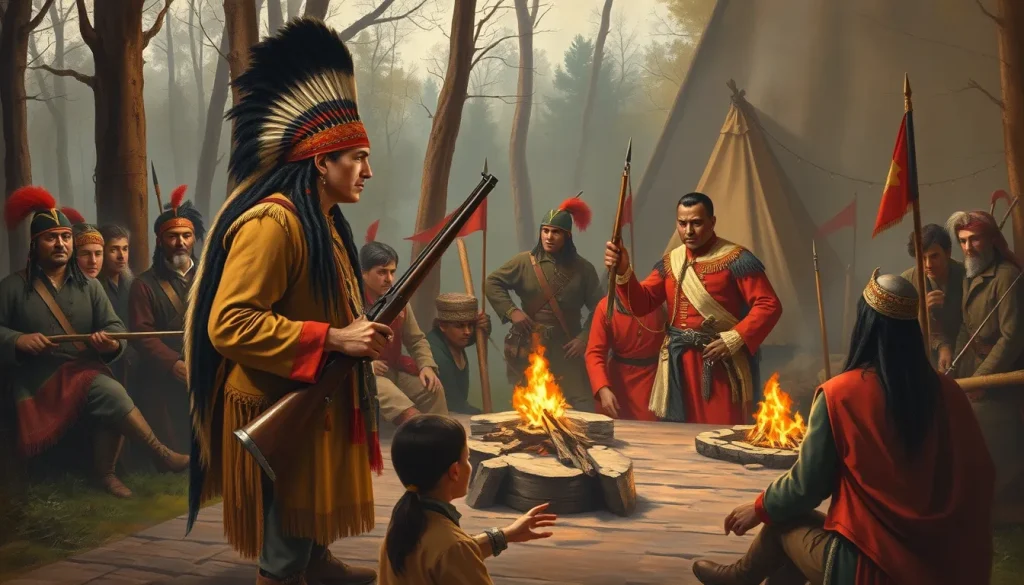
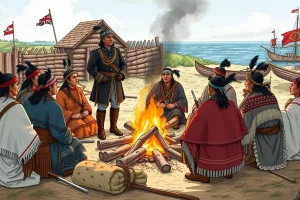
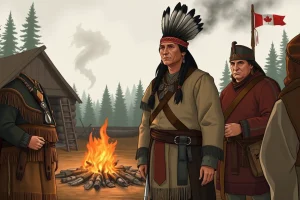
When war broke out, most Indigenous nations chose to ally with the British, seeing them as the lesser threat to their lands. Tecumseh forged a formal alliance with British General Isaac Brock, who promised an independent Indigenous state in the Old Northwest. In July 1812, a combined force of British troops, Canadian militia, and Indigenous warriors captured Fort Michilimackinac, and in August, Tecumseh’s warriors helped force the surrender of Fort Detroit. However, after Brock’s death at Queenston Heights (October 1812), the alliance wavered. The Battle of the Thames in October 1813 proved catastrophic: Tecumseh was killed and his confederacy broken. Further south, the Creek War (1813–1814) saw the Red Sticks, a nativist faction, defeated by Andrew Jackson at the Battle of Horseshoe Bend, leading to the Treaty of Fort Jackson (1814), which ceded over 20 million acres. The Treaty of Ghent (December 1814) ended the war without addressing Indigenous lands, and Britain abandoned its Native allies. Post-war, the U.S. rapidly negotiated treaties that stripped Native nations of territory, culminating in the Indian Removal Act of 1830.
Why It Matters
The War of 1812 closed the “middle ground” that had allowed Indigenous peoples to balance European powers. Before the war, Native nations could leverage British-American rivalry to preserve autonomy; after 1815, the British ceased to challenge American expansion, and the U.S. implemented a policy of removal. The death of Tecumseh and the dissolution of his confederacy removed the most capable Indigenous military leader and his coalition. Historians argue this was the turning point that made Indian removal east of the Mississippi possible, leading to the Trail of Tears in the 1830s. The war also reshaped American memory, with figures like William Henry Harrison and Andrew Jackson using their anti-Indian actions to rise to the presidency. For Indigenous peoples, the war remains a story of lost opportunity and betrayal.
Definition
Native American resistance during the War of 1812 refers to the military and diplomatic efforts of Indigenous nations to protect their lands and sovereignty by aligning with European powers, particularly Great Britain. This resistance included both armed conflict—such as Tecumseh’s confederacy and the Creek Red Sticks—and diplomatic attempts to maintain autonomy through intertribal unity and foreign alliances.
Background
Indigenous resistance predates the war, with roots in the post-Revolutionary crisis. The Northwest Indian War (1785–1795) and the pan-Indian movement led by Tecumseh and the Prophet (from 1808) sought to stop U.S. land cessions. The British in Canada provided military support, as they relied on Native allies to defend their own territory. However, the U.S. viewed this as a threat and used it as a casus belli.
How It Worked
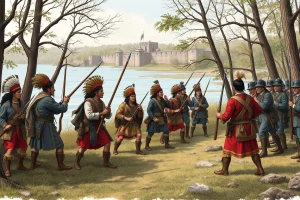
The war changed resistance by shifting it from a balance-of-power strategy to a direct military confrontation. Indigenous warriors—skilled in terrain and unconventional warfare—were essential to British victories early in the war, such as at Detroit and Michilimackinac. Tecumseh’s confederacy unified dozens of nations, but the war exposed its fragility: tribes had differing interests, and British support was uncertain. After the war, the U.S. exploited this fragmentation, using treaties and removal policies that relied on the absence of British backing.
Competing Viewpoints
Historians differ on the war’s impact. Some emphasize the decisive loss of Native military power and the betrayal by Britain, arguing that the war was the pivotal moment that doomed Indian land rights. Others stress that Native resistance continued after 1815, albeit in different forms, and that the war was one factor among many (including epidemics, population decline, and economic pressure). The significance of Tecumseh is also debated: while some view him as a visionary whose death ended any hope of an indigenous state, others point to the internal divisions among Indigenous nations as the primary cause of failure.
Role in the War of 1812
Native American resistance shaped the war’s course. Indigenous forces were instrumental in the British capture of Detroit and Michilimackinac, and they defended Upper Canada against American invasions. Tecumseh’s confederacy gave the British a critical manpower advantage. However, the war also turned Indigenous nations into battleground proxies, and British military policy often prioritized imperial interests over Native goals. The war’s end left these nations without a European ally, making them vulnerable to American land claims that had been suspended during the conflict.
Consequences and Historical Interpretation
The immediate consequence was the collapse of large-scale military resistance east of the Mississippi. The Treaty of Ghent made no provisions for Indigenous nations, and Britain’s abandonment allowed the U.S. to impose treaties like those at Fort Jackson and after the war. Over the following decades, the U.S. purchased or forcibly obtained millions of acres from Indigenous nations, culminating in the Indian Removal Act. Later historians have interpreted this as a “turning point” in U.S.–Indigenous relations, marking the end of the “middle ground” and the rise of removal policy. The war also romanticized Tecumseh as a symbol of resistance, while the actual power of Native nations declined permanently.
Primary Sources
Key primary sources include: Tecumseh’s speeches, as recorded by British observers, such as his address to General Brock in 1812. The Treaty of Ghent (1814) is crucial for showing that Indigenous nations were excluded from peace negotiations. The Treaty of Fort Jackson (1814) illustrates forced cessions. Military reports from British officers like Brock and American commanders like Harrison and Jackson provide contemporary accounts. Also, the correspondence and proclamations of British agents such as Sir George Prevost show the official view. These sources must be read critically, as they are filtered through European or American perspectives and may misrepresent Indigenous motives.
Further Reading
- Hickey, Donald R. The War of 1812: A Forgotten Conflict. University of Illinois Press, 1989.
- Kiel, Doug. “The Fight for Native Self-Determination.” National Park Service, 2017.
- “First Nations and Métis Peoples in the War of 1812.” The Canadian Encyclopedia.
- White, Richard. The Middle Ground: Indians, Empires, and Republics in the Great Lakes Region, 1650-1815. Cambridge University Press, 1991.
- Edmunds, R. David. Tecumseh and the Quest for Indian Leadership. Little, Brown, 1984.
References
- “Indigenous Peoples – War of 1812” (U.S. National Park Service). Accessed via https://nps.gov/subjects/warof1812/indigenous-peoples.htm.
- “First Nations and Métis Peoples in the War of 1812” (The Canadian Encyclopedia). Accessed via https://thecanadianencyclopedia.ca/en/article/first-nations-in-the-war-of-1812.
- “Why the War of 1812 Was a Turning Point for Native Americans” (History.com). Accessed via https://www.history.com/articles/war-of-1812-native-americans-tecumseh.
- Kiel, Doug. “The Fight for Native Self-Determination” (National Park Service). Accessed via https://nps.gov/articles/erosion-of-the-middle-ground.htm.
FAQ
Why did most Native American nations ally with the British during the War of 1812?
Most Native nations saw Great Britain as a lesser threat than the United States, which was actively expanding onto their lands. The British promised support and offered trade and military alliance, whereas American settlers and troops were encroaching on Native territories.
What was the immediate impact of Tecumseh's death at the Battle of the Thames?
Tecumseh's death in October 1813 shattered his confederacy and eliminated the most unifying leader among Indigenous peoples. Without his leadership, the coalition fractured, and British morale and military capability in the northwest declined sharply.
How did the Treaty of Ghent affect Native American nations?
The Treaty of Ghent ignored Indigenous interests entirely, providing no guarantees for their lands or autonomy. It ended British military assistance to Native peoples, leaving them vulnerable to American treaties and removal policies.
Leave a Reply