Short Answer
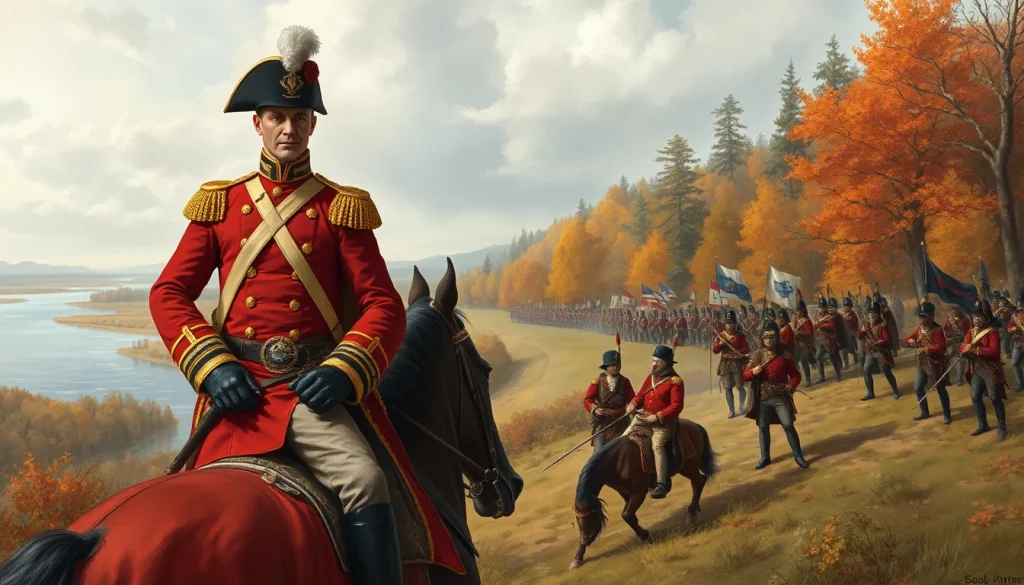
Henry Procter (c. 1763 – 31 October 1822), sometimes spelled Proctor, was a British Army officer who commanded the British forces on the Detroit frontier in Upper Canada during the War of 1812. He is chiefly remembered for the Battle of the Thames, also called the Battle of Moraviantown, on 5 October 1813, when his retreat before and during the engagement allowed an American army under William Henry Harrison to defeat the British and their Indigenous allies and killed the Shawnee leader Tecumseh. Procter’s conduct was later examined by a court-martial, and his reputation became a byword for failure in the British war effort. This article focuses on Procter himself and his role in the Thames campaign; it treats the battle as the central event in his military career rather than as a separate battle study.
Historical Context
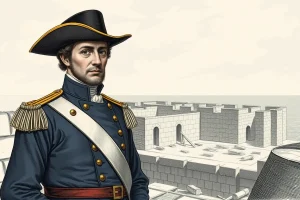
The Detroit River corridor was one of the most exposed frontiers in British North America during the War of 1812. Upper Canada’s Western District was thinly settled, and its main British posts were at Amherstburg, including Fort Malden and the Amherstburg Navy Yard, opposite the American town of Detroit. The British regular force in the region was small, and its defence depended on militia, Provincial Marine vessels, and alliances with Indigenous nations. The Shawnee leader Tecumseh and his confederacy became the most important of those allies after the United States declared war in June 1812.
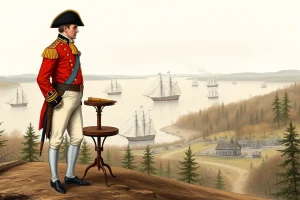
Control of Lake Erie was decisive. As long as the British could move troops and supplies across the lake and along the Detroit River, Procter’s position could be maintained. Once the United States completed and deployed its Lake Erie squadron, British supply lines became precarious, and the Detroit frontier became a liability. British commanders in Montreal and Kingston gave the western frontier a lower priority than the Niagara and St. Lawrence theatres, so Procter received limited reinforcements even as American forces under Major General William Henry Harrison gathered to retake Detroit.
What Happened
When war began, Procter was a lieutenant-colonel commanding the 41st Regiment of Foot in Upper Canada. In July 1812, after American Brigadier General William Hull crossed the Detroit River and occupied Sandwich, Major General Isaac Brock sent Procter to take command at Amherstburg. Procter arrived on 26 July, organized defences at Fort Malden, and worked with Tecumseh and other Indigenous leaders. In August, British and Indigenous forces fought actions at Brownstown and Maguaga that disrupted Hull’s supply line between Detroit and Ohio. Brock arrived with reinforcements on 13 August, and Detroit surrendered on 16 August. Procter’s role in isolating Detroit was praised by Brock.
Procter remained in command on the Detroit frontier. In January 1813, hearing that an American advance guard had occupied Frenchtown on the River Raisin, he led an expedition that attacked and forced its surrender. The victory brought him promotion to brigadier-general, and later to major-general, but it was overshadowed by the killing of wounded American prisoners by some of his Indigenous allies after the battle. Procter was accused of failing to prevent the killings. In May 1813 he attacked Fort Meigs on the Maumee River, ambushing a relief column but failing to capture the fort. A second attempt in July also failed, and an assault on Fort Stephenson on the Sandusky River in the summer of 1813 cost heavy casualties.
The decisive change came at sea. On 10 September 1813, the British squadron on Lake Erie under Commander Robert Heriot Barclay was defeated by an American squadron under Oliver Hazard Perry. With the Americans now controlling the lake, Procter could no longer supply or reinforce Amherstburg. He began a retreat from Amherstburg and Sandwich on 27 September, destroying stores that could not be carried. Tecumseh and many Indigenous warriors opposed withdrawal, but Procter persuaded them to make a stand in the Thames valley. American forces under Harrison pursued.
On 5 October 1813, the British and Indigenous force was caught near present-day Thamesville, Ontario, at Moraviantown. In the Battle of the Thames, the British line quickly broke. Tecumseh was killed, and many British soldiers were captured or scattered. Procter escaped with a small group of survivors and continued to Ancaster. The defeat left the Western District of Upper Canada under American control for the rest of the war. Controversy over the retreat and battle began immediately, and Procter’s conduct became the subject of a court-martial at Montreal in December 1814.
Why It Matters
The Battle of the Thames was a turning point on the northwestern frontier. It ended British power in the Detroit region, exposed Upper Canada to further American raids, and shattered the Indigenous coalition that had made the British position possible. Tecumseh’s death was especially consequential: he had been the leading figure in the intertribal alliance, and no leader of comparable authority replaced him. For the United States, the victory restored control of Detroit and the Michigan Territory and became a celebrated part of the war’s memory.
For Procter, the battle fixed a reputation. Contemporary critics and later popular accounts described him as the British general who fled the Thames, and his court-martial gave official weight to charges of poor preparation and leadership. Historians disagree about how much blame he deserves. Some emphasize his failure to prevent the retreat from becoming a rout, his inadequate dispositions at Moraviantown, and his inability to rally his troops. Others, including Sandy Antal in A Wampum Denied, argue that Procter was made a scapegoat for a campaign crippled by supply shortages, low priority from senior commanders, and the loss of Lake Erie. The debate continues because the evidence is fragmentary and much of it comes from self-interested participants.
Early Life
Henry Patrick Procter was born around 1763 in County Kilkenny, Ireland, the eldest son of Richard Procter, a British Army surgeon, and Anne Gregory. He married Elizabeth Cockburn in 1792, and they had one son and four daughters. His father had served in the British Army, including at the Battle of Bunker Hill, and Procter followed a military career.
Procter entered the 43rd Regiment of Foot as an ensign on 5 April 1781 and became a lieutenant in December 1781. He served in the New York area during the closing months of the American Revolutionary War. After the war he remained in the army, becoming a captain in November 1792 and a major in May 1795. In October 1800 he exchanged into the 41st Regiment of Foot as a lieutenant-colonel. He joined the regiment in Lower Canada in 1802 and later served in both Lower and Upper Canada. By 1810 he was a brevet colonel.
Role Before the War
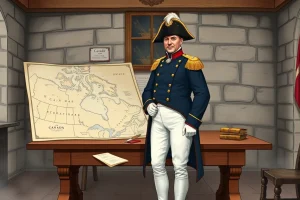
Procter’s prewar record was solid. He commanded the 1st Battalion of the 41st Foot and was known for discipline and administrative diligence. Major General Isaac Brock, who would become the senior British commander in Upper Canada, praised the condition of the regiment. Brock noted that the 41st was ‘very sharp’ and ascribed its excellent state to Procter’s ‘indefatigable industry.’ At the outbreak of war, Procter held garrison responsibilities in Upper Canada, including command at Fort George on the Niagara frontier, before being sent to Amherstburg.
Role During the War
Procter’s wartime command centred on the Detroit frontier. In 1812 he defended Fort Malden, coordinated with Tecumseh and Wyandot leaders, and helped cut American communications between Detroit and Ohio. After Brock’s capture of Detroit, Procter remained in command in the west. In 1813 he won a costly victory at Frenchtown on the River Raisin, then led unsuccessful attacks on Fort Meigs and Fort Stephenson. He was promoted to brigadier-general and then major-general, but his force remained short of regulars, supplies, and naval support.
After the British defeat on Lake Erie in September 1813, Procter faced an impossible strategic situation. He chose to retreat up the Thames valley rather than wait to be cut off at Amherstburg. The retreat preserved some of his force but strained relations with his Indigenous allies, who wanted to fight. At Moraviantown, the British force was defeated and Tecumseh killed. Procter left the field with a handful of survivors and retreated to Ancaster.
Major Actions
Procter’s major actions include the August 1812 skirmishes at Brownstown and Maguaga, which helped isolate Detroit; the capture of Detroit on 16 August 1812 as part of Brock’s campaign; the defeat of the American advance guard at Frenchtown on the River Raisin in January 1813; the sieges and assaults at Fort Meigs in May and July 1813; the failed attack on Fort Stephenson; and the retreat from Amherstburg that ended in the Battle of the Thames on 5 October 1813.
His conduct at the Thames was the most controversial. Critics charged that he began the retreat too late, burdened it with excessive baggage, failed to protect supplies, neglected fortifications along the Thames, made poor dispositions at Moraviantown, and did not rally his troops or Indigenous allies. His defenders point to the loss of Lake Erie, the lack of reinforcements, and the weakness of his supply lines. The court-martial ultimately found against him on several charges, but the exact degree of personal responsibility remains debated.
Contemporary Accounts
Contemporary accounts of Procter are divided and often partisan. British official correspondence, including Brock’s letters, shows that Procter was initially respected for his administration and for his role in the Detroit campaign. Procter’s own dispatches and his later defence at court-martial stressed the weakness of his force, the failure of supplies, and the consequences of losing Lake Erie. American reports, especially those from Harrison’s command, presented the Thames as a decisive victory over a retreating and discredited enemy.
Reports from Upper Canada, including communications associated with John Christopher Reiffenstein, Procter’s staff adjutant of militia, spread alarming accounts of the retreat and helped shape the early narrative of Procter’s incompetence. Newspaper reports in both the United States and Upper Canada repeated and exaggerated these claims. Indigenous perspectives, especially Shawnee and Wyandot recollections of Tecumseh’s death and the collapse of the alliance, are essential but often survive through later oral tradition or mediated recollections rather than verbatim documents. No reliable verbatim transcript of Tecumseh’s words to Procter before the battle is preserved.
Later Life
After the Thames, Governor-in-Chief Sir George Prevost refused to give Procter another significant command. A court-martial began at Montreal in December 1814. Procter faced five charges relating to the retreat and battle. He was convicted on several counts, publicly reprimanded, and suspended without rank or pay for six months. Some charges were later dropped, but the proceedings ruined his military career.
Procter returned to England in the fall of 1815 and lived in semi-retirement. He died at Bath, Somerset, on 31 October 1822. His later life was quiet, but his wartime reputation continued to be debated in histories of the War of 1812.
Historical Legacy
Henry Procter is often remembered as one of the least successful British officers of the War of 1812. The phrase ‘the British general who fled the Battle of the Thames’ reflects the contemporary and popular memory of his conduct on 5 October 1813. His court-martial reinforced that image, and for many nineteenth- and twentieth-century writers he became a convenient symbol of British failure in the western theatre.
Modern historians are more divided. Some judge Procter’s leadership to have been genuinely deficient, especially in the retreat and at Moraviantown. Others see him as a scapegoat for structural problems: the Detroit frontier was a low priority, reinforcements were scarce, supply lines were long, and the loss of Lake Erie made his position untenable. The scholarly debate has not produced a single consensus, partly because the surviving evidence comes from participants with strong reasons to shift blame. What is clear is that Procter’s career illustrates how personal reputation, military logistics, Indigenous alliances, and naval power intersected in the War of 1812.
Primary Sources
- Henry Procter’s dispatches and letters, 1812–1814. Procter’s correspondence with Isaac Brock, Sir George Prevost, and other commanders provides the British frontier commander’s perspective. It is valuable for supply problems, troop levels, and strategy, but it is also self-justifying, especially after the Thames.
- Isaac Brock’s correspondence, 1811–1812. Brock’s letters praise the discipline of the 41st Foot and describe Procter’s role in the Detroit campaign. They do not cover the 1813 retreat because Brock was killed at Queenston Heights in October 1812.
- Court-martial proceedings, Montreal, December 1814. The trial record contains charges, testimony, and defence material about Procter’s conduct. It is a central source, but it reflects a formal legal setting in which witnesses had reputations and careers at stake.
- William Henry Harrison’s reports and dispatches, 1813. American commander’s accounts describe the pursuit and Battle of the Thames from the U.S. perspective. They are essential for chronology but often frame the victory in terms favourable to Harrison and his army.
- John Christopher Reiffenstein’s communications and newspaper reports, 1813. These accounts helped spread early claims about Procter’s failures. They show how the retreat was reported, but they are prone to rumour, exaggeration, and political bias.
- Indigenous oral traditions and later recollections. Shawnee, Wyandot, and other Indigenous accounts preserve memories of Tecumseh, the alliance, and the battle. They are indispensable for a fuller picture, though many were recorded later and mediated by translators or editors.
Further Reading
- Antal, Sandy. A Wampum Denied: Procter’s War of 1812. Carleton University Press, 1997.
- Sugden, John. Tecumseh’s Last Stand. University of Oklahoma Press, 1985.
- Sugden, John. Tecumseh: A Life. Henry Holt, 1998.
- Taylor, Alan. The Civil War of 1812: American Citizens, British Subjects, Irish Rebels, and Indian Allies. Knopf, 2010.
- Dictionary of Canadian Biography, ‘Procter (Proctor), Henry.’
- The Canadian Encyclopedia, ‘Henry Procter (Proctor).’
- American Battlefield Trust, ‘Henry Procter.’
References
- Dictionary of Canadian Biography, ‘Procter (Proctor), Henry.’ https://www.biographi.ca/en/bio/procter_henry_6E.html
- The Canadian Encyclopedia, ‘Henry Procter (Proctor).’ https://thecanadianencyclopedia.ca/en/article/henry-procter-proctor
- American Battlefield Trust, ‘Henry Procter.’ https://www.battlefields.org/learn/biographies/henry-procter
- Encyclopaedia Britannica, ‘Henry A. Procter.’ https://www.britannica.com/biography/Henry-A-Procter
- Wikipedia, ‘Henry Procter (British Army officer).’ https://en.wikipedia.org/wiki/Henry_Procter_%28British_Army_officer%29
FAQ
Why is Henry Procter called the British general who fled the Battle of the Thames?
After the British line collapsed at Moraviantown on 5 October 1813, Procter left the field with a small group of survivors and continued retreating to Ancaster. Critics at the time and later popular accounts described this as flight; modern historians generally treat it as part of a wider retreat that became a rout.
Was Henry Procter found guilty at his court-martial?
Yes. A court-martial at Montreal in December 1814 examined his conduct during the retreat and battle. He was convicted on several charges, publicly reprimanded, and suspended without rank or pay for six months; the proceedings effectively ended his military career.
What happened to Tecumseh at the Battle of the Thames?
Tecumseh was killed during the fighting on 5 October 1813. His death shattered the Indigenous coalition that had supported the British on the Detroit frontier and became a central part of the battle's historical memory.
Did Henry Procter have any successes in the War of 1812?
Yes. In 1812 he helped isolate Detroit by cutting American communications and supported Brock's capture of Detroit. In January 1813 he defeated an American advance guard at Frenchtown on the River Raisin, though the killing of prisoners afterward became a lasting controversy.
Leave a Reply