
Short Answer
The question of whether the United States planned to conquer Canada is central to understanding the War of 1812. American leaders and military planners did develop and execute multiple invasion attempts of British North America during the conflict, though success was limited. This article examines the evidence for these plans, the motivations behind them, and how historians have interpreted them.
Historical Context
After the American Revolution, tensions with Britain remained high over issues such as impressment, trade restrictions, and British support for Indigenous peoples in the Northwest Territory. Many Americans, particularly from the South and West, called for war and expansion into Canada. In June 1812, President James Madison asked Congress for a declaration of war, citing these grievances. Canada was seen as a vulnerable British possession that could be captured to force concessions. The U.S. government believed that conquering Canada would cut off British supply lines, secure American borders, and provide leverage in peace negotiations.
What Happened
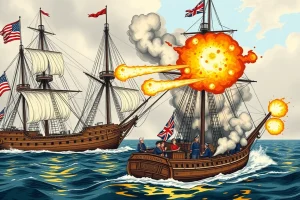
The United States launched multiple invasions of Canada during the War of 1812. In 1812, American forces under General William Hull invaded from Detroit but were forced to surrender after a brief campaign. Another attempt on the Niagara frontier ended in defeat at the Battle of Queenston Heights in October 1812. In 1813, American troops captured York (now Toronto) and Fort George, but suffered setbacks at Stoney Creek and Beaver Dams. A two-pronged offensive toward Montreal in late 1813 ended in failure at the Battles of Châteauguay and Chrysler’s Farm. The U.S. Navy achieved successes on the Great Lakes, notably the Battle of Lake Erie in September 1813, which allowed the Americans to recapture Detroit. However, land campaigns remained largely unsuccessful. The war ended in 1815 with the Treaty of Ghent, which restored the prewar boundaries.
Why It Matters
The failure to conquer Canada had significant consequences. It strengthened Canadian identity and contributed to later Confederation in 1867, as Canadians sought to avoid absorption into the United States. The war also resolved some outstanding issues, though impressment was not addressed. Historians debate whether the United States truly intended to annex all of Canada or simply use it as a bargaining chip. The unsuccessful invasions shaped the course of the war and the long-term relationship between the United States and British North America.
Definition
In the context of the War of 1812, “plans to conquer Canada” refers to the strategic intentions and military operations by the United States to capture or annex British North America. This included formal objectives set by the Madison administration, invasion orders issued to generals, and the actual movements of American armies across the border.
Background
American expansionist sentiment toward Canada predates the War of 1812. During the Revolutionary War, the Continental Congress invited Quebec to join the rebellion and authorized an unsuccessful invasion. The Articles of Confederation even included a standing invitation for Canada to join the United States. In the early 19th century, as tensions with Britain grew, voices in Congress and the press called for the annexation of Canada. The War Hawks, led by Henry Clay and John C. Calhoun, argued that conquering Canada would punish Britain and fulfill America’s territorial destiny.
How It Worked
The plans were formulated by President Madison and his cabinet, with Secretary of War William Eustis and military leaders like General Henry Dearborn. The strategy was to launch multiple offensives into Canada at once, overwhelming the thin British defenses. The key targets were Montreal, Quebec City, and the Niagara Peninsula. American planners believed that occupying these areas would sever British supply routes and force a negotiated peace. The U.S. Army and state militias were mobilized, and the Navy was tasked with gaining control of the Great Lakes. However, poor coordination, inadequate training, and logistical difficulties plagued the operations.
Competing Viewpoints
Historians disagree on the extent and sincerity of American plans to conquer Canada. Some argue that the United States genuinely intended to annex Canada, citing the invasion orders and the war aims expressed by Congress. Others contend that the conquest was a means to an end—a way to force Britain to address impressment and trade rights—and that permanent annexation was not the primary goal. Still others maintain that American plans were opportunistic and unrealistic, given the limited military capacity. These differing interpretations reflect the complexity of the war’s causes and objectives.
Role in the War of 1812
The planned conquest of Canada was a central feature of America’s military strategy. In 1812, the U.S. launched invasions from Detroit, Niagara, and the Lake Champlain region, but all failed. The following year, American forces captured York and Fort George, but were repulsed at Stoney Creek and Beaver Dams. The 1813 campaign against Montreal was a disaster. The U.S. naval victory on Lake Erie was a decisive moment, but it did not lead to a successful land invasion. By 1814, with the British sending reinforcements, the Americans were on the defensive. The invasions had consumed vast resources and ultimately failed to achieve their strategic objectives.
Consequences and Historical Interpretation
The failure to conquer Canada had lasting consequences. It solidified Canadian resolve and contributed to eventual Confederation in 1867. The war also ended with the Treaty of Ghent, which restored the status quo ante bellum, meaning no territory changed hands. Historians have interpreted this outcome as a demonstration of the limits of American expansionism and the resilience of British North America. The question of whether the United States planned to conquer Canada remains a topic of scholarly debate, but the evidence from war plans and military operations clearly indicates that such plans existed and were attempted.
Primary Sources
Key primary sources include President James Madison’s war message to Congress on June 1, 1812, which outlined American grievances but did not explicitly call for the conquest of Canada. However, military correspondence and orders from Secretary of War William Eustis and generals such as William Hull and Henry Dearborn show explicit invasion plans. The U.S. Army’s official history, “The War of 1812,” states that “invasion and conquest of Canada” was a major American objective. Also relevant are official reports of the battles, such as those from the Battle of Lake Erie and the Battle of Queenston Heights, which provide details on the campaigns. These sources are preserved in the National Archives and Library of Congress.
Further Reading
- Hickey, Donald R. The War of 1812: A Forgotten Conflict. University of Illinois Press, 1989.
- Friedman, Jordan. “America’s Long History of Trying to Acquire Canada.” History.com, 2025. Link.
- Maass, Richard. “The 51st State That Never Was: Why the United States Didn’t Annex Canada.” War on the Rocks, 2025. Link.
- LaBee, Ryan Thomas. “The US Military Once Had a Secret Plan to Invade Canada. It Was Called ‘War Plan Red’.” Military.com, 2026. Link.
References
- Friedman, Jordan. “America’s Long History of Trying to Acquire Canada.” History.com. Last modified September 5, 2025. https://www.history.com/articles/united-states-canada-william-seward
- Maass, Richard. “The 51st State That Never Was: Why the United States Didn’t Annex Canada.” War on the Rocks. February 14, 2025. https://warontherocks.com/the-51st-state-that-never-was-why-the-united-states-didnt-annex-canada/
- LaBee, Ryan Thomas. “The US Military Once Had a Secret Plan to Invade Canada. It Was Called ‘War Plan Red’.” Military.com. September 1, 2026. https://www.military.com/the-us-military-once-had-a-secret-plan-to-invade-canada-it-was-called-war-plan-red
- The Conversation. “America’s designs on annexing Canada have a long history − and record of political failures.” Accessed 2026. https://theconversation.com/americas-designs-on-annexing-canada-have-a-long-history-and-record-of-political-failures-250229
FAQ
Did the United States have a formal plan to conquer Canada during the War of 1812?
Yes. The U.S. government and military developed invasion plans targeting key Canadian regions, including Upper Canada and Montreal. These plans were implemented in multiple campaigns from 1812 to 1814, as documented by the U.S. Army's official history and military correspondence.
Why did the United States want to conquer Canada?
American leaders aimed to force Britain to address grievances such as impressment and trade restrictions. Conquering Canada was seen as a way to cut off British supply lines and gain leverage in peace negotiations. Some expansionists also genuinely sought to annex Canada to the United States.
What was the outcome of the American attempts to conquer Canada?
The invasion attempts mostly failed. American forces captured York temporarily but were repelled at key battles. The Treaty of Ghent in 1815 restored the prewar boundaries, leaving Canada outside U.S. control. The failure reinforced Canadian separateness and contributed to eventual Confederation.

Leave a Reply