Short Answer
The Battle of New Orleans, fought on January 8, 1815, was the final major engagement of the War of 1812. Contemporary accounts—written by American and British participants, officers, and civilians—constitute a rich body of primary source material that documents the battle from diverse perspectives. These accounts range from official reports and personal diaries to published memoirs and letters, and they have fundamentally shaped historical understanding of the battle.
Historical Context
The War of 1812 began in June 1812 over issues such as impressment, trade restrictions, and British support for Indigenous nations. By late 1814, the conflict had reached a stalemate, and diplomatic negotiations were underway in Ghent. Meanwhile, a British force under General Edward Pakenham was dispatched to seize New Orleans, a strategic port controlling the mouth of the Mississippi River. Major General Andrew Jackson, after victories in the Creek War, was ordered to defend the city. The British invasion force landed at Lake Borgne and approached New Orleans via Bayou Bienvenue, prompting Jackson to establish a defensive line along the Rodriguez Canal near the Chalmette plantation. The Treaty of Ghent had been signed on December 24, 1814, but news had not yet reached the combatants.
What Happened
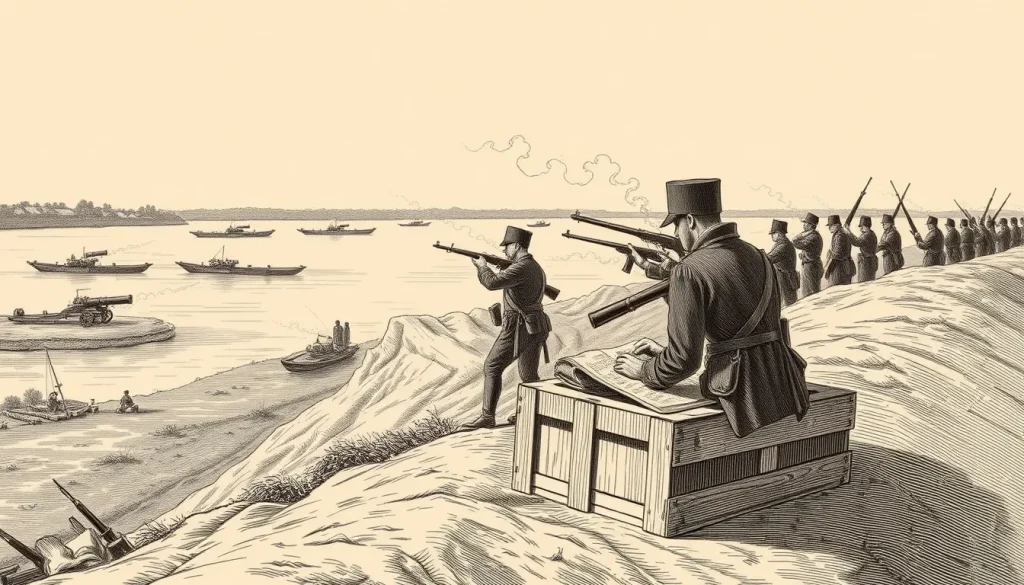
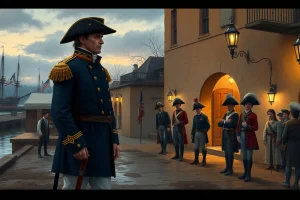
The battle took place on January 8, 1815. British forces launched a frontal assault on Jackson’s fortified line, which was anchored on the Mississippi River and stretched to a swamp. The American defenders, including regulars, Tennessee and Kentucky militia, Creole volunteers, and free men of color, had constructed an earthen rampart. The British attack was poorly coordinated; a lead column under Colonel William Thornton captured an American artillery position on the west bank, but the main assault on the east bank was repulsed with heavy losses. Pakenham was killed, and within about two hours the British retreated. American casualties were about 71 total, while British losses exceeded 2,000 killed, wounded, and captured.
Why It Matters
The American victory made Andrew Jackson a national hero and bolstered American confidence after a series of setbacks. It also came after the Treaty of Ghent had been signed, but before ratification, making it technically unnecessary yet psychologically important. For historians, the contemporary accounts of the battle are crucial because they provide firsthand details, reveal the chaos of combat, and demonstrate the varying perspectives of participants. These accounts also fueled controversies, such as the disputed role of the Kentucky militia and the myth of cotton-bale defenses, which later scholars have addressed.
Definition
Contemporary accounts of the Battle of New Orleans are primary sources produced at the time of the battle or shortly thereafter by individuals who participated in or witnessed the events. They include official dispatches, personal letters, diaries, newspaper reports, and later memoirs written by participants. These accounts are distinguished from secondary sources, which are written later by historians using earlier materials.
Background
The battle was a major engagement with significant political and military stakes, so many participants felt compelled to record their experiences. Military officers on both sides were required to submit official reports, while soldiers and civilians wrote letters and diary entries. After the war, the public’s interest in the victory led to the publication of several memoirs and histories, including those by Arsène Lacarrière Latour and British officer George Gleig.
How It Worked
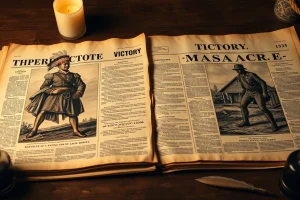
Accounts were generated through various channels. Official reports, such as Jackson’s dispatch of January 9, 1815, provided a structured military overview. Personal letters often captured immediate reactions, while diaries recorded day-to-day experiences. Later memoirs, like Gleig’s narrative, offered more reflective and sometimes embellished recollections. Newspapers reprinted reports and eyewitness stories, and publishers issued bound volumes. These accounts were influenced by the author’s rank, nationality, and personal biases, as well as the desire to justify actions or claim glory.
Competing Viewpoints
American and British accounts naturally differ. British narratives often emphasize the difficulty of the assault and the strength of American fortifications, while American accounts highlight their own courage and discipline. Within the American side, there were tensions between regular army and militia, particularly regarding the performance of the Kentucky troops. Jackson initially claimed the Kentuckians fled, but later accounts, such as that of the anonymous Kentucky soldier, defended their conduct. Additionally, later historians identified inaccuracies, such as the popular but false claim that the ramparts were made of cotton bales; Latour’s description confirms they were earthen.
Role in the War of 1812
These accounts served to document the final military action of the war and to shape public perception. They provided evidence of the American victory and contributed to the growth of Jackson’s reputation. For the British, the failure was reported in official letters and subsequent memoirs by participants like Gleig, which analyzed the strategic mistakes.
Consequences and Historical Interpretation
Historians have used these accounts to reconstruct the battle, but they have also critically analyzed them. The contradictory claims about the Kentucky militia led to a public dispute between Jackson and General John Adair, resulting in a published correspondence in 1815. The myth of cotton bales was perpetuated by some accounts but refuted by others. Modern historians, such as Robert Remini and Robin Reilly, have synthesized these sources to produce balanced narratives. The accounts remain vital for teaching about the War of 1812 and the nature of historical evidence.
Primary Sources
A significant number of contemporary accounts survive. The following are among the most frequently cited:
- Arsène Lacarrière Latour, Historical Memoir of the War in West Florida and Louisiana in 1814–15 (1816): Published with maps and detailed descriptions of the American defenses. Latour was a military engineer on Jackson’s staff. His account is detailed but reflects his professional perspective.
- George Robert Gleig, A Narrative of the Campaigns of the British Army at Washington and New Orleans (1821): A British officer’s memoir that provides a British perspective on the invasion and defeat. Gleig was critical of the British leadership.
- Official reports by Andrew Jackson and Edward Pakenham: Jackson’s report of January 9, 1815, is available in American State Papers; Pakenham’s report (written before his death) is less accessible but summarized in British records.
- Anonymous Kentucky soldier’s account, “They’re comin’ on their all fours!”: This eyewitness narrative, preserved in a Kentucky National Guard document, offers a private soldier’s view of the battle, including the famous shout by Captain Patterson.
- Rev. William Calhoun Love’s memoir: Written around 1860, this autobiographical account describes the experiences of a Kentucky volunteer, from recruitment to the battle. Though written later, it remains a valuable personal account.
Further Reading
- Robert V. Remini, The Battle of New Orleans (1999)
- Robin Reilly, The British at the Gates: The New Orleans Campaign in the War of 1812 (1974)
- Gene A. Smith, Andrew Jackson and the Battle of New Orleans (2006)
- The Battle of New Orleans Bicentennial Commission website
References
- “They’re comin’ on their all fours!” Kentucky National Guard, https://kynghistory.ky.gov/Our-History/History-of-the-Guard/1812%20Additional%20Resources/ThebattleofNewOrleans_s.pdf
- George Washington Cable, “The Battle of New Orleans,” https://www2.latech.edu/~bmagee/louisiana_anthology/texts/cable/cable–battle_of_new_orleans.html
- “War of 1812: ‘To Describe Those Lines'”, American Battlefield Trust, https://www.battlefields.org/learn/primary-sources/war-1812-describe-those-lines
- Zachary F. Smith, The Battle of New Orleans, Project Gutenberg, https://www.gutenberg.org/files/25699/25699-h/25699-h.htm
- “The Battle of New Orleans by Rev. William Calhoun Love”, SteveEskew.com, https://steveeskew.com/gleanings/index.php?id=the-battle-of-new-orleans-by-rev-william-calhoun-love-part-1-of-2
FAQ
What are the most important contemporary accounts of the Battle of New Orleans?
Key accounts include Arsène Lacarrière Latour's Historical Memoir (1816), British officer George Gleig's narrative (1821), and various American letters and memoirs, such as that of anonymous Kentucky soldier and William Calhoun Love.
How reliable are contemporary accounts of the battle?
They are valuable but must be used with caution, as each account reflects the author's perspective, rank, and memory. Official reports may exaggerate enemy losses, and memoirs written later may be influenced by later events.
What were the main controversies in the accounts?
Disputes include the use of cotton bales in the defenses (actually earthworks), the behavior of the Kentucky militia, and the exact number of British casualties.
Leave a Reply