Short Answer
The bombardment of Fort McHenry on September 13–14, 1814, during the War of 1812, is remembered largely through Francis Scott Key’s poem, but it is also documented in a remarkable and diverse set of contemporary accounts. These include official military reports, private letters, newspaper dispatches, and British and American naval logs. Each provides a distinct perspective on the battle, and together they form the primary evidence for understanding what happened in Baltimore harbor and why it mattered.
Historical Context
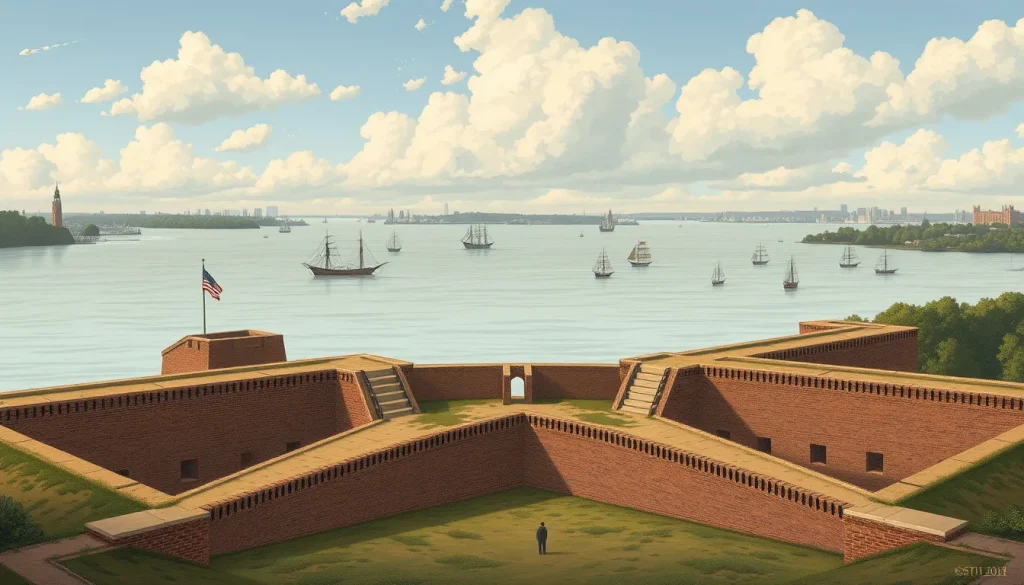
After the British burned Washington, D.C., in August 1814, their Chesapeake campaign turned next to Baltimore, a vital American port and shipbuilding center. Fort McHenry, a star-shaped earthen fort at the entrance to Baltimore’s harbor, stood between the British fleet and the city. The Royal Navy, commanded by Vice Admiral Alexander Cochrane, needed to reduce the fort to allow its ships to move up the Patapsco River and shell Baltimore. A successful attack on Baltimore would have dealt a severe blow to American morale and trade. The defense of the fort thus became a critical moment in the war, with both sides aware that the outcome would have significant consequences.
What Happened
On September 12, British troops landed at North Point and marched toward Baltimore, while the fleet of about thirty ships maneuvered into position. The bombardment of Fort McHenry began at sunrise on September 13 and continued for roughly twenty-five hours. The fort’s commander, Major George Armistead, oversaw a mixed garrison of regular artillerymen, sea fencibles, volunteer militia, and a detachment from Commodore Barney’s flotilla. The British ships, including bomb vessels and a rocket ship, fired shells and Congreve rockets from beyond the reach of most American guns. Despite an estimated 1,500 to 1,800 shells falling in and around the fort, American casualties were remarkably light: four killed and twenty-four wounded according to Armistead’s official report. The American flag never fell, and on the morning of September 14 the fleet withdrew, abandoning the attempt to capture Baltimore.
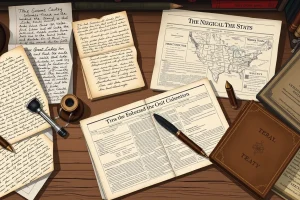
The battle produced an extraordinary array of contemporary records. Armistead wrote a detailed report to the Secretary of War on September 24, 1814. Private Isaac Munroe, a member of the volunteer artillery, composed a vivid letter on September 17, which was soon printed in newspapers. From the British side, midshipman Charles Robert Malden kept a logbook aboard the frigate HMS Trave, recording the bombardment in terse, routine entries. The Maryland Gazette published a news summary on September 22, 1814. And Francis Scott Key, an American lawyer held aboard a British ship during the attack, wrote the lines that became “The Star-Spangled Banner.” These documents, created within days or even hours of the event, form the foundation of our knowledge of the battle.
Why It Matters
These contemporary accounts are the essential primary sources for the bombardment of Fort McHenry. They allow historians to reconstruct the sequence of the attack, the challenges faced by both sides, and the human experience of being under fire. They also reveal the competing narratives that emerged at the time: Americans stressed their stubborn defense and the flag’s survival, while the British, through logs like Malden’s, recorded the operation as a failed assault that could not achieve its objective. The most famous account, Key’s poem, transformed the battle into a symbol of American resilience and eventually became the national anthem. Without these records, the events at Fort McHenry would have been far less known and its legacy far more ambiguous.
Definition
Contemporary accounts of Fort McHenry are written records created at or near the time of the September 1814 bombardment. They include official military reports, private letters, newspaper articles, naval logs, and poems. These are primary sources that offer direct evidence of the events and the perspectives of those who witnessed them.
Background
During the War of 1812, official and personal documentation was a routine part of military and civilian life. Commanders were required to submit reports to their superiors, soldiers and civilians wrote letters home, newspapers provided updates to the public, and naval officers maintained daily logs. The bombardment of Fort McHenry came at a moment of high public interest, as Baltimore was a major city and the British had recently burned Washington. Consequently, many individuals took great care to record what they saw, either for official purposes or for personal remembrance.
How It Worked
The various types of accounts operated through distinct channels. Official reports, like Armistead’s letter to the Secretary of War, followed a standardized military format, detailing troop strengths, actions, casualties, and the condition of the fort. Private letters, such as Munroe’s, were less structured and often more emotional, capturing the chaos and fear of the bombardment. Naval logs, like Malden’s, were kept in a prescribed daily format, noting time, weather, position, and actions in terse language. Newspapers combined official and private information, sometimes adding their own commentary and sometimes repeating errors. Key’s poem, initially printed as a broadside, was a deliberate piece of propaganda that aimed to inspire patriotism. These different forms reached different audiences and collectively shaped public understanding of the battle.
Competing Viewpoints
The accounts do not agree in every detail. Armistead reported four killed and twenty-four wounded, while Munroe mentioned seven killed and fifteen wounded in the fort, though he may have included only his company. The Maryland Gazette claimed the enemy’s loss was about four hundred, a figure unsupported by other evidence. Malden’s log offers a British perspective that is notably detached, recording the bombardment without any acknowledgment of an American defensive success. These discrepancies arise from the confusion of combat, the natural bias of eyewitnesses, and the practical limitations of observation. Historians must weigh these sources against each other, recognizing that official reports often emphasized discipline and effectiveness, while private letters could exaggerate emotion and patriotic fervor.
Role in the War of 1812
These contemporary accounts were not mere records; they had operational and political consequences. The British fleet’s withdrawal, documented in Malden’s log and other naval records, confirmed that the Royal Navy could not easily capture Baltimore, a fact that influenced later military planning. For the United States, Armistead’s report and newspaper accounts of the successful defense boosted national morale after the humiliation of Washington’s burning. In the ongoing peace negotiations at Ghent, the ability to point to Baltimore as a victory strengthened the American negotiating position. The accounts also informed public opinion and helped shape the memory of the war as a conflict with mixed but ultimately favorable results for the United States.
Consequences and Historical Interpretation
Historians have used these primary sources to address detailed questions about the battle, including the range and accuracy of the artillery, the types of shells and rockets used, the number of British ships, and the morale of the defenders. The accounts also reveal the limitations of eyewitness testimony: numbers vary, motives are sometimes hidden, and each writer had their own perspective. Over time, Key’s poem became the dominant narrative, overshadowing the more technical accounts. Modern scholarship has reassessed the battle’s strategic significance, pointing out that the British fleet moved on to attack other locations after its withdrawal. The survival of these documents is itself part of history: Armistead’s report resides at the Smithsonian, Malden’s log has been offered at auction, and Munroe’s letter was published in the Maryland Historical Magazine in 1981. Their continuing availability allows each generation to reinterpret the bombardment and its place in American and British memory.
Primary Sources
The most important contemporary accounts of Fort McHenry include the following:
- Official report of Lieut. Col. George Armistead, dated September 24, 1814, and addressed to the Secretary of War. This is the authoritative American military account, including details of troop composition, the bombardment, and casualties. It is held at the Smithsonian Institution. (Source: Smithsonian, amhistory.si.edu)
- Letter from Private Isaac Munroe, September 17, 1814, published in newspapers. Munroe, a member of the Baltimore Fencibles, gives a vivid personal narrative of the battle, including the deaths of his comrades and the feeling of helplessness when American guns could not reach the fleet. It was later reprinted in the Maryland Historical Magazine. (Source: American Battlefield Trust)
- Logbook of Charles Robert Malden, kept aboard HMS Trave on September 13–14, 1814. This British naval log provides a concise, firsthand English account of the bombardment, recording the fleet’s movements and the ongoing fire. It is one of the few known British eyewitness accounts. (Source: Freeman’s auction press)
- Newspaper report in The Maryland Gazette, September 22, 1814. This report summarizes the attack for the general public, including the number of ships and the fleet’s retreat. It reflects contemporary journalism’s reliance on unofficial and official information. (Source: American Battlefield Trust)
- Francis Scott Key’s poem “Defence of Fort M’Henry”, written in September 1814. Key witnessed the bombardment from a British ship and was inspired to write the poem that became “The Star-Spangled Banner.” The poem is both a literary work and a contemporary primary source, capturing the emotional significance of the flag’s survival. (Source: National Park Service)
Further Reading
- Hickey, Donald R. The War of 1812: A Forgotten Conflict. University of Illinois Press, 1989.
- Foreman, Amanda. A World on Fire: Britain’s Crucial Role in the American Civil War. Random House, 2010. (For context on British-American relations; specifically for the War of 1812, see Hickey)
- Bodle, Wayne. “The Defense of Baltimore and the War of 1812.” Maryland Historical Magazine, vol. 109, no. 3 (2014).
- Malden, Charles Robert. Logbook, HMS Trave, 1814. Manuscript held at private collection; offered at auction by Freeman’s, 2026.
- “Official Account of the Bombardment of Fort McHenry.” Smithsonian National Museum of American History, transcript available online.
References
- “Official Account of the Bombardment of Fort McHenry.” Smithsonian National Museum of American History. https://amhistory.si.edu/starspangledbanner/pdf/TRANSCRIPT%20Official%20Account%20of%20the%20Bombardment%20of%20Fort%20McHenry.pdf
- “War of 1812: ‘The shot strike the frigates in several instances, when every heart was gladden[ed]’” American Battlefield Trust. https://www.battlefields.org/learn/primary-sources/war-1812-shot-strike-frigates-several-instances-when-every-heart-was-gladdened
- “War of 1812: ‘The enemy’s fleet arranged…before Fort McHenry’” American Battlefield Trust. https://www.battlefields.org/learn/primary-sources/war-1812-enemys-fleet-arrangedbefore-fort-mchenry
- “The Bombardment of Fort McHenry: A Rare Eyewitness Account of the Battle that Inspired ‘The Star-Spangled Banner’ Offered at Freeman’s.” Freeman’s Auction, June 24, 2026. https://freemansauction.com/press/the-bombardment-of-fort-mchenry-a-rare-eyewitness-account-of-the-battle-that-inspired-the-star-spangled-banner-offered-at-freeman-s
- “While the bombardment continued, it was sufficient proof that the fort had not surrendered.” National Park Service. https://www.nps.gov/articles/while-the-bombardment-continued.htm
FAQ
Why are there different casualty numbers in the accounts of Fort McHenry?
The official report by Major Armistead states four killed and twenty-four wounded. Private Isaac Munroe's letter refers to seven killed and fifteen wounded in the fort, but this may include different troop companies or reflect the confusion of battle. Discrepancies are normal in eyewitness accounts.
What does the British logbook of HMS Trave reveal about the bombardment?
The logbook of midshipman Charles Robert Malden provides a rare British perspective. It records the fleet's movements and the continuous bombardment in a terse, factual style, showing that the operation was carried out as a standard naval engagement rather than an emotional crusade.
How did Francis Scott Key's account become the dominant narrative?
Key's poem, 'Defence of Fort M'Henry,' was quickly printed and widely circulated. Its emphasis on the American flag as a symbol of endurance resonated with the public and was eventually adopted as the national anthem, turning the battle into a foundational patriotic story.



Leave a Reply