How the Treaty of Ghent Addressed Indigenous Nations

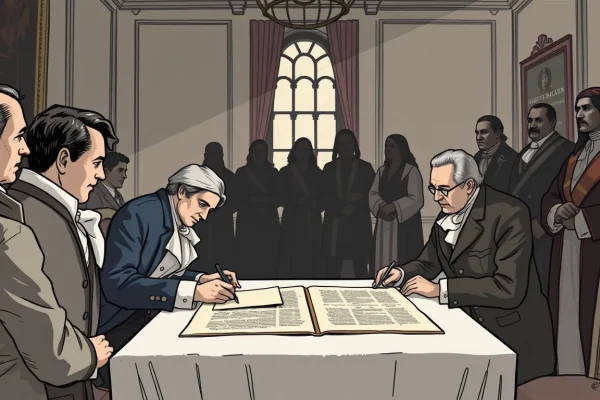
The Treaty of Ghent (1814) included Article IX, which promised to restore Indigenous peoples’ possessions, rights, and privileges to their 1811 status, but the provision was unenforced and Britain’s proposed Indigenous buffer state was dropped. This article examines the treaty’s limited and consequential treatment of Indigenous nations and its long-term impact.

Read More →

Records of Impressed American Sailors

Records of Impressed American Sailors are the diplomatic and administrative documents created by the U.S. government between the 1790s and the end of the War of 1812 to track foreign impressment of American seamen and to seek their release. These records document a primary cause of the War of 1812 and survive as a rich source for genealogists and historians.

Read More →

What Did the United States Want From the Treaty of Ghent?

The United States wanted the Treaty of Ghent to end impressment, protect neutral trade rights, restore pre-war boundaries, and stop British interference with American sovereignty. These aims shifted during negotiations as the war’s circumstances changed, ultimately leading to a treaty that restored the status quo ante bellum without addressing the original grievances.

Read More →

Seamen’s Protection Certificates and Genealogy

Seamen’s Protection Certificates, created by the U.S. Congress in 1796, were identity documents issued to American merchant seamen to protect them from British impressment. The applications and registers of these certificates, preserved at the National Archives, have become valuable resources for genealogists researching maritime ancestors from the early republic, including the War of 1812 era.

Read More →