
Short Answer
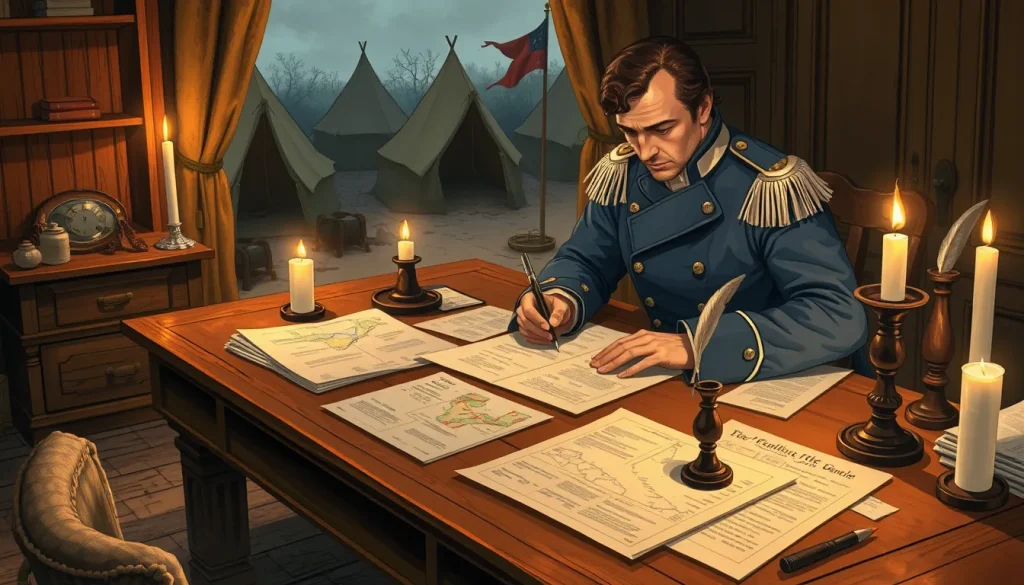
Military reports from the War of 1812 are official dispatches, letters, and returns produced by commanders and officers for their superiors, governments, and the public. These reports form the backbone of the historical record for battles, sieges, and campaigns, but they also carry personal perspectives, political pressures, and communication limitations of their era. Reading them critically is essential for reconstructing what actually happened and for understanding how the war was perceived.
Historical Context
The War of 1812 (1812–1815) was fought between the United States and Great Britain, with British North American and Indigenous allies playing crucial roles. Communication and reporting were slow and often unreliable: official dispatches traveled by ship or overland, sometimes taking weeks. Militia and regular forces operated under different reporting rules, and both sides used newspapers to rally public support. Official reports were written by commanding officers, who were accountable to political leaders and to the public. These documents thus reflect command priorities, contemporary military standards, and the need to justify actions. Understanding this context helps readers recognize why reports were written as they were and what pressures shaped them.
What Happened
During the war, American and British officers filed reports after significant actions. American army officers reported to the Secretary of War, while naval officers reported to the Secretary of the Navy; British army and naval officers reported through their own chains of command, often to colonial governors or the Admiralty. Reports were typically letters, sometimes with attached returns of killed, wounded, and missing. They were often published in local newspapers, making them immediate public documents. Compilations such as H.A. Fay’s Collection of the Official Accounts (1817) and John Brannan’s Official Letters of the Military and Naval Officers of the United States (1823) gathered many reports together for future readers. The National Archives and Records Administration (NARA) preserves numerous records, including Registers of Enlistments and Discharge Certificates, while the Library and Archives Canada holds British records. These sources allow researchers to trace not only the reports themselves but also the men and units involved.
Why It Matters
Military reports are primary sources that directly shape our understanding of the War of 1812. They provide detail on tactics, casualties, unit positions, and command decisions. Without them, many engagements would be obscure. However, they are not neutral: commanders often wrote to defend their reputations, secure promotions, or influence public opinion. American and British reports of the same battle frequently conflict, and both may omit the roles of Indigenous warriors or militia. Historians therefore use reports as evidence but cross-reference them with muster rolls, pension files, and other correspondence. Learning to read these reports critically is a foundational skill for any student of the war.
Definition: Types of Military Reports
A War of 1812 military report is an official communication from a commanding officer to his immediate superior, or to a governmental authority, describing a military operation, engagement, or the state of a command. Common types include battle reports, siege accounts, expedition summaries, and periodic strength returns. Reports often include the date and place of the action, a narrative of events, lists of casualties, and commendation of subordinate officers. They may also contain or append maps, orders, and lists of captured matériel. Official reports differ from personal letters or diaries in that they are written for official record and may be published.
Background: The Reporting Chain in the War of 1812
American army and navy officers were required to submit written reports to their respective secretaries. The Secretary of War and Secretary of the Navy reviewed and often forwarded reports to Congress, which sometimes ordered publication. British officers reported through a similar system, with dispatches going to the colonial governor or directly to London. These reports were frequently printed in newspapers such as the National Intelligencer or London Gazette. Because of the time lag, reports sometimes arrived after public rumors had already spread. Compilations like those by Fay and Brannan were assembled from official correspondence and newspaper reprints. The National Archives holds many originals, including muster rolls and pay vouchers that complement the narrative reports.
How to Analyze a Military Report
When reading a report, first note the author—his rank, command, and role—and the intended recipient. This shapes the tone and content. For example, a subaltern’s report to a general might emphasize obedience, while a commanding general’s dispatch to the War Department might stress overall success. Look for the date and place of writing: reports composed immediately after battle may be chaotic; later revisions might be more polished but also more self-serving. Check the report’s claims against known facts: numbers of troops, casualties, and captures are frequently inflated or understated. Compare with opposing accounts and with any later court-martial or inquiry. Also consider what is omitted: the names of Indigenous allies, the actions of militia, or logistics problems may be absent. Read between the lines for hints of rivalry or political influence.
Competing Viewpoints: Sources of Bias
Bias is unavoidable in official reports. American officers, for instance, tended to emphasize the bravery of regulars and the failures of militia, while British officers highlighted their own discipline and the supposed inferiority of American forces. The Battle of Queenston Heights (October 13, 1812) is a classic case: American and British accounts disagree about the role of the militia and the circumstances of Winfield Scott’s capture. Political rivalries could also affect reporting: after the surrender of Detroit in 1812, William Hull and his subordinates traded accusing reports. Reports from senior officers often credit themselves and their favorites while blaming others. They may also downplay losses or exaggerate enemy strength to make their own success appear greater. Readers must therefore treat each report as a piece of evidence, not as the final word.
Role in the War of 1812
Military reports shaped public opinion and morale during the war. Victories like the USS Constitution’s capture of HMS Guerriere in August 1812 were celebrated in American newspapers, boosting national confidence. British reports, in turn, emphasized successes on the Canadian frontier. Reports also influenced strategic decisions: a defeat could lead to a change in command, as happened after the disaster at Frenchtown or the burning of York. Conversely, a successful report might secure a commander’s reputation and advancement. The reports themselves became part of the political debate, with opposition newspapers scrutinizing them for errors or spin. Thus, they were not just operational documents but instruments of propaganda and public information.
Consequences and Historical Interpretation
Historians have relied on military reports as the backbone of campaign and battle narratives. However, modern scholarship has become more critical. The Naval War of 1812 documentary history series, for example, reprints reports with explanatory notes, comparing conflicting versions. Researchers now use muster rolls, pension records, and official correspondence to verify casualty figures and troop movements. The reports are still essential, but they are no longer taken at face value. They reveal not only what happened but how commanders wanted events to be perceived, offering insights into the culture of the military and the values of the era.
Primary Sources
The most relevant primary sources include the compilations by Fay and Brannan, which collect official reports from 1812–1815. Fay’s Collection of the Official Accounts (1817) presents reports in their original wording, without commentary, as he sought “to preserve the very skeleton and soul of the history of the war.” Brannan’s Official Letters (1823) includes additional letters and documents. The National Archives holds original muster rolls, discharge certificates, and compiled service records, such as M233 Registers of Enlistments and M1856 Discharge Certificates. Canadian repositories, including Library and Archives Canada, hold British military correspondence. The Delaware Public Archives has transcribed military records for that state. Each source has limitations: Fay was American and focused on American reports; Brannan likewise; NARA records are U.S. government records with a United States-centric view. To understand the war fully, researchers must consult both American and British official documents, along with private journals and letters.
Further Reading
- Donald R. Hickey, The War of 1812: A Forgotten Conflict (University of Illinois Press, 1989).
- William S. Dudley (ed.), The Naval War of 1812: A Documentary History, 3 vols. (Naval Historical Center, 1985–2002).
- J. Mackay Hitsman, The Incredible War of 1812 (University of Toronto Press, 1965).
- Robert S. Quimby, The U.S. Army in the War of 1812: An Operational and Command Study (Michigan State University Press, 1997).
- Library and Archives Canada, “War of 1812: Military Records,” online guide.
References
- Fay, H. A. Collection of the Official Accounts, in Detail, of All the Battles Fought by Sea and Land, between the Navy and Army of the United States and the Navy and Army of Great Britain during the Years 1812, 13, 14, & 15. New York: E. Conrad, 1817. [https://www.ibiblio.org/pha/USN/Navy/Collection%20of%20the%20official%20accounts%20of%20battle%20in%20War%20of%201812%20(Fay)%20(1817).pdf]
- Brannan, John. Official Letters of the Military and Naval Officers of the United States during the War with Great Britain in the Years 1812, 13, 14, & 15. Washington, D.C., 1823. [https://www.canadiana.ca/view/oocihm.47221]
- National Archives and Records Administration. “Regular and Volunteer United States Military Service Between the Revolutionary War and the War of 1812.” Reference Information Paper 909. [http://www.archives.gov/files/research/military/between-rev-and-1812.pdf]
- Delaware Public Archives. “War of 1812 Military Records, Volumes 4 and 5.” [https://warof1812.delaware.gov/documents/military/index.shtml]
- Salmon, M. Stephen. “Leonhart, Editing Naval Documents: The Case of the War of 1812; Dudley (ed.), Editing Naval Documents: An Historical Appreciation; The Naval War of 1812: A Documentary History, Volume 1: 1812.” Archivaria, 1988. [http://archivaria.ca/index.php/archivaria/article/view/11505]
FAQ
What are common pitfalls when reading War of 1812 military reports?
Common pitfalls include relying on only one side's account, ignoring the author's personal or political bias, and treating casualty figures as definitive. Since reports were written for different audiences, they may exaggerate successes or downplay failures. Cross-referencing multiple accounts is crucial.
How can I compare American and British reports of the same battle?
Start by reading both reports side by side, noting differences in numbers, unit designations, and key events. Look for corroborating evidence in other primary sources such as muster rolls, personal diaries, or court-martial records. Modern documentary histories, like the Naval War of 1812 series, often annotate and reconcile conflicting reports.
Where can I find War of 1812 military reports?
Many are in the National Archives and Records Administration (NARA) in the United States and Library and Archives Canada. Published collections include Brannan's Official Letters (1823) and Fay's Collection (1817), as well as modern editions like The Naval War of 1812 documentary history.
Leave a Reply