
Short Answer
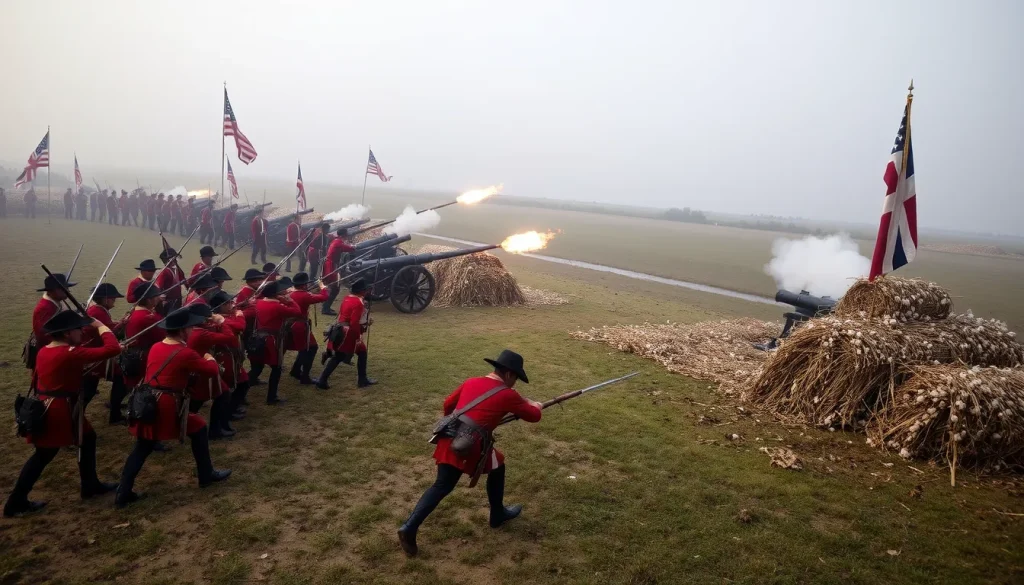
The Battle of New Orleans, fought on January 8, 1815, was the last major battle of the War of 1812. It occurred in and around the city of New Orleans, Louisiana, and ended in a decisive American victory over British forces. Because of its dramatic circumstances and political aftermath, the battle became the subject of numerous myths—misconceptions about timing, scope, participants, and key figures—that continue to shape popular memory.
Historical Context
The War of 1812 (1812–1815) pitted the United States against Great Britain over maritime rights, impressment, and territorial ambitions. By late 1814, the war in Europe had ended with Napoleon’s defeat, allowing Britain to send veteran forces to North America. After burning Washington, D.C., in August 1814, British commanders sought to capture New Orleans, a strategic port controlling the Mississippi River. Maj. Gen. Andrew Jackson commanded American forces in the 7th Military District, tasked with defending the Gulf Coast. The Treaty of Ghent, negotiated to end the war, was signed on December 24, 1814, but it was not ratified by the United States until February 16, 1815. Thus, the Battle of New Orleans was fought while the war was technically still legally in effect.
What Happened
The British campaign against New Orleans involved multiple engagements, not just the January 8 assault. On December 14, 1814, a British naval force defeated American gunboats on Lake Borgne, east of the city. British troops then landed and advanced toward the Mississippi. Jackson attacked the British camp on the night of December 23 in a brutal engagement at the De La Ronde plantation, which ended inconclusively. Over the following days, Jackson withdrew his forces to a defensive line along the Rodriguez Canal at Chalmette, two miles south of the city. He built an earthen rampart supported by artillery. British commander Lt. Gen. Edward Pakenham arrived on Christmas Day and spent several days reconnoitering. On December 28, the British launched what historian Glenn Williams calls a “grand reconnaissance,” but it was repulsed. On January 1, 1815, the British conducted a heavy artillery bombardment, which failed to disable the American guns. Finally, on the morning of January 8, Pakenham ordered a full-scale assault. The main attack hit the left side of Jackson’s line, while a secondary column attacked across the Mississippi River. The assault was a disaster for the British; they suffered about 2,000 casualties, including Pakenham, while American losses were around 70. British forces withdrew from the field and eventually evacuated the region by January 18, but a follow-up attack on Fort Bowyer at Mobile Bay occurred in February, after the treaty had been ratified.
Why It Matters
The Battle of New Orleans was a decisive American victory that boosted national morale and made Andrew Jackson a hero, later propelling him to the presidency. However, the battle’s myths—about its timing, the nature of the fighting, and the participants’ roles—have colored historical memory. These myths arose from political needs, patriotic sentiment, and romanticized popular culture. Understanding them is essential for a clear picture of the war’s end and the battle’s real legacy.
Definition
Myths about the Battle of New Orleans are widely repeated but historically inaccurate accounts that exaggerate, distort, or misattribute facts about the engagement. Common myths include claims that the battle was fought after the war had ended, that it was the final combat of the war, that it lasted only a single day, that the American victory was won primarily by Kentucky riflemen, and that pirate Jean Lafitte fought conspicuously on the front lines.
Background
The seeds of these myths were planted in the immediate aftermath of the battle. The American victory contrasted sharply with earlier defeats in the war, and politicians, especially those allied with Andrew Jackson, used it to promote a narrative of American resilience. The fact that the Treaty of Ghent had been signed but not yet ratified created confusion about the war’s timeline. Furthermore, the battle’s participants included a diverse force of regulars, militia, freed men of color, Choctaw allies, and Baratarian privateers, each with their own stories that were simplified or exaggerated over time.
How the Myths Developed
Each myth has its own origin. The myth that the battle occurred after the war ended stems from the delay in ratification and the subsequent proclamations of peace. The “one-day battle” myth ignores the weeks of skirmishes and naval actions that preceded January 8. The role of the Kentucky militia was romanticized by the popular 1821 ballad “The Hunters of Kentucky,” which falsely credited backwoods riflemen with the victory, a claim that Andrew Jackson himself privately ridiculed. Jean Lafitte’s involvement was magnified because his Baratarian pirates provided artillery expertise, but he was not present on the firing line. The myth that it was primarily a land battle overlooks the crucial naval operations on Lake Borgne and the Mississippi River.
Competing Viewpoints
Historians generally agree on the factual record, but they interpret the myths differently. Some emphasize political motives, noting that Jackson’s campaign for president in 1828 used the battle mythology to appeal to frontier voters. Others focus on cultural memory, arguing that myths persisted because Americans wanted to celebrate citizen-soldiers over a standing army. A few scholars, like Don Hickey, see broader patterns of mythmaking in all nations involved in the War of 1812. While there is debate about the relative importance of the causes, the fact that the Kentucky militia performed poorly and that American artillery did the most damage is well documented.
Role in the War of 1812
The Battle of New Orleans was the climactic engagement of the Gulf Coast campaign. It reinforced American control of the Mississippi River and protected the economic heartland of the United States. The battle’s strategic consequences were limited because the Treaty of Ghent had already been agreed, but it shaped the war’s outcome in the public mind, giving Americans a sense of triumph despite the war having ended in a draw. The myths also influenced how the war was remembered: the victory obscured earlier failures and contributed to the notion that the United States had won the war.
Consequences and Historical Interpretation
Modern historians have worked to correct these myths through careful examination of contemporary reports, letters, and official records. For example, historian Glenn Williams emphasizes that the battle was not a single engagement but a series of at least five combat actions. The National Park Service and the American Battlefield Trust have published articles clarifying that artillerymen—not riflemen—were the decisive factor. These corrections matter because they provide a more accurate understanding of the war and its participants, and they help prevent the distortion of historical events for political or cultural purposes.
Primary Sources
Key primary sources include Andrew Jackson’s official report to Secretary of War James Monroe, written the day after the battle, in which he described the Kentucky militia’s flight. British officer accounts, such as that of an unnamed artilleryman, describe the deadly American cannon fire. The Treaty of Ghent itself is a crucial document, showing that the peace was not in effect until ratified. The song “The Hunters of Kentucky” is a primary source for the mythmaking process. The correspondence of British commanders, including Cochrane and Pakenham, provides insight into British plans and decisions. These sources must be used carefully, as they each reflect particular biases and perspectives.
Further Reading
- Don Hickey, The War of 1812: A Forgotten Conflict (University of Illinois Press, 1989).
- Robert V. Remini, The Battle of New Orleans (Viking, 1999).
- Donald R. Hickey, Glorious Victory: The Battle of New Orleans, January 8, 1815 (University of Texas Press, 2015).
- Charles Brooks, The Siege of New Orleans (University of Washington Press, 1961).
- National Park Service, “Americans Celebrate an Idealized Version of their Militia,” https://www.nps.gov/articles/myths-of-the-militia.htm
- American Battlefield Trust, “10 Facts: 1812 Battle of New Orleans,” https://www.battlefields.org/learn/articles/10-facts-1812-battle-new-orleans
References
- Christopher Klein, “6 Myths About the Battle of New Orleans,” HISTORY, January 8, 2015, https://www.history.com/articles/6-myths-about-the-battle-of-new-orleans-3
- David Vergun, “Army historian corrects myths on Battle of New Orleans’ 200th anniversary,” U.S. Army, January 9, 2015, https://www.army.mil/article/140876/
- National Park Service, “Americans Celebrate an Idealized Version of their Militia,” last updated April 29, 2015, https://www.nps.gov/articles/myths-of-the-militia.htm
- Don Hickey, “Leading Myths of the War of 1812,” The War of 1812 Magazine, Napoleon Series, Issue 4, https://www.napoleon-series.org/military-info/Warof1812/2006/Issue4/c_myths.html
- American Battlefield Trust, “10 Facts: 1812 Battle of New Orleans,” updated June 24, 2026, https://www.battlefields.org/learn/articles/10-facts-1812-battle-new-orleans
FAQ
Was the Battle of New Orleans fought after the war ended?
No. The Treaty of Ghent was signed on December 24, 1814, but it was not ratified by the United States until February 16, 1815. The battle occurred on January 8, 1815, while the war was still legally in effect.
Did Kentucky riflemen win the Battle of New Orleans?
No. The Kentucky militia performed poorly and many fled. The American victory was due chiefly to regular army artillerymen who fired cannon into the advancing British columns.
Was Jean Lafitte a hero at the battle?
Lafitte supplied artillery and men, but there is no evidence he fought on the front lines. His role was important but exaggerated in popular accounts.



Leave a Reply