The War of 1812: A Complete History

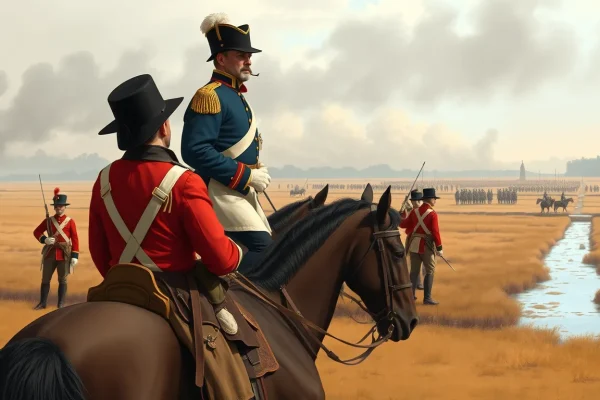
The War of 1812 (1812–1815) pitted the United States against Great Britain and their respective allies across the Atlantic, Great Lakes, Canadian frontier, Chesapeake, and Gulf Coast. Declared on June 18, 1812, over British maritime restrictions and impressment, it ended with the Treaty of Ghent restoring prewar boundaries. Though militarily inconclusive, the war transformed American politics, Canadian identity, and Indigenous North America.

Read More →

Congressional Debates Before the War of 1812

In 1811 and 1812, Congress engaged in a heated and regionally divided debate over whether to declare war on Great Britain for the first time under the Constitution. President James Madison’s war message of June 1, 1812, and the subsequent votes in the House and Senate resulted from months of oratory that centered on impressment, the Orders in Council, frontier conflicts, and the question of territorial expansion into Canada. The debates revealed deep partisan and sectional divisions, leading critics to call the conflict ‘Mr. Madison’s War.’

Read More →

Who Won the War of 1812? Results and Consequences

The War of 1812 ended in the Treaty of Ghent with no transfer of territory and no formal victor, leaving military results close to a draw. Consequences, however, differed sharply: Americans gained nationalism and security, Britain defended Canada, colonists in British North America forged a founding memory, and Indigenous nations lost the most. Historians therefore treat the question of who won as a matter of interpretation.

Read More →

The Naval War of 1812: Ships, Battles, and Blockades

The naval war of 1812–1815 was the oceanic struggle between the small United States Navy, American privateers, and the far larger Royal Navy. American heavy frigates won a celebrated series of single-ship duels in 1812, but Britain responded with an escalating blockade that by April 1814 closed the entire American coast. The fighting shaped morale, commerce, and strategy throughout the War of 1812, even though the Treaty of Ghent restored the pre-war status quo.

Read More →

Treaty of Ghent Ratification Explained

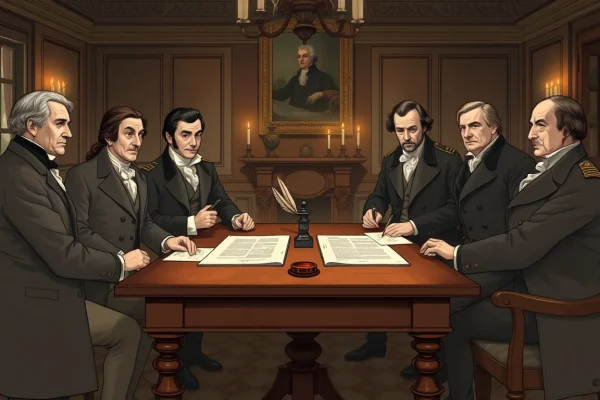
The Treaty of Ghent, signed on December 24, 1814, ended the War of 1812 only after both governments ratified it. The British ratified on December 27, 1814, and the U.S. Senate unanimously approved it on February 16, 1815, with exchange of ratifications the next day officially concluding the war.

Read More →

Battle of Baltimore (1814)

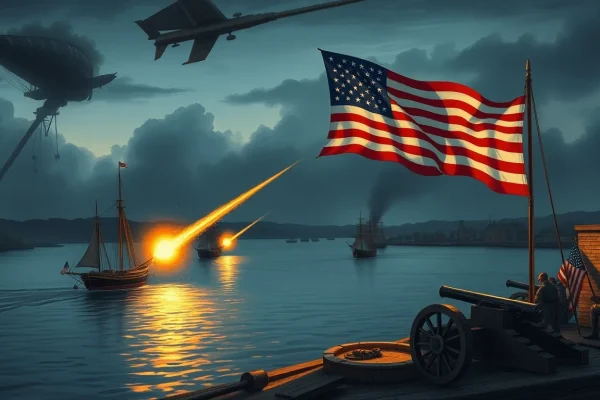
The Battle of Baltimore, fought September 12–14, 1814, was a combined British land and naval attack on Baltimore, Maryland, during the War of 1812. After burning Washington, D.C., British forces failed to seize Baltimore because American defenders held at North Point and Fort McHenry. The battle inspired Francis Scott Key to write ‘The Star-Spangled Banner.’

Read More →

Women During the War of 1812

Women played essential and varied roles during the War of 1812, managing farms and businesses, serving as nurses and spies, and defending their homes. Their contributions, often obscured by contemporary gender ideals, were crucial to both American and Canadian war efforts and shaped postwar society.

Read More →