
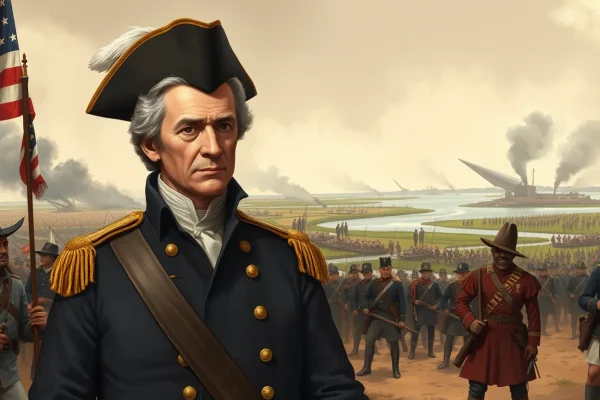
Andrew Jackson’s Rise After the War of 1812

Andrew Jackson’s victory in the Battle of New Orleans on January 8, 1815 transformed him from a regional militia commander into a national hero, setting him on a path to the presidency in 1829. His successes during the War of 1812, especially against the Creek Nation and at New Orleans, came to symbolize a youthful American republic’s ability to triumph over a European power, overshadowing the war’s many American failures.
Read More →

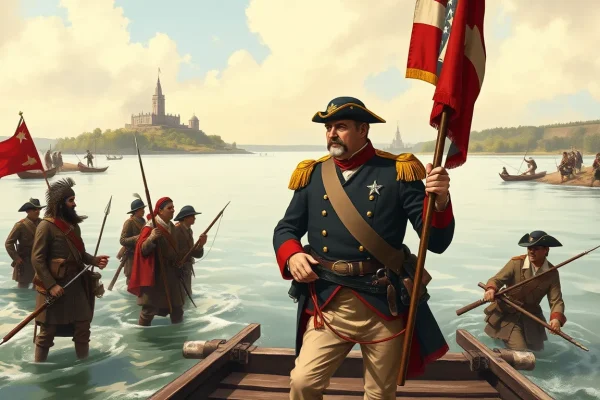
William Hull’s Invasion of Upper Canada

In July 1812, American Brigadier General William Hull led an invasion of Upper Canada from Detroit, crossing the Detroit River and occupying Sandwich. The campaign ended in disaster with Hull’s surrender of Fort Detroit to British Major General Isaac Brock on August 16, 1812, a major early setback for the United States.

Read More →

Why 1814 Was the Decisive Year of the War of 1812

The year 1814 proved decisive in the War of 1812 because the defeat of Napoleon freed thousands of British regulars for North America, shifting the conflict from a stalemate to a series of invasions that culminated in the burning of Washington, successful American defenses at Plattsburgh and Baltimore, and the Gulf Coast campaign that ended at New Orleans.

Read More →

British Memory of the War of 1812

British memory of the War of 1812 is characterized by widespread neglect, overshadowed by the Napoleonic Wars. This article explores why the conflict is largely forgotten in Britain, how it has been interpreted by historians, and its consequences for historical understanding.

Read More →

Desertion During the War of 1812

Desertion plagued both the American and British armies during the War of 1812, sapping manpower, undermining campaigns, and prompting harsh punishments. Driven by low pay, harsh discipline, and bounty fraud, desertion rates peaked in 1814 and shaped the conflict’s outcome.

Read More →

York During the War of 1812

York, the capital of Upper Canada, was captured by American forces on 27 April 1813, leading to the burning of government buildings and later British retaliation at Washington. The attack underscored the strategic importance of Lake Ontario and became a defining event of the War of 1812.

Read More →

The War of 1812 and the Napoleonic Wars

The War of 1812 was fought inside the shadow of the Napoleonic Wars (1803–1815). Britain’s Orders in Council, its blockade of Napoleonic Europe, and the impressment of American seamen grew directly from the European struggle, while Napoleon’s decrees and misleading promises helped push the United States toward war. Napoleon’s defeat in 1814 freed British forces for the campaigns that burned Washington, and the peace at Ghent was shaped by the wider European settlement.

Read More →

Shipbuilding at Kingston During the War of 1812

Shipbuilding at Kingston during the War of 1812 refers to the large-scale construction of warships at the Royal Navy dockyard on Point Frederick, present-day Kingston, Ontario. This shipyard built the vessels that enabled the British to contest control of Lake Ontario, directly influencing the war’s outcome on the Upper Canada frontier.

Read More →