
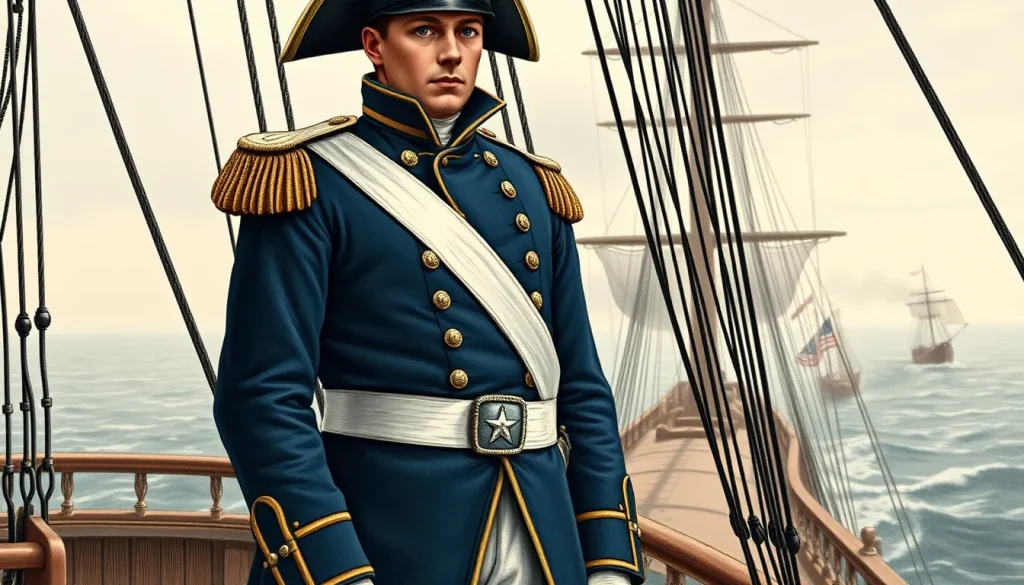
Short Answer
The War of 1812 (1812–1815) involved a small but active United States Marine Corps, which served in shipboard detachments, amphibious landings, and shore batteries. Researching an individual Marine requires navigating military records, pension files, and archival collections held primarily by the U.S. National Archives and Records Administration (NARA), as well as state and private repositories. This article provides a practical methodology for identifying service information, understanding record types, and overcoming common research challenges.
Historical Context
The United States declared war on Great Britain on June 18, 1812, amid disputes over impressment, trade restrictions, and British support for Indigenous resistance on the frontier. The U.S. Marine Corps, established in 1798, was a small force of about 400–500 officers and enlisted men at the start of the war. Marines served on every U.S. Navy vessel, provided security at navy yards, and participated in combined operations such as the battles at Lake Erie, Champlain, and New Orleans, as well as the burning of York (Toronto) in 1813. The Corps also saw action in the Chesapeake Bay region and along the Gulf Coast. Understanding this context is essential because Marines were attached to naval commands, and their service records are often found within naval administrative records rather than army files.
What Happened
During the war, Marines served in two primary capacities: sea-going detachments on frigates, sloops, brigs, and schooners, and shore-based units guarding naval installations or participating in land expeditions. Their duties included maintaining discipline, providing sharpshooters in naval engagements, and leading boarding parties. Notable actions included the capture of HMS Macedonian by USS United States (1812), the defense of Fort McHenry (1814), and the Battle of New Orleans (1815). The Corps also contributed to campaigns on the Niagara frontier and in the Northwest. After the war, the Corps was reduced in size but maintained its distinct identity. The records generated during this period—muster rolls, payrolls, pension applications, and compiled service records—now form the basis for genealogical and historical research.
Why It Matters
Researching a War of 1812 Marine is significant for several reasons. First, it connects individuals to a pivotal conflict in North American history, revealing the experiences of ordinary sailors and soldiers. Second, the records themselves are a rich source for social history, including details about enlistment, physical description, and post-war life. Third, the process of research teaches valuable skills in archival navigation and historical methodology. For descendants, it provides a tangible link to ancestral service. Historians use these records to reconstruct the Corps’ operations and the lives of its members, contributing to a more complete picture of the war’s military and social dimensions.
Definition
A War of 1812 Marine is an individual who served in the United States Marine Corps between 1812 and 1815, on active duty in the navy or at shore installations. Research focuses on identifying service details such as enlistment dates, ship assignments, rank, and subsequent pension claims. This guide specifically addresses records for enlisted men and officers, with an emphasis on federal sources held by NARA and related online databases.
Background
The U.S. Marine Corps has maintained muster rolls since its founding. For the War of 1812, original muster rolls were created monthly for each ship or shore post, recording the names, ranks, and dates of enlisted men. In the late 19th century, the War Department created Compiled Military Service Records (CMSRs) for volunteer soldiers, but Marines are generally included in naval records. However, NARA also holds Marine Corps muster rolls in Record Group 127 (Records of the U.S. Marine Corps). Pension and bounty land records, administered by the War Department, provide supplementary information, especially for veterans who lived into the 1870s. Researchers must understand the distinction between army and naval record groups to locate the correct files.
How to Research
Begin with known information: name, possible birth year, and any family stories. Then follow these steps:
- Step 1: Search online indexes. Start with free databases such as FamilySearch and the National Archives Catalog. The FamilySearch collection “United States, Muster Rolls of the Marine Corps, 1798-1937” includes War of 1812-era rolls. NARA’s M602 is the Index to Compiled Service Records of Volunteer Soldiers, but Marines may appear in naval indexes. Also search Fold3 and Ancestry for compiled records.
- Step 2: Request a compiled military service record (CMSR). For Marines, use NARA’s NATF Form 86 to request a compiled service record for naval and Marine Corps personnel. These files may contain summary cards from muster rolls, pay records, and hospital reports.
- Step 3: Check pension and bounty land records. If the Marine or his widow applied for a pension or bounty land, those files may contain extensive personal details. The 1871 and 1878 pension acts expanded eligibility. Search Fold3’s War of 1812 Pension Project, which includes images from NARA. Also check the Bureau of Land Management’s General Land Office Records for bounty land warrants.
- Step 4: Examine original muster rolls. NARA microfilm publication T1118 includes muster rolls of the Marine Corps, arranged by month and station. These rolls list ranks, dates, and sometimes remarks about desertion or death.
- Step 5: Search ship’s decks logs and naval officers’ correspondence. Record Group 45 (Naval Records Collection) contains ship deck logs and officer correspondence, which may mention individual Marines.
- Step 6: Consult state and local archives. Some Marines served in state militia but are rarely designated as Marines; however, Sea Fencibles and privateers may be confused. Verify unit designations carefully.
Competing Viewpoints
Research interpretations differ between genealogists and academic historians. Genealogists prioritize locating records to prove lineage and obtain membership in organizations like the General Society of the War of 1812. Historians use the same records to analyze demographic patterns, retention rates, and the social composition of the Corps. There is debate over the reliability of compiled service records versus original muster rolls, as CMSRs may contain transcription errors or omissions. Additionally, the distinction between regular Marines and Sea Fencibles—a volunteer naval militia—can be confusing, as both served in coastal defense but were under different commands. Competing narratives about the effectiveness of the Marine Corps in the war also influence how records are interpreted, with some emphasizing naval victories and others highlighting failures on land.
Role in the War of 1812
Marines played a critical role in several key engagements. On the USS Constitution under Captain Isaac Hull, Marine detachments provided musketry during the victories over HMS Guerriere and HMS Java. At the Battle of Lake Erie (1813), Marines served under Oliver Hazard Perry. In the Chesapeake campaign (1814), a Marine detachment helped defend Fort McHenry, an event that inspired Francis Scott Key’s “Star-Spangled Banner.” At the Battle of New Orleans (1815), a battalion of Marines under Major Daniel Carmick fought alongside army regulars. The Corps also participated in the burning of York and the capture of Fort George. These actions underscored the Marines’ dual role as shipboard infantry and amphibious assault troops.
Consequences and Historical Interpretation
The War of 1812 solidified the Marine Corps’ reputation as an essential component of the U.S. Navy. Post-war, the Corps was retained but its size reduced, with lessons learned about discipline and combined operations. Historians have used service records to reconstruct the demographics of early Marines—most were young, native-born or naturalized citizens, with many from maritime states. The 1871 and 1878 pension legislation created a surge in late-life applications, providing detailed family information that now aids genealogists. Modern digital databases have made research more accessible, but incomplete indexing and lost records still pose challenges. Interpretations of the Marines’ performance vary, with some scholars criticizing poor training and others highlighting tactical adaptability. Overall, research on War of 1812 Marines contributes to a deeper understanding of the war’s naval and amphibious dimensions.
Primary Sources
The most relevant primary sources include:
- Muster Rolls of the Marine Corps, 1798-1937 (NARA Record Group 127, microfilm T1118): Monthly lists of officers and men on each ship or station, providing names, ranks, enlistment dates, and remarks.
- Compiled Service Records, Naval and Marine Corps (NARA): These jackets contain cards abstracted from original rolls and are available on microfilm and via NARA’s order system.
- Pension Application Files (NARA): For veterans and widows claiming pensions under acts of 1871 and 1878, these files can include marriage certificates, family information, and proof of service.
- Bounty Land Warrant Application Files (NARA): Evidence submitted to obtain land warrants, sometimes documenting additional details.
- Ship Deck Logs (NARA Record Group 45): Daily entries from naval vessels that may mention individual Marines, injuries, or courts-martial.
- Officers’ Correspondence (NARA): Letters from Marine officers such as Commandant Franklin Wharton and others, offering command-level perspectives.
Each source has limitations: muster rolls may not cover all personnel due to loss or damage; CMSRs are second-hand summaries; pension files were created decades after service and may contain errors. Researchers should compare multiple sources to verify details.
Further Reading
- Butler, Stuart L. “Genealogical Records of the War of 1812.” Prologue 23:4 (Winter 1991).
- Kluskens, Claire. War of 1812 Military Service, Bounty Land, and Pension Records: A Step-by-Step Guide. National Archives, 2020.
- “United States War of 1812 Navy and Marine Units.” FamilySearch Wiki.
- Lambert, David Allen. “Star-Spangled Genealogy: War of 1812 Research Guide.” Family Tree Magazine.
- National Archives, “War of 1812” research page.
- Smith, Gene A. Marines in the War of 1812. Washington, DC: History and Museums Division, U.S. Marine Corps, 2002. (If uncertain, verify existence; this is a known monograph.)
References
- U.S. National Archives and Records Administration, “War of 1812,” https://www.archives.gov/research/military/war-of-1812.
- David Allen Lambert, “Star-Spangled Genealogy: War of 1812 Research Guide,” Family Tree Magazine, accessed 2025, https://familytreemagazine.com/records/military/war-of-1812-genealogy/.
- Claire Kluskens, “War of 1812 Military Service, Bounty Land, and Pension Records: A Step-by-Step Guide to Basic Federal Sources,” National Archives, accessed 2025, https://twelvekey.com/wp-content/uploads/2020/05/war_of_1812_basic_guide_2020_05_19.pdf.
- FamilySearch Wiki, “United States War of 1812 Navy and Marine Units,” accessed 2025, https://www.familysearch.org/en/wiki/United_States_War_of_1812_Navy_and_Marine_Units.
- Maryland Center for History and Culture, “Guide to the War of 1812 Sources,” accessed 2025, https://www.mdhistory.org/wp-content/uploads/2023/10/GuideToWarOf1812Resources_2020.pdf.
FAQ
Where do I start researching a War of 1812 Marine?
Start with family records and oral history, then search free indexes on FamilySearch and Fold3. Use the family name to locate muster rolls or compiled service records at NARA.
What is the difference between a compiled service record and a pension file?
A compiled service record summarizes service dates and units from original rolls, while a pension file contains applications for benefits, often including biographical details, marriage dates, and physical descriptions.
Are War of 1812 Marine records available online?
Many indexes and some digitized records are available on FamilySearch and Fold3, but full compiled service records and pension files may require ordering from NARA or viewing on microfilm at research centers.



Leave a Reply